
Long COVID and Dysautonomia Support: POTS, Brain Fog, Blood Flow, and Nervous System Recovery

Long COVID Is Not Just Lingering Fatigue
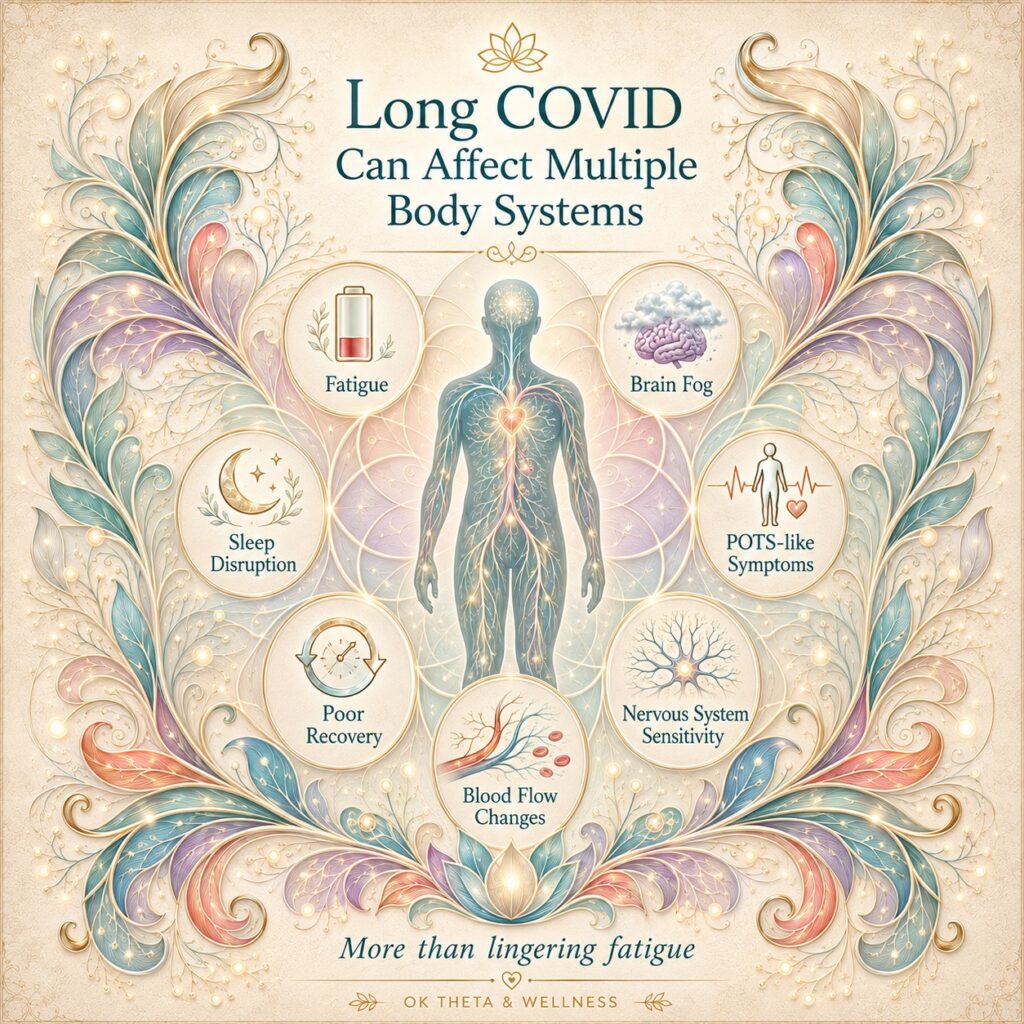
When I talk with people dealing with Long COVID, I often hear some version of the same sentence: “I just do not feel like myself anymore.” Sometimes that shows up as fatigue, dizziness, heart racing, brain fog, poor sleep, exercise intolerance, shortness of breath sensations, temperature changes, or a body that seems to overreact to ordinary stress. Some people feel tired but wired. Others feel weak but restless, or like their mind is wrapped in wet wool by mid-afternoon. That is one of the reasons I think Long COVID deserves a broader conversation.
This is not always a simple problem of low energy. For many people, Long COVID behaves more like a disruption in regulation. The body may have trouble managing blood flow, heart rate, blood pressure, inflammation, sleep rhythm, stress response, and recovery after exertion. In other words, the issue may not be one broken switch. It may be several body systems struggling to find the same tempo again. At OK Theta & Wellness, I think about Long COVID support through that lens. I am especially interested in the overlap between Long COVID, dysautonomia, POTS-like symptoms, brain fog, endothelial dysfunction, and nervous system recovery.
That does not mean every person with Long COVID has the same cause or needs the same support. They do not. Long COVID is not one neat little box. It is more of a tangled drawer of cords, batteries, adapters, and blinking lights. But there are patterns worth paying attention to, and those patterns can help us think more clearly about supportive care. The three modalities I most often consider in this conversation are EECP, the Theta Chamber, and Morph/PENS. Each one approaches the problem from a different direction: circulation, nervous system regulation, and auricular neuromodulation.
Spin into Wellness in Oklahoma’s First Theta Chamber!
What Dysautonomia Means in Plain English
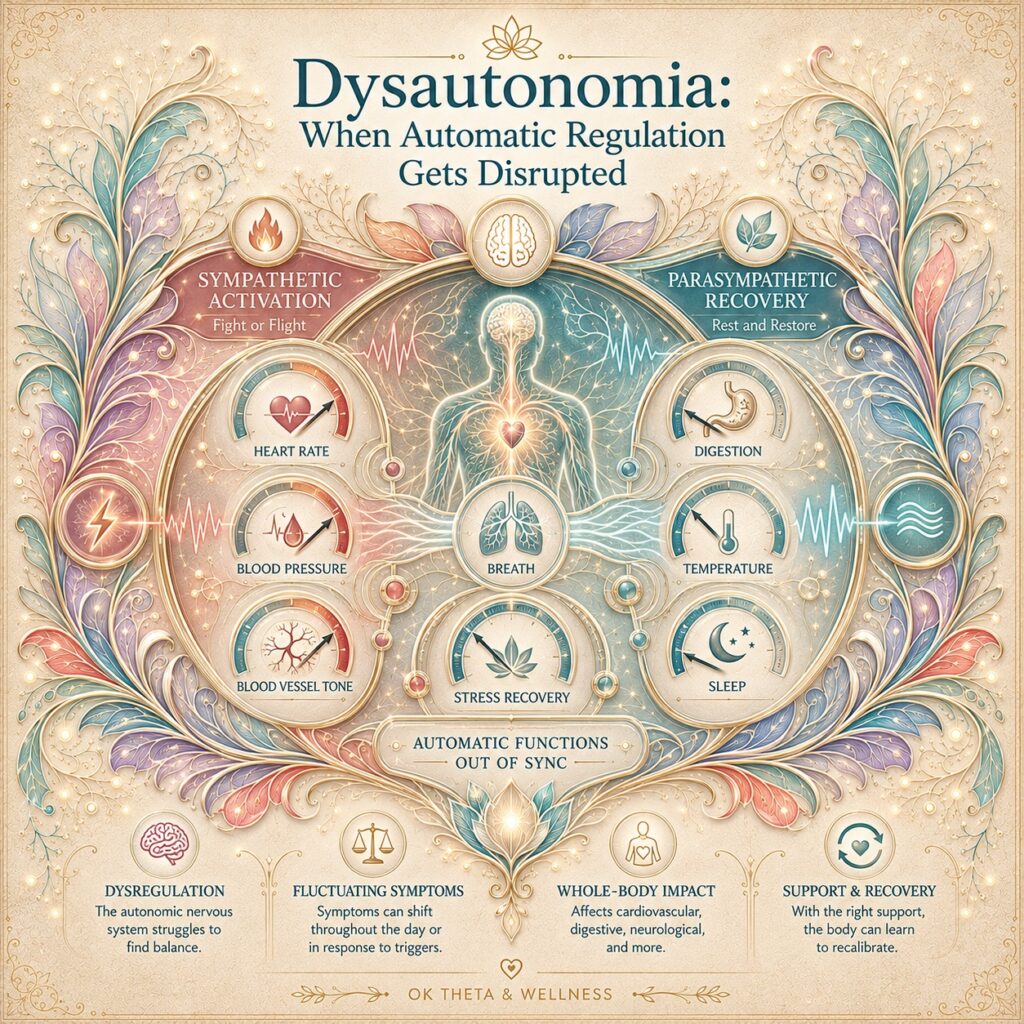
Dysautonomia means the autonomic nervous system is not regulating as smoothly as it should. The autonomic nervous system manages many of the things your body does automatically. Heart rate. Blood pressure. Blood vessel tone. Sweating. Digestion. Temperature regulation. Pupils. Breath patterns. The shift between “go mode” and “recovery mode.”
When this system is irritated or unstable, people can feel symptoms that are very real but sometimes difficult to explain. A person may stand up and feel their heart race. They may feel lightheaded in the grocery store, crash after a normal errand, feel anxious in their body even when their thoughts are calm, and feel exhausted but unable to truly rest.
That is one reason dysautonomia can be so frustrating. It can make ordinary life feel physiologically expensive. In Long COVID, dysautonomia may show up as:
- Heart racing when standing
- Dizziness or lightheadedness
- POTS-like symptoms
- Brain fog
- Poor stamina
- Exercise intolerance
- Shortness of breath sensations
- Fatigue after activity
- Poor sleep
- Temperature intolerance
- Digestive changes
- Feeling wired but tired
- Difficulty returning to baseline after stress or exertion
For many people, this is not just a mindset issue. It is a body regulation issue.
POTS, Orthostatic Intolerance, and Brain Fog
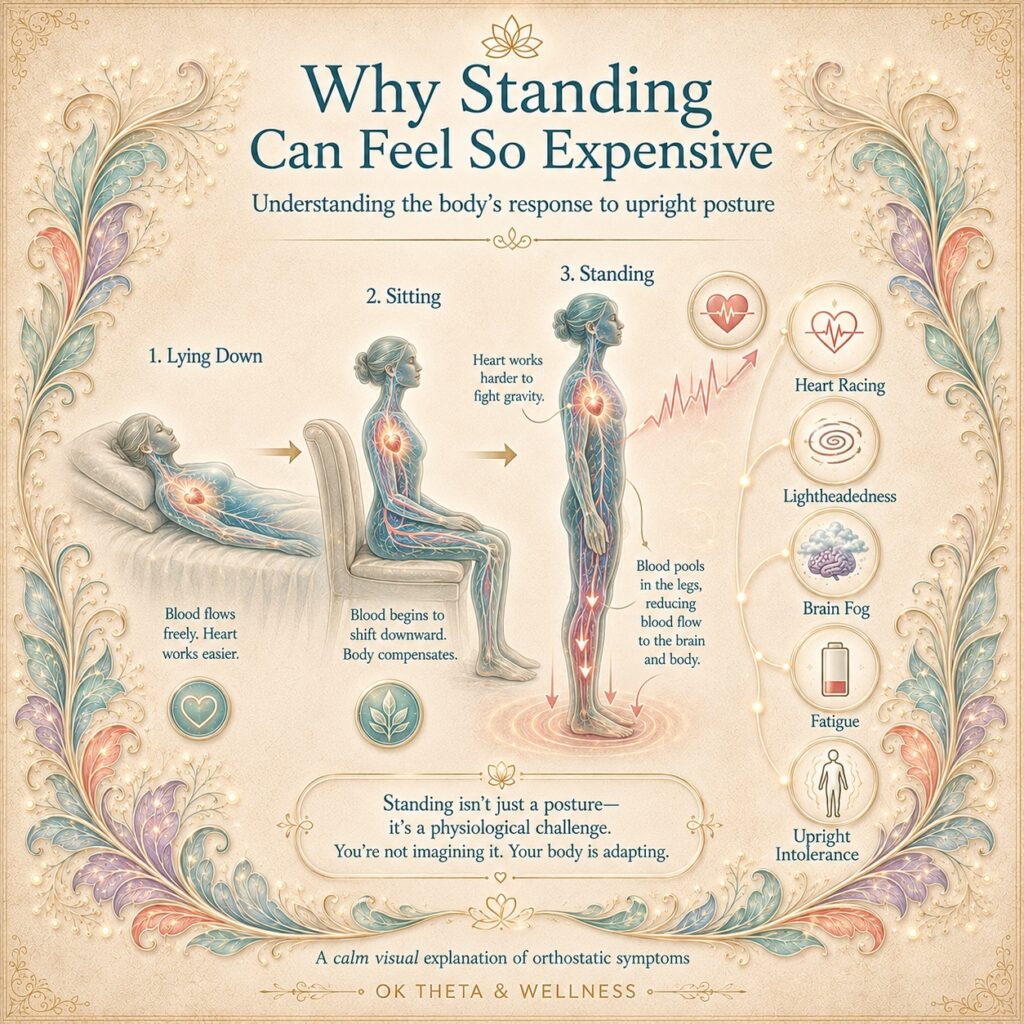
One of the more recognized dysautonomia patterns after COVID is POTS, or postural orthostatic tachycardia syndrome. In simple terms, POTS involves an abnormal heart rate response when a person moves upright. Many people describe feeling worse when standing, showering, walking through a store, sitting upright for too long, or doing basic tasks that used to be easy. Symptoms can include racing heart, dizziness, weakness, shakiness, fatigue, nausea, and brain fog.
Orthostatic intolerance is a broader term. It means symptoms worsen in the upright position and often improve when lying down. Not every person with orthostatic intolerance has POTS, but the lived experience can overlap. Brain fog is not always just a “thinking problem.” Sometimes brain fog appears to be tied to posture, blood flow, autonomic regulation, sleep quality, inflammation, and how well the body tolerates exertion.
When someone says, “My brain works better lying down,” that is a clue. It suggests that cognitive function may be influenced by vascular and autonomic physiology. The brain is not separate from the rest of the body. It is not floating above the neck like a royal advisor issuing commands from a balcony. It depends on circulation, oxygen delivery, glucose metabolism, inflammatory balance, sleep, and autonomic stability. I do not think about Long COVID brain fog as only a concentration problem. I think about it as a whole-body regulation problem that may be felt most clearly in the brain.
Endothelial Dysfunction: The Blood Vessel Lining Matters
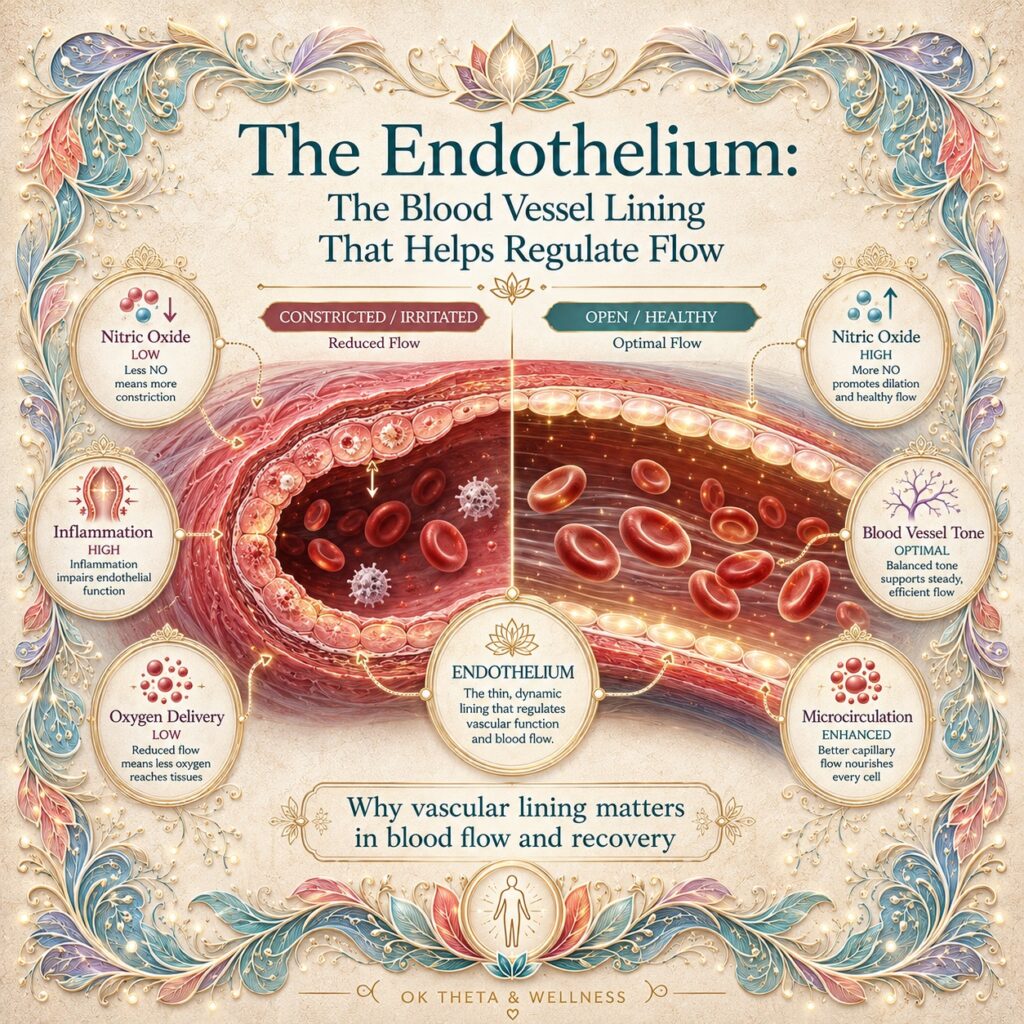
One of the most important pieces of the Long COVID conversation is the endothelium. The endothelium is the inner lining of the blood vessels. It helps regulate blood vessel dilation, blood flow, inflammation, clotting balance, nitric oxide signaling, and microcirculation. When the endothelium is irritated or dysfunctional, the vascular system may not respond as well as it should. In Long COVID, blood flow is not just a heart issue. It is a whole-body issue.
If the blood vessels are not dilating appropriately, if microcirculation is impaired, if inflammatory signaling is elevated, or if the autonomic nervous system is not coordinating vascular tone well, a person may feel underpowered. They may fatigue quickly, feel foggy, feel heavy. Their recovery may be poor.
This is where I think endothelial dysfunction gives us a useful framework. Not every symptom of Long COVID is vascular. Not every person with Long COVID has the same mechanism. But vascular function is a major part of the recovery conversation because circulation is how the body delivers oxygen, nutrients, hormones, immune cells, and metabolic support. If the nervous system is the body’s communication network, the vascular system is the delivery system. When both are disrupted, the person can feel like their internal infrastructure has gone glitchy.
EECP: Supporting Circulation and Vascular Function
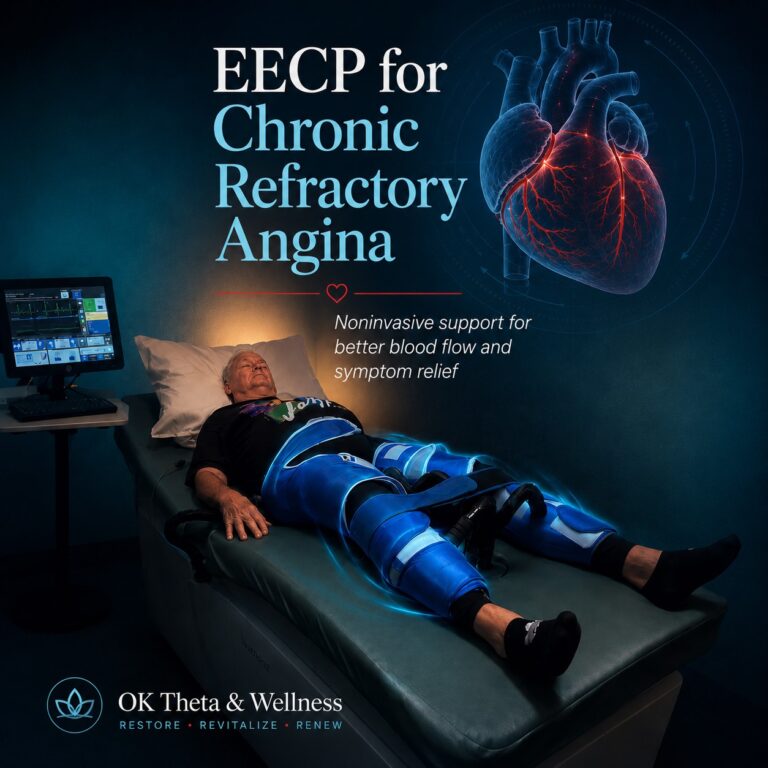
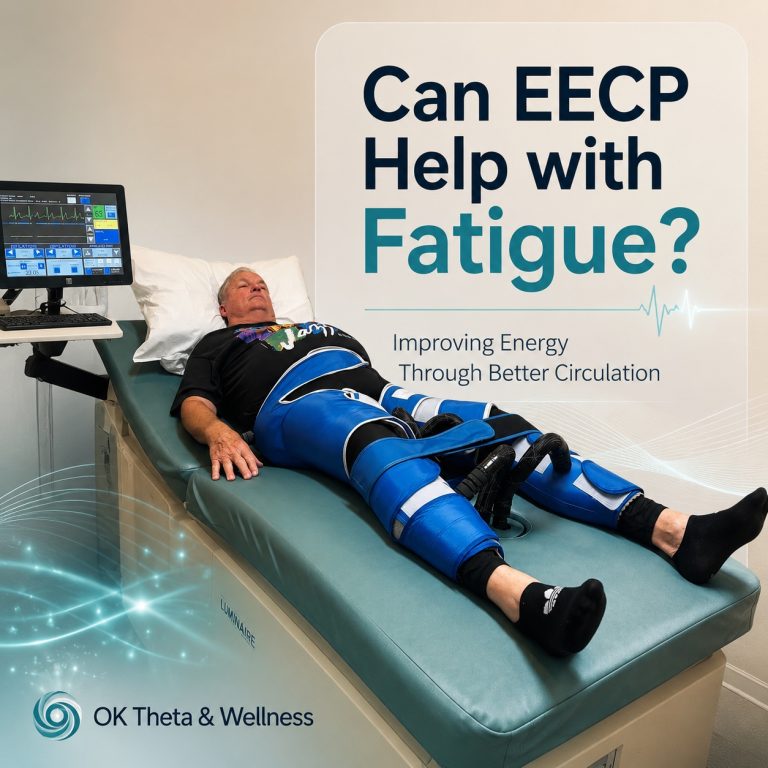
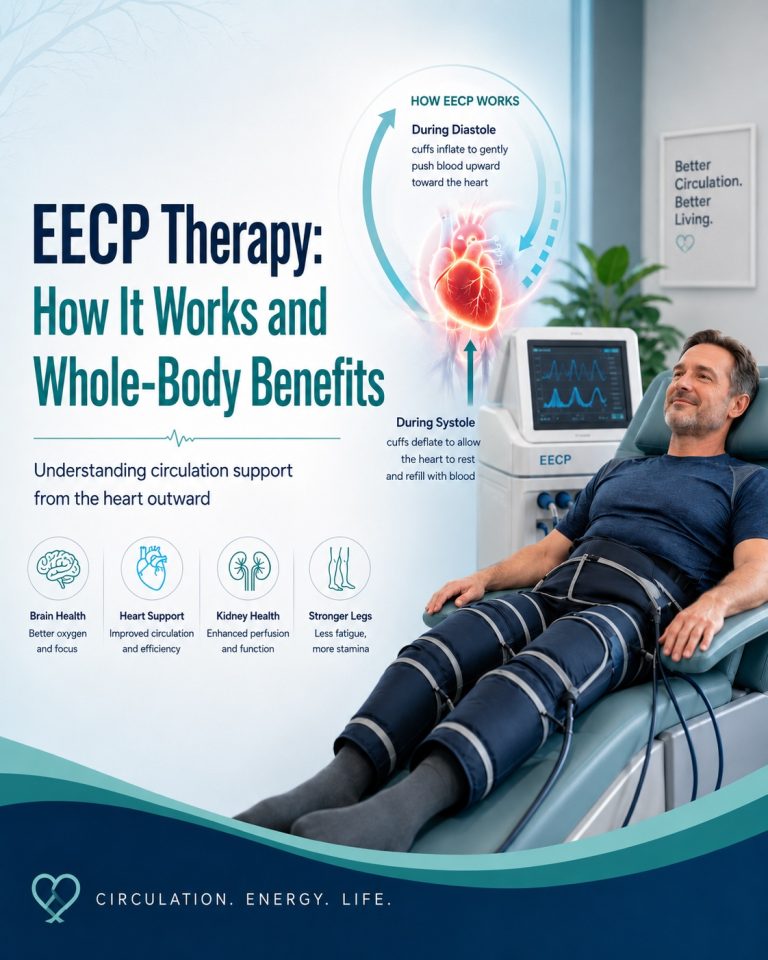
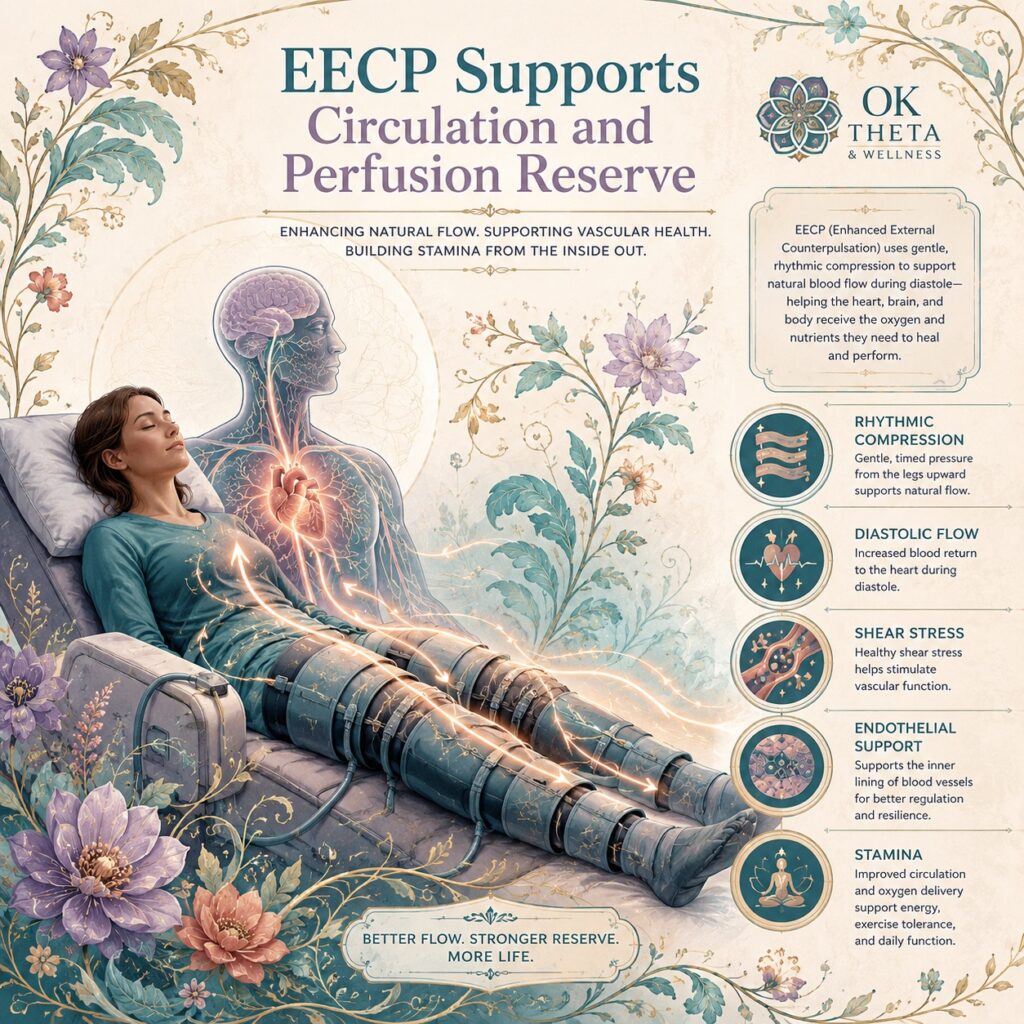
EECP stands for enhanced external counterpulsation. During EECP, cuffs are placed around the legs and inflate in rhythm with the heartbeat. The timing is designed to increase blood flow back toward the heart during diastole, reduce cardiac workload, and create repeated vascular shear stress. That shear stress is important because it may support endothelial function and nitric oxide signaling.
I often explain EECP as a structured circulation therapy. It is not passive in the sense of doing nothing. The body is being rhythmically challenged, session after session, in a way that supports vascular responsiveness. In the Long COVID conversation, EECP makes sense to me for several reasons:
- First, many people with Long COVID describe poor stamina, exertional intolerance, heavy limbs, brain fog, and poor recovery. Those symptoms may have multiple causes, but vascular function and perfusion reserve are worth considering.
- Second, endothelial dysfunction has been discussed in the Long COVID literature as one possible contributor to persistent symptoms.
- Third, EECP has already been used for cardiovascular conditions, especially chronic stable angina, where improving blood flow and vascular function is central to the goal.
- Fourth, a Long COVID study reported improvements in quality of life after EECP, including a significant proportion of participants returning to work. That does not mean EECP is a guaranteed answer for Long COVID. It does mean EECP deserves a serious place in the supportive-care conversation.
At OK Theta & Wellness, I do not describe EECP as a magic fix. I think of it as a way to support the vascular side of recovery. For the right person, that may matter. The question I ask is not, “Can one modality cure Long COVID?” The better question is, “If this person’s symptoms suggest poor blood flow, poor stamina, endothelial dysfunction, or reduced recovery capacity, would vascular support be a reasonable part of the plan?” Often, I think the answer is yes.
Theta Chamber: Helping the Body Practice Safety
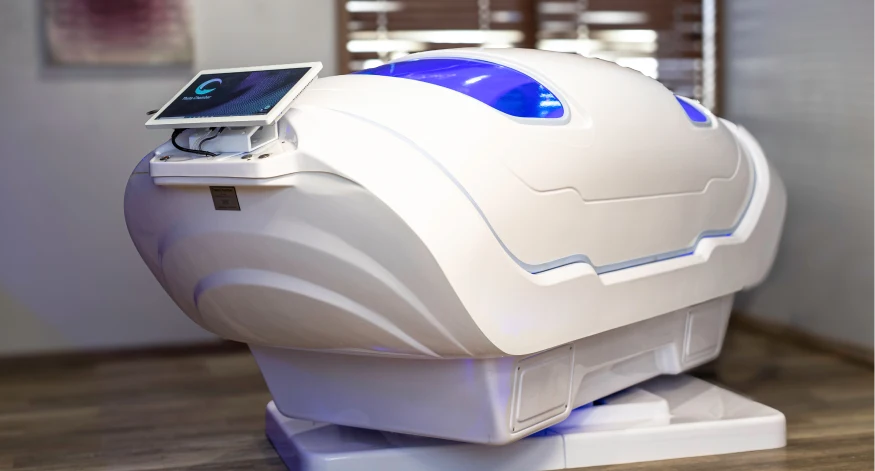
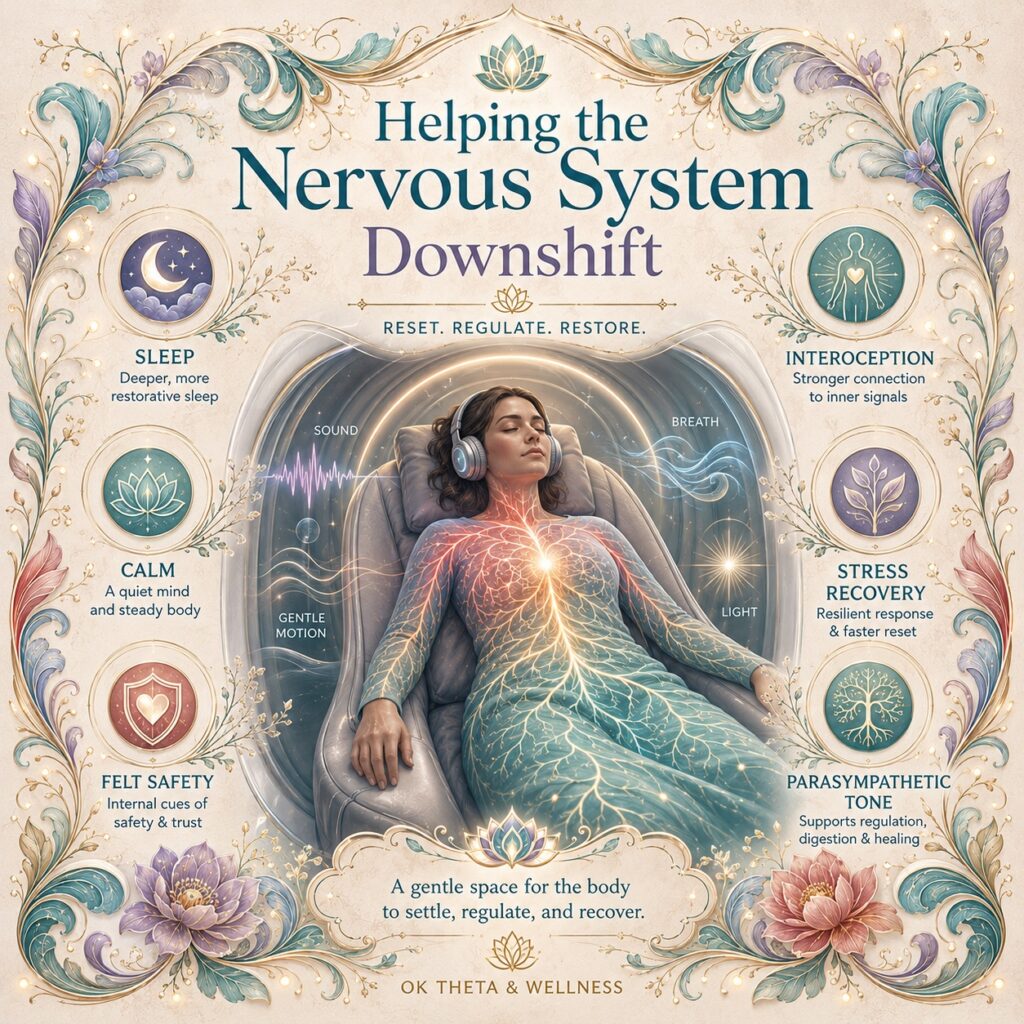
The Theta Chamber approaches Long COVID support from a different direction. Many people with Long COVID do not just feel tired. They feel activated and exhausted but unable to relax. Their sleep may be light, or their body may feel braced. They may feel overstimulated by noise, light, social interaction, or a busy day. Often they may feel like their nervous system lost the ability to downshift. That is where the Theta Chamber becomes interesting.
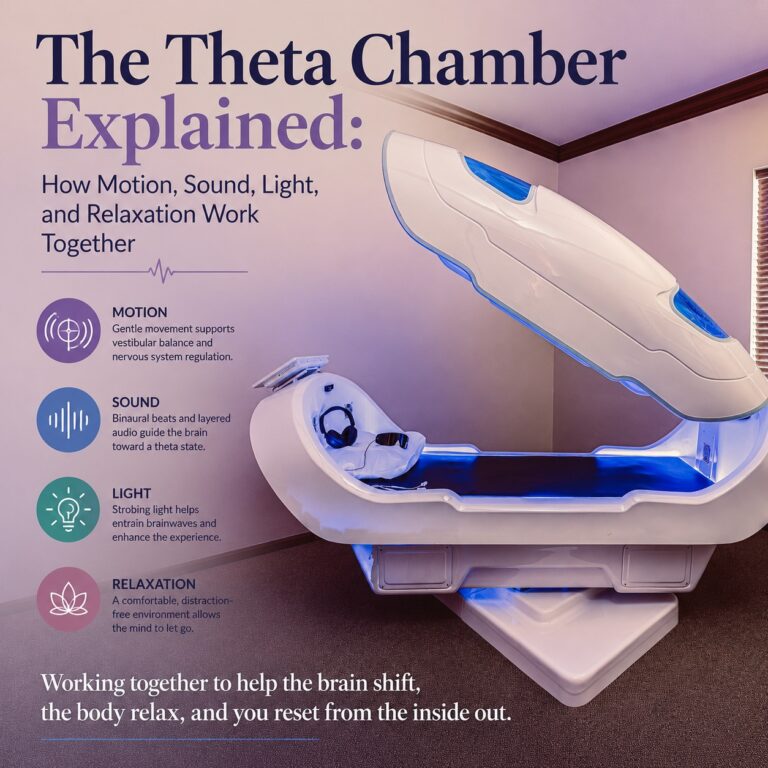
The Theta Chamber uses rhythmic sensory input, including gentle motion, light, sound, and other supportive technologies. The goal is to help guide the brain and body toward a calmer state, often associated with theta brainwave activity, relaxation, internal awareness, and nervous system downshifting. I do not think of the Theta Chamber as simply “relaxation.” Relaxation is part of it, but the deeper goal is regulation.
For many people, especially those who have been living in a prolonged stress physiology pattern, the body has to relearn what safety feels like. Not as an idea, or as a motivational phrase taped to the bathroom mirror, but as a felt state. A body stuck in high alert often burns through energy inefficiently. Muscles guard. Sleep becomes shallow. Breath patterns change. Pain sensitivity may increase. The person may become more reactive to stress and less able to return to baseline.
In that context, repeated theta sessions may give the nervous system a structured opportunity to practice calm. The person does not have to force it. They are not being asked to meditate perfectly or “clear their mind.” The environment does some of the rhythmic heavy lifting. For Long COVID support, I think the Theta Chamber may be especially relevant for people who describe:
- Poor sleep
- Feeling wired but tired
- Stress sensitivity
- Muscle guarding
- Brain fog that worsens with overwhelm
- A body that feels stuck in fight-or-flight
- Difficulty relaxing even when exhausted
- Poor recovery after busy days
- Symptoms that flare with poor sleep or emotional stress
The body cannot rebuild capacity if it never gets out of alarm mode. Sometimes the first step is helping the system remember how to stand down rather than pushing harder.
Morph/PENS: Ear-Based Neuromodulation and the Autonomic Nervous System
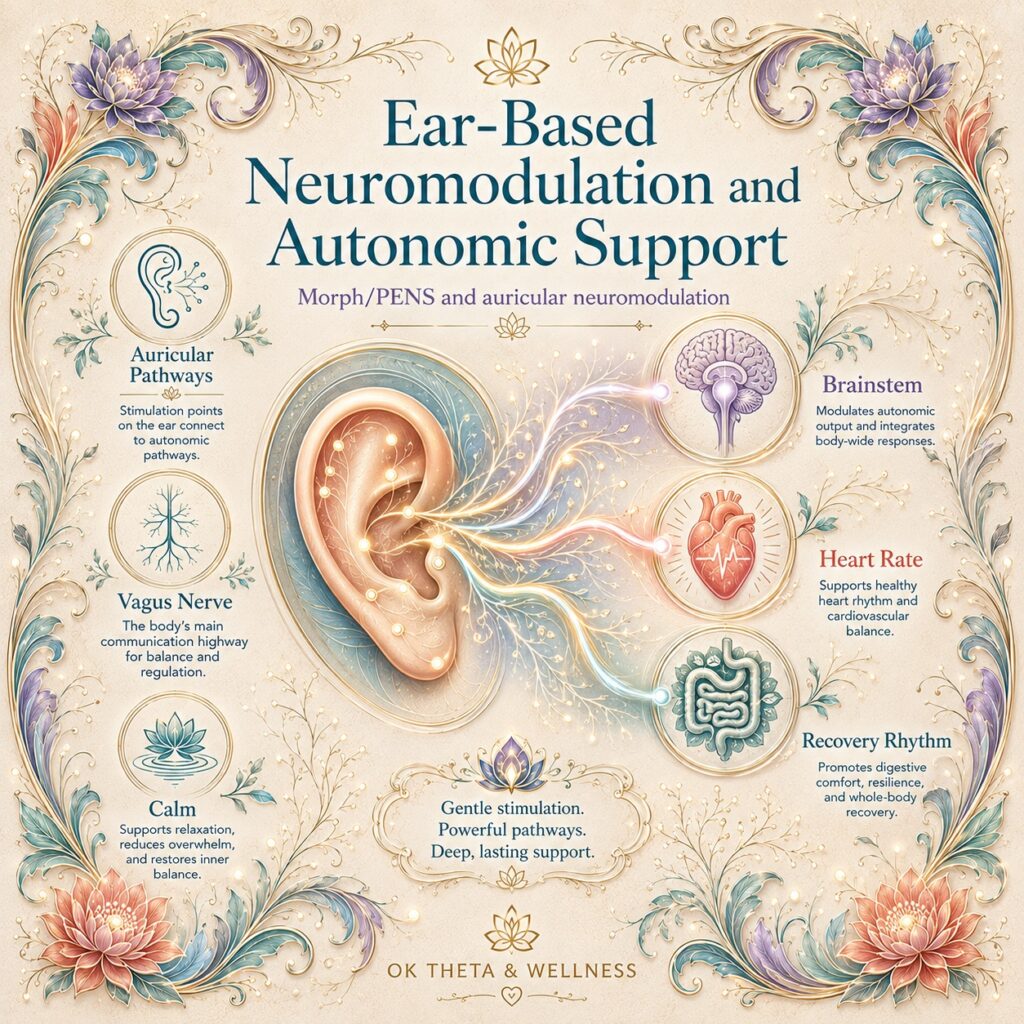
Morph/PENS adds a third layer to this conversation: auricular neuromodulation. The ear is neurologically interesting because it contains input from several nerve branches (e.g., vagus nerve), including pathways that communicate with the autonomic nervous system. Some forms of ear-based neuromodulation are studied under the broader category of transcutaneous auricular vagus nerve stimulation, or taVNS.
I am careful with the language here because Morph/PENS is its own device and should not be treated as identical to every taVNS study. But the larger scientific conversation around auricular stimulation, vagal pathways, autonomic regulation, inflammation, and brain-body communication is highly relevant.
Why does this matter for Long COVID? Because dysautonomia is, at its core, a regulation problem. If the body is struggling to shift between activation and recovery, if heart rate and vascular tone feel unstable, if sleep and stress recovery are disrupted, then autonomic signaling becomes an important target for support.
Morph/PENS is a wearable device that stimulates points around the ear over an extended period. In practice, many people describe the experience in terms of calm, better sleep, reduced pain sensitivity, or a faster return to baseline. Responses vary, of course. They always do. The nervous system is not a vending machine where we insert one protocol and receive one predictable snack. But as part of a Long COVID and dysautonomia support plan, Morph/PENS makes sense to me because it addresses the signaling side of regulation.
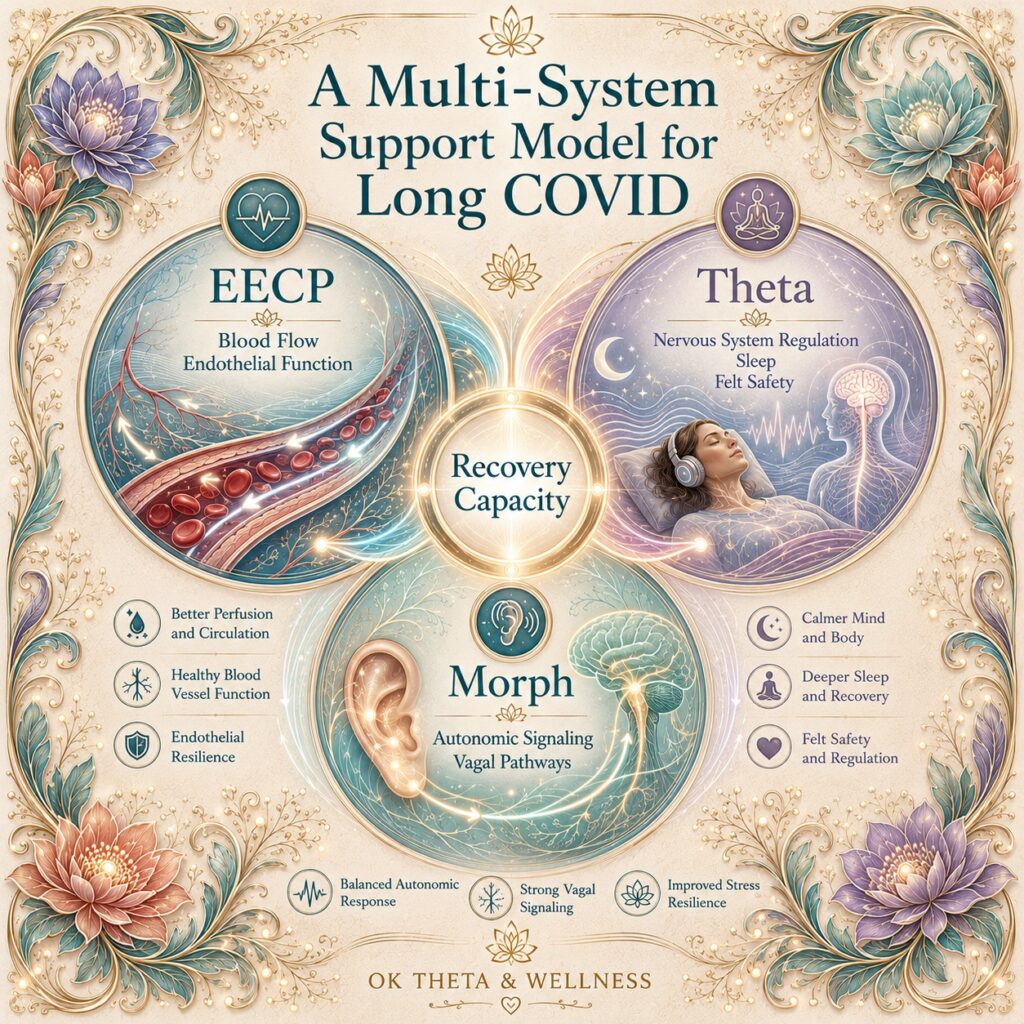
- EECP supports the vascular delivery system.
- Theta supports central nervous system downshifting and felt safety.
- Morph/PENS supports autonomic signaling through ear-based neuromodulation.
Those are different doors into the same house.
Why These Modalities Belong in the Same Conversation
Long COVID can affect people in layered ways. One person may be dominated by POTS-like symptoms. Another may have crushing fatigue and brain fog, or feel mostly wired, inflamed, and unable to sleep. Others may crash after exertion, or feel cognitively dulled and physically underpowered.
That is why I like a multi-system support model. I do not want to chase every symptom as though each one lives in its own tiny apartment. I want to ask what systems may be struggling underneath those symptoms.
- Is there an autonomic regulation problem?
- Is there a vascular or endothelial function problem?
- Is the person sleeping poorly?
- Is the body stuck in high alert?
- Is brain fog worse when upright or after exertion?
- Is the person crashing after ordinary activity?
- Is there poor recovery capacity?
- Is the body unable to return to baseline?
When we ask those questions, EECP, Theta, and Morph/PENS begin to make sense together.
- EECP may support circulation, endothelial function, and perfusion reserve.
- Theta may support nervous system downshifting, sleep, interoception, and parasympathetic recovery.
- Morph/PENS may support autonomic signaling through ear-based neuromodulation.
That combination does not pretend Long COVID is simple. It respects the complexity.
Who Might Consider Long COVID and Dysautonomia Support?
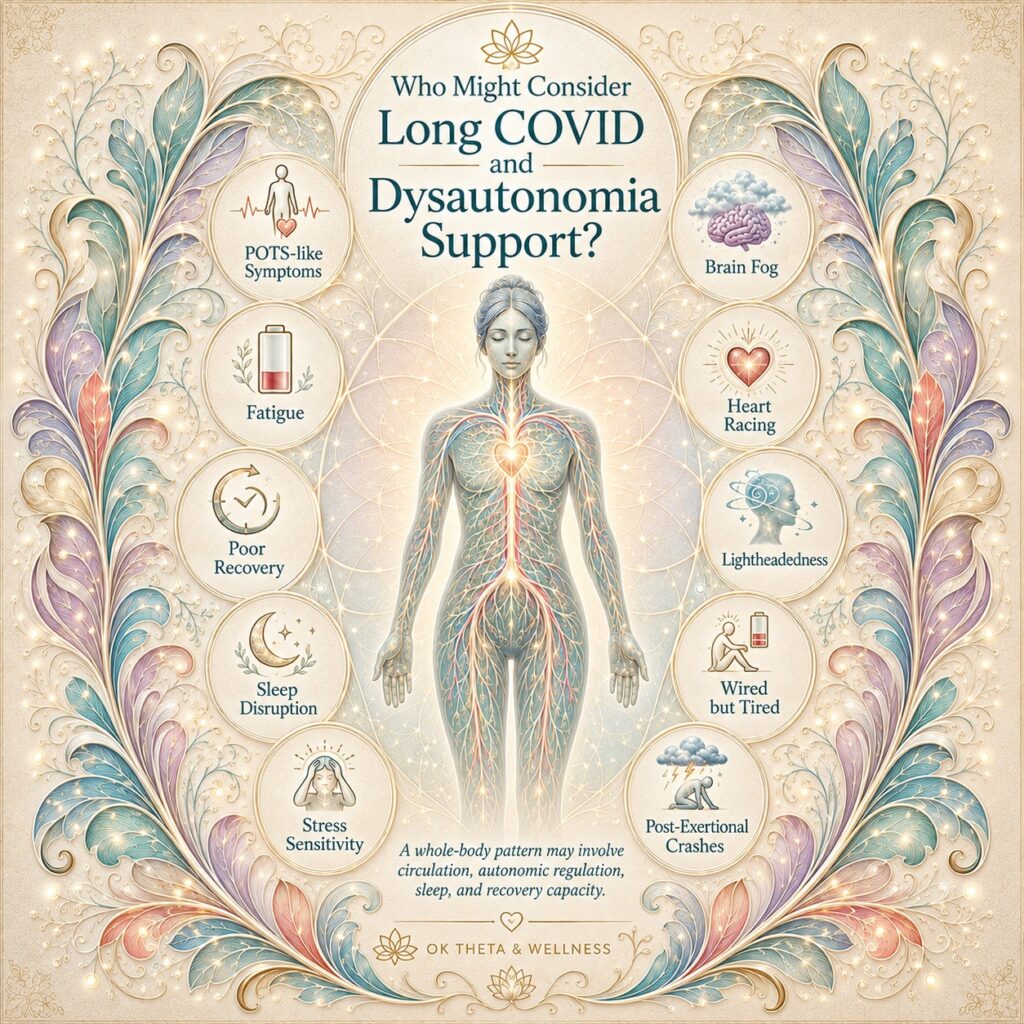
This kind of support may be worth considering for people dealing with Long COVID symptoms such as:
- POTS-like symptoms
- Heart racing with standing
- Dizziness or lightheadedness
- Brain fog
- Fatigue
- Exercise intolerance
- Poor recovery after activity
- Post-exertional crashes
- Sleep disruption
- Feeling wired but tired
- Stress sensitivity
- Temperature intolerance
- Heavy limbs
- Reduced stamina
- Cold hands or feet
- A body that feels stuck in high alert
- Symptoms that flare after overdoing it
I also think this conversation may be useful for people who have been told their basic testing looks normal, but they still know something is off. That does not mean testing is unimportant, but it could mean that the absence of obvious findings on basic testing does not always capture autonomic instability, endothelial dysfunction, poor recovery capacity, or nervous system sensitization.
At the same time, Long COVID symptoms deserve medical evaluation. Chest pain, fainting, severe shortness of breath, new neurologic symptoms, uncontrolled heart rhythm issues, or sudden worsening symptoms should not be brushed aside. Supportive therapies should fit into appropriate medical care, not replace it.
What I Would Track Over Time
With Long COVID and dysautonomia support, I like tracking function more than chasing one perfect symptom score. Useful questions include:
- Am I standing more comfortably?
- Is my heart rate less reactive?
- Is my brain fog less disruptive?
- Do I recover faster after activity?
- Are my crashes less intense?
- Are my good days lasting longer?
- Is my sleep improving?
- Do I feel less wired at night?
- Is my stamina improving?
- Am I less lightheaded?
- Can I tolerate errands with fewer setbacks?
- Is my body less tense?
- Am I returning to baseline faster after stress or exertion?
- Can I participate in more of the life I actually want?
Those are meaningful markers. Recovery does not always arrive as a trumpet blast. Sometimes it shows up as being able to unload the groceries without needing to lie down, or walking through a store without the internal alarm bells. Other times it is reading a page and actually remembering it, or sleeping through the night and waking up with a body that feels less hostile. Small changes matter when they point toward better regulation.

Grounded Expectations
I want to be very clear: Long COVID is complicated. People do not respond the same way. Some people improve steadily. Others improve in waves. Some feel better in one area before another. Others need pacing, hydration strategies, medication management, physical therapy, medical testing, nutrition support, sleep support, or specialty care. Supportive modalities are not a substitute for appropriate medical evaluation.
I also think it is important to respect post-exertional malaise. Some people with Long COVID cannot simply “push through.” Pushing harder can backfire. For those individuals, recovery may require careful pacing and a slower approach to rebuilding capacity. I prefer the word support.
At OK Theta & Wellness, rather than make promises, my goal is to support the conditions that may help the body regulate:
- Better blood flow.
- Better autonomic balance.
- Better sleep.
- Better nervous system recovery.
- Better return to baseline.
- Better capacity over time.
Rebuilding Capacity One Regulated Step at a Time
Long COVID can make people feel like their body has become unpredictable. The things that used to be automatic suddenly require negotiation. Standing. Thinking. Sleeping. Walking. Working. Exercising. Socializing. Recovering. That can be discouraging. But I do believe there is room for a more complete conversation. One that includes the nervous system, the vascular system, the endothelium, the brain, the vagus nerve, sleep, stress physiology, and the body’s ability to return to baseline.
For me, EECP, Theta, and Morph/PENS each offer a different way to support that larger recovery conversation.
- EECP speaks to circulation and vascular function.
- Theta speaks to central nervous system regulation and felt safety.
- Morph/PENS speaks to autonomic signaling and neuromodulation.
Together, they create a practical framework for Long COVID dysautonomia support, especially for people dealing with POTS-like symptoms, brain fog, fatigue, poor recovery, and a body that feels stuck in high alert. If you are dealing with Long COVID symptoms, POTS-like symptoms, brain fog, fatigue, or poor recovery after activity, OK Theta & Wellness offers supportive options designed to help the body regulate, recover, and rebuild capacity over time. Contact us for a consultation.
References
A 2026 review describes Long COVID as involving multiple proposed mechanisms, including endothelial dysfunction, viral reactivation, mast cell activation, immune exhaustion, and autonomic dysfunction, with autonomic nervous system dysfunction emerging as a prevalent abnormality. (PMC)
A 2025 article on cerebral blood flow in orthostatic intolerance notes that Long COVID symptoms overlapping with orthostatic intolerance include fatigue, dyspnea, headache, palpitations, and brain fog, and discusses the relevance of blood-flow physiology in this symptom cluster. (AHA Journals)
A 2024 study on EECP in Long COVID reported improved quality of life and stated that 78% of participants returned to work, while noting the need for further investigation. (PMC)
A 2024 pilot study of transcutaneous vagus nerve stimulation in female Long COVID patients found preliminary evidence of potential benefit and called for larger randomized controlled trials. (PMC)
A 2026 Scientific Reports pilot study reported that transcutaneous auricular vagus nerve stimulation improved dysautonomia, PTSD symptoms, and cognitive impairment in Long COVID patients, though this remains emerging evidence. (pubmed.ncbi.nlm.nih.gov)