
Wired but Tired: Fatigue, Stress, Poor Sleep, and Nervous System Support
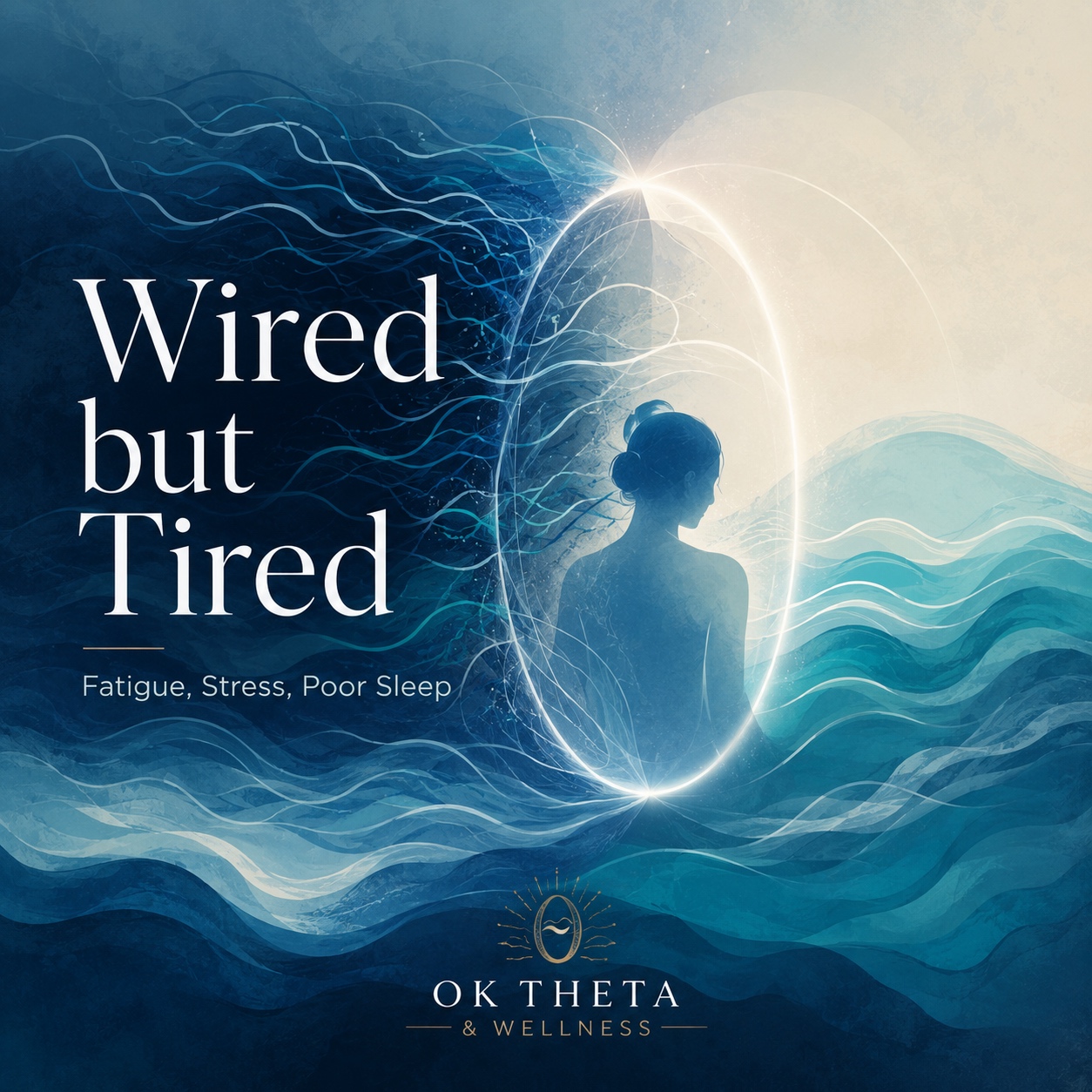
There is a particular pattern I hear about often. A person is exhausted, but they cannot fully rest. Their body feels worn down, but their mind keeps running. They may feel tired during the day, but when bedtime comes, their system does not settle. They may finally fall asleep, but the sleep feels light, broken, or unrefreshing. They are tired, but not relaxed. That is the pattern many people describe as “wired but tired.”
I do not use that phrase as a formal diagnosis. It is not meant to replace a medical evaluation, and persistent or unexplained fatigue should always be taken seriously. But as a real-world description, “wired but tired” captures something important. It points to a state where the body feels depleted, yet the nervous system still seems to be running in high gear.
At OK Theta & Wellness, this is one of the patterns we think about often because it connects so many things people struggle with: fatigue, stress, poor sleep, muscle tension, pain sensitivity, brain fog, irritability, and the feeling that the body cannot fully recover. The person may not simply need “more energy.” Sometimes, the deeper issue is that the body has forgotten how to downshift.
Spin into Wellness in Oklahoma’s First Theta Chamber!
What Does “Wired but Tired” Feel Like?
People describe this pattern in different ways. Some say they feel exhausted all day but restless at night. Some describe racing thoughts, shallow breathing, or a body that feels tense even when nothing obvious is happening. Others notice they are more sensitive than usual. Noise feels louder. Tasks feel heavier. Minor problems feel bigger. Their patience runs thin. Their body feels guarded, like it is preparing for something even when there is no immediate threat.
Common descriptions include:
- Trouble falling asleep
- Waking up during the night
- Feeling tired even after sleep
- Brain fog
- Afternoon crashes
- Muscle tension
- Jaw, neck, shoulder, or back tightness
- Restlessness
- Irritability
- Feeling overstimulated
- Relying heavily on caffeine
- Pain that worsens with stress or poor sleep
- Difficulty recovering after busy or stressful days
One way I think about it is this: The body may be tired, but the alarm system is still on. That is a difficult place to live. It can make a person feel like they are failing at rest. They may have time to relax, but their body does not accept the invitation. They may go to bed early, but their nervous system continues humming like a refrigerator in the next room.

Fatigue Is Not Always Just an Energy Problem
When people feel tired, it is natural to think in terms of energy:
- Do I need more sleep?
- Do I need more vitamins?
- Do I need to push harder?
- Do I need to exercise more?
- Do I need to rest more?
Sometimes the answer is straightforward. A person may be sleep deprived, dehydrated, undernourished, overworked, or recovering from illness. Medical issues such as anemia, thyroid problems, sleep apnea, heart concerns, autoimmune disease, infection, medication effects, or hormonal changes can also contribute to fatigue. Those possibilities matter and should not be brushed aside.
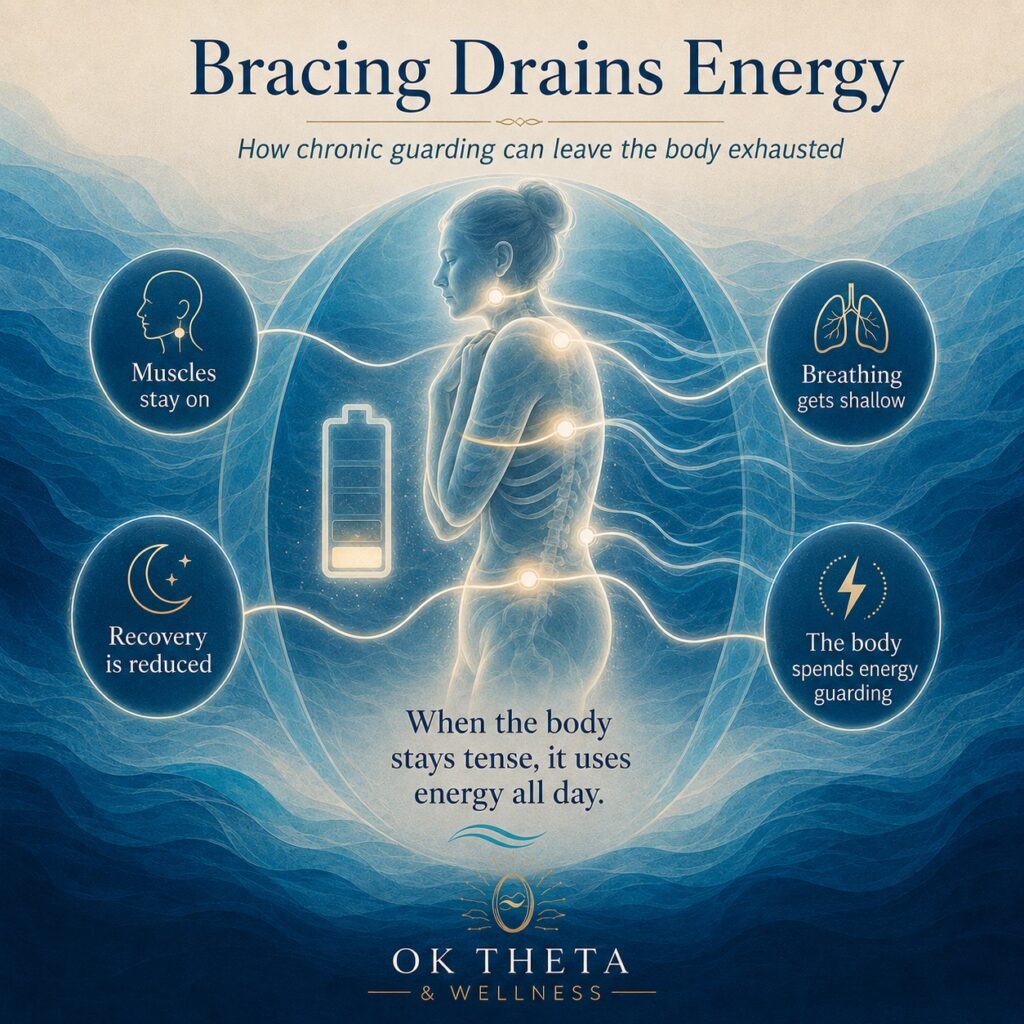
But there is another layer that is easy to miss. Sometimes fatigue is less about a lack of energy, and more about the way the nervous system is spending energy. For instance, a body in a chronic stress state is not at rest. Even if the person is sitting still, the system may be scanning, bracing, anticipating, and guarding. That takes energy, changes breathing, affects sleep, tightens muscles, and can increase pain sensitivity. It can make normal life feel heavier than it should.
In that situation, the goal is not simply to stimulate the body into having more energy. The first step may be helping the body feel safe enough to recover. This is an important distinction. Usually people do not need more pressure, but they might just need a better off-ramp.

The Stress-Sleep-Fatigue Loop
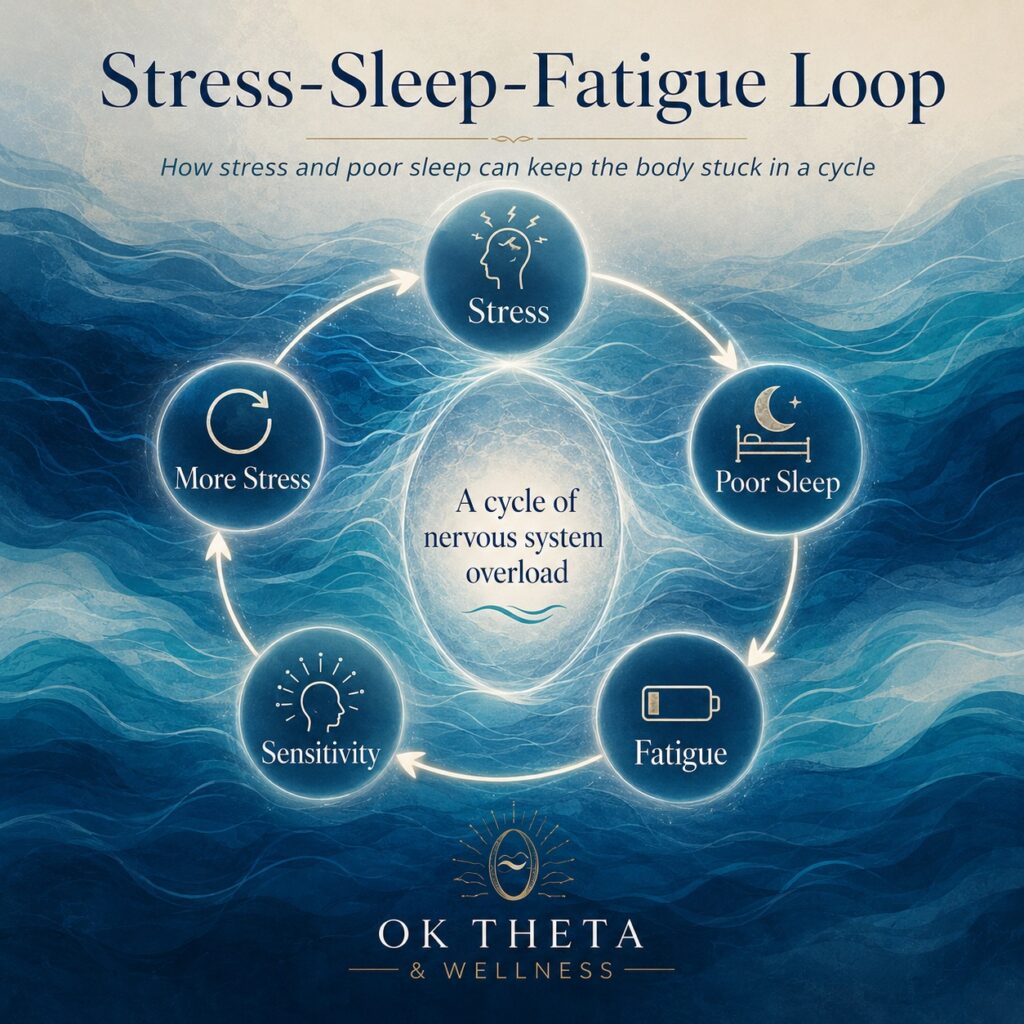
Stress, poor sleep, and fatigue often feed each other. Stress keeps the nervous system alert. Alertness makes sleep lighter. Poor sleep reduces recovery. Low recovery makes stress feel bigger. The body becomes more reactive. Then the next night’s sleep suffers again. Round and round it goes.
This is why people can feel stuck. They may try to solve the fatigue by sleeping more, but their sleep quality is poor. They may try to reduce stress, but they are too tired to use their normal coping tools. They may try to exercise, but their recovery is limited. They may try to relax, but their body will not soften. “Wired but tired” is often not one broken switch. It is a loop.
And when a loop has been running for a long time, it usually needs to be approached from more than one direction. That is the reason I like a multi-modal approach. The brain, body, sleep cycle, pain system, hydration status, nutrient reserves, and stress response are not separate kingdoms. They are more like neighboring rooms in the same house. When one room is on fire, everyone smells smoke.
Why the Body May Stay Braced
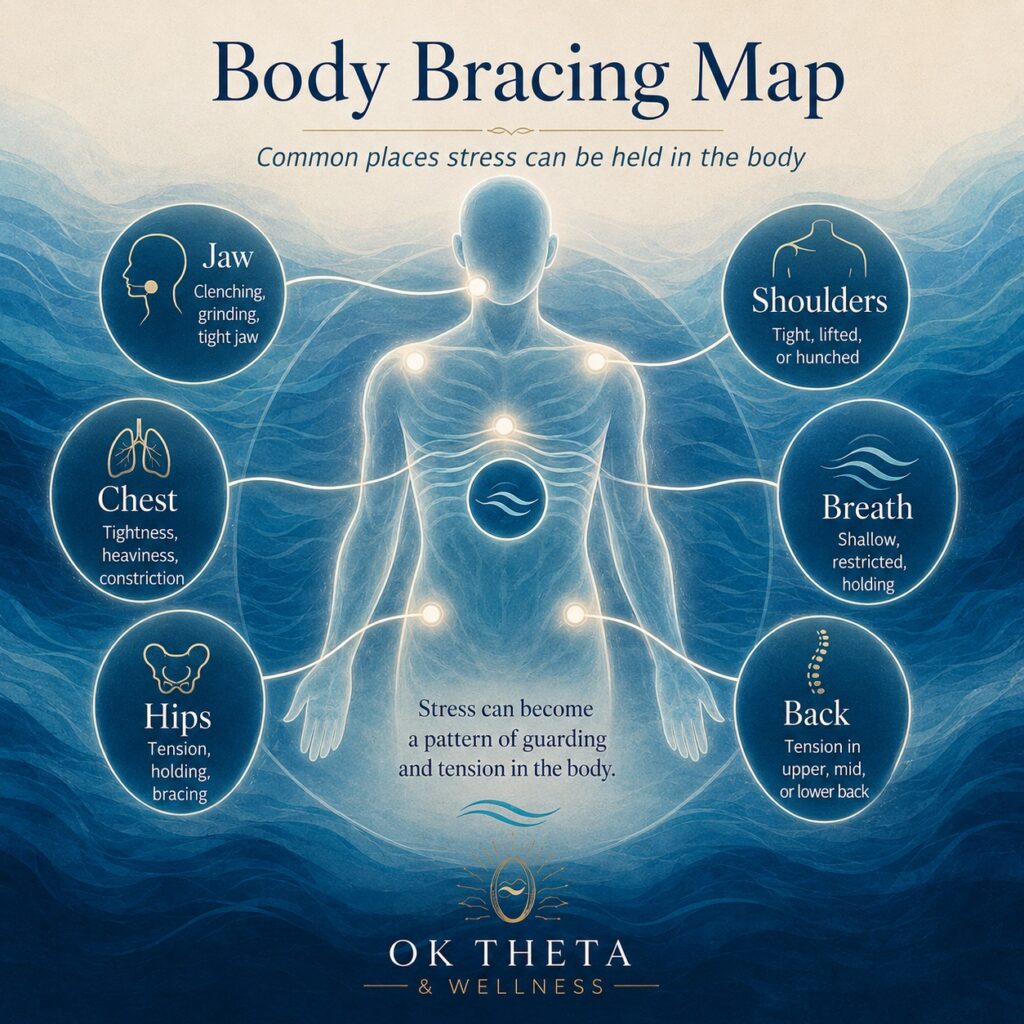
Stress does not only live in our thoughts. It shows up in the body. I see this all the time. People hold stress in their jaw, neck, shoulders, chest, hips, low back, diaphragm, posture, and breathing pattern. Sometimes the person knows they are tense. Other times, they do not realize how much effort their body is using until they finally experience a moment of release.
The body can become braced without asking permission. This bracing may have started for a good reason. Pain, injury, emotional stress, poor sleep, trauma, work pressure, caregiving, illness, or prolonged uncertainty can all teach the body to stay guarded. The problem is that guarding can become the default setting.
Over time, chronic bracing can drain energy. It can make movement less efficient, pain feel louder, breathing more shallow, and can reinforce the feeling that the body is not safe enough to rest. In a wired-but-tired state, the body is often carrying the day long after the day is over. That is why I think body-based therapies matter. You cannot always think your way out of a pattern that the body is physically holding.
Theta Chamber: Helping the Brain Practice the Downshift
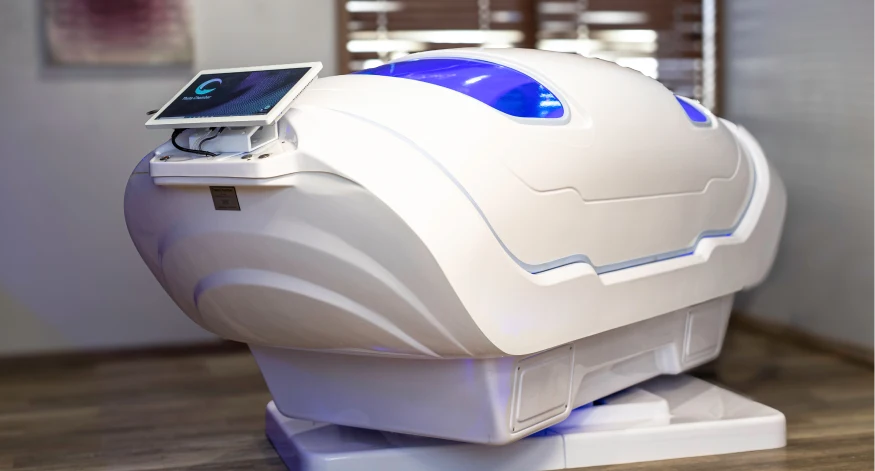
The Theta Chamber is one of the main tools we use at OK Theta & Wellness for people who feel stuck in high alert. The way I think about the Theta Chamber is simple: it creates a structured environment where the brain and body are given rhythmic input that may help support relaxation, internal awareness, and nervous system downshifting.
The session includes gentle rotation, light stimulation through goggles, sound, binaural beats, PEMF, and cranial electrotherapy stimulation. The goal is not to force the body into relaxation. The goal is to create conditions where the body has a better chance of remembering how. For the wired-but-tired person, this can be especially relevant.
Many people are not lacking the desire to rest. In fact, they desperately want rest. But their system is still oriented toward vigilance. They may lie in bed with a tired body and an alert mind, or sit down to relax and immediately feel restless. They may have lost access to the internal state that allows recovery to begin.
The Theta Chamber may help support that transition by giving the nervous system a repeated experience of slowing down. Some people become deeply relaxed. Some feel their breathing shift. Some notice that they feel calmer afterward. Some sleep during the session. Others remain aware but feel removed from the usual mental noise. I often describe it as practicing the downshift. Just like the body can learn to brace, it may also be able to relearn how to soften.

Morph/PENS/PNFS: Supporting Pain Signaling and Autonomic Balance
Another modality that fits this conversation is Morph. Morph is a wearable auricular neuromodulation device placed around the ear. The ear is interesting because it contains nerve branches that communicate with broader systems involved in pain modulation, autonomic regulation, and stress signaling. For someone who is wired but tired, this matters because the nervous system can become noisy.
Pain, poor sleep, stress, and high alertness can amplify each other. Pain can make sleep worse. Poor sleep can make pain louder. Stress can make the body more sensitive. Sensitivity can make the person feel less safe in their own body. Then the cycle keeps turning. Morph may be considered as a supportive option when pain sensitivity, sleep disruption, stress reactivity, or difficulty returning to baseline are part of the picture.
I do not think of it as simply a pain device. I think of it as one possible way to support the nervous system when the volume knob seems to be turned up too high. For some people, “wired but tired” feels like static in the background. Morph may help support the body’s ability to quiet some of that static so the person has a better chance of settling.

Massage and Assisted Stretching: Helping the Body Stop Holding the Day
Massage and assisted stretching are also important because stress often becomes physical. At OK Theta & Wellness, this work may include therapeutic massage, Thai massage-inspired movement, and assisted stretching. I like that combination because it does not treat the body like a machine with one tight bolt. It invites the body back into rhythm, movement, breath, and awareness.
For the wired-but-tired person, massage is not just about sore muscles. It may help the body receive a message it has been waiting for: You do not have to keep bracing. This can be very powerful. When the jaw softens, the shoulders drop, the breath deepens, or the hips release even slightly, the person may realize how much tension they were carrying. This does not mean every problem disappears in one session. But it may create a doorway.
Assisted stretching can add another layer. Many people who live under stress move in guarded ways. They avoid range of motion, compensate, and protect where they hurt. Over time, the body’s movement vocabulary gets smaller. Guided stretching can help the person explore motion in a way that feels supported instead of forced. A wired nervous system often does not respond well to being bullied. It responds better to being invited. Massage and assisted stretching can help bring the person out of their head and back into the body in a safer, more grounded way.
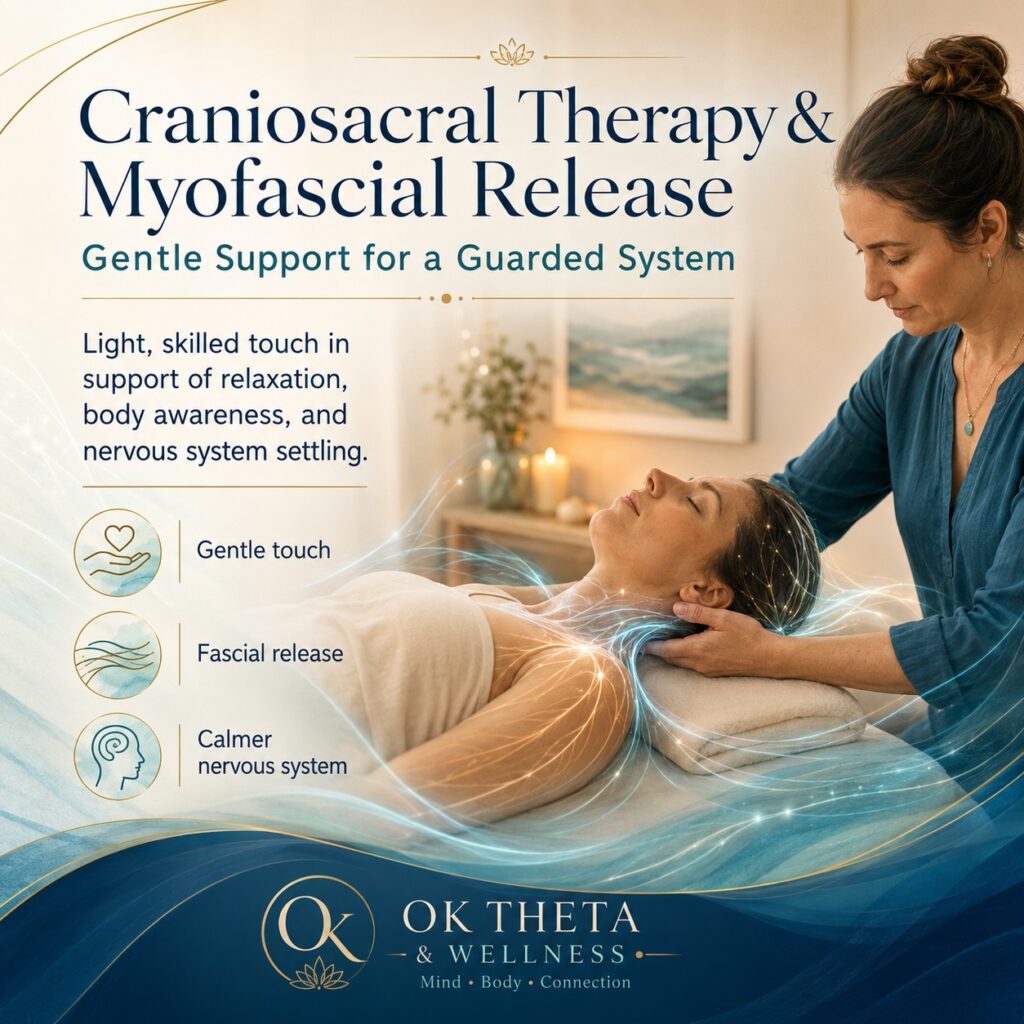
Craniosacral Therapy and Myofascial Release: Gentle Support for a Guarded System
Another supportive option we offer at OK Theta & Wellness is craniosacral therapy and myofascial release, performed by our physical therapist. I think this fits beautifully into the “wired but tired” conversation because not every overloaded body responds well to force. Sometimes the nervous system is already so guarded that aggressive pressure, intense stretching, or a “push through it” approach can feel like too much.
Myofascial release focuses on the fascia, the connective tissue network that surrounds and supports muscles, joints, nerves, and organs. When the body has been under stress, recovering from injury, or living with chronic tension, the fascia can become restricted or guarded. This may contribute to stiffness, discomfort, limited movement, or a sense that the body cannot fully let go.
Craniosacral therapy is even more subtle. It uses very light touch and careful attention to the body’s rhythms, tension, and protective patterns. Many people experience it as deeply calming. For a wired-but-tired person, that matters. A body that has been living in high alert may need a quiet, non-threatening input before it is willing to release.
I like that this work is performed by a physical therapist because it brings together body awareness, anatomy, movement understanding, and nervous system sensitivity. It is not just relaxation for relaxation’s sake. It is a thoughtful way of helping the body explore safety, softness, and improved movement without demanding that it change faster than it is ready to change. For someone who is wired but tired, craniosacral therapy and myofascial release may help create the conditions for the body to stop defending and start recovering.
Infusion Support: Hydration, Nutrients, and Recovery Capacity
The tired side of “wired but tired” also deserves attention. Fatigue can be influenced by hydration, nutrient status, sleep quality, stress load, inflammation, metabolic demand, and recovery capacity. This is where IV infusion or intramuscular support may be considered as part of a broader wellness strategy.
At OK Theta & Wellness, infusion support may include options such as hydration, B vitamins, B12, magnesium, NAD+, glutathione, amino acids, trace minerals, and other nutrients depending on the person’s goals and appropriateness. Infusion support is not a replacement for sleep or nutrition, nor is it a shortcut around medical evaluation when fatigue is persistent, severe, or unexplained.
But for some people, nutrient and hydration support may be a useful part of the recovery picture. I think of this as supporting capacity. If the nervous system is working on downshifting, the body still needs resources. It needs hydration, nutrients, adequate sleep, and recovery time. It needs the basics, not in a boring way, but in a deeply biological way.
Sometimes people are trying to regulate a nervous system that is running on fumes. Infusion support may help some people feel more supported while they work on the larger pattern of stress, sleep, and recovery.
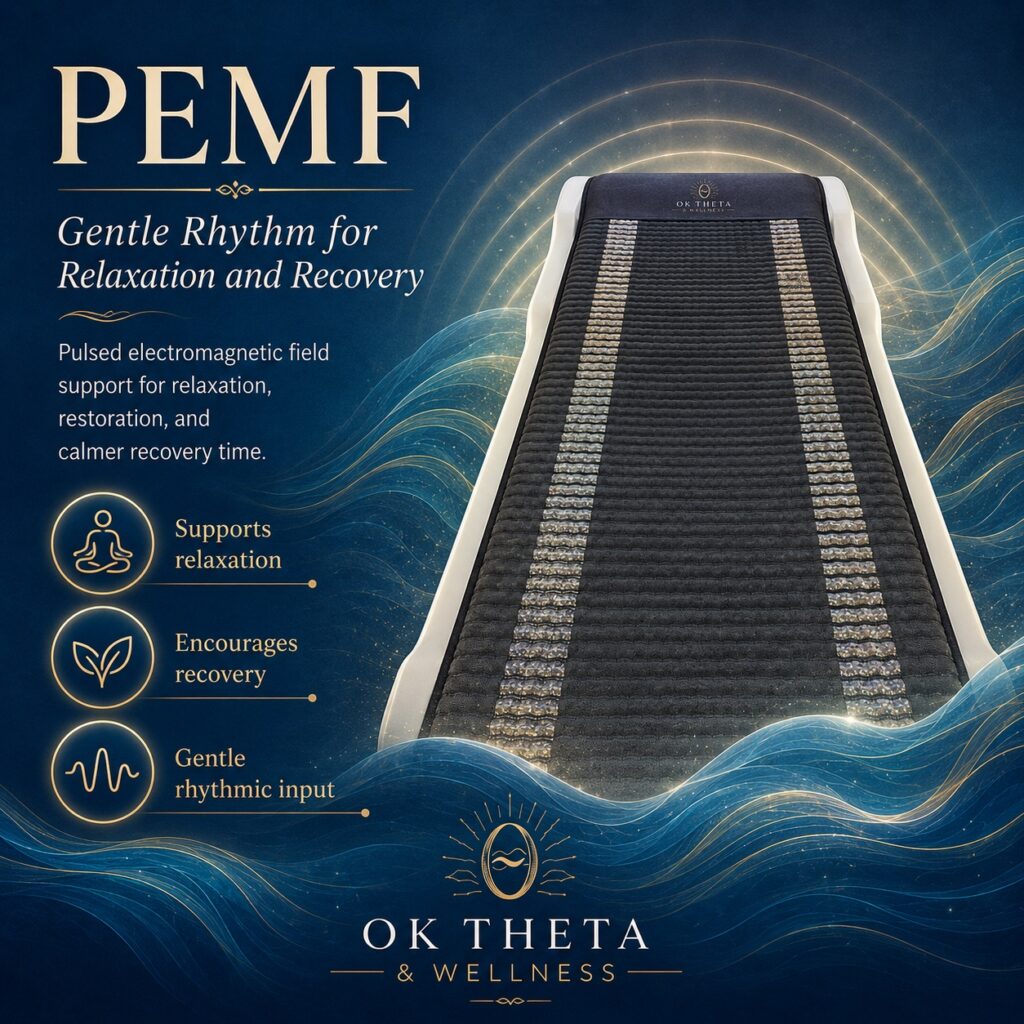
PEMF: Gentle Rhythm for Relaxation and Recovery
PEMF, or pulsed electromagnetic field therapy, is another supportive modality that fits into this conversation. The body is rhythmic by nature. Breath, heart rate, sleep, brainwave activity, and recovery itself all have and can respond to rhythm. When someone is wired but tired, those rhythms may feel disorganized. The person may be tired at the wrong times, alert at the wrong times, tense when they want to rest, and depleted when they need to function.
PEMF uses gentle pulsed electromagnetic fields and may be used to support relaxation, comfort, and recovery. At OK Theta & Wellness, PEMF can be part of the session environment and may be layered with other modalities depending on the person’s needs. I tend to think of PEMF as a quiet supportive tool. It is not always the loudest part of the plan, but it can contribute to the overall recovery setting. For the wired-but-tired person, the value may be in creating a softer physiological environment. Less push, more rhythm. Less demand, more support.
Why a Multi-Modal Approach Makes Sense
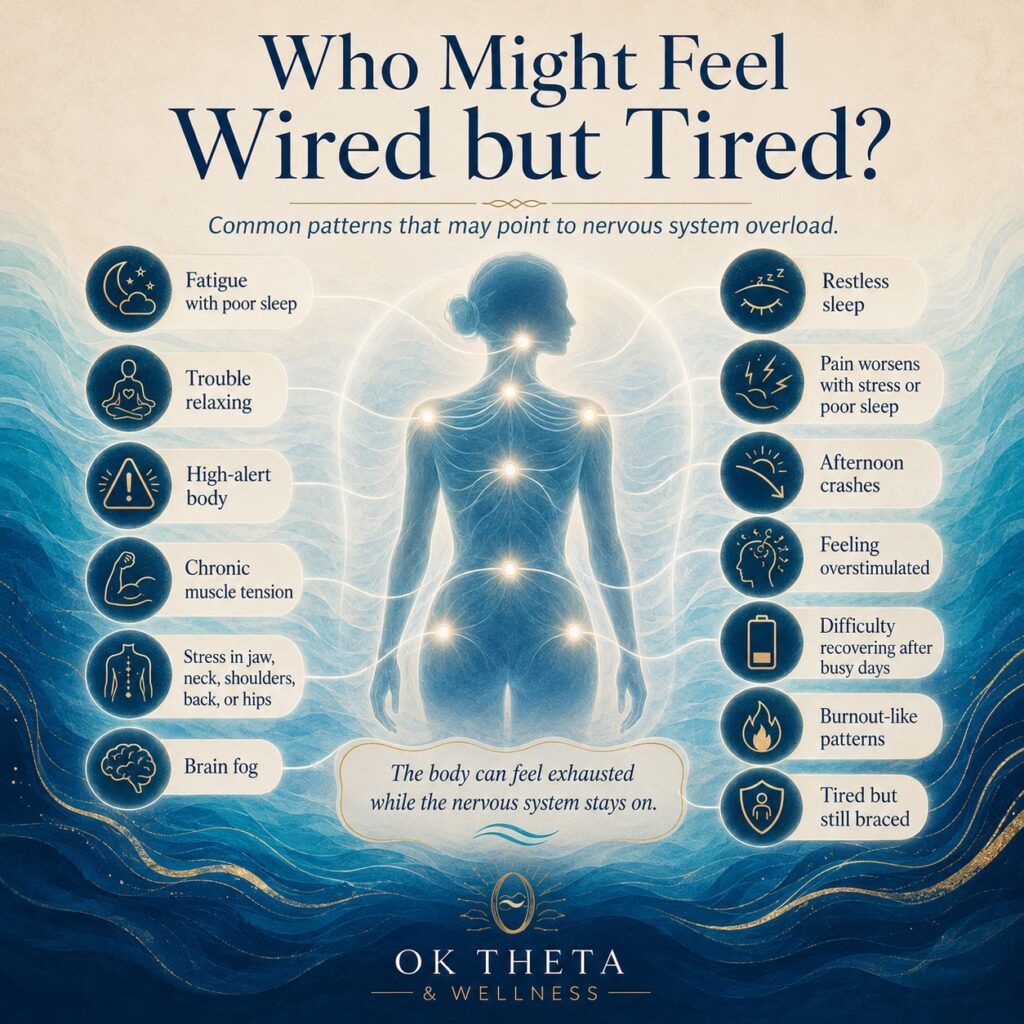
One reason I wanted to write about “wired but tired” is because it helps explain why we offer several different modalities at OK Theta & Wellness. We are not trying to throw random tools at one problem. We are trying to look at the pattern from multiple angles:
- Theta may support the brain’s downshift.
- Morph/PENS may support pain signaling and autonomic balance.
- Massage and assisted stretching may help the body release bracing.
- Craniosacral therapy and Myofascial release may support relaxation and nervous system settling.
- Infusion support may help with hydration, nutrients, and recovery capacity.
- PEMF may provide gentle rhythm-based support for relaxation and recovery.
Each modality is different, but they all orbit the same larger goal: helping the body move from survival mode toward recovery mode. That is the heart of this topic. When someone is wired but tired, they may not need one heroic intervention. They may need a series of supportive signals that all point in the same direction.
You are safe enough to soften, are allowed to rest, do not have to keep guarding, and can return to baseline. Recovery is possible. That may sound simple, but for an overloaded nervous system, simple is not always easy.
Who Might Consider Wired but Tired Support?
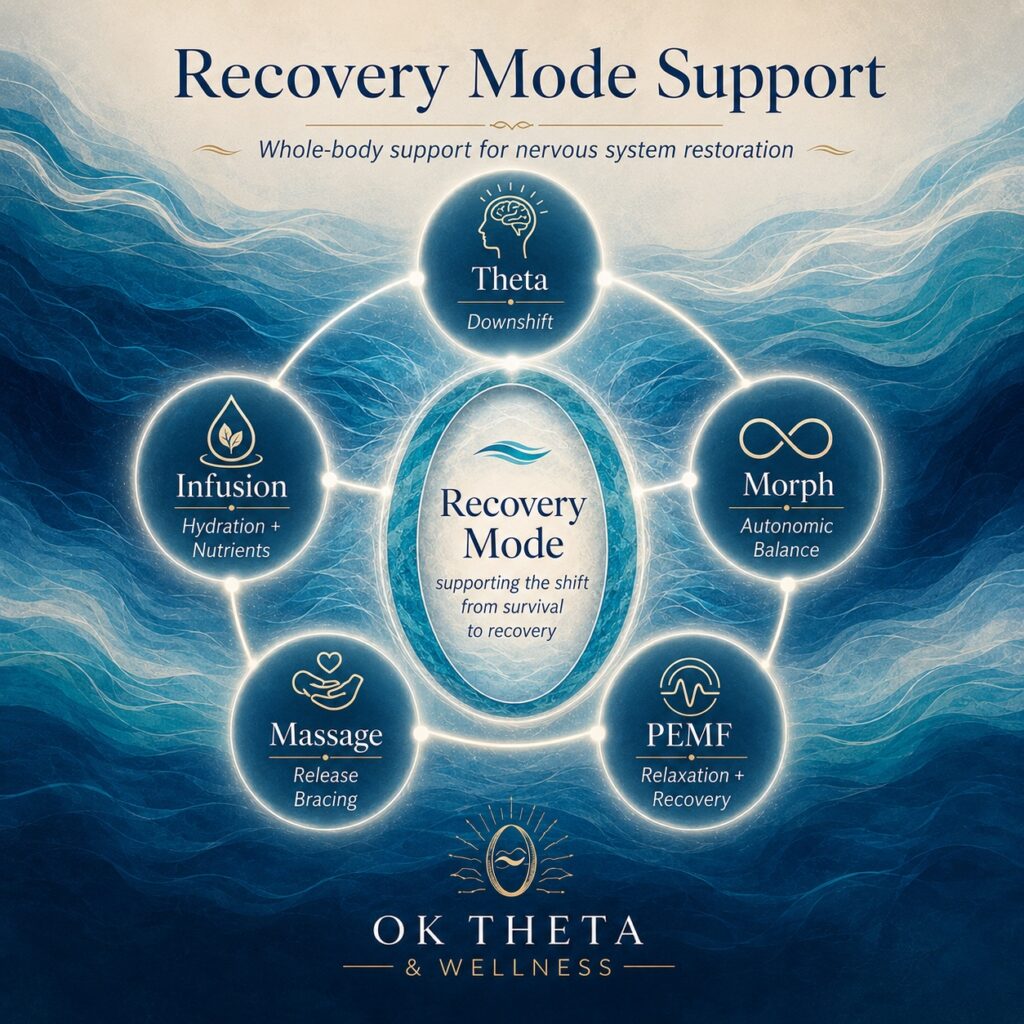
This type of support may be worth exploring for people who feel stuck in the overlap between fatigue, stress, poor sleep, and physical tension. You may relate to this pattern if you experience:
- Fatigue with poor sleep
- Trouble relaxing
- A body that feels stuck in high alert
- Chronic muscle tension
- Stress that shows up in the jaw, neck, shoulders, back, or hips
- Brain fog
- Restless sleep
- Pain that worsens with stress or poor sleep
- Afternoon crashes
- Feeling overstimulated
- Difficulty recovering after busy days
- Burnout-like patterns
- A sense that your body is tired but still braced
Again, I want to be clear: ongoing fatigue deserves thoughtful evaluation. Wellness support should not be used to ignore major medical causes of fatigue, chest symptoms, severe shortness of breath, fainting, unexplained weight loss, persistent fever, severe depression, or other concerning changes. But once appropriate medical concerns are being considered, there is still a lot of room to support the nervous system, sleep quality, body tension, and recovery capacity. That is where this conversation becomes practical.
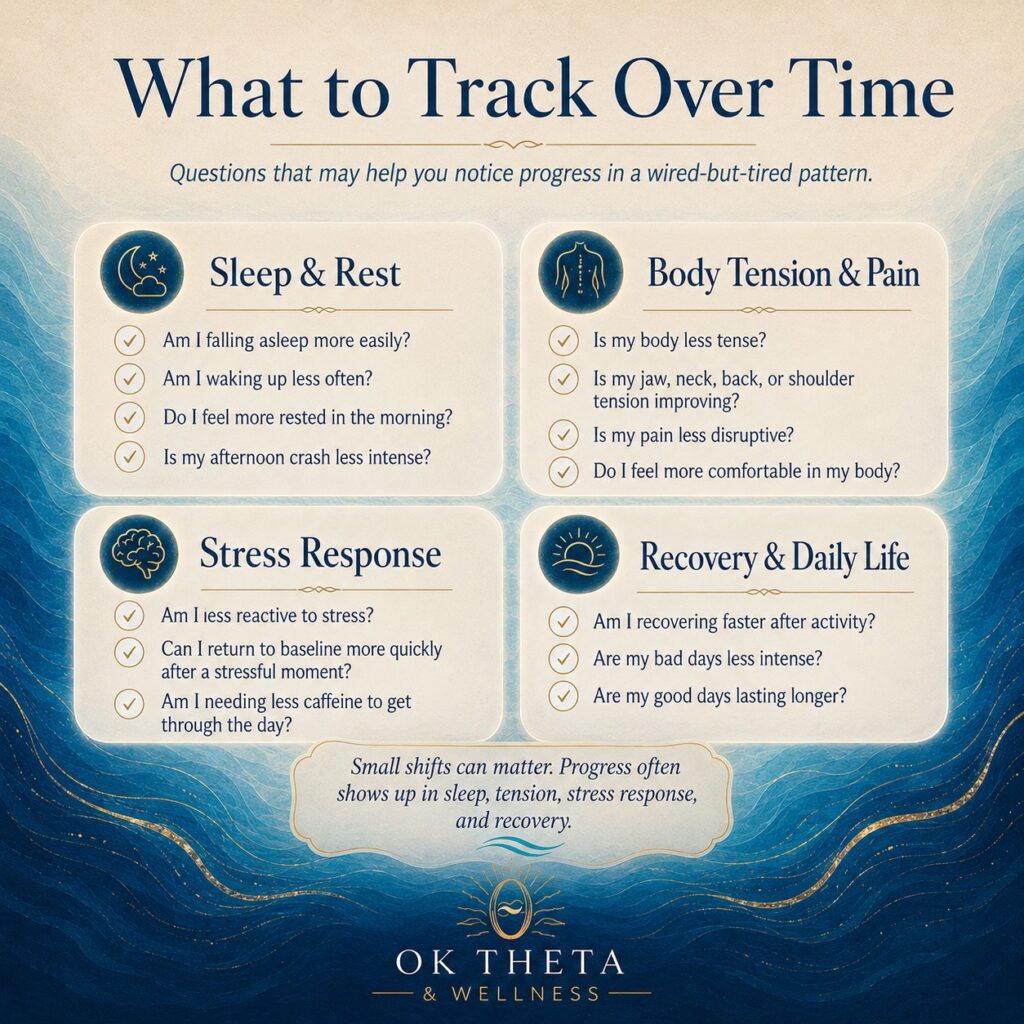
What Should You Track Over Time?
When someone is working on a wired-but-tired pattern, I do not think the only question should be, “Do I have more energy?” That question matters, but it is not the whole story.
I would also pay attention to questions like:
- Am I falling asleep more easily?
- Am I waking up less often?
- Do I feel more rested in the morning?
- Is my afternoon crash less intense?
- Is my body less tense?
- Is my jaw, neck, back, or shoulder tension improving?
- Am I less reactive to stress?
- Is my pain less disruptive?
- Am I needing less caffeine to get through the day?
- Am I recovering faster after activity?
- Are my bad days less intense?
- Are my good days lasting longer?
- Can I return to baseline more quickly after a stressful moment?
- Do I feel more comfortable in my body?
That last one is important. The goal is not just to perform better. The goal is to feel more at home in your own system.
Ready to Move Out of Survival Mode?
If you feel wired but tired, your body may not need another push. It may need support. You may need space for your nervous system to settle, your muscles to stop bracing, your sleep to become more restorative, and your body to begin recovering instead of constantly defending.
At OK Theta & Wellness, we approach fatigue, stress, poor sleep, and nervous system overload from multiple angles. The Theta Chamber may help support the brain’s downshift. Morph/PENS may support pain signaling and autonomic balance. Massage, assisted stretching, craniosacral therapy, and myofascial release may help the body release tension and guarding. Infusion support may help with hydration, nutrients, and recovery capacity. PEMF may provide gentle rhythm-based support for relaxation and restoration.
You do not have to figure out the whole pattern by yourself. If you are tired of feeling exhausted but unable to rest, we would be happy to help you explore which supportive options may fit your body, your stress load, and your recovery goals.
Schedule a visit with OK Theta & Wellness in Oklahoma City and take the next step toward moving from survival mode into recovery mode.