
Active Aging Support: How Circulation, Mobility, and Recovery Work Together
When people talk about longevity, they often talk about living longer. I understand that. More years matter. But when I think about longevity in a practical, real-life way, I think about something more immediate. This is active aging support:
- Can you still walk comfortably?
- Can you travel?
- Can you play with your kids or grandkids?
- Can you work in the yard, go to dinner, exercise, recover after a busy day, and wake up with enough energy to participate in life?
- Can you trust your body enough to keep using it?
Active aging is not only about adding years to life, but it is also about preserving the ability to use those years. It is about circulation, mobility, balance, sleep, tissue comfort, recovery capacity, and nervous system regulation. Lastly, it is about keeping the body adaptable enough that life does not slowly shrink down around pain, stiffness, fatigue, or fear of overdoing it.
At OK Theta & Wellness, this is one of the reasons we bring multiple modalities together. EECP, StemWave, infusion support, Theta Chamber sessions, and assisted stretching each support a different part of the active aging picture. None of these are magic. None of them replace good nutrition, movement, sleep, medical care, or common sense. But each may help support the body’s ability to stay active, recover, and participate more fully.
Spin into Wellness in Oklahoma’s First Theta Chamber!
Healthy Aging Should Feel Functional
One of the most important ideas in healthy aging is function. It is one thing to say, “I want to live longer.” It is another thing to say, “I want to stay capable.” That is the practical question.
- Am I able to get up from the floor?
- Can I walk through the grocery store without feeling wiped out?
- Am I able to climb stairs?
- Can I move my shoulder, hip, knee, back, or foot without constantly protecting it?
- How difficult is it for me to recover after a trip, a workout, a long workday, or a stressful season?
For many people, aging does not show up all at once. It whispers first with a little more stiffness in the morning, less confidence walking on uneven ground, or a nagging tendon or joint. Aging can get a little louder with slower recovery after activity, more fatigue in the afternoon, poorer sleep, or a sense that the body is becoming more guarded. The goal of active aging support is not to deny that the body changes over time. It is to support the systems that help the body keep adapting.
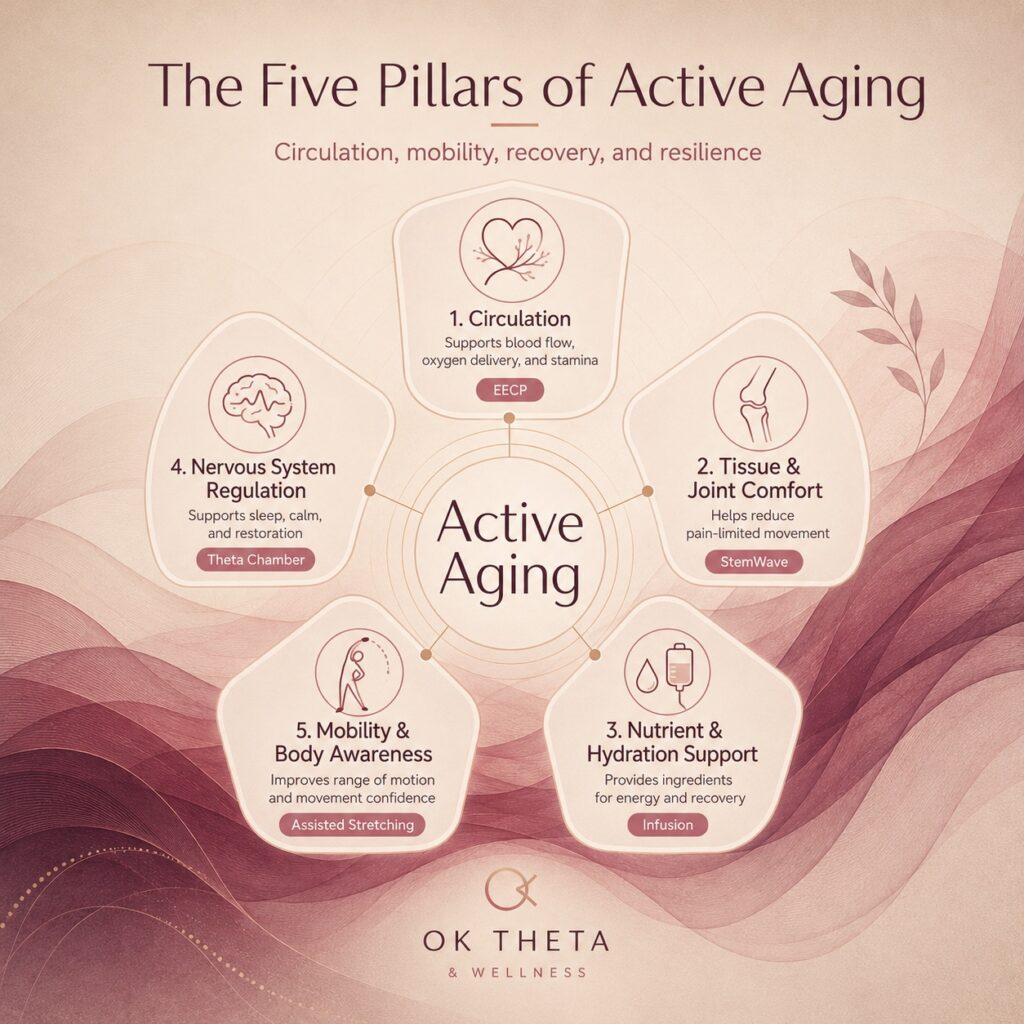
The Five Pillars of Active Aging Support
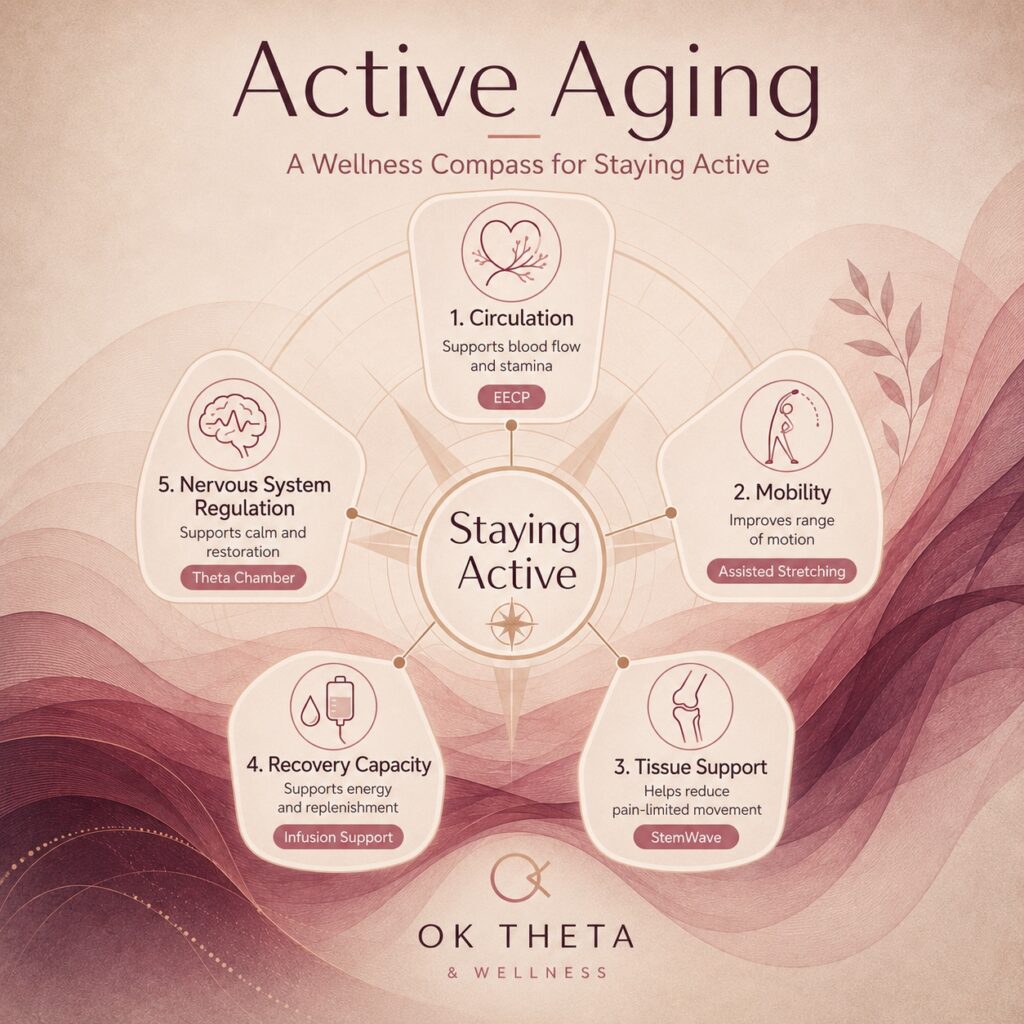
When I think about staying active over time, I tend to think in five major categories.
First, circulation.
The body needs blood flow to deliver oxygen and nutrients. Circulation supports muscles, nerves, connective tissue, the brain, and the cardiovascular system. If the delivery system is struggling, everything downstream may feel more limited.
Second, tissue and joint comfort.
Pain changes behavior. When an area hurts, people naturally avoid using it. Over time, that can lead to weakness, stiffness, compensation, and reduced confidence.
Third, nutrient and hydration support.
The body needs raw materials. Energy metabolism, tissue repair, nerve function, muscle contraction, and recovery all depend on adequate nutritional support.
Fourth, nervous system regulation.
A body stuck in stress mode often does not sleep, repair, digest, move, or recover as well. Chronic high alert can make the body feel older than it is.
Fifth, mobility and body awareness.
Movement requires range of motion, coordination, balance, and trust. Assisted stretching and bodywork can help a person reconnect with areas that have become stiff, braced, or ignored. Active aging is rarely a one-lever problem. It is usually a control panel.
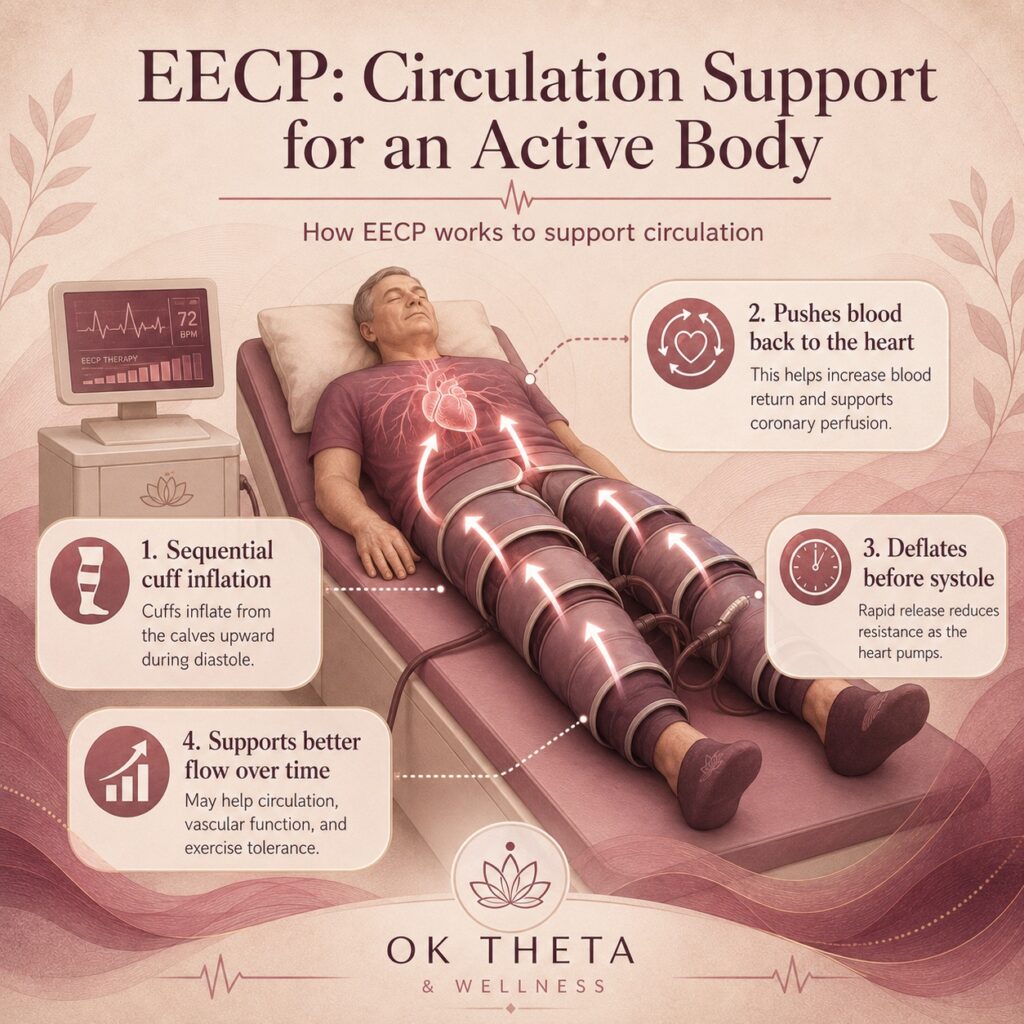
EECP: Circulation Support for an Active Body
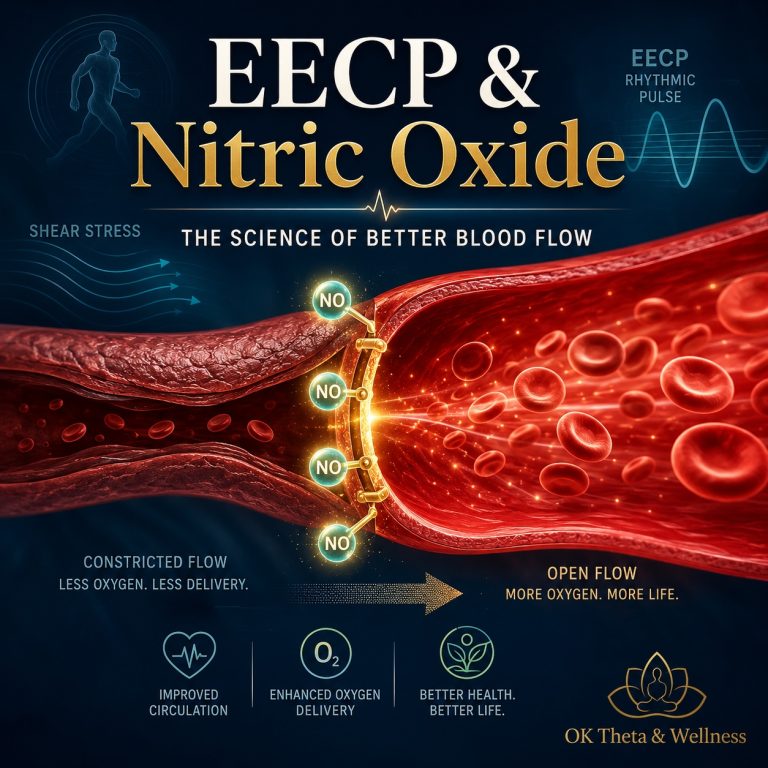
EECP stands for enhanced external counterpulsation. It uses cuffs around the legs that inflate and deflate in rhythm with the heartbeat. The goal is to support circulation during the relaxation phase of the heart cycle.
At OK Theta & Wellness, I think of EECP as a circulation-focused tool. It is often discussed in relation to heart health and refractory angina, but the broader concept is interesting for active aging because circulation affects the entire body. Muscles need blood flow. Nerves need blood flow. The brain needs blood flow. Connective tissue and joints need oxygen and nutrients. Recovery after activity depends partly on delivery and clearance.
When people feel like they are losing stamina, recovering more slowly, or feeling more physically limited, circulation is one of the systems worth thinking about. EECP is not exercise. But it may support the vascular side of the active aging equation. For some people, that can be a meaningful part of rebuilding capacity. I often think of EECP as helping support the body’s internal delivery routes. If you want the body to stay active, the blood flow highways need to stay open.
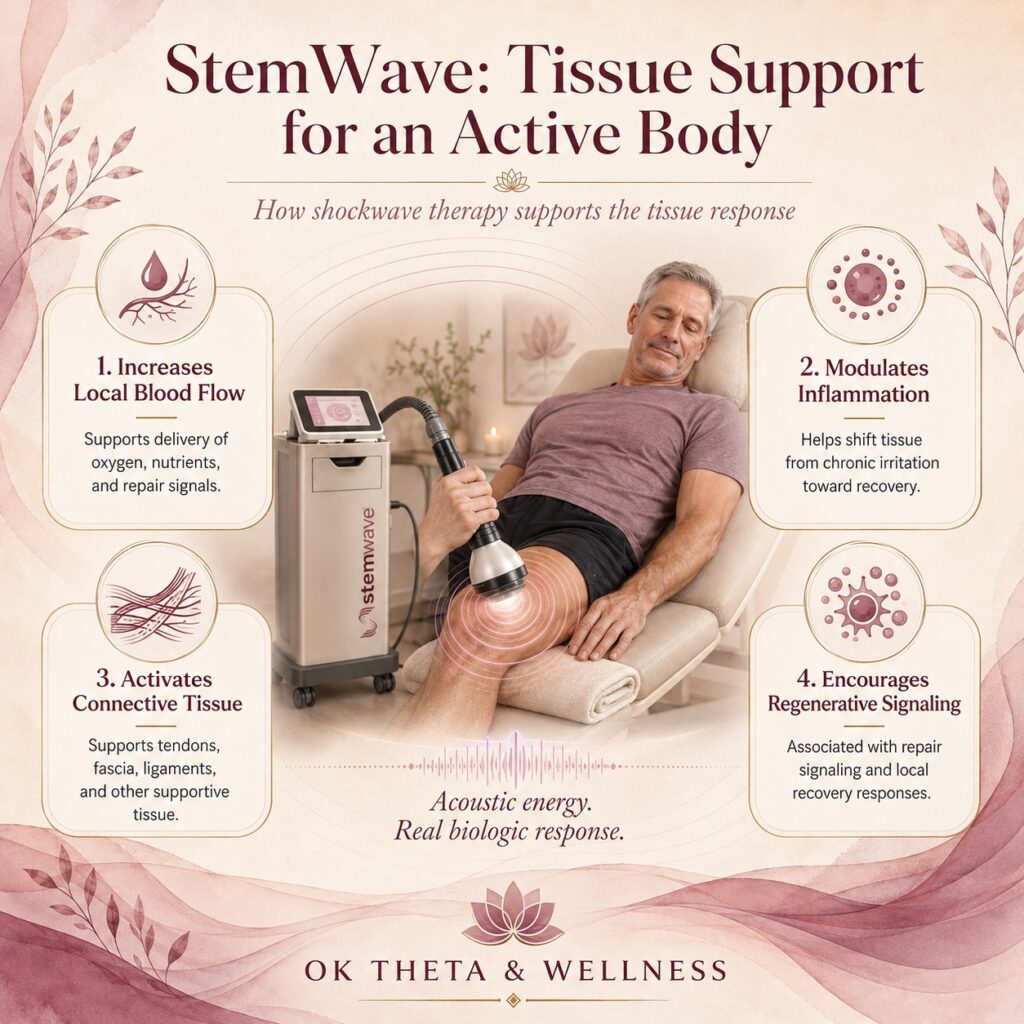
StemWave: Tissue Support When Pain Limits Movement
Pain is one of the fastest ways a person’s world gets smaller. A knee starts hurting, so walking decreases. Exercise changes when a shoulder becomes irritated. Balance and confidence decline when a foot or ankle becomes tender. When a hip, back, elbow, or tendon stays sensitive, the body starts moving around the problem instead of through it. This is where StemWave may fit into active aging support.
StemWave uses focused acoustic wave therapy to support irritated tissue and local recovery responses. In practical terms, we often use it when pain, tenderness, joint irritation, tendon problems, or soft tissue sensitivity are interfering with movement. The goal is not simply to chase pain. The deeper goal is to help the body become more usable.
When a painful area becomes less reactive, people may feel more confident moving again. They may walk more, exercise more, stretch more comfortably, or stop guarding so intensely. Movement is one of the most important ingredients in healthy aging. People often think they stop moving because they are aging. Sometimes the bigger issue is that pain slowly convinces them to move less. StemWave may be one way to support the tissue side of that pattern.
Assisted Stretching: Helping the Body Remember It Has Options
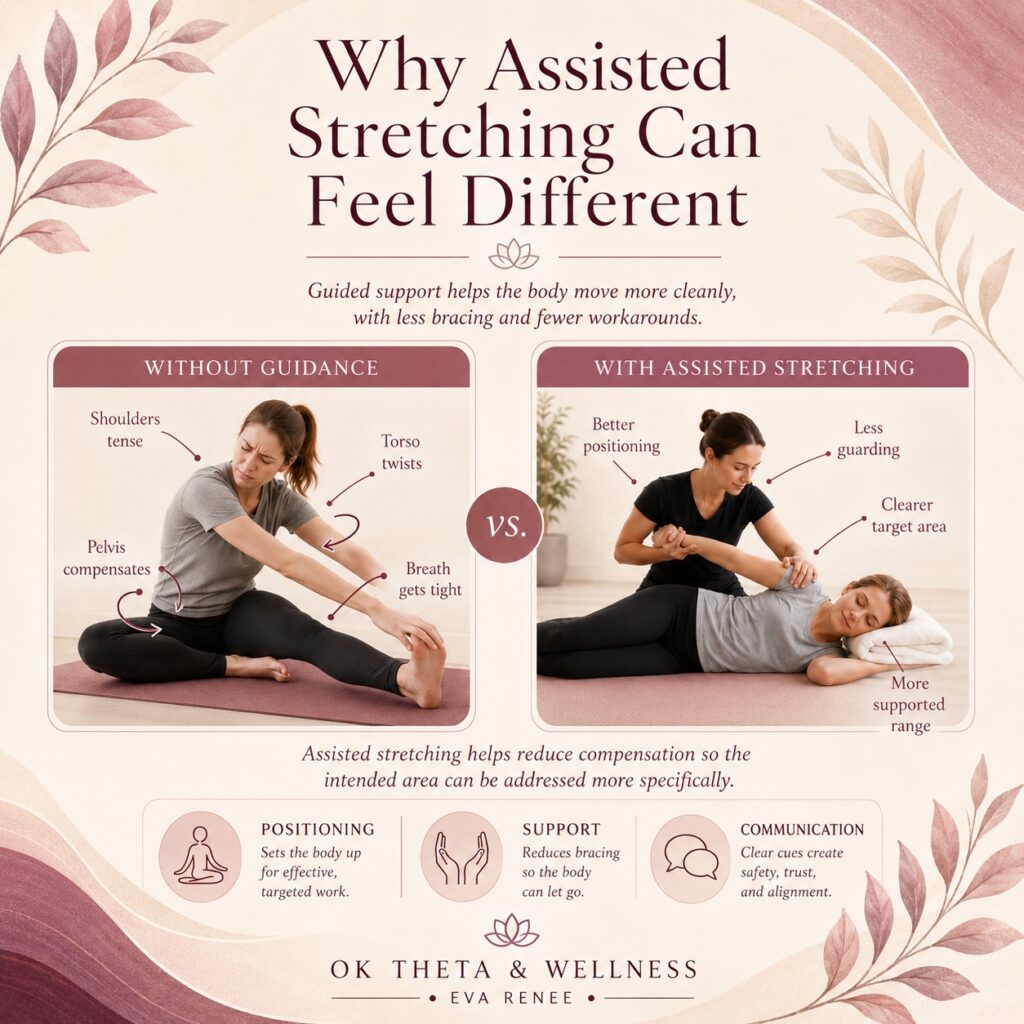
Mobility is more than flexibility. Mobility includes range of motion, coordination, body awareness, breath, balance, and confidence. It also includes the nervous system’s willingness to allow movement. A lot of people think they are simply “tight.” Sometimes that is true. But often the body is not just tight. It is guarded.
The body may guard because of old injuries, stress, posture, pain, inflammation, lack of movement, or fear of triggering symptoms. Over time, the person may not even realize how much they are bracing. Assisted stretching can help with this because it creates a guided environment where the body is invited to move without forcing. Therapeutic massage, Thai massage-inspired movement, and assisted stretching can help soften areas of tension, improve awareness, and gently explore range of motion.
I like assisted stretching for active aging because it addresses something that is easy to overlook: movement confidence. Many people need more mobility, and they need to feel safe using the mobility they have. Assisted stretching is less about forcing the body into a shape, and more about helping the body remember that it has options.
Infusion Support: Nutrients, Hydration, and Recovery Capacity
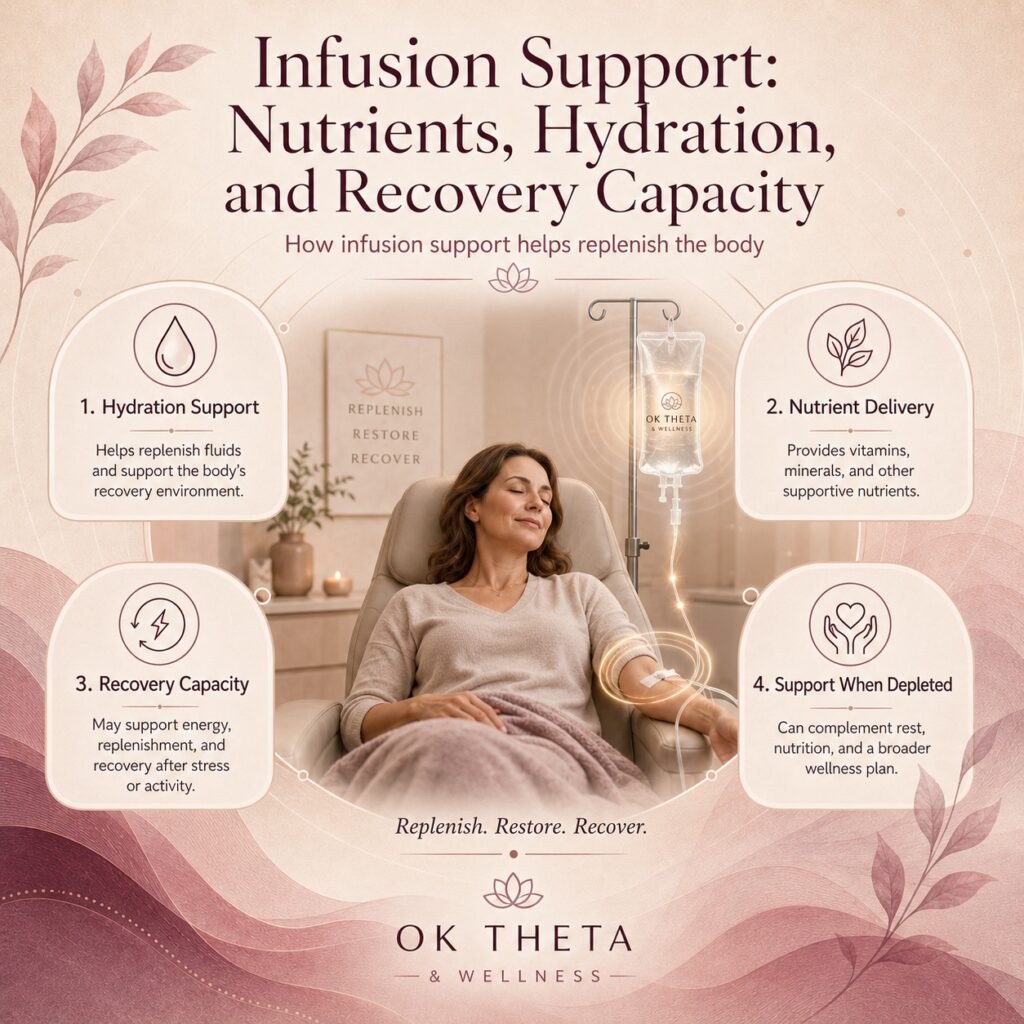
The body cannot repair, recover, or produce energy out of thin air. It needs hydration, minerals, vitamins, amino acids, and enough support for cellular energy metabolism and antioxidant defenses. That is where infusion support may fit into the active aging picture.
At OK Theta & Wellness, infusion support may include things like B vitamins, magnesium, vitamin C, glutathione, amino acids, NAD+, and other nutrient combinations depending on the person’s goals and needs. Infusion support does not replace food, sleep, or medical evaluation when symptoms require it. I think of infusion support more like supporting the body’s internal supply cabinet. Some people are depleted. Others are recovering from stress, illness, travel, poor sleep, heavy work demands, or long seasons of overextension. And some want support for energy metabolism, hydration, or recovery capacity.
When used thoughtfully, infusion support may complement the other pieces of active aging support. If EECP supports circulation, StemWave supports local tissue recovery, and assisted stretching supports mobility, infusion therapy may help support the nutritional and hydration side of the equation. The body still has to do the work. Infusion support may help make sure it has some of the ingredients.
Theta Chamber: The Nervous System Side of Longevity
The nervous system is one of the most overlooked parts of active aging. A person can have good intentions, a decent exercise plan, and access to helpful therapies, but if the nervous system is stuck in high alert, the body may still struggle to recover.
Chronic stress, poor sleep, and pain change the body. Anxiety, grief, burnout, trauma, and constant stimulation can all influence muscle tension, inflammation, digestion, energy, and pain sensitivity. This is why I believe nervous system regulation belongs in the longevity conversation.
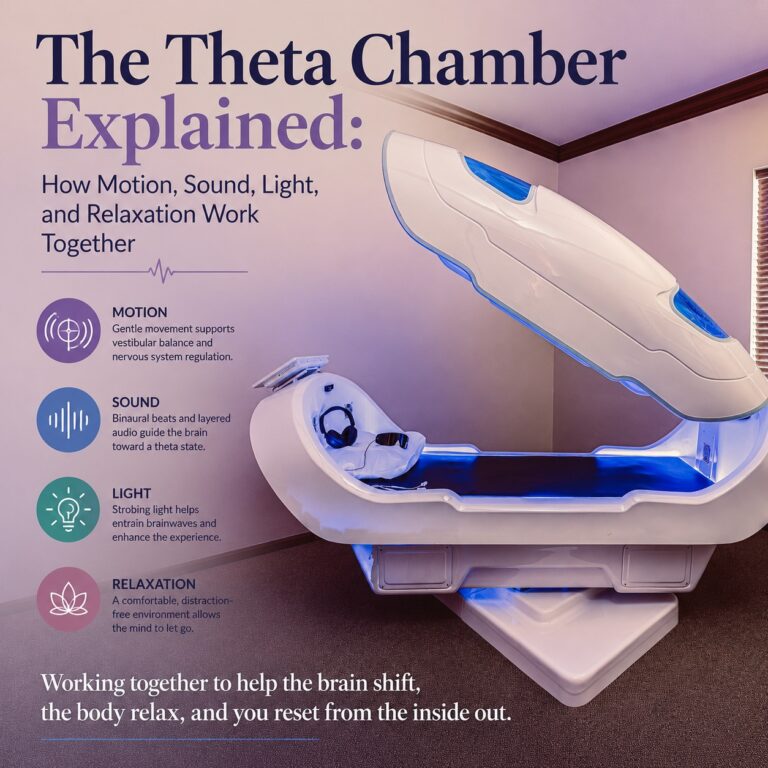
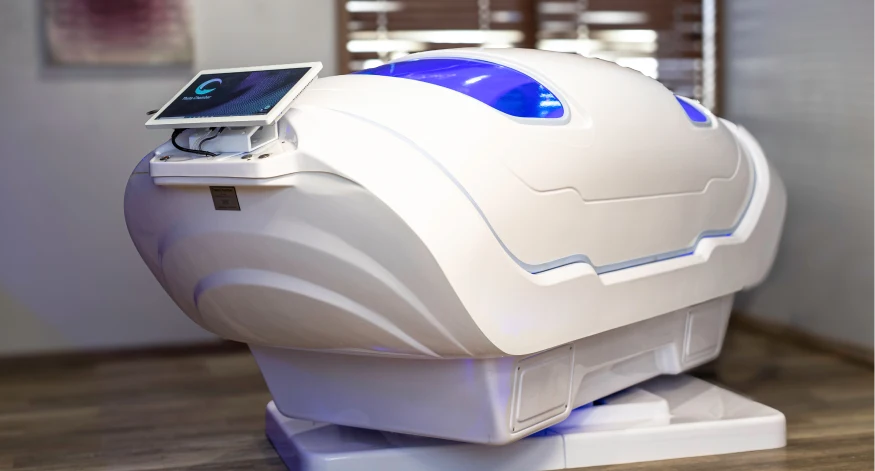
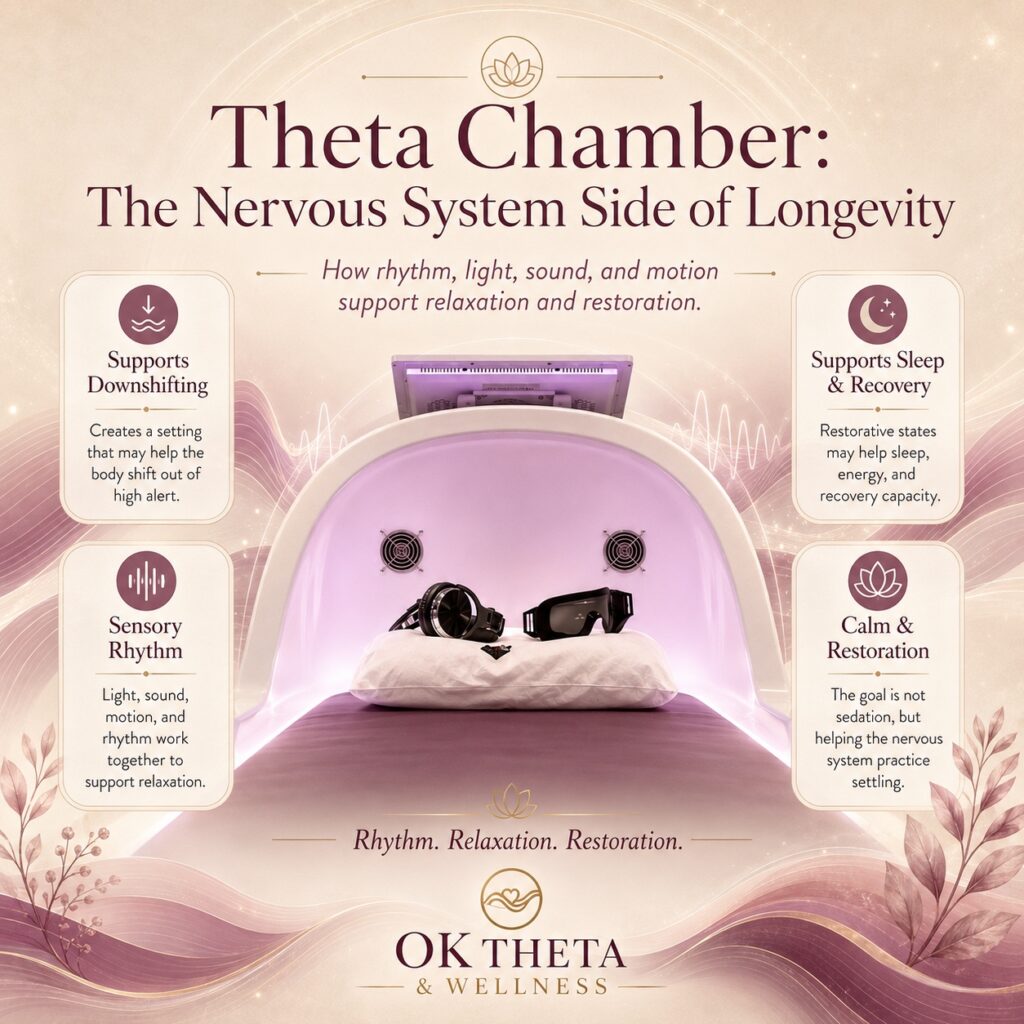
The Theta Chamber uses a combination of light, sound, gentle motion, and relaxation-focused sensory input to help create a setting where the body can downshift. Many people describe feeling calmer, clearer, more spacious internally, or deeply rested after sessions. From an active aging perspective, recovery is not just mechanical. Recovery is neurological.
If the body is constantly braced, guarded, and scanning for threat, it may have a harder time sleeping, repairing, and returning to baseline after stress. The goal of Theta Chamber sessions is not to make someone passive. It is to help the body access a state where restoration becomes more available. Longevity support is not only about pushing the body harder. Sometimes the missing ingredient is teaching the body how to come down from high alert.
Why These Modalities Work Better as a System
The reason I like combining these modalities is simple: people are not usually limited by one thing. A person may have poor sleep, stiff hips, knee pain, low stamina, high stress, and slow recovery after activity. The body is one system. Circulation affects recovery. Pain affects movement. Movement affects circulation. Sleep affects pain. Stress affects muscle tension. Nutrient status affects energy. Confidence affects activity. Activity affects mood. This is why a whole-body active aging approach can make sense:
- EECP may support circulation.
- StemWave may support irritated tissue and movement-limiting discomfort.
- Infusion therapy may support hydration, nutrients, and recovery capacity.
- Theta Chamber sessions may support nervous system regulation and restorative states.
- Assisted stretching may support mobility, range of motion, and body awareness.
Each modality has its own role. Together, they can create a more complete support strategy for people who want to remain active and engaged.
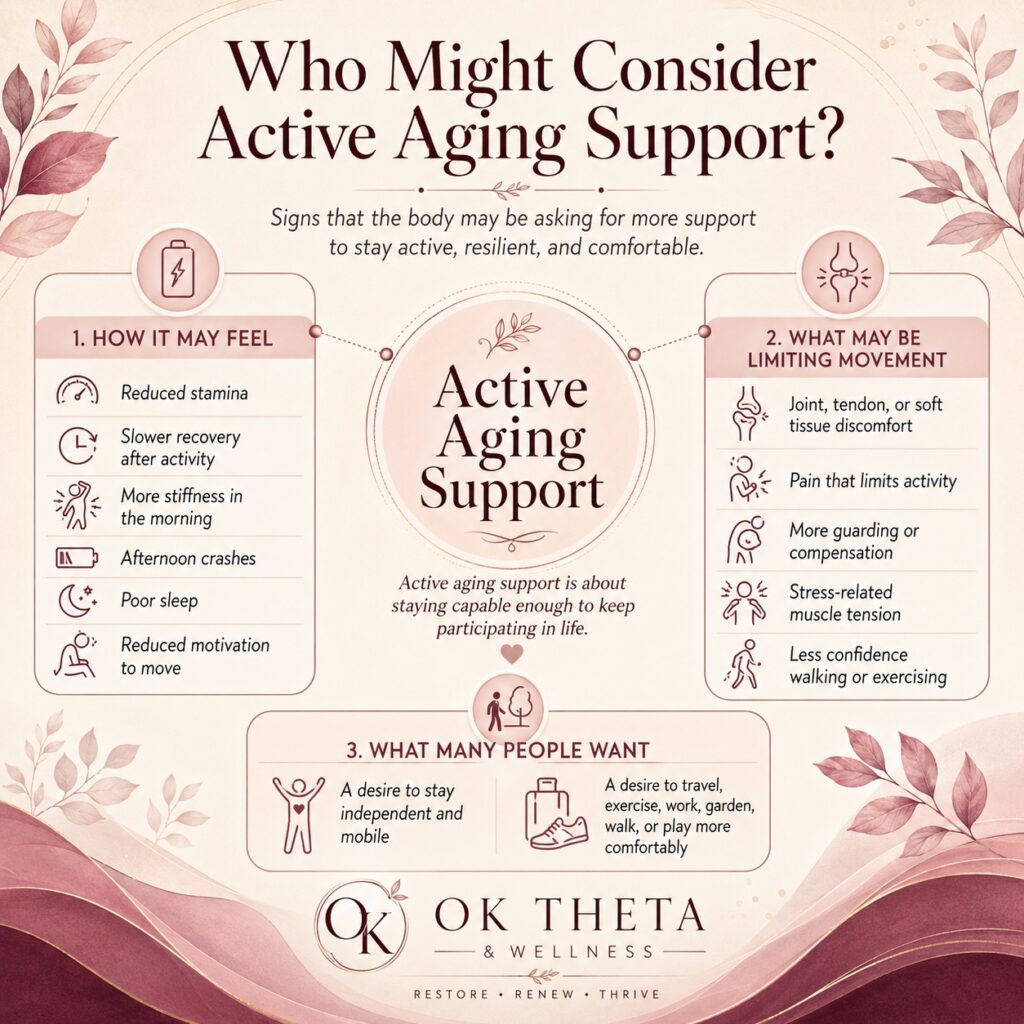
Who Might Consider Active Aging Support?
Active aging support may be worth considering for people who feel like their body is starting to slow down before they are ready for life to slow down. This may include people who notice:
- Reduced stamina
- Slower recovery after activity
- More stiffness in the morning
- Joint, tendon, or soft tissue discomfort
- Less confidence walking or exercising
- More guarding or compensation
- Poor sleep
- Stress-related muscle tension
- Afternoon crashes
- Reduced motivation to move
- Pain that limits activity
- A desire to stay independent and mobile
- A desire to travel, exercise, work, garden, walk, or play more comfortably
Active aging can begin whenever someone decides they want to be proactive instead of waiting for decline to become obvious.
What Should You Track Over Time?
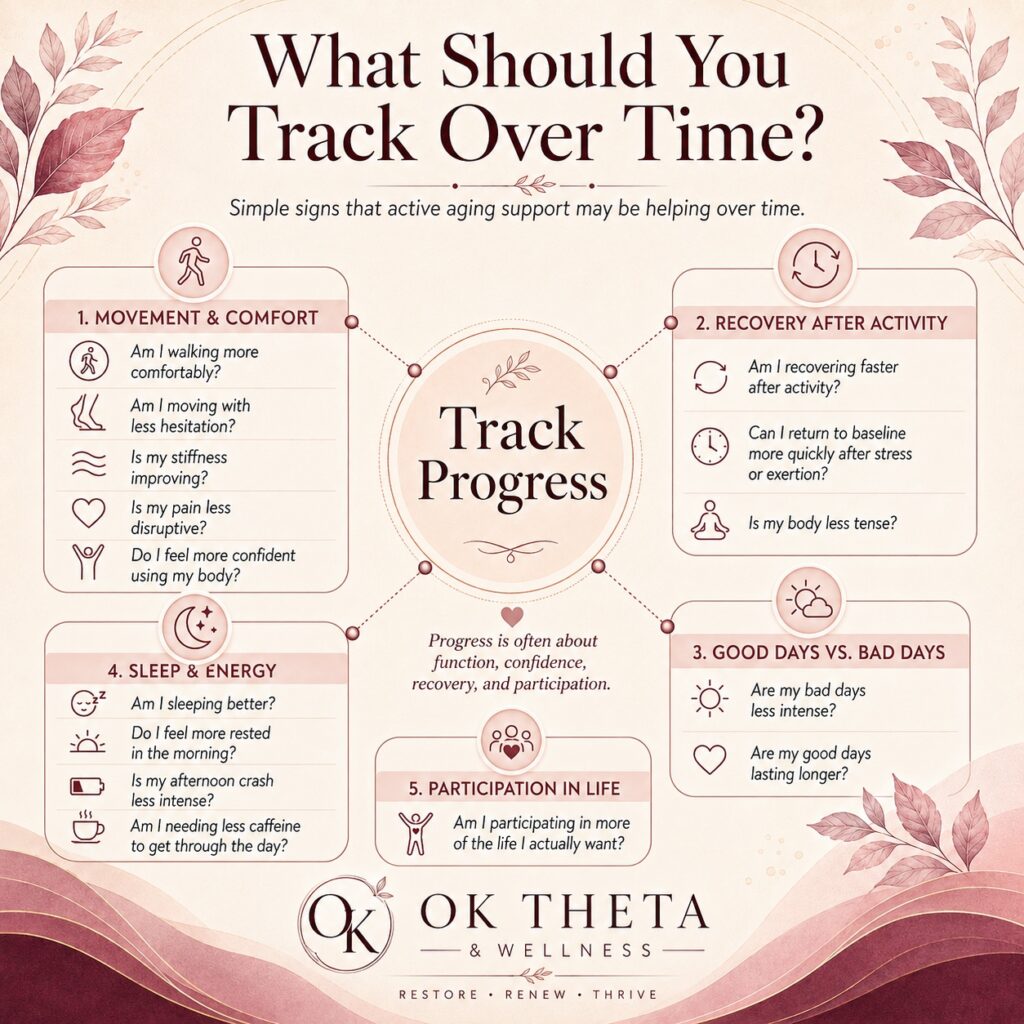
One of the most useful things a person can do is track function rather than obsess only over symptoms. Pain matters, of course. But function tells a deeper story. Questions worth tracking include:
- Am I walking more comfortably?
- Is my stiffness improving?
- Am I moving with less hesitation?
- Is my pain less disruptive?
- Am I recovering faster after activity?
- Are my bad days less intense?
- Do I feel more confident using my body?
- Are my good days lasting longer?
- Am I sleeping better?
- Do I feel more rested in the morning?
- Is my afternoon crash less intense?
- Am I needing less caffeine to get through the day?
- Is my body less tense?
- Can I return to baseline more quickly after stress or exertion?
- Am I participating in more of the life I actually want?
That last question may be the most important one. The goal is not just to feel better in a treatment room. The goal is to live better outside of it.
Staying in the Game
The real goal of active aging is not perfection. It is participation. It is being able to say yes to more of life because the body feels more capable, more supported, and less guarded. At OK Theta & Wellness, our active aging approach brings together circulation support, tissue support, nutrient and hydration support, nervous system support, and mobility support because the body is not a collection of separate parts. It is one living system trying to keep moving forward.
If you are starting to feel like your body is slowing down, becoming more guarded, or taking longer to recover, active aging support may be worth exploring. The goal is to stay active enough to enjoy the life you are living.
Interested in Active Again Support?
If you are interested in active aging support, circulation support, mobility, recovery, or longevity-focused wellness care, OK Theta & Wellness can help you think through which combination of EECP, StemWave, infusion support, Theta Chamber sessions, and assisted stretching may best fit your goals.
You do not have to wait until your body feels completely stuck before you start supporting it. Sometimes the best time to rebuild capacity is when you first notice it beginning to fade.
References
Mayo Clinic. “Stress management: Relaxation techniques.”
This source supports mentioning relaxation practices such as meditation, mindfulness, progressive muscle relaxation, tai chi, yoga, and regular practice as part of nervous system and stress support. (Mayo Clinic)
World Health Organization. “Healthy ageing and functional ability.”
This source supports the blog’s framing that healthy aging is centered on maintaining functional ability, not simply adding years. The WHO describes healthy aging as developing and maintaining the abilities that allow wellbeing in older age. (World Health Organization)
American Heart Association. “American Heart Association Recommendations for Physical Activity in Adults.”
This supports the active aging emphasis on aerobic activity, strength training, and reducing sedentary time. The AHA recommends at least 150 minutes per week of moderate-intensity aerobic activity, or 75 minutes of vigorous activity, plus muscle-strengthening activity at least two days per week. (www.heart.org)
American Heart Association. “Balance Exercise.”
This source supports including balance, mobility, and varied movement as part of active aging. The AHA notes that older adults should include balance training along with aerobic and muscle-strengthening activities. (www.heart.org)
Bozorgi A, et al. “Effect of Enhanced External Counterpulsation on Clinical Symptoms, Quality of Life, 6-Minute Walking Distance, and Echocardiographic Measurements of Patients With Refractory Angina Pectoris.”
This article supports the cautious discussion of EECP as a circulation-focused therapy with evidence related to refractory angina, exercise tolerance, and quality of life. (PMC)
Rayegani SM, et al. “The safety and effectiveness of enhanced external counterpulsation in patients with refractory angina pectoris: A systematic review and meta-analysis.”
This systematic review supports the use of EECP as an evidence-informed modality in the context of refractory angina and cardiovascular symptom support. (PMC)
Amin F, et al. “Enhanced external counterpulsation for chronic angina pectoris.” Cochrane Review.
This review provides a more conservative evidence base for EECP and is useful if you want the post to acknowledge that research quality and indications vary. (PMC)
Avendaño-Coy J, et al. “Extracorporeal shockwave therapy improves pain and function in subjects with knee osteoarthritis: A systematic review and meta-analysis of randomized clinical trials.”
This supports discussing shockwave therapy as a modality that may help pain and function in knee osteoarthritis populations. (PubMed)
Tang P, et al. “The efficacy of extracorporeal shock wave therapy for knee osteoarthritis: An umbrella review.”
This more recent umbrella review supports the blog’s cautious language around ESWT improving pain and function in knee osteoarthritis. (PMC)
Majidi L, et al. “The effect of extracorporeal shock-wave therapy on pain in patients with tendinopathy: A systematic review and meta-analysis.”
This supports the StemWave section’s discussion of shockwave therapy for tendon-related pain and mobility-limiting discomfort. (PMC)
NIH Office of Dietary Supplements. “Magnesium: Health Professional Fact Sheet.”
This supports the infusion section’s discussion of magnesium in relation to energy production, nerve impulse conduction, muscle contraction, glutathione synthesis, and normal heart rhythm. (Office of Dietary Supplements)
MedlinePlus. “Magnesium in diet.”
This provides a patient-friendly source supporting magnesium’s role in nerve and muscle function, energy production, protein production, immune support, and bone health. (MedlinePlus)
Covarrubias AJ, Perrone R, Grozio A, Verdin E. “NAD+ metabolism and its roles in cellular processes during ageing.” Nature Reviews Molecular Cell Biology.
This supports the grounded NAD+ discussion by describing NAD+ as involved in metabolism, DNA repair, chromatin remodeling, cellular senescence, and other cellular processes relevant to aging research. (PMC)
Mayo Clinic. “Relaxation techniques: Try these steps to lower stress.”
This supports the Theta Chamber section’s broader discussion of relaxation, stress management, breathing, sleep, and the importance of practices that help the body downshift. (Mayo Clinic)