
Light, Rhythm, and the Brain: Why Strobing Goggles Matter in the Theta Chamber
Light Is Not Just Something We See
Most of us think of light as visual information. Bright room. Dark room. Sunrise. Screen glare. Headlights on a wet Oklahoma road. But the brain does not treat light as mere decoration. Light is timing information. It helps regulate circadian rhythm, alertness, sleep-wake biology, attention, and the nervous system’s sense of what season, time, and state the body is in. In neuroscience, rhythmic light can also be used as a stimulus that the brain responds to in measurable ways, especially through the visual system and EEG activity. This is the basic idea behind intermittent photic stimulation and steady-state visual evoked potentials, where repeated visual flicker can produce brain responses that are time-locked to the stimulus frequency. (PMC)
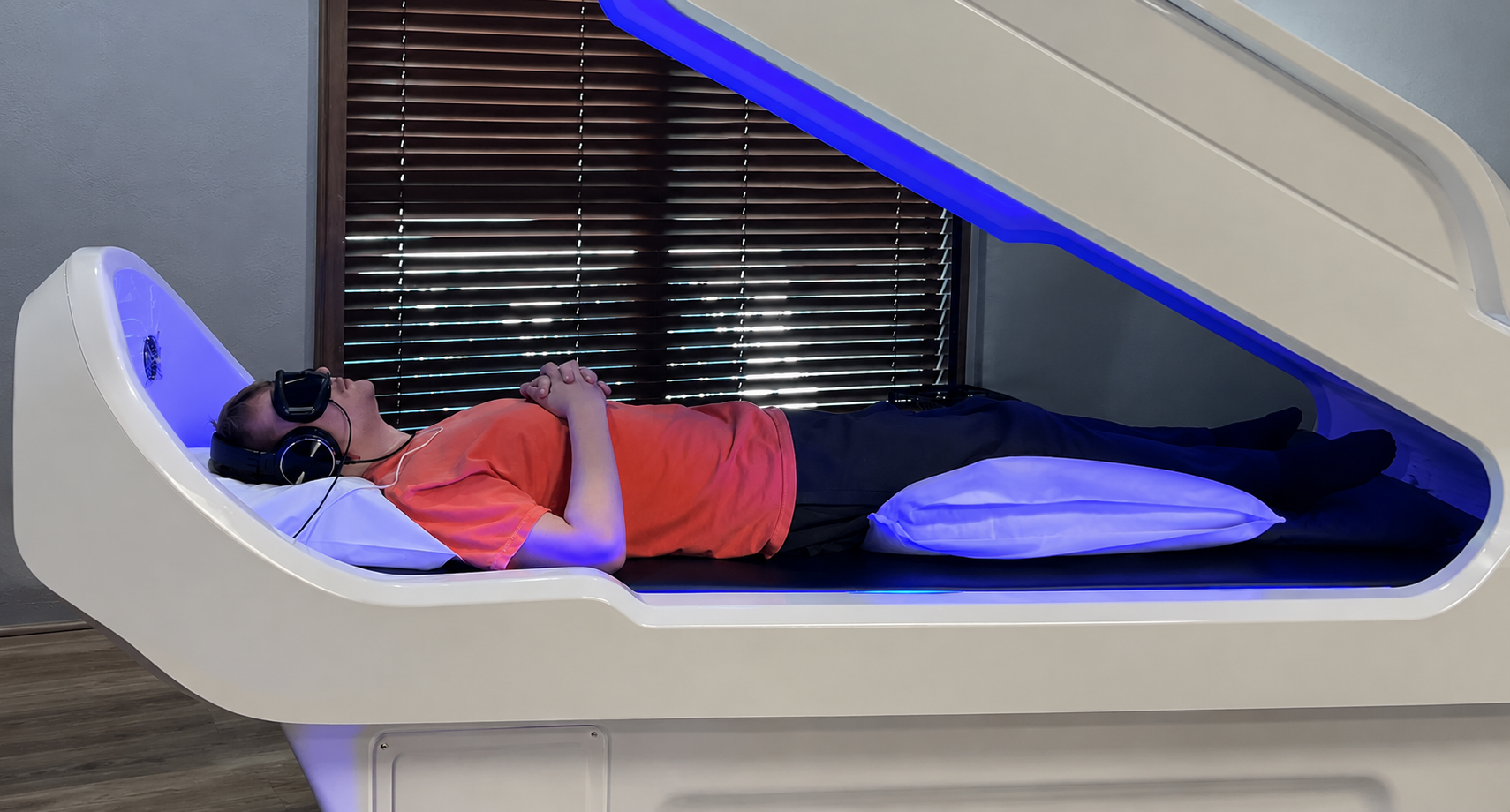
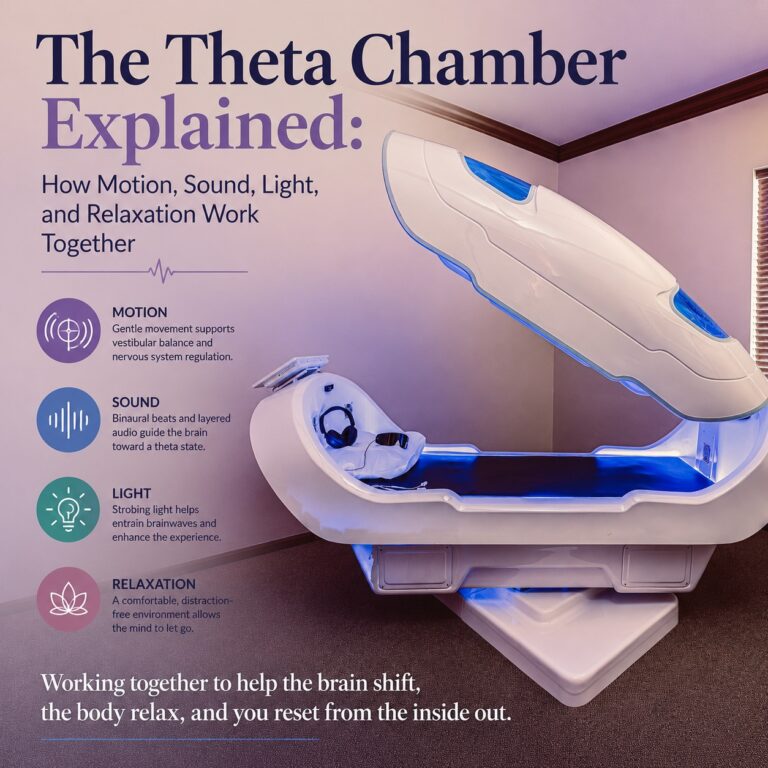
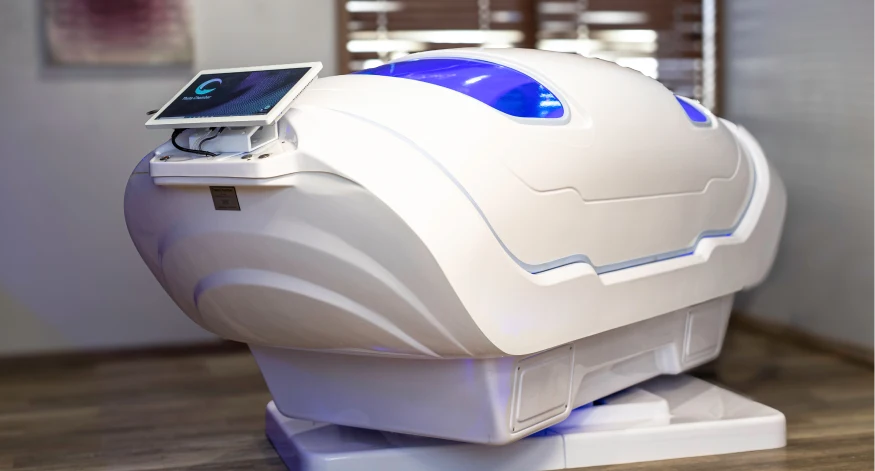
The Theta Chamber is not just a relaxation bed. It is an organized sensory field. Gentle motion, sound, binaural beats, cranial electrotherapy stimulation, PEMF, and strobing goggles are not random add-ons. They are different forms of rhythm, giving the brain repeated, structured signals. And the brain, by nature, is a rhythm organ.
Spin into Wellness in Oklahoma’s First Theta Chamber!
The Brain Runs on Oscillation
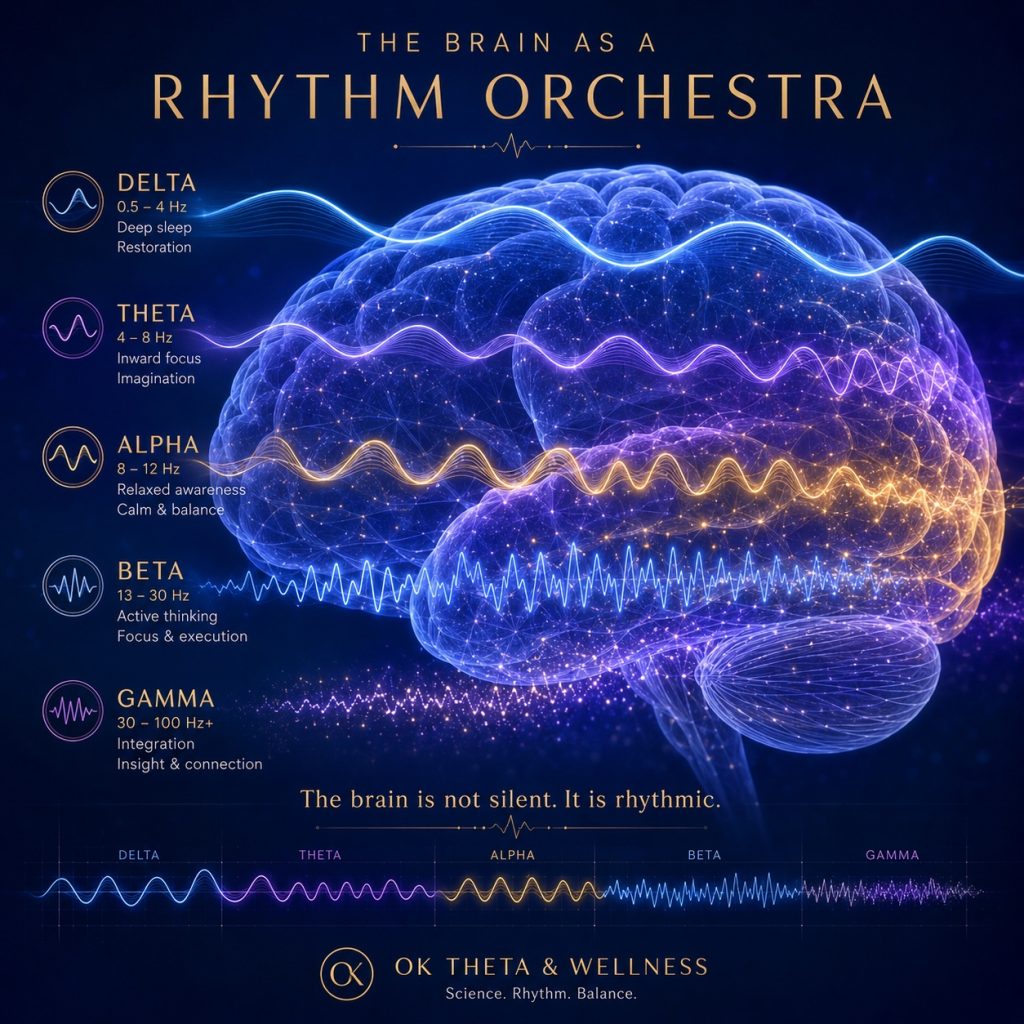
Brainwaves are not mystical decorations floating over the skull. They are patterns of electrical activity that reflect coordinated communication across neural networks. Delta, theta, alpha, beta, and gamma rhythms are not “good” or “bad” by themselves. They are different modes of function.
- Theta is often associated with inward attention, memory, emotional processing, meditation, and learning states
- Alpha is commonly associated with relaxed wakefulness and visual cortical inhibition or gating
- Beta tends to show up with active thinking and engagement
- Gamma is often discussed in relation to binding, perception, and higher-order integration
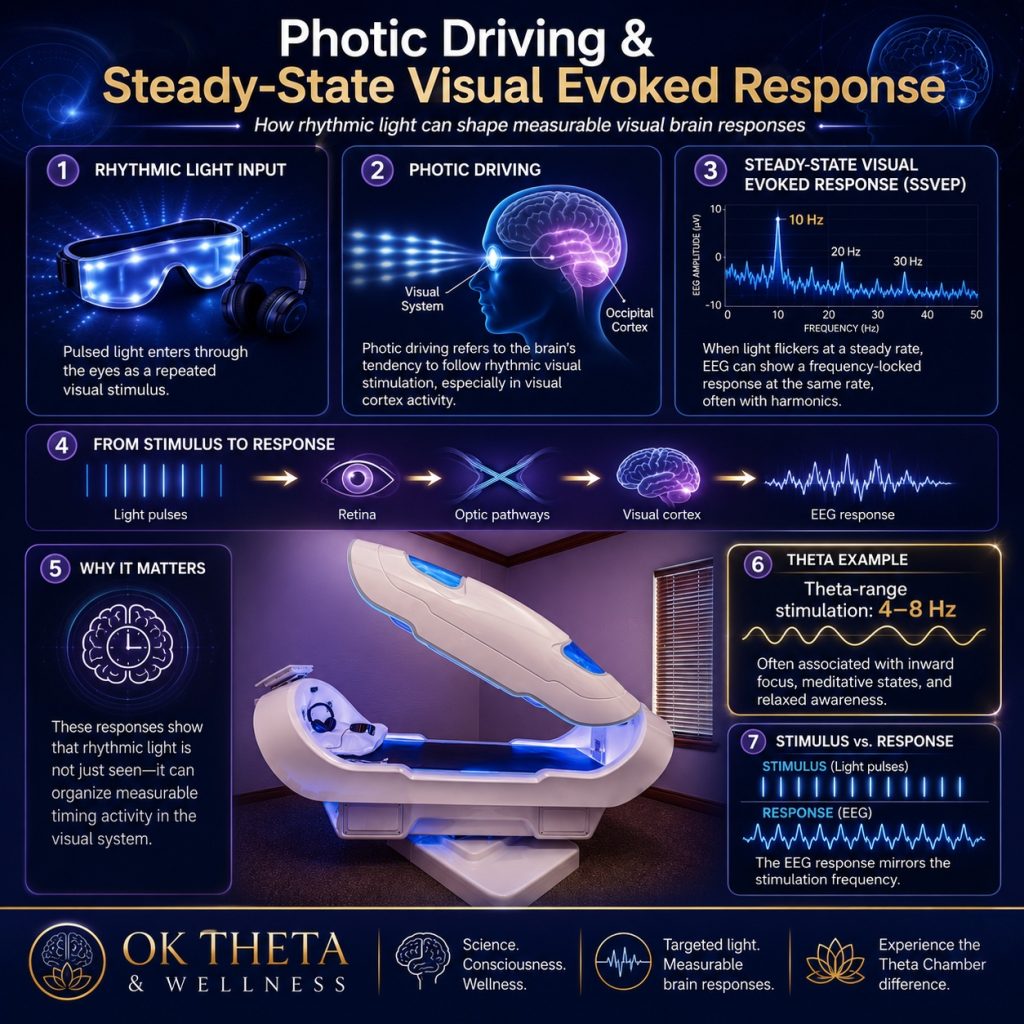
When light is pulsed rhythmically, the visual system can respond rhythmically. This response is sometimes called photic driving, and in research settings it can be measured using EEG or related methods. The response is not magic. It is physiology. The retina, thalamus, visual cortex, and broader cortical networks are built to process timing, contrast, and repetition. (Frontiers)
In plain English: when rhythmic light enters the system, the brain may begin to organize some of its activity around that rhythm. Not perfectly or identical in every person. But measurably enough that rhythmic visual stimulation has been used for decades in EEG laboratories and vision research. (PMC)
What Is Photic Stimulation?
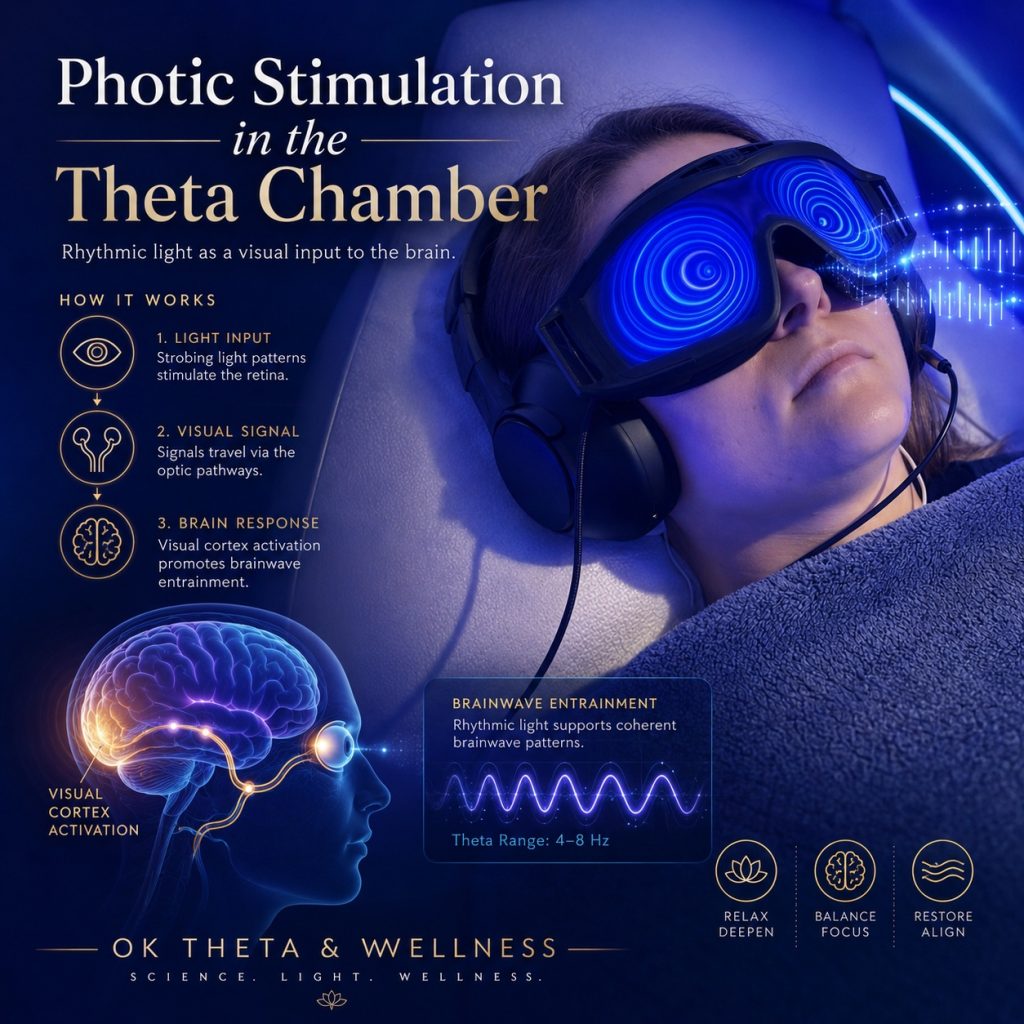
Photic stimulation refers to flashing or pulsed light used to stimulate the visual system. In clinical EEG, intermittent photic stimulation is commonly used to evaluate photosensitivity and certain seizure tendencies. The safety context matters. Flickering light is powerful enough that it deserves respect, especially for people with epilepsy, photosensitive seizures, migraines triggered by light, or significant neurological sensitivity. (International League Against Epilepsy)
But outside of seizure testing, rhythmic light has also been studied for its ability to influence brain oscillations. In visual neuroscience, steady-state visual evoked potentials are one of the clearest examples. When a person looks at a visual stimulus flickering at a specific frequency, the brain can produce an EEG response at that same frequency and related harmonics. Researchers use this because the signal can be strong, measurable, and frequency-specific. (PMC)
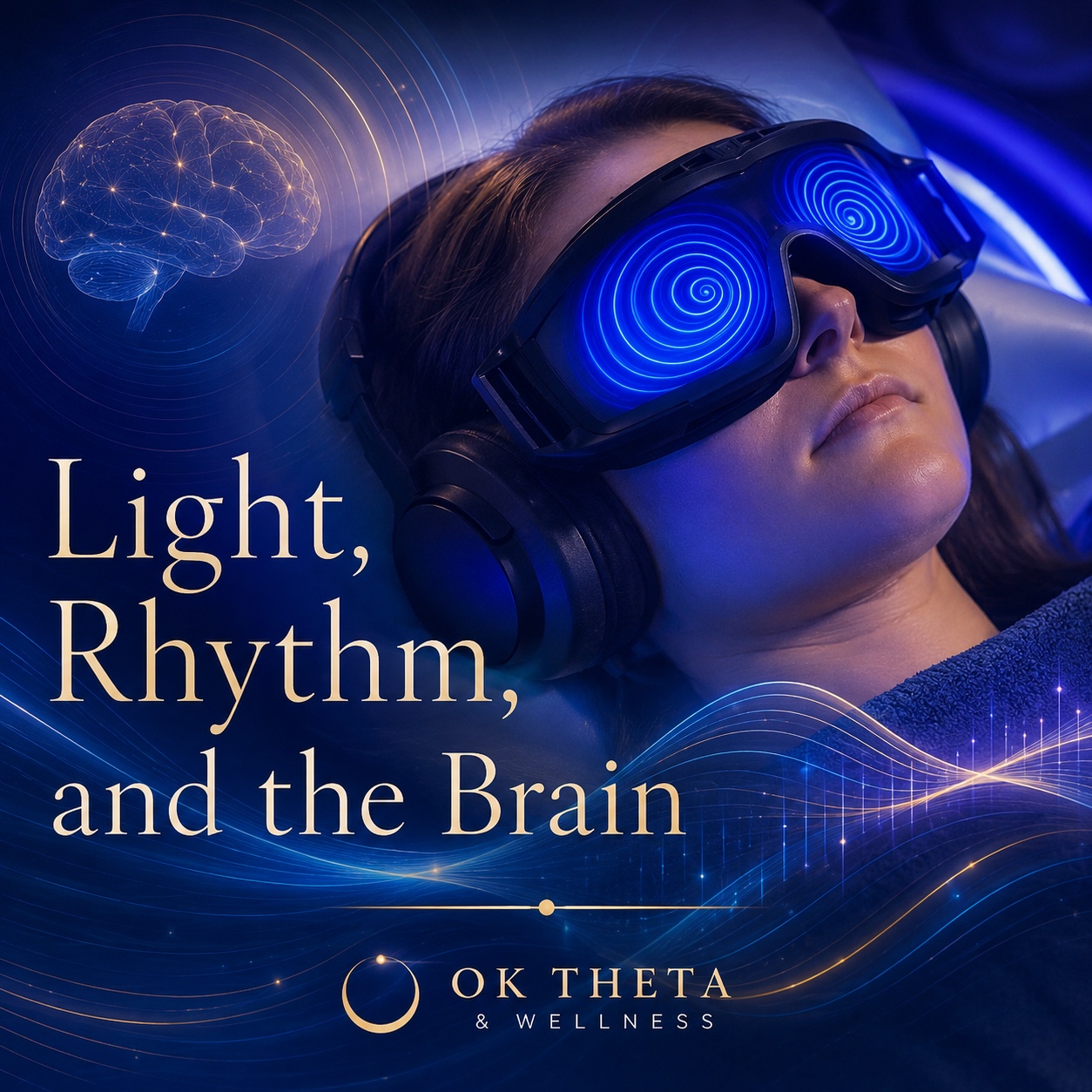
This is one reason strobing goggles are such an interesting part of the Theta Chamber. The strobing goggles are not simply “flashing lights.” They are a way of introducing rhythm into the visual system while the body is already being supported by motion, sound, and a deeply restful environment.
Entrainment: The Brain Meeting a Rhythm
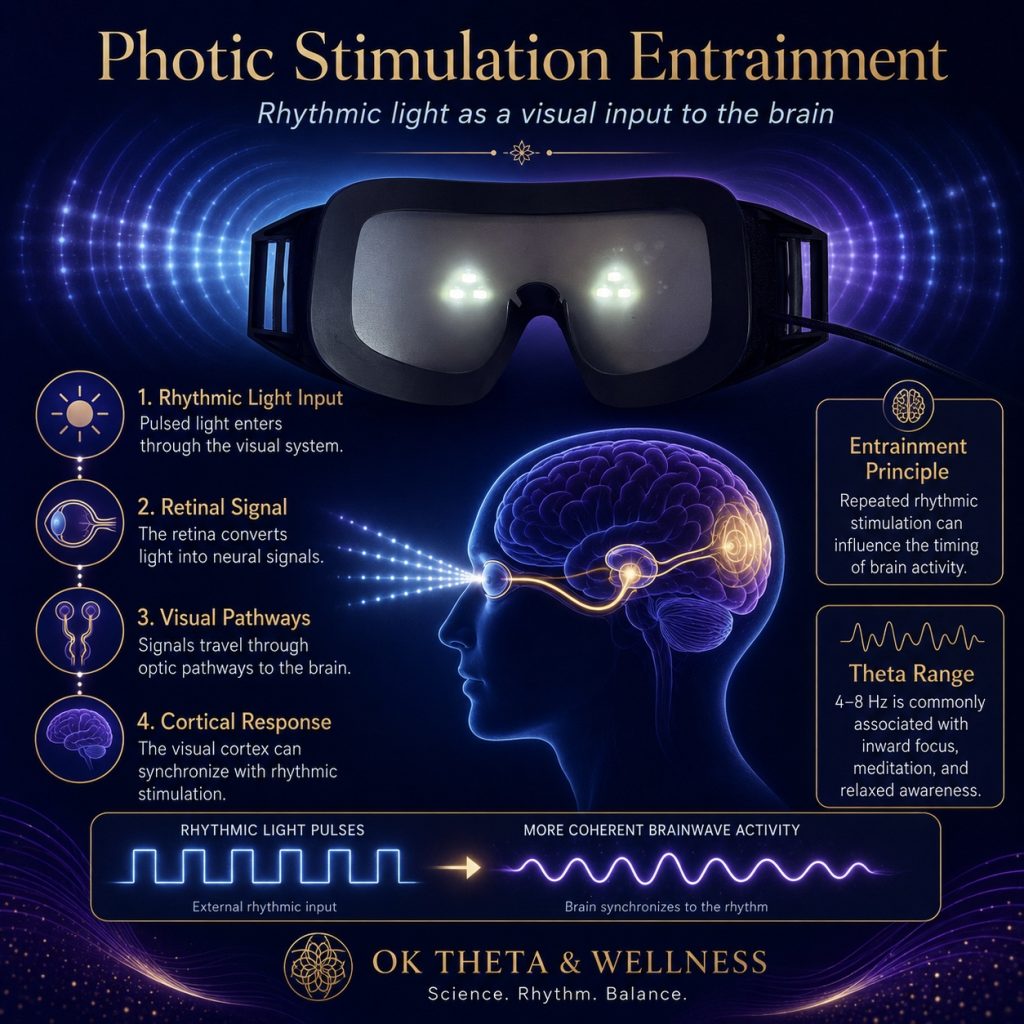
Entrainment is a word that gets thrown around loosely, so it is worth slowing down. In the simplest sense, entrainment means that one rhythmic system begins to coordinate with another rhythm. The brain may respond to rhythmic stimulation by influencing the timing of neural activity. Visual flicker can influence visual cortical rhythms. Auditory rhythms can influence auditory and broader timing networks. Multisensory rhythm may have effects that are different from one stimulus alone. (PMC)
A 2016 study by Notbohm and colleagues found evidence that rhythmic visual stimulation can entrain alpha oscillations, and importantly, that regular flicker and irregular flicker do not appear to affect the brain in the same way. Regularity matters. The brain is not merely responding to brightness. It is responding to pattern. (PMC)
That is a key point for understanding the Theta Chamber. The nervous system is constantly asking: “Is this random, or is this organized?” Random input can feel like noise. Organized rhythm can feel like a signal. And when the body receives a coherent sensory environment, it may have an easier time shifting out of vigilance and into regulation.
Why Light Pairs So Well With the Theta Chamber
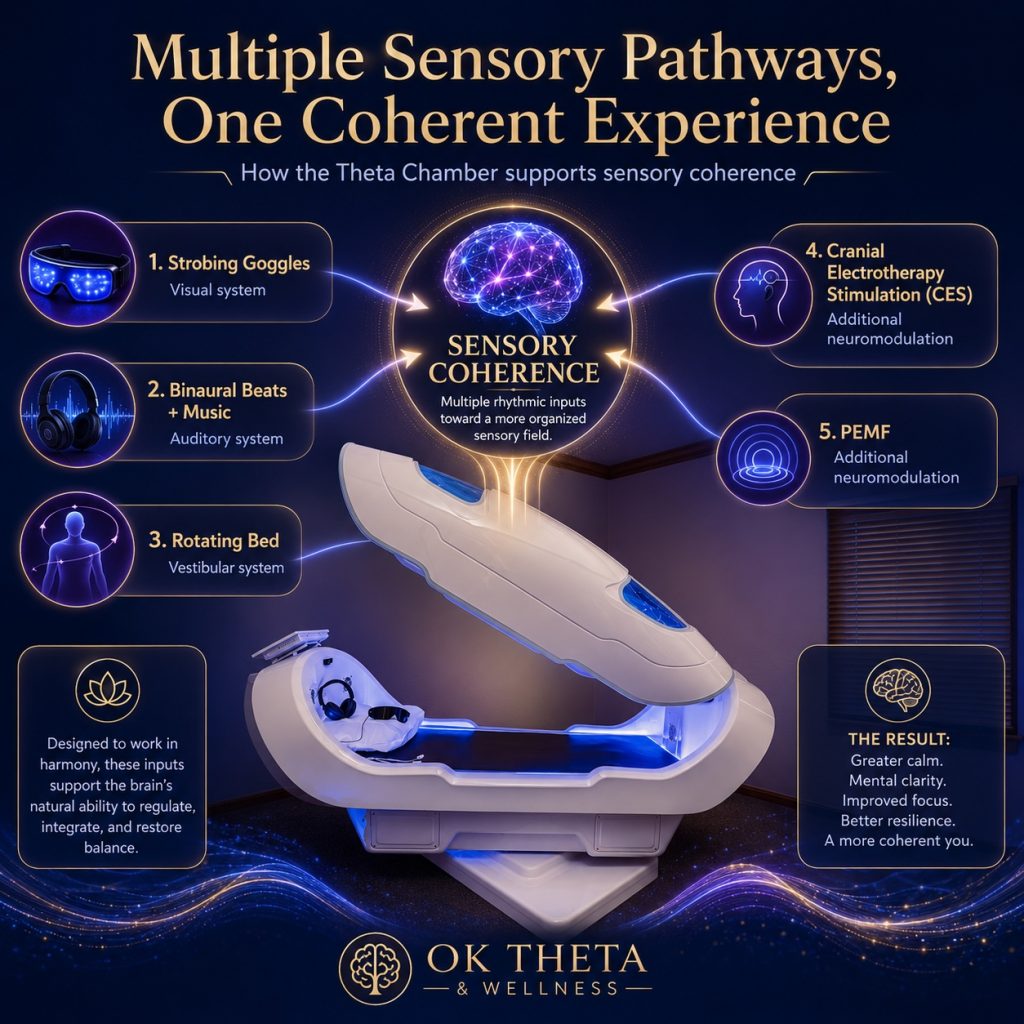
The Theta Chamber uses multiple sensory pathways at once. The strobing goggles stimulate the visual system. Binaural beats and music stimulate the auditory system. A rotating bed stimulates the vestibular system. CES and PEMF add additional neuromodulatory and body-based inputs.
The reason this is compelling is that the brain does not live in separate departments. Vision, sound, balance, body sensation, autonomic state, attention, and emotion are constantly talking to each other. A part of the brain called the thalamus helps regulate and route sensory information while the brainstem participates in arousal and autonomic tone. The cortex interprets, predicts, and updates. Lastly, the limbic system colors the whole thing with emotional meaning.
So, when the Theta Chamber introduces light rhythm, it is not doing so in isolation. It is part of a larger sensory conversation. That is why I often think of the chamber less like a single intervention and more like a carefully arranged field. Not a command, but more like an invitation. The body is not being forced into relaxation. It is being given repeated safety signals: rhythm, containment, predictability, low demand, reduced effort, and sensory coherence.
The Frequency-Following Idea
The term “frequency following response” is often used in auditory neuroscience to describe how neural activity can phase-lock to periodic sound features. In broader brainwave entrainment discussions, people sometimes use the phrase more loosely to describe the brain’s tendency to respond to rhythmic stimulation. The more precise visual term would often be photic driving or steady-state visual evoked response. (PMC)
The big idea is still approachable: the brain can detect rhythm, track rhythm, and sometimes synchronize aspects of neural activity to rhythm. This does not mean that flashing a 7 Hz light simply “turns the whole brain into theta.” The brain is more complex than that. Different people respond differently. Effects depend on frequency, intensity, duration, eyes open versus closed, baseline brain state, medication, fatigue, anxiety level, and individual neurobiology. Research also shows that entrainment effects can vary based on stimulation parameters and the person’s intrinsic rhythms. (Frontiers)
At OK Theta & Wellness, we do not need to pretend the brain is a light switch. It is more like land after a long dry spell. You do not yell at the soil to change, but you can change the conditions.
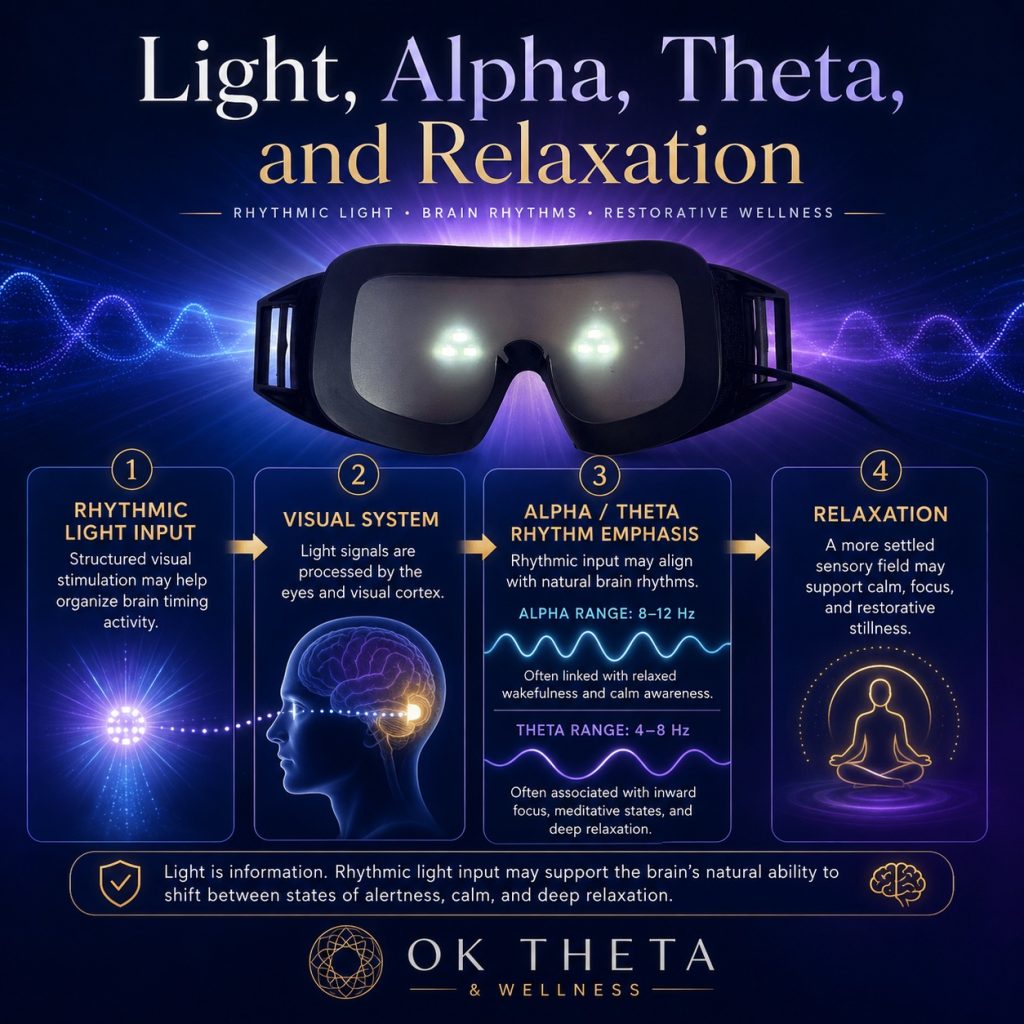
Light, Alpha, Theta, and Relaxation
Many photic driving responses are strongest around alpha-range frequencies, especially near a person’s own natural alpha rhythm. Research on rhythmic visual stimulation has explored how flicker can interact with alpha oscillations, attention, and visual processing. (PMC)
Theta-range stimulation is also interesting because theta is commonly associated with meditative and memory-related states. In the Theta Chamber, theta is not just about one device or one input. It is the overall state we are trying to make more accessible: inward awareness, reduced defensive effort, emotional processing, and a teachable nervous system.
The strobing goggles may help by adding one more layer of structured rhythm. For some people, that rhythm becomes a focal point. For others, it fades into the background. Other people experience colors, patterns, dreamlike imagery, or a sense of visual movement behind closed eyes. Some simply feel calmer. The experience is subjective, but the underlying principle is grounded: rhythmic sensory input can influence measurable brain activity.
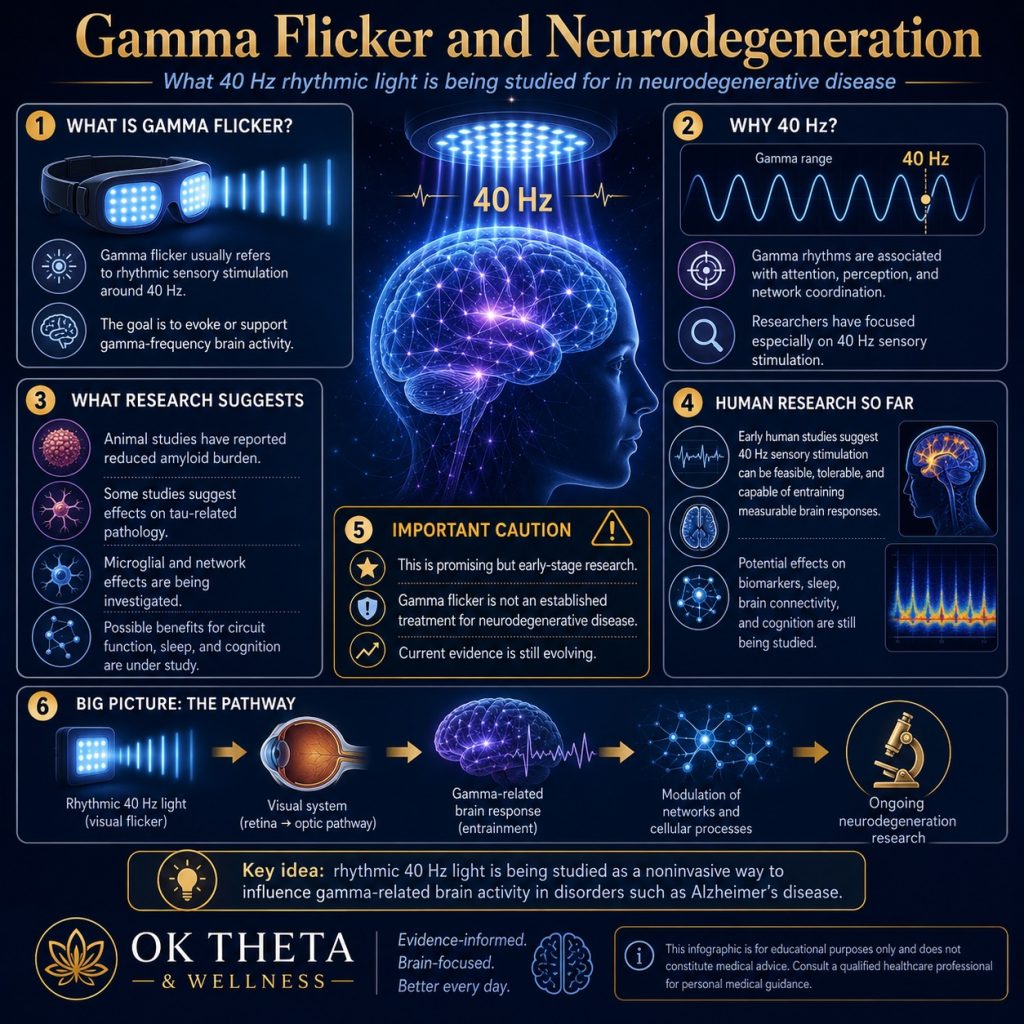
Gamma Flicker and Emerging Research
One of the more fascinating areas of modern rhythmic light research involves 40 Hz gamma stimulation. Much of this work has focused on Alzheimer’s disease and neurodegeneration. Early preclinical work generated excitement around the possibility that 40 Hz sensory stimulation could affect gamma activity and potentially influence disease-related biology. More recent human studies and clinical trials are still developing, and the field remains early. (PMC)
This is worth mentioning carefully. The point is not that strobing goggles treat Alzheimer’s disease. That would be too big a claim. Rather, it is that serious researchers are studying rhythmic light as a biologically meaningful input to the brain. Light rhythm is not just a spa concept. It is a neuroscience concept. That is the lane we want to stay in: curious, evidence-informed, humble, and precise.
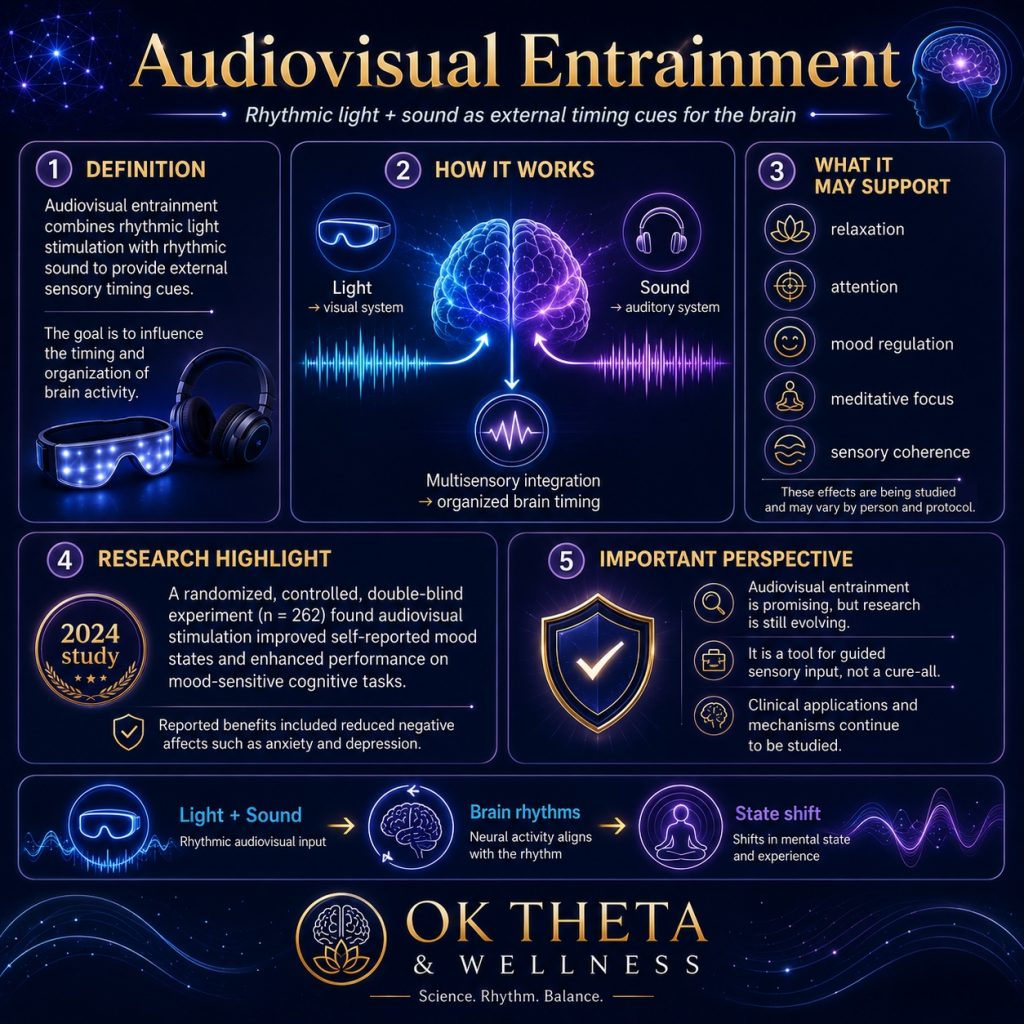
Audiovisual Entrainment: Light Plus Sound
Strobing goggles become even more interesting when paired with sound. Audiovisual entrainment uses rhythmic light and rhythmic auditory input together. A 2025 review described audiovisual entrainment as a non-pharmacological, stimulus-driven approach intended to align brain electrical activity with external rhythmic inputs, while also noting that mechanisms, protocols, and clinical applications need continued study. (PMC)
A 2024 randomized, double-blind experiment found that audiovisual stimulation improved self-reported mood states and mood-sensitive cognitive task performance in a large sample, though the authors also noted that many effects were similar whether binaural beats were present or not, suggesting the broader rhythmic audiovisual field may matter, not only one specific ingredient. (Nature)
This is what we see conceptually in the Theta Chamber. The experience is not one isolated mechanism. It is layered rhythm. Light rhythm. Sound rhythm. Motion rhythm. Breath rhythm. Heart rhythm. The nervous system begins to receive the same message from multiple directions: settle, organize, soften, observe.
Safety and Individualization
Because flickering light can provoke symptoms in susceptible individuals, strobing goggles are not something to treat casually. People with a history of seizures, photosensitive epilepsy, certain migraine patterns, or significant light sensitivity should discuss this before using rhythmic light stimulation. Intermittent photic stimulation is used in EEG labs specifically because it can reveal photosensitivity in vulnerable individuals. (International League Against Epilepsy)
This is also why individualized protocols matter. Some people do well with theta. Others may need a gentler alpha-theta entry point. Some may need less intensity, less visual stimulation, or no goggles at all. The goal is to meet the nervous system where it is. In our language at OK Theta & Wellness: we are not trying to “hack” the brain. We are trying to give it a better environment.
Why This Matters
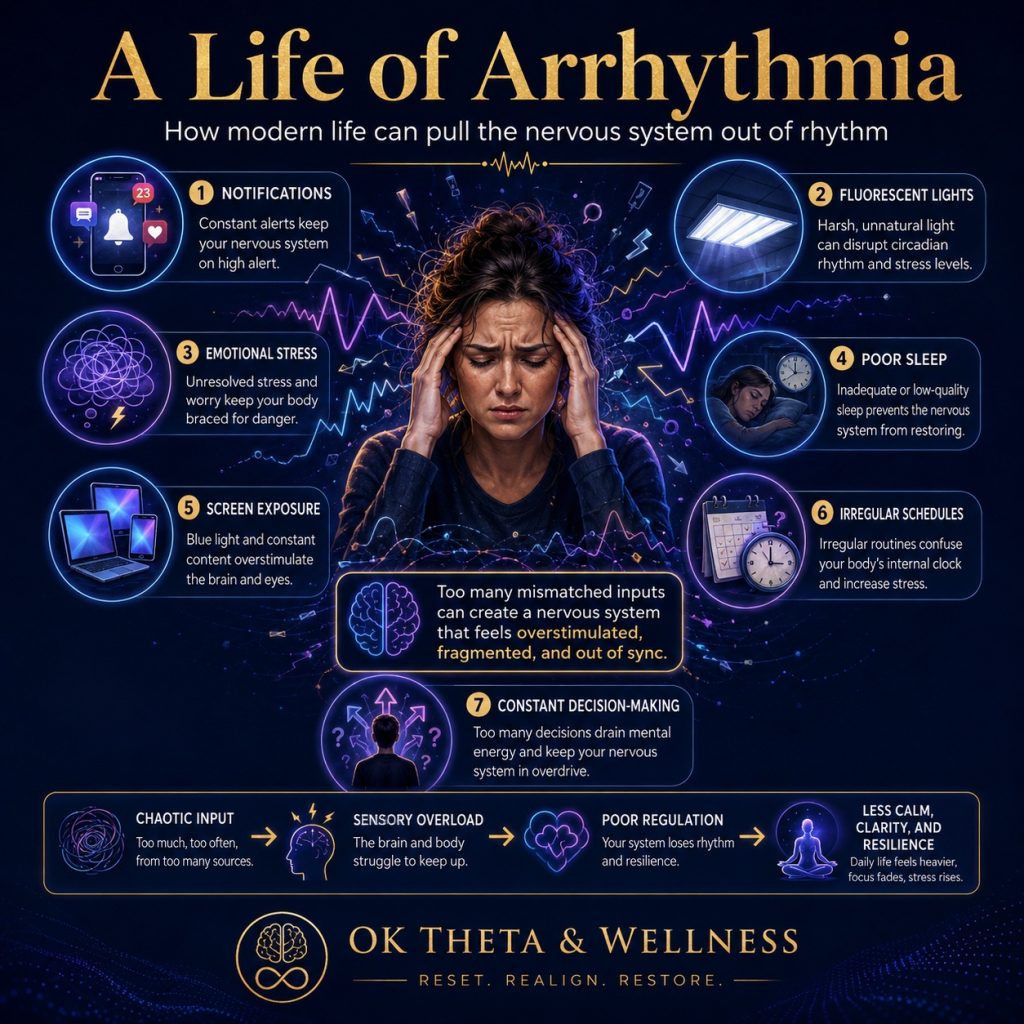
Modern life blocks rhythm in many ways. Notifications, fluorescent lights, emotional stress, poor sleep, screen exposure, irregular schedules, and constant decision-making all create a nervous system that is externally stimulated but internally disorganized.
The Theta Chamber offers a different kind of input, giving the brain and body rhythm. Instead of more effort, it gives structure. Instead of asking the mind to force meditation, it gives the body sensory conditions that may help meditation become more available. That is the deeper meaning of light, rhythm, and the brain. The strobing goggles are not just there to make the experience look futuristic. They are one part of a larger principle: the brain changes state through patterned input. Sometimes healing begins when the nervous system finally receives a rhythm it can trust.
Curious what your brain might do with more rhythm?
At OK Theta & Wellness in Oklahoma City, the Theta Chamber offers a guided sensory environment using gentle motion, sound, light rhythm, and deep relaxation technology to help the body settle and the mind soften. Schedule your Theta Chamber session today and give your nervous system a rhythm it can trust.
Revitalize Your Mind,
Renew Your Body