
The Theta Chamber Explained: How Motion, Sound, Light, and Relaxation Work Together

Most people think relaxation is something they have to perform. Sit still. Clear the mind. Breathe perfectly. Stop thinking. Be calm on command. That is a tall order for a nervous system that has been running hard for years.
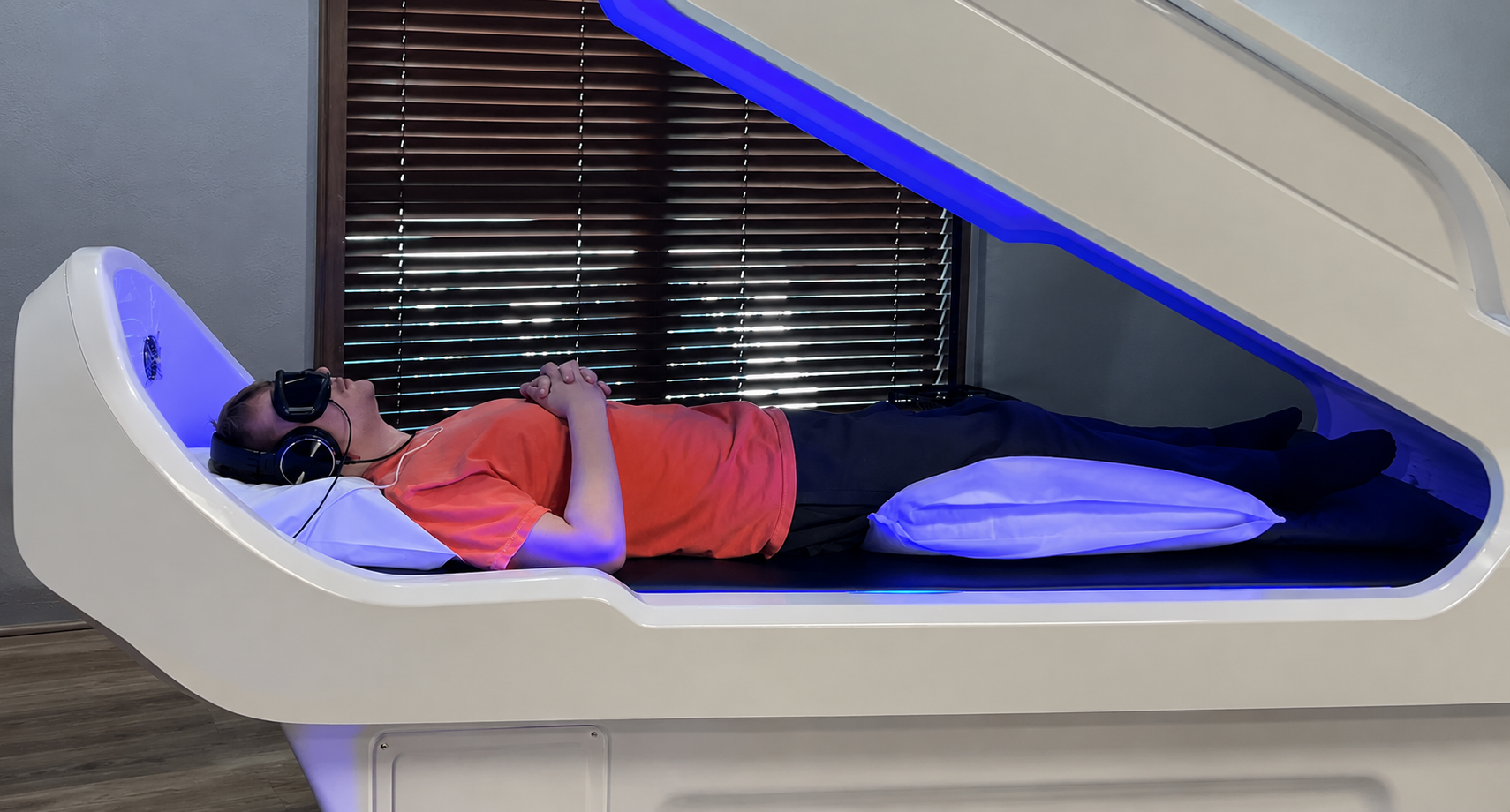
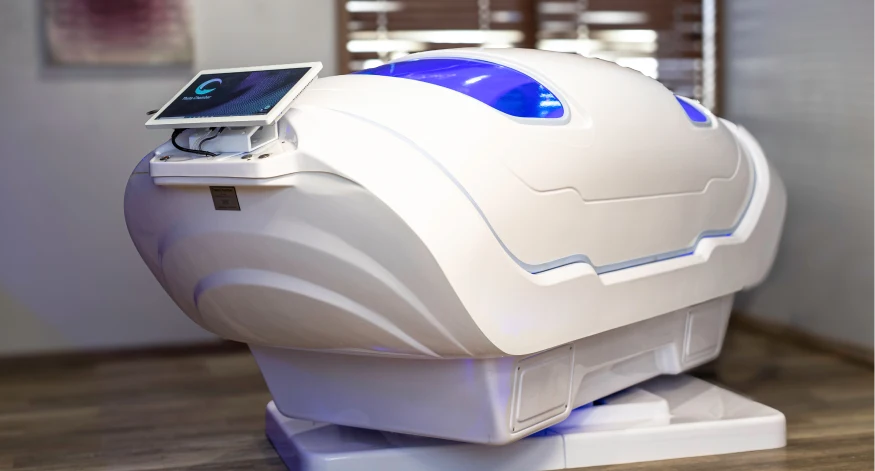
The Theta Chamber takes a different approach. Instead of asking the mind to force itself into quiet, it gives the brain and body a coordinated set of signals: gentle motion, sound, light, low-level electrical stimulation, PEMF, and a deeply supported resting environment. Each piece has its own purpose, but the real story is not found in any one component by itself. The real story is how these signals work together.
That is why I often describe the Theta Chamber as a multisensory relaxation and entrainment experience. It is a layered sensory environment designed to help the nervous system shift out of guarded, overactive, high-alert processing and into a more receptive state. Many people are not simply “stressed.” They are overloaded. Their nervous system has been asked to carry too much for too long. The Theta Chamber gives the body a different kind of input: rhythmic, predictable, gentle, and immersive. In plain language, it gives the brain fewer reasons to defend and more reasons to let go.
Spin into Wellness in Oklahoma’s First Theta Chamber!
The brain is built for rhythm
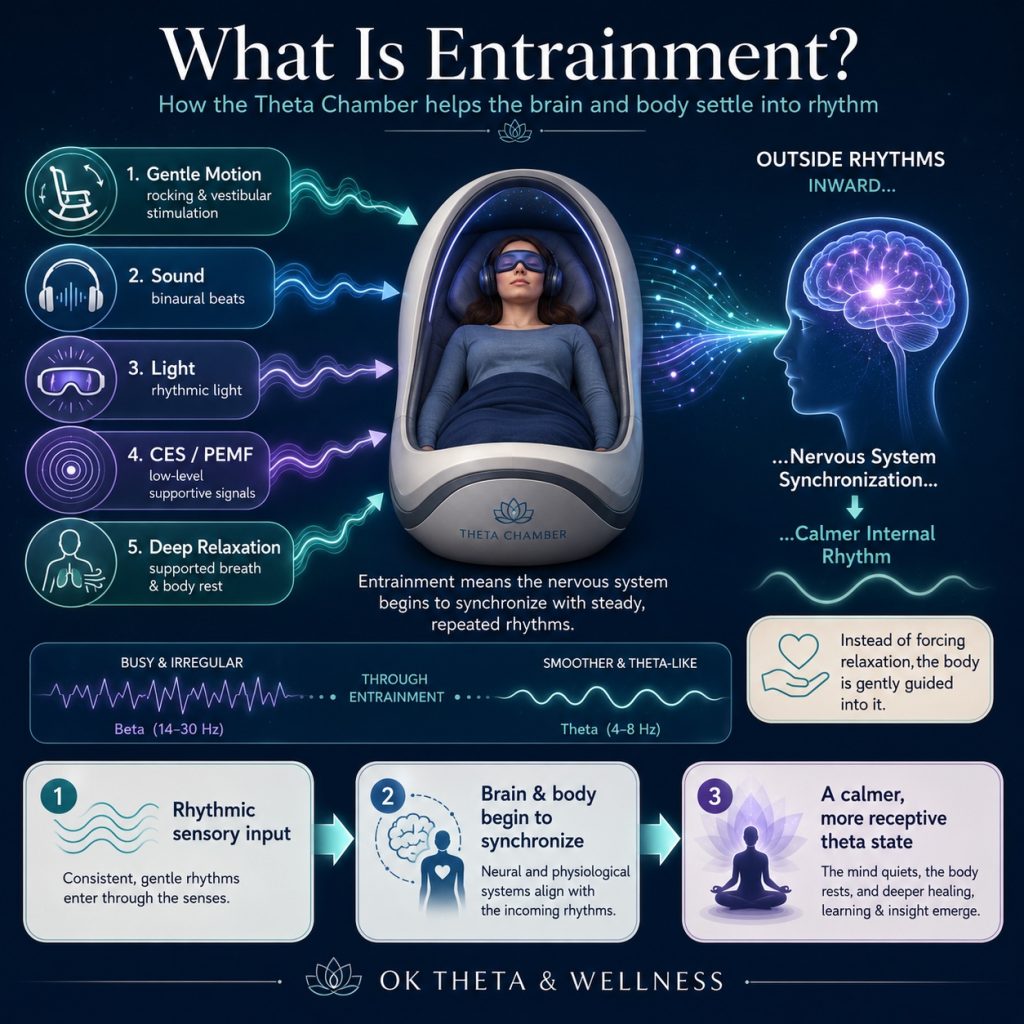
The brain is not a static machine. It is rhythmic. Breathing has rhythm. Heart rate has rhythm. Walking has rhythm. Sleep cycles have rhythm. Neural networks communicate partly through oscillations, or brainwave patterns, that help coordinate timing across different brain regions. This is where the concept of entrainment becomes important. Entrainment simply means that one rhythm can influence another rhythm. In neuroscience, rhythmic sensory input can affect the timing of brain activity. A major review on neuronal entrainment describes it as a way the brain couples its own rhythmic activity to external and internal rhythmic events, helping organize attention and sensory processing. (PMC)
Entrainment does not mean every rhythmic stimulus automatically “forces” the brain into a specific state. The brain is more intelligent than that. It is not a metronome with a skull. It is adaptive, context-sensitive, and variable from person to person. But rhythm does matter. The nervous system listens to repeated patterns, and the Theta Chamber uses this principle by combining several kinds of rhythmic input at once: vestibular motion, pulsed sound, light stimulation, PEMF, and cranial electrotherapy stimulation. Sessions are not designed to overpower the brain, but rather to create an environment where relaxation becomes easier to access.
Multisensory integration: why the whole matters more than the parts
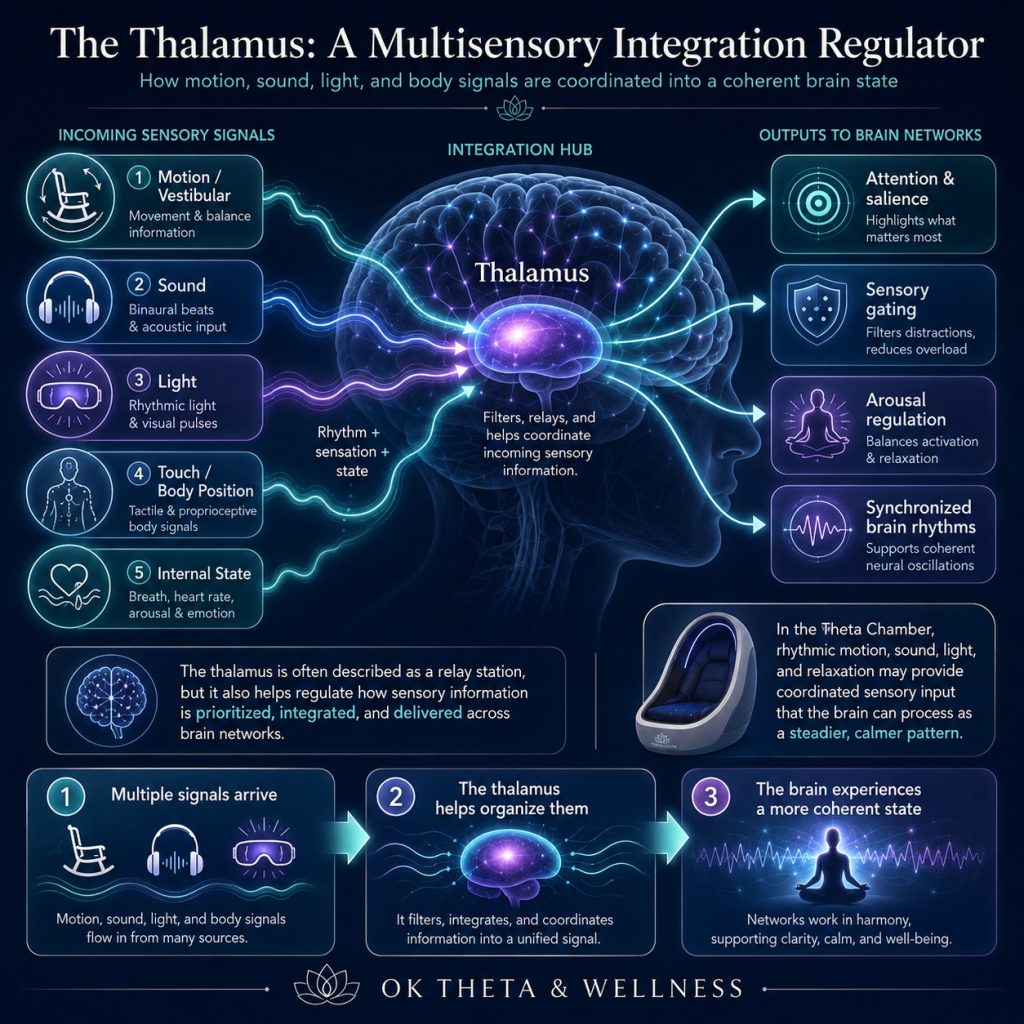
The brain does not experience the world in isolated compartments. Sound, light, movement, touch, body position, and emotion are constantly being woven together into one felt experience. This is called multisensory integration.
Research has shown that multisensory integration happens across both cortical and subcortical brain regions. The thalamus, often described as a sensory relay station, appears to play an important role in coordinating information across sensory channels, not merely passing signals forward like a clerk stamping paperwork. (PMC) Other reviews describe multisensory integration as a distributed process involving multiple brain regions rather than one single “integration center.” (Royal Society Publishing)
This is one of the key ideas behind the Theta Chamber. A single relaxing sound may help. Gentle motion may help. Reduced light may help. But when the nervous system receives multiple coherent signals at the same time, the message becomes more convincing. The body begins to receive a whole-environment signal that says: you are safe enough to soften. That is different from simply telling someone, “Relax.” The Theta Chamber is trying to communicate with the nervous system in its own language: rhythm, repetition, sensation, and safety.
Gentle motion and the vestibular system
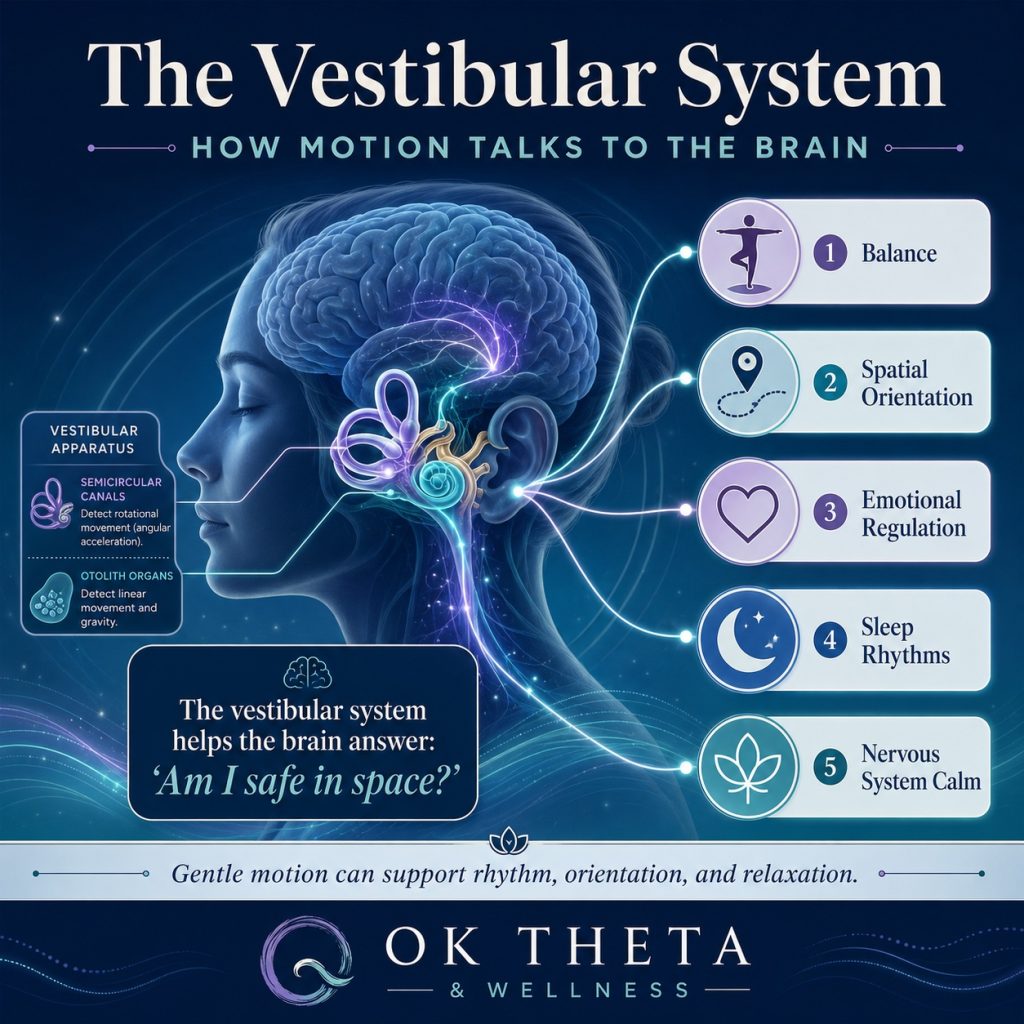
One of the most unique parts of the Theta Chamber is the gentle motion of the bed. This engages the vestibular system, which is the sensory system involved in balance, spatial orientation, and the body’s relationship to gravity. The vestibular system is not just about whether we feel dizzy or balanced. It has deep connections with brainstem systems, autonomic regulation, posture, eye movements, attention, and emotional state. This makes sense clinically. Rocking calms babies. Walking helps people think. Gentle repetitive movement often helps the body settle before the mind can explain why.
Studies of vestibular stimulation show that influencing vestibular input can alter brain activity. For example, noisy galvanic vestibular stimulation has been shown to modulate EEG activity, including changes in cortical power patterns. (PMC) Other work has explored vestibular stimulation in neurological conditions and motor regulation, including Parkinson’s disease research. (ScienceDirect)
Now the Theta Chamber is not the same thing as galvanic vestibular stimulation. But the broader point holds: vestibular input is a powerful signal to the nervous system. Gentle rhythmic motion may help the body enter a more regulated state because the brain is receiving predictable, repetitive information about movement and orientation. In everyday language, the motion gives the nervous system something steady to ride.
Binaural beats and sound entrainment
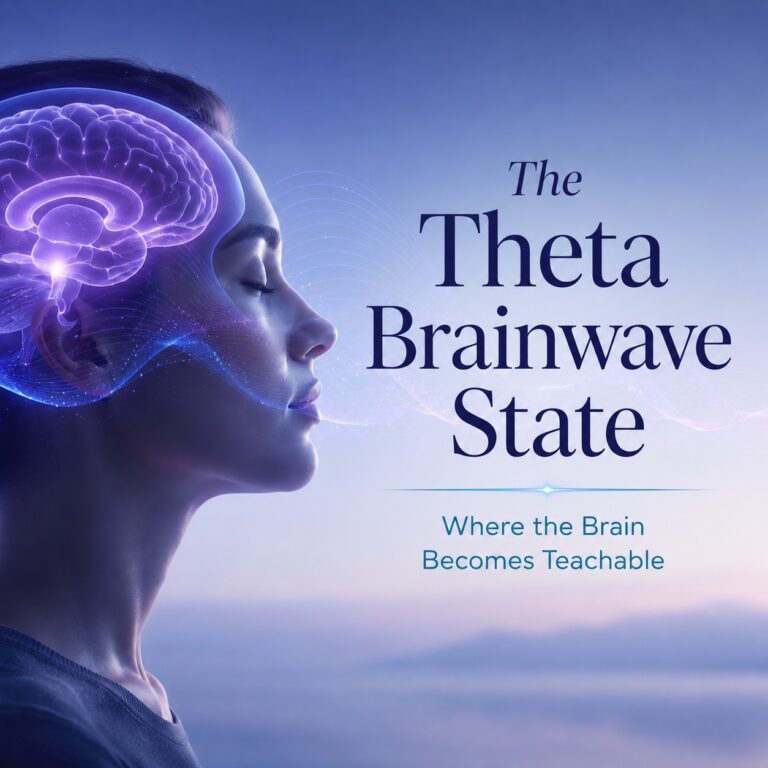
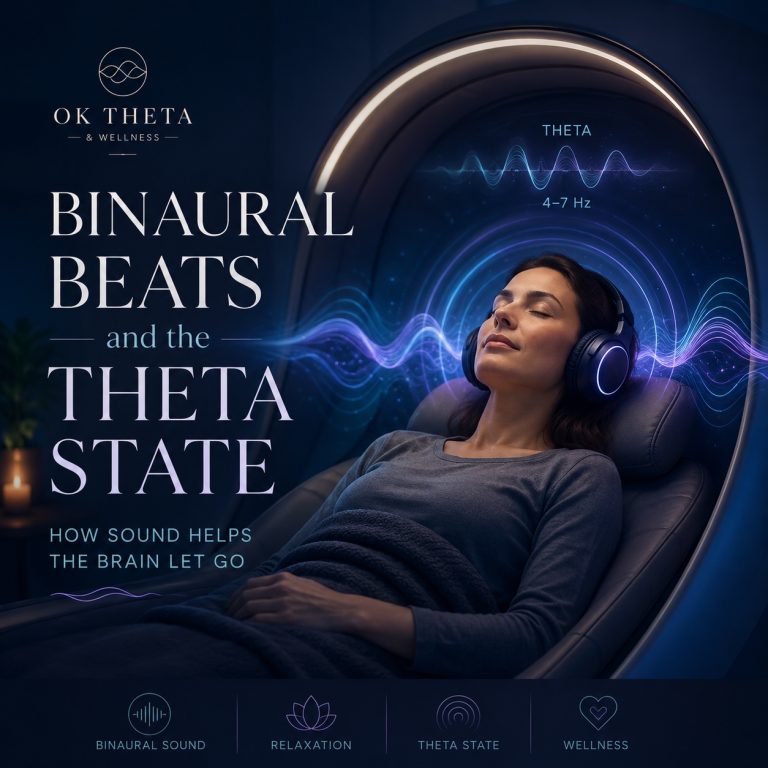
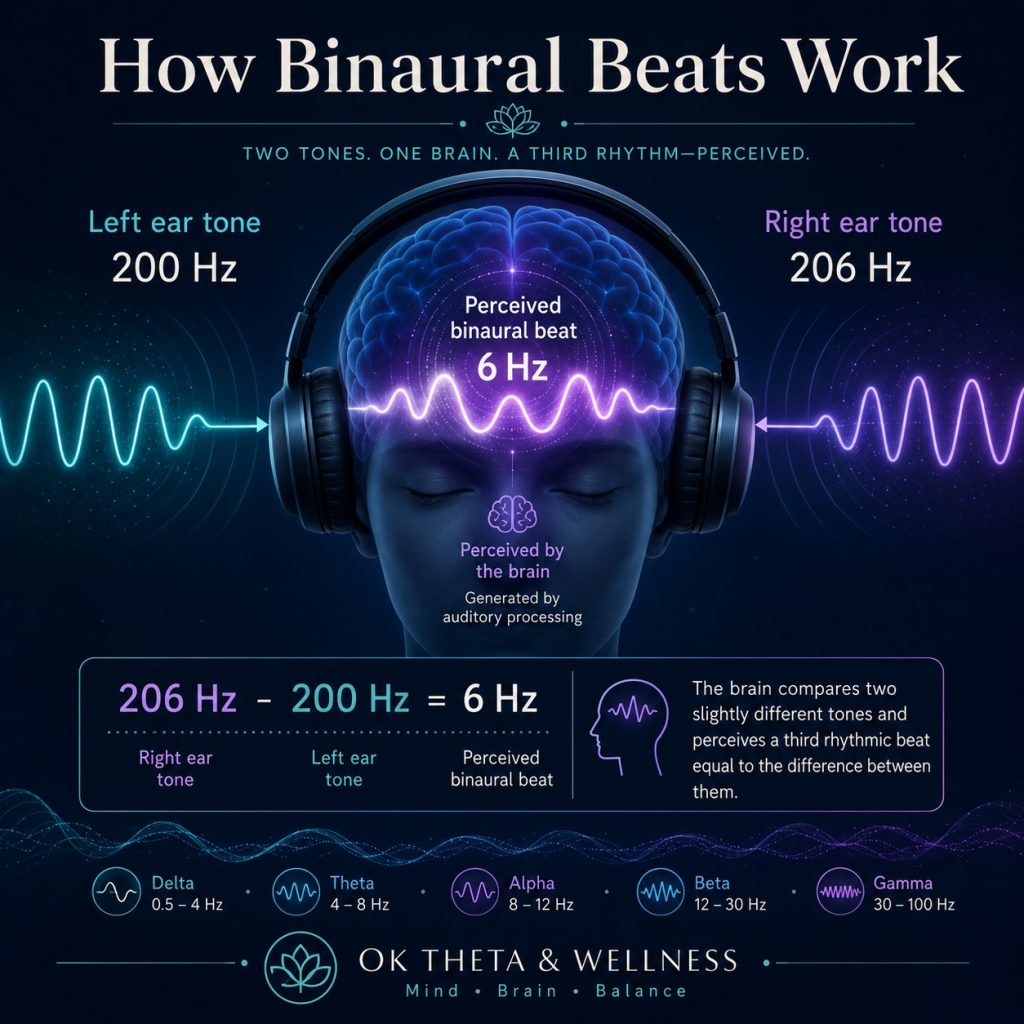
Binaural beats happen when each ear receives a slightly different tone. The brain perceives the difference between the two frequencies as a third rhythmic beat. For example, if one ear hears 200 Hz and the other hears 206 Hz, the perceived beat is 6 Hz, which falls in the theta range. Theta brainwave activity is often associated with drowsiness, early sleep, internal attention, memory processing, meditation, and emotional processing. That does not mean theta is magical. It means theta is one of the brain’s natural rhythms, and certain states of consciousness tend to involve more of it.
The research on binaural beats is interesting, but it is also mixed. A 2023 systematic review found that binaural beat studies vary widely in methods and results, with inconsistent evidence for reliable brainwave entrainment. (PMC) A 2024 review similarly noted inconsistency across studies, with some supporting effects and others finding limited or no significant EEG change. (The Open Public Health Journal) That caution is important. Binaural beats should not be presented as a guaranteed neurological lever.
But within the Theta Chamber, binaural beats are not working alone. They are one part of a larger sensory environment. Sound provides rhythm. Rhythm provides structure. Structure gives the mind something to settle into. When paired with motion, light, relaxation, and reduced external demands, binaural beats may contribute to the overall state shift even when the scientific literature remains variable on their isolated effects.
Strobing goggles and light entrainment
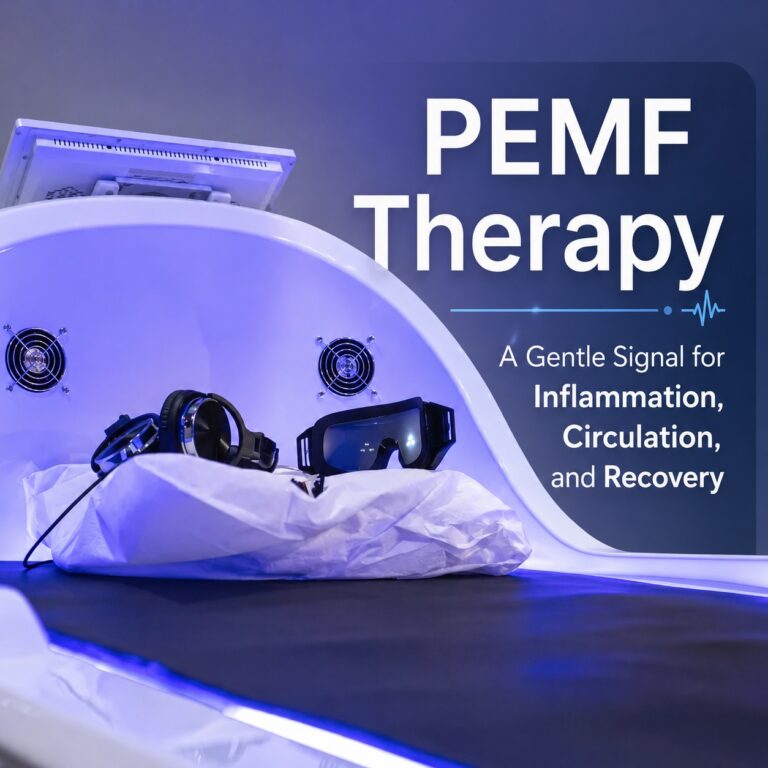
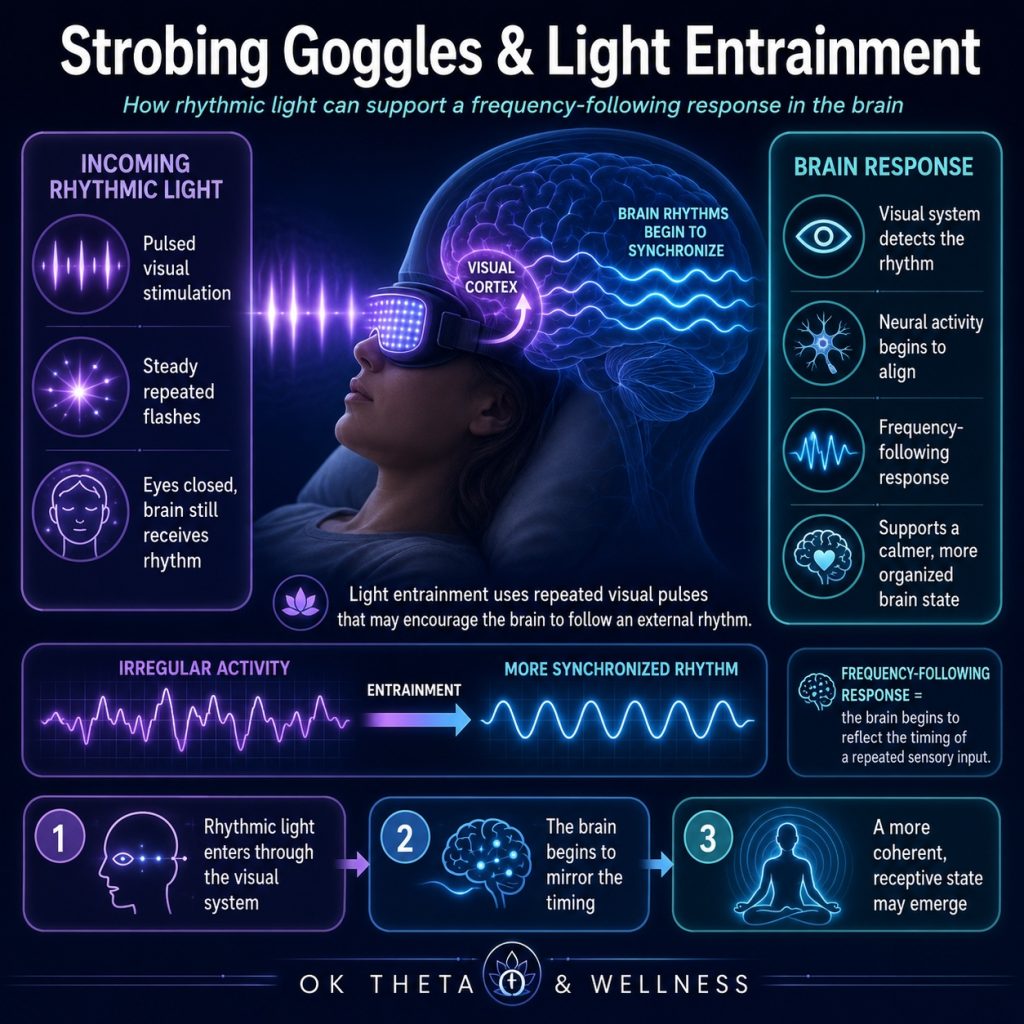
The visual system is another major pathway for rhythmic stimulation. Strobing goggles use pulses of light, usually with eyes closed, to create rhythmic visual input. This can produce a frequency-following response in the brain, where neural activity becomes more synchronized with the timing of the stimulus.
A review of brainwave entrainment describes photic and auditory stimulation as methods used to influence brainwave frequency and psychological states. (PubMed) Research on pulsed light stimulation has also shown measurable changes in EEG activity, including changes in alpha activity in occipital and other brain regions. (PMC) More recent work continues to explore stroboscopic light stimulation and its ability to produce visual phenomena and altered-state experiences, while also emphasizing safety considerations. (MedRxiv)
Strobing light is not appropriate for everyone, especially people with a history of photosensitive seizures or certain neurological conditions. At OK Theta & Wellness, this is why screening and individualized settings matter. When used appropriately, the light component can add a visual rhythm to the session. The eyes are closed, but the brain still receives patterned input. In combination with sound and motion, the goggles help create an immersive environment where the outside world recedes and internal awareness becomes easier to access.
PEMF therapy: a body-level rhythm
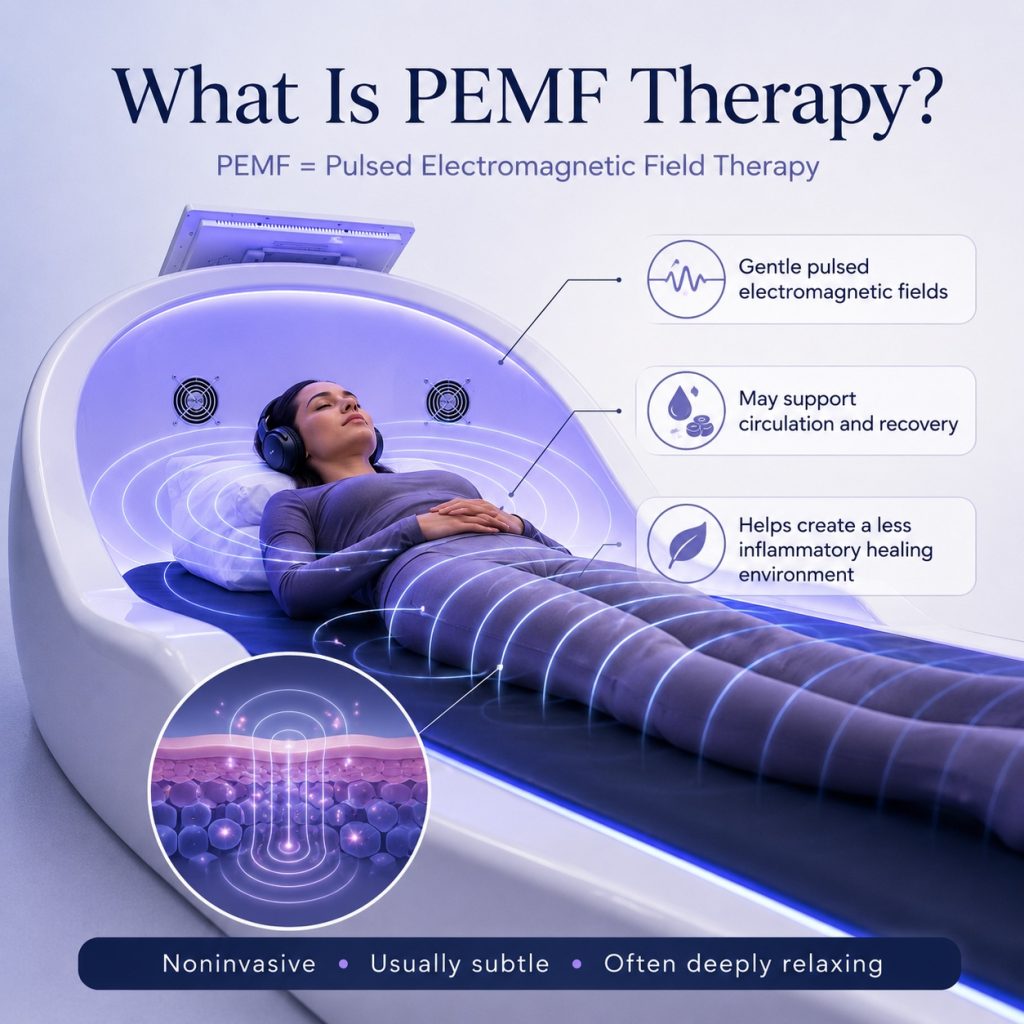
PEMF stands for pulsed electromagnetic field therapy, delivering low-frequency electromagnetic pulses to the body. In many clinical settings, it has been studied for pain, bone healing, tissue repair, inflammation, and physical function. PEMF appears to influence inflammatory signaling in a way that may help tissues shift toward a less inflamed, more repair-oriented state.
The evidence varies depending on the condition, device, intensity, frequency, and treatment schedule. A 2025 PLOS ONE meta-analysis found PEMF therapy significantly reduced short-term pain in osteoarthritis studies, while also noting the need for careful interpretation and more research. (PLOS) So again, the grounded position is this: PEMF is promising in some areas, mixed in others, and highly dependent on protocol.
Your body is already electrical. Nerves, muscles, bone, fascia, blood vessels, and cell membranes all depend on electrical gradients. PEMF does not “charge the body” like a battery. A better way to think of it is that PEMF provides a rhythmic environmental signal that cells may respond to.
In the Theta Chamber, I think of PEMF less as a stand-alone “miracle therapy” and more as another rhythmic layer. It gives the body a pulsed signal while the brain is also receiving rhythmic motion, sound, and light. For some people, that added body-level input may deepen the sense of physical relaxation. For others, we may modify or avoid it depending on medical history, implanted devices, sensitivity, or comfort. This is a recurring theme: the technology is only as useful as the judgment behind it.
Cranial electrotherapy stimulation: a gentle electrical signal
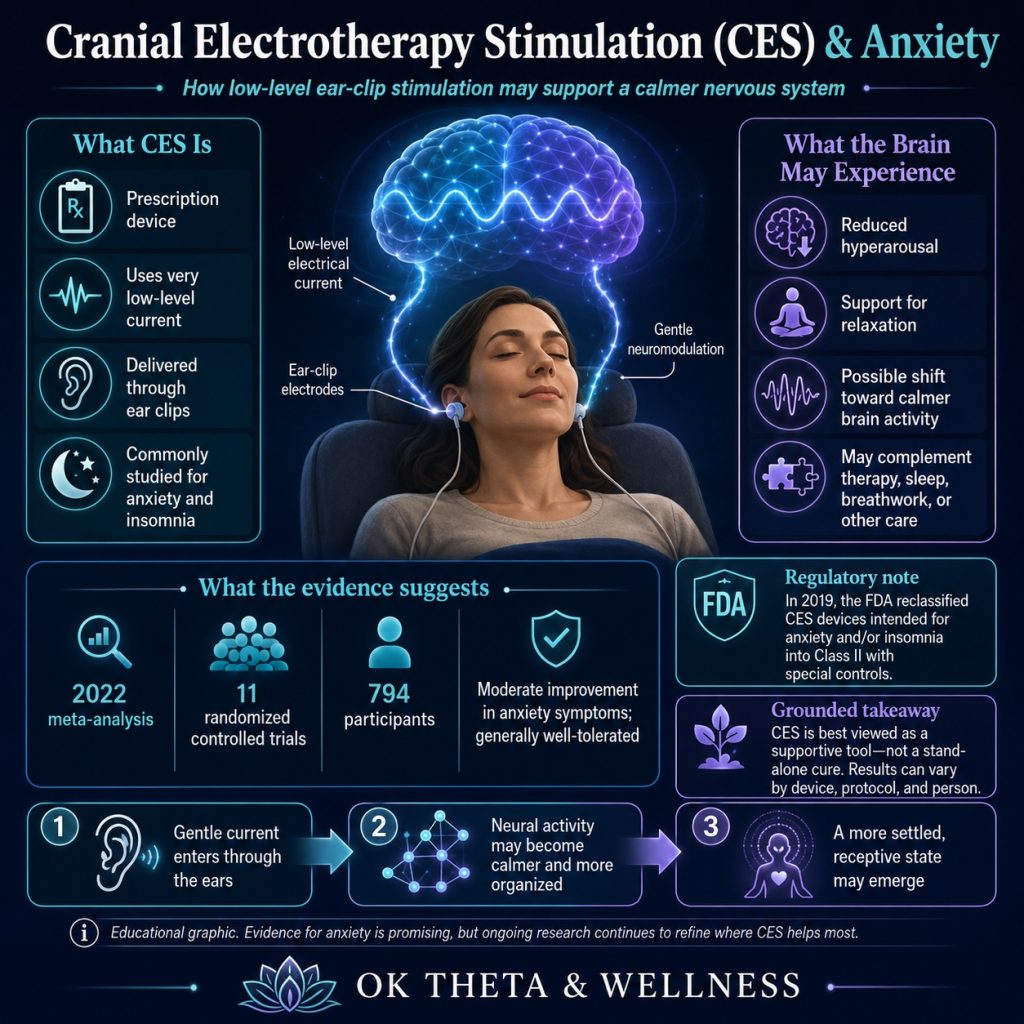
Cranial electrotherapy stimulation, or CES, uses very low-level electrical current, delivered through ear clips, with the intent of influencing brain and nervous system activity. Such devices have been studied for anxiety, insomnia, depression, pain, and stress-related symptoms.
A review of CES found that evidence appears more consistent for anxiety than depression. (Frontiers) A different neuroimaging study found that CES altered brain activity patterns and connectivity, including effects involving the default mode network. (PMC)
In the Theta Chamber, CES is another quiet layer in the stack. It is not dramatic or meant to feel forceful. It is a low-level signal that may help support relaxation and nervous system modulation. As with light stimulation and PEMF, CES should be used thoughtfully. People with certain implanted devices, seizure history, pregnancy, or other medical considerations should be screened carefully. Good wellness care is not just about offering tools. It is about knowing when to use them, when to modify them, and when not to use them.
Relaxation is not passive
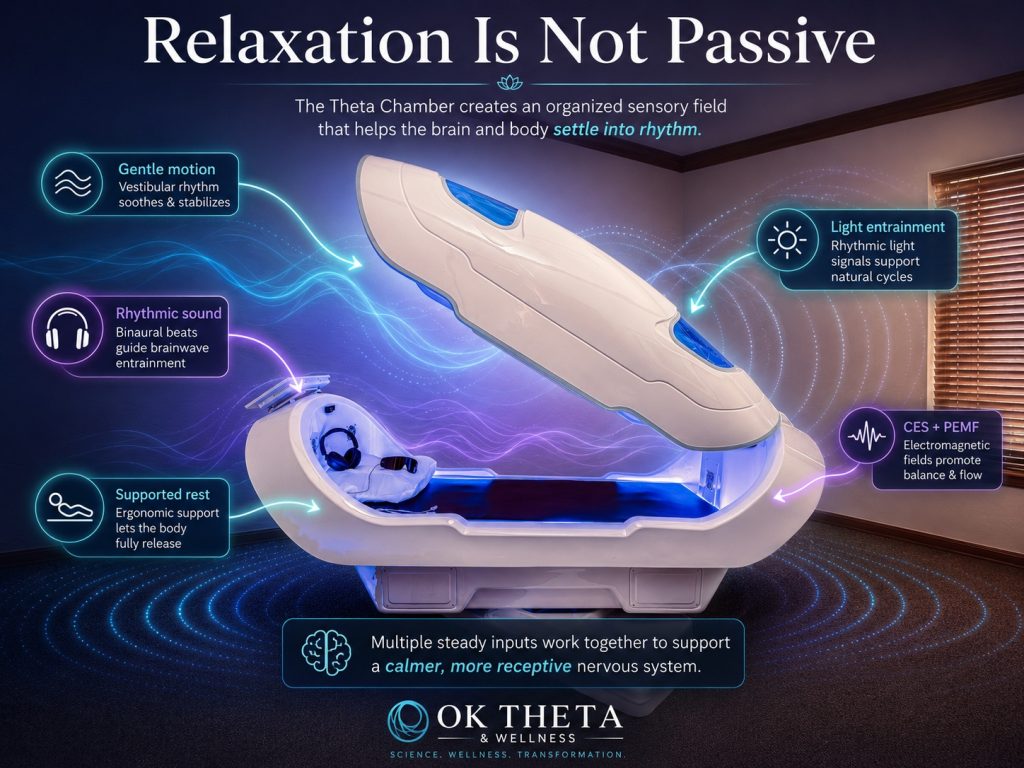
One of the misconceptions about deep relaxation is that it is passive. People imagine relaxation as doing nothing. But from a nervous system perspective, relaxation can be an active physiological shift. The body must reduce threat monitoring. Muscle tone changes. Breathing changes. Attention changes. The autonomic nervous system shifts, transitioning the mind from external problem-solving into internal processing. This transition can make the brain become less defended and more receptive.
This is why the Theta Chamber experience can feel different from simply lying on a couch. The chamber creates an organized sensory field with the body is supported in a gently rotating bed. Sound gives rhythm. Light gives rhythm. CES and PEMF provide additional low-level stimulation. The environment narrows competing inputs. The mind is not asked to wrestle itself into stillness. It is invited. That distinction matters.
The Theta Chamber as a “sensory safety signal”
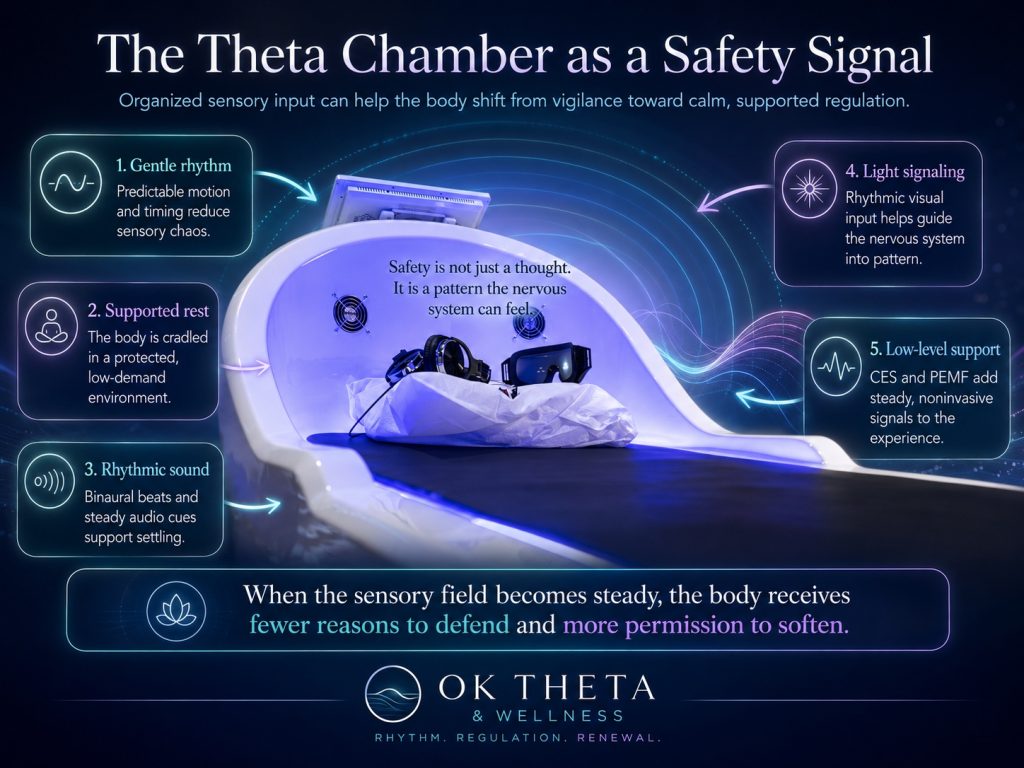
My favorite way to explain the Theta Chamber is this: it creates a sensory safety signal. The modern nervous system is often bombarded by mismatch. Screens are bright. Notifications are unpredictable. Stress is constant. Sleep is inconsistent. Movement is limited. Breathing is shallow. Noise is everywhere. The brain receives a thousand little messages that say, “Stay ready.”
The Theta Chamber gives the brain repetition instead of chaos. Rhythm instead of interruption. Support instead of vigilance. Internal awareness instead of external demand. From a neuroscience standpoint, we can talk about entrainment, vestibular pathways, thalamocortical processing, autonomic regulation, multisensory integration, and oscillatory timing. From a human standpoint, we can say it more simply: The chamber helps the body remember what calm feels like. A deeper, body-led quiet.
Why this matters for emotional processing and neuroplasticity
When the nervous system feels safer, people often gain access to thoughts and emotions they could not easily reach in a defended state. This does not mean every session is emotional. Some people simply rest while others fall asleep. It is not uncommon to notice colors, memories, body sensations, or unexpected insights. Some just feel quiet for the first time in a long time. That is enough.
In my view, the Theta Chamber is not about escaping the self. It is about creating enough quiet that the self can be observed with less fear. This is where the “theta” concept becomes meaningful. Theta is often associated with internal attention, memory, and meditative states. The chamber gives people a structured way to practice being with themselves without having to generate the state entirely on their own.
That may be especially helpful for people who say, “I can’t meditate.” Many people cannot sit still and drop into calm by willpower. But when the body is rhythmically supported, the door may open more easily.
A grounded conclusion
The Theta Chamber is best understood as a multisensory nervous system experience. Motion, sound, light, PEMF, CES, and relaxation all contribute something. The literature behind each component is not equally strong, and some areas remain mixed or early. That honesty matters.
But the deeper logic is sound: the brain is rhythmic, embodied, sensory, and integrative. It does not separate motion from emotion as cleanly as we sometimes pretend, nor does it process sound, light, touch, and body position in isolation. It is constantly asking, “Am I safe? Do I need to defend? Can I soften?” The Theta Chamber answers with rhythm.
Ready to Experience the Theta Chamber?
At OK Theta & Wellness in Oklahoma City, we use the Theta Chamber to support deep relaxation, nervous system regulation, emotional processing, and a more receptive internal state.
If your body has been running in high gear, if your mind has trouble slowing down, or if traditional meditation has never quite clicked, this may be a different doorway.
Schedule your first Theta Chamber session and experience what it feels like when the body is gently guided into calm. Contact us if you have questions. We are happy to help.
Revitalize Your Mind,
Renew Your Body