
EECP Therapy in Oklahoma City: How It Works and Whole-Body Benefits

At OK Theta & Wellness, we talk a lot about the nervous system, the brain, oxygen delivery, recovery, and resilience. But underneath all of those conversations is something very basic: circulation.
Blood flow is not just a heart issue. It is a brain issue. It is an energy issue. It is a kidney issue. It is a leg-strength issue. It is a healing issue. If the body is a farm, circulation is the irrigation system. You can have good soil, good seed, and good sunlight, but if the water does not reach the field, growth is limited.
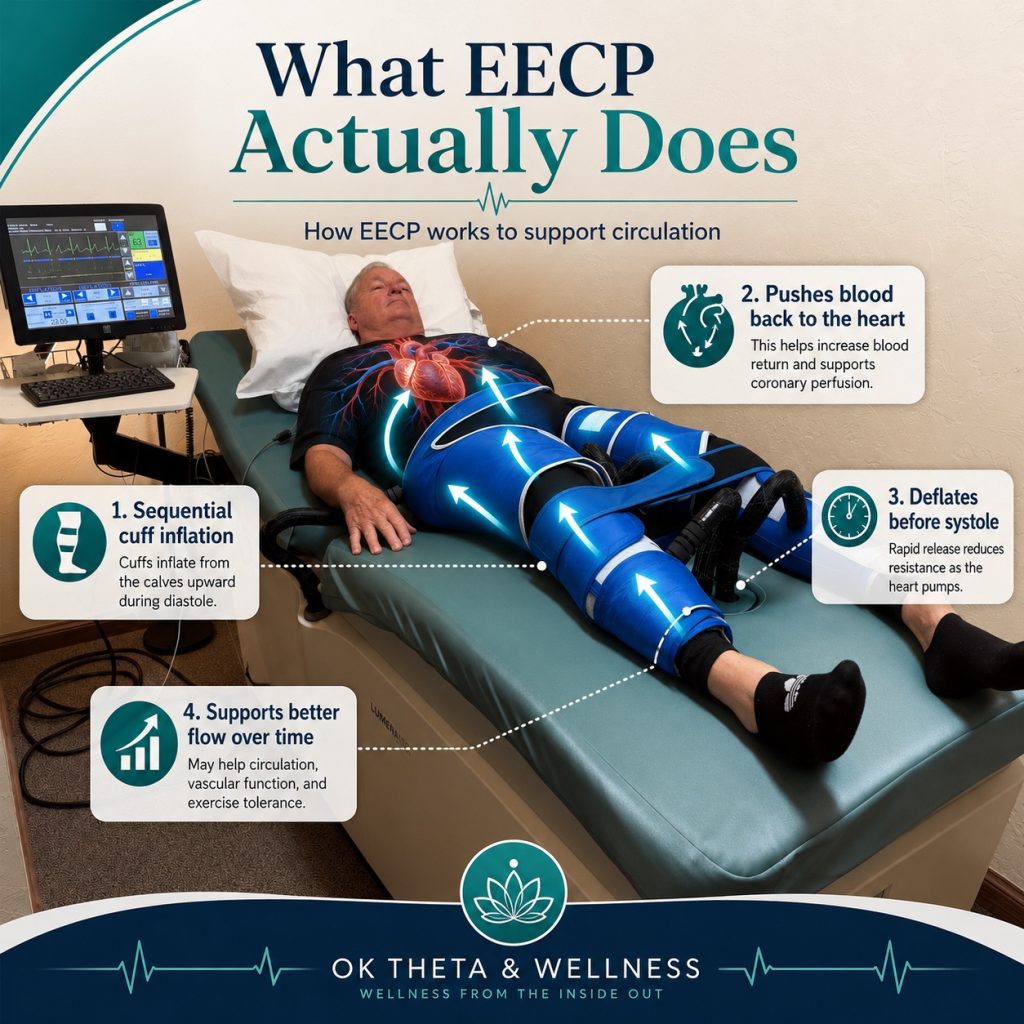
That is why we are excited about EECP therapy. EECP stands for Enhanced External Counterpulsation. It is a non-invasive therapy designed to support blood flow using large inflatable cuffs wrapped around the legs and hips. During treatment, the patient lies comfortably while the cuffs inflate and deflate in rhythm with the heartbeat. The goal is simple but powerful: help push blood back toward the heart during the resting phase of the cardiac cycle, improve circulation, and support vascular function from the heart outward.
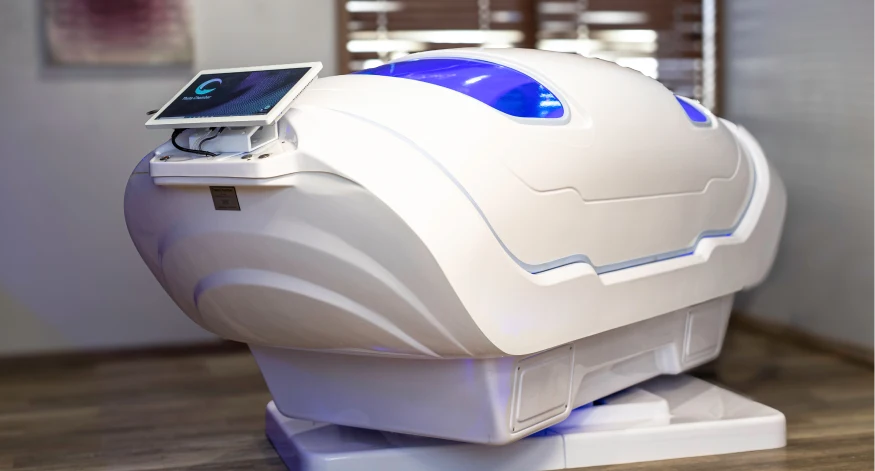
Spin into Wellness in Oklahoma’s First Theta Chamber!
How EECP Works
To understand EECP, it helps to understand the rhythm of the heart.
The heart has two major phases. During systole, the heart contracts and pumps blood forward. During diastole, the heart relaxes and refills. Diastole is also when the coronary arteries, the blood vessels that feed the heart muscle itself, receive much of their blood flow.
EECP is timed to this natural rhythm.
During diastole, the cuffs inflate sequentially from the calves upward toward the thighs and hips. This creates an external wave of pressure that helps move blood upward toward the heart. During systole, the cuffs rapidly deflate, reducing resistance and allowing the heart to pump with less strain.
In plain language, EECP acts like an external circulation assistant. It does not replace the heart. It works with the heart. It gives circulation a rhythmic push, almost like a second set of hands helping move blood through the body’s vascular highways.
This is why EECP has traditionally been studied in cardiovascular disease, especially chronic angina and ischemic heart disease. But the literature has expanded well beyond that. A 2020 expert consensus paper described EECP’s clinical application across multiple conditions, including angina, heart failure, cerebrovascular disease, sleep disorders, diabetes, neurodegenerative conditions, sudden hearing loss, erectile dysfunction, and psychiatric conditions. That does not mean EECP is a cure-all, but it does tell us something important: researchers are looking at EECP as a systemic circulation therapy, not just a narrow heart treatment. (PubMed)

The Vascular System Is an Organ of Adaptation
One of the most important ways EECP may support the body is through the endothelium.
The endothelium is the thin inner lining of the blood vessels. It is not just passive wallpaper inside the arteries. It is an active, living interface that helps regulate blood vessel tone, inflammation, clotting, vascular flexibility, and nitric oxide production.
Nitric oxide matters because it helps blood vessels relax and widen. When nitric oxide signaling improves, vessels can become more responsive. They can “open the gate” more effectively when tissue needs oxygen and nutrients.
Several studies have connected EECP with improved endothelial function. A 2022 randomized controlled trial in patients with coronary artery disease found that EECP improved endothelial dysfunction and increased long-term exercise tolerance. The study also reported increases in VEGF and VEGFR2, which are involved in vascular growth and repair signaling. (PubMed) A systematic review and meta-analysis evaluating endothelial function through flow-mediated dilation also reported that EECP improved this marker of vascular health. (PubMed)
That matters because improved blood flow is not only about pushing more volume through a pipe. It is about helping the pipe become healthier, more flexible, and more responsive. EECP creates pulsatile blood flow and shear stress along the vessel wall. That shear stress is one of the ways the body “hears” the message that circulation needs to adapt.
In that sense, EECP is a kind of vascular workout. Not a treadmill workout. Not a weight room workout. A blood-vessel workout.

Why Whole-Body Benefits Make Sense
When circulation improves, the benefits do not have to stay confined to the chest.
The heart is the pump, but the vascular system is the delivery network. If oxygen-rich blood reaches tissue more efficiently, the downstream effects may show up in many places: energy, stamina, exercise tolerance, cognitive clarity, leg heaviness, recovery, and tissue health.
That is why the whole-body literature is so interesting.
In the kidney literature, a 2023 systematic review concluded that EECP may increase renal perfusion and may have beneficial effects on kidney-related hemodynamics in several clinical settings. (PMC) In the erectile dysfunction literature, a narrative review described EECP as a non-invasive option that has been studied for improving erectile function, likely through increased pelvic blood flow and nitric oxide-related mechanisms. (PMC)
These are different organs, but they share a common theme: blood flow.
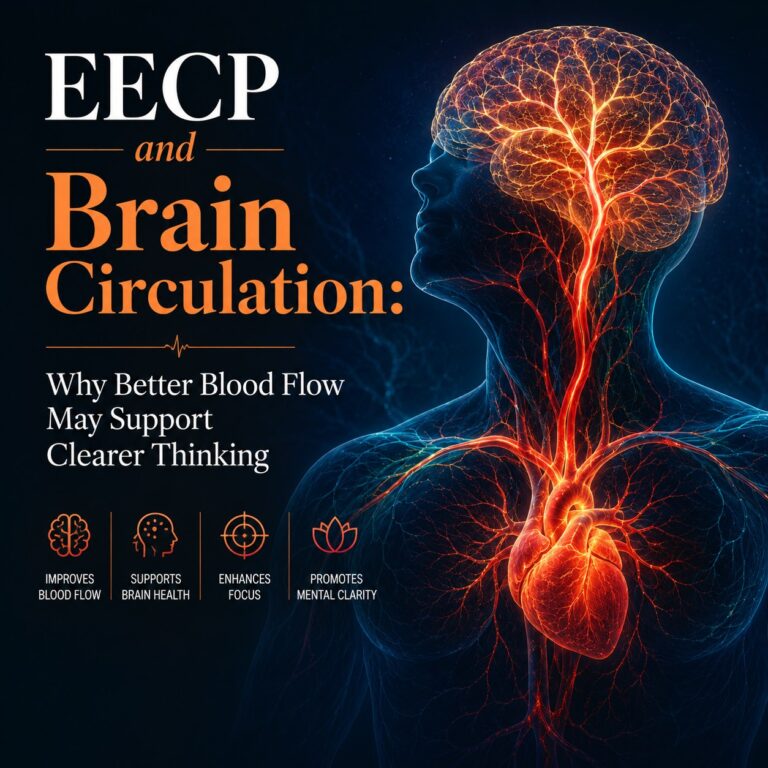
The brain is another important part of this conversation. EECP has been studied for its effects on cerebral blood flow and brain-heart coupling. One 2023 Frontiers in Physiology paper discussed EECP’s influence on cardiac function, hemodynamics, cerebral blood flow, and heartbeat-evoked potential, which is a way of studying brain-heart communication. (ResearchGate)
That is where the conversation becomes especially relevant to people dealing with brain fog, fatigue, and post-viral dysautonomia.

EECP, Long COVID, and POTS
Long COVID has forced medicine to pay closer attention to the overlap between circulation, autonomic regulation, endothelial dysfunction, inflammation, fatigue, and cognition.
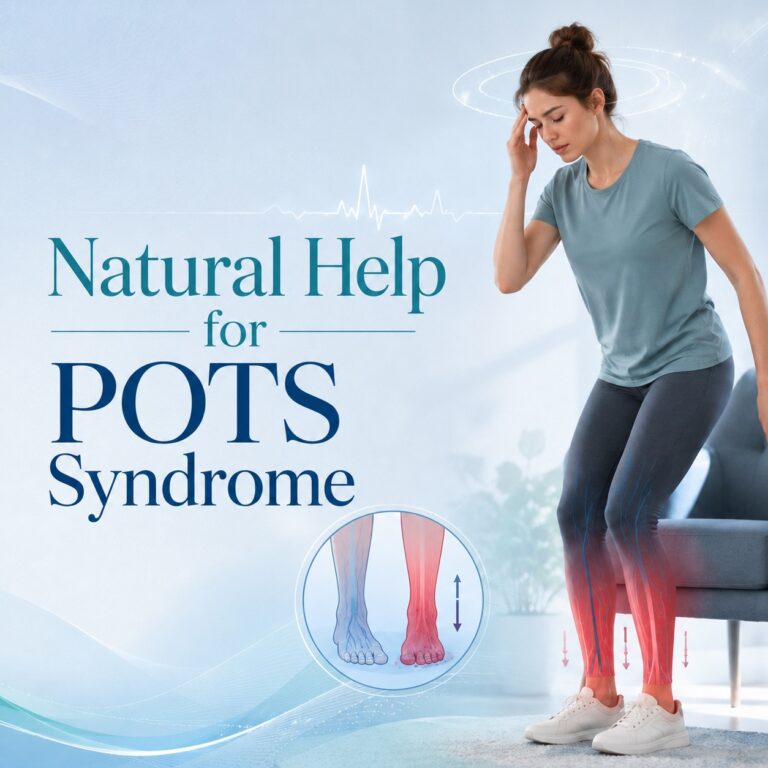
Many people with Long COVID describe symptoms that do not fit neatly into one box: shortness of breath, exercise intolerance, palpitations, dizziness, brain fog, fatigue, and post-exertional crashes. Some develop POTS, or postural orthostatic tachycardia syndrome, where the heart rate rises excessively when standing. But POTS is not just a fast heart rate problem. It is often a gravity, circulation, blood vessel tone, and autonomic regulation problem.
That is why EECP is being explored in this space.
A 2021 Cureus case report described the successful use of EECP in a patient with Long-COVID-associated POTS. After 15 one-hour sessions over three weeks, the patient reported improvement in brain fog, daily function, functional capacity, and six-minute walk distance. The authors specifically noted that this was the first published case of EECP being used successfully for COVID-19-associated POTS and called for further trials. (PubMed)
A 2022 Long COVID cohort study treated patients with 15 to 35 EECP sessions and found improvements in validated fatigue and cardiovascular markers, with patients reporting better quality of life and return to normal daily activities. (ScienceDirect) More recent Long COVID research has continued in that direction. A 2024 matched-control observational study reported that EECP improved Long COVID-associated fatigue and cardiopulmonary symptoms compared with controls. (MDPI) Another 2024 study found that EECP led to significant improvement in cognitive functioning among Long COVID patients with objectively defined cognitive impairment at baseline. (PubMed)
This is promising, but we should be honest about the state of the literature. EECP for Long COVID and POTS is not yet a settled, fully established standard of care. The available evidence includes case reports, retrospective cohorts, observational data, and emerging comparative studies. Larger randomized controlled trials are still needed. But the mechanism makes sense.
If Long COVID and POTS involve impaired vascular regulation, endothelial dysfunction, poor venous return, abnormal autonomic responses, reduced exercise tolerance, and brain fog, then a therapy that supports circulation, shear stress, endothelial signaling, and central blood flow deserves serious attention. Not hype. Not overpromising. Just careful, grounded attention.

What EECP Feels Like
A typical EECP session is non-invasive. The patient lies down while cuffs around the legs and hips inflate and deflate in rhythm with the heartbeat. The sensation is firm pressure, timed and repetitive, moving upward through the legs.
Many people describe it as unusual at first, then surprisingly relaxing once they settle into the rhythm. There are no needles, no surgery, and no medication involved in the session itself. For many patients, the experience feels like the body is being gently assisted from the outside, one heartbeat at a time.
That said, EECP is still a medical-style therapy and should be evaluated appropriately. It may not be right for everyone, especially people with certain vascular, cardiac, bleeding, clotting, or severe valve-related conditions. A proper consultation matters. The goal is not to put every person into every therapy. The goal is to match the right therapy to the right physiology.
Why We Brought EECP to OK Theta & Wellness
At OK Theta & Wellness, we are interested in therapies that help the body regulate itself better.
The theta chamber supports nervous system regulation. StemWave supports tissue signaling. IV therapies can support nutrient status and recovery. EECP fits into that same philosophy by supporting circulation, vascular responsiveness, and blood flow.
We brought EECP into the clinic because circulation sits at the root of so many symptoms people struggle to explain. Fatigue. Brain fog. Poor stamina. Cold extremities. Exercise intolerance. Recovery that feels slower than it should. Post-viral symptoms. Long COVID. POTS-like patterns. Vascular aging. Reduced resilience.
Not all of these problems are solved by circulation alone. The body is not that simple. But circulation is often one of the first places worth looking because every organ depends on delivery.
Oxygen has to arrive. Nutrients have to arrive. Waste has to leave. Blood vessels have to respond. The heart, brain, kidneys, muscles, and nervous system are all part of the same river system.
EECP is one way to support that river.
A Different Way to Think About Circulation
Most people do not think about their blood vessels until something goes wrong. But vascular health is not just about avoiding a heart attack or stroke someday. It is about how well the body functions today.
- Can you think clearly?
- Can you walk farther?
- Can you recover after activity?
- Can your body tolerate standing?
- Can your brain get enough oxygen when gravity is pulling blood downward?
- Can your vessels flex when the moment demands it?
These are practical questions. Oklahoma questions, really. Not fancy. Just: does the system hold up when life asks it to work?
EECP gives us a tool to support that system from the legs back to the heart, from the heart out to the organs, and from circulation into whole-body function.
Ready to Explore EECP?
If you are dealing with fatigue, brain fog, circulation concerns, exercise intolerance, Long COVID symptoms, POTS-like symptoms, or simply want to better understand your vascular health, EECP may be worth a conversation.
At OK Theta & Wellness, we would be honored to help you determine whether EECP fits your situation. We will look at your goals, your symptoms, your history, and your overall physiology, then help you decide whether this therapy belongs in your recovery plan.
Schedule an EECP consultation with OK Theta & Wellness today and let’s find out whether better circulation could be part of your next step forward.