
Exercise Without Exercise? EECP Therapy And Cardiovascular Benefits

Exercise without exercise: EECP therapy is a phrase I use to help people understand one of the most interesting things about enhanced external counterpulsation. EECP does not replace walking, strength training, or traditional cardiovascular exercise, but it may offer a low-strain way to support circulation, stamina, and cardiovascular function when intense workouts are not realistic.
Some people want to improve their cardiovascular health, but intense workouts are not currently possible. Maybe they deal with fatigue, poor stamina, chest discomfort, shortness of breath, joint pain, neuropathy symptoms, long COVID-like crashes, dizziness, deconditioning, or a body that simply does not recover well after exertion. For those people, the idea of pushing harder can feel less like a health plan and more like a threat.
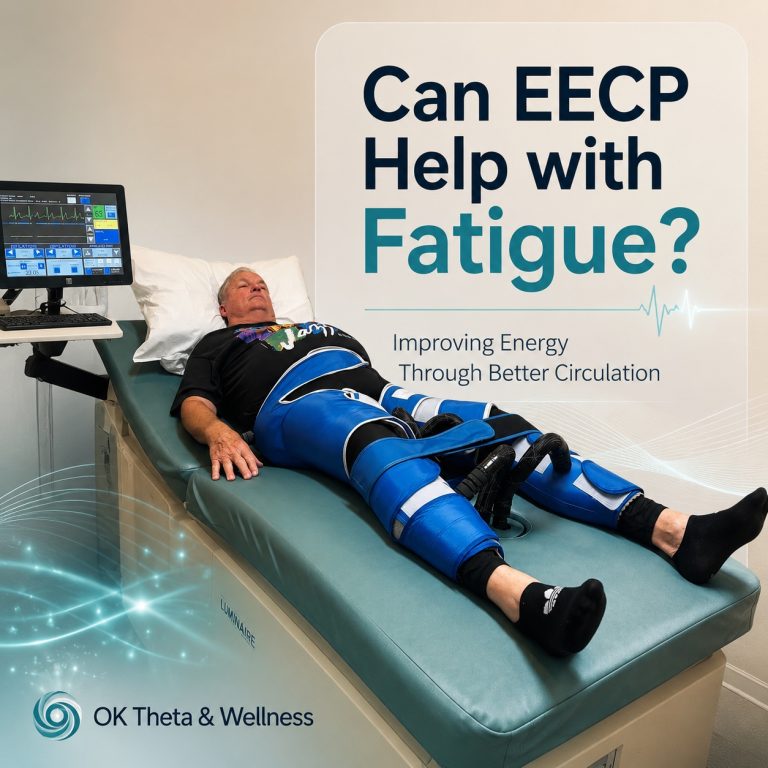
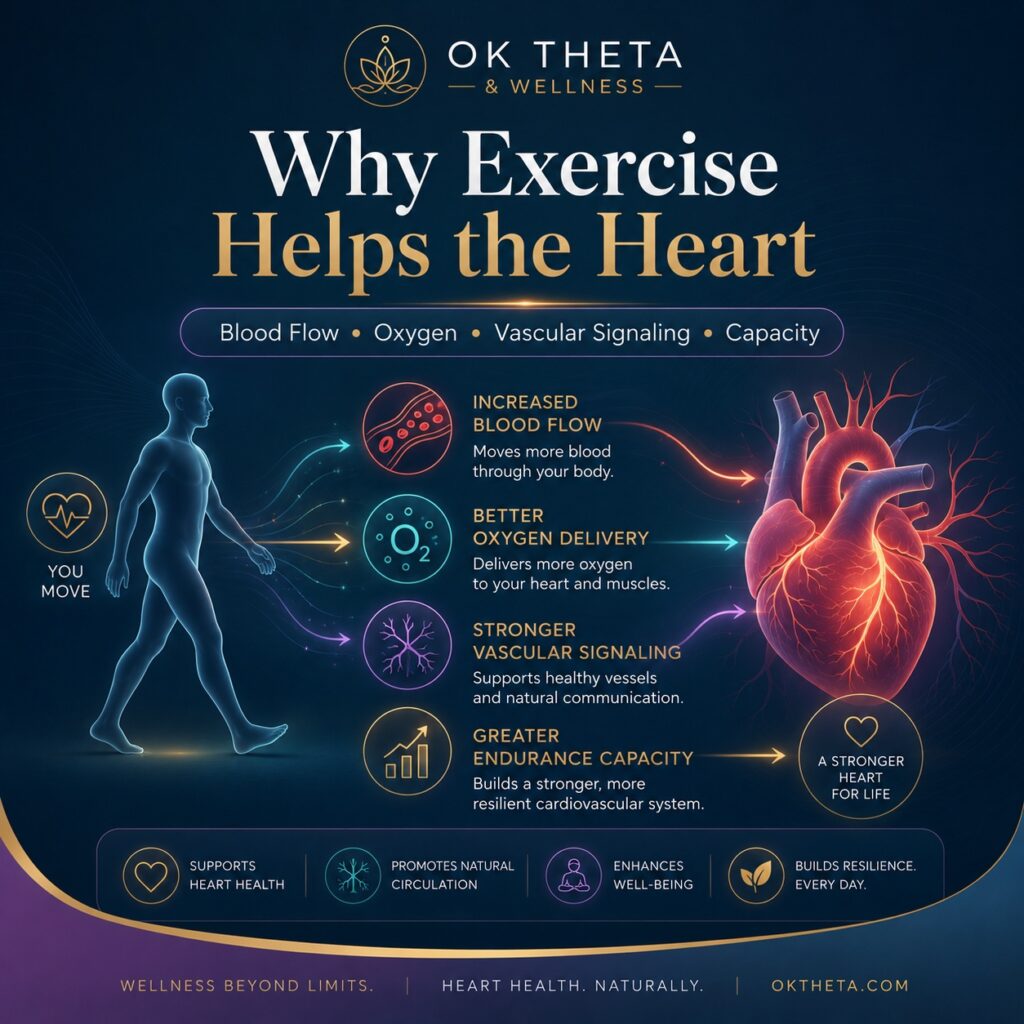
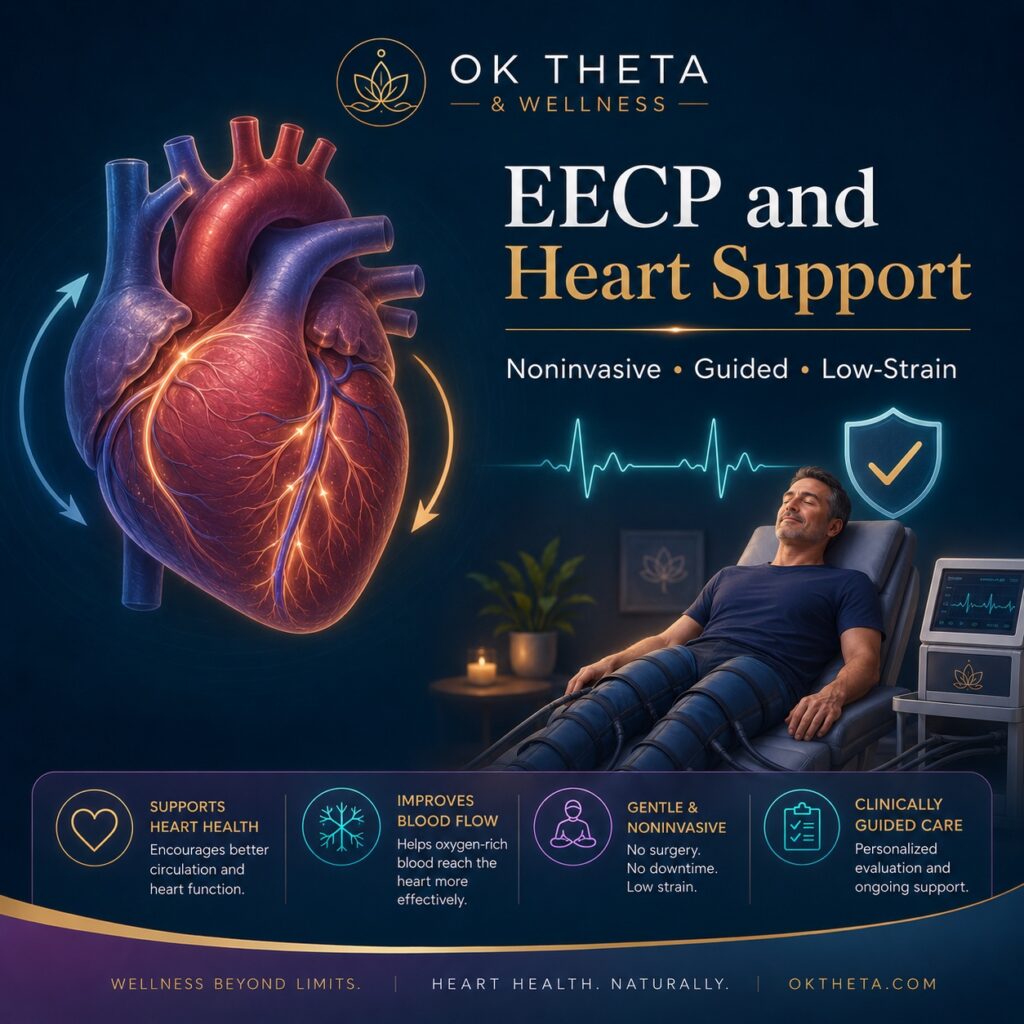
EECP, or enhanced external counterpulsation, is a noninvasive therapy designed to support circulation while the person is lying down. It uses inflatable cuffs around the legs and hips that rhythmically squeeze in sync with the heartbeat. The result is a repeated circulatory stimulus that may support blood flow, vascular function, and exercise tolerance without requiring the person to physically strain through a workout. So when I say “exercise without exercise,” what I really mean is this: EECP may provide some cardiovascular-like circulation benefits without asking the body to perform intense physical exercise.
Spin into Wellness in Oklahoma’s First Theta Chamber!
Why Exercise Helps the Cardiovascular System
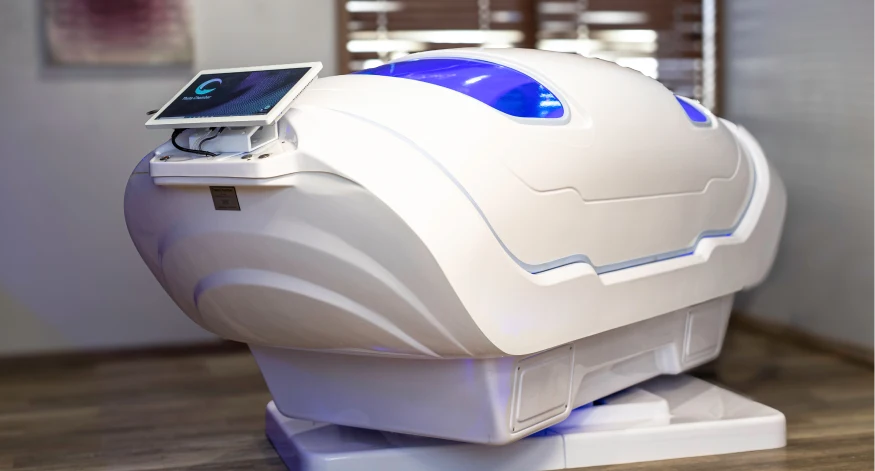
Most people think of exercise in terms of calories, sweat, weight loss, or muscle tone. But from a cardiovascular perspective, exercise is much deeper than that. When you walk briskly, climb stairs, ride a bike, swim, or do other aerobic activity, your blood vessels are challenged. Your heart pumps more blood, muscles demand more oxygen, and blood flow increases. The inner lining of the blood vessels, called the endothelium, receives more mechanical stimulation from the movement of blood across the vessel wall. That increased flow is not just plumbing. It is information.
The cardiovascular system responds to repeated healthy stress by adapting. Over time, regular physical activity can support cardiorespiratory fitness, blood pressure regulation, blood sugar regulation, vascular function, sleep, mood, and overall resilience. That is why organizations like the American Heart Association recommend regular aerobic activity and muscle-strengthening activity for adults. [1]
But here is the problem I see often: the people who may need cardiovascular support the most are sometimes the same people who have the hardest time tolerating exercise. That creates a frustrating loop. You need more capacity to exercise, but exercise itself feels out of reach.
What Is EECP Therapy?
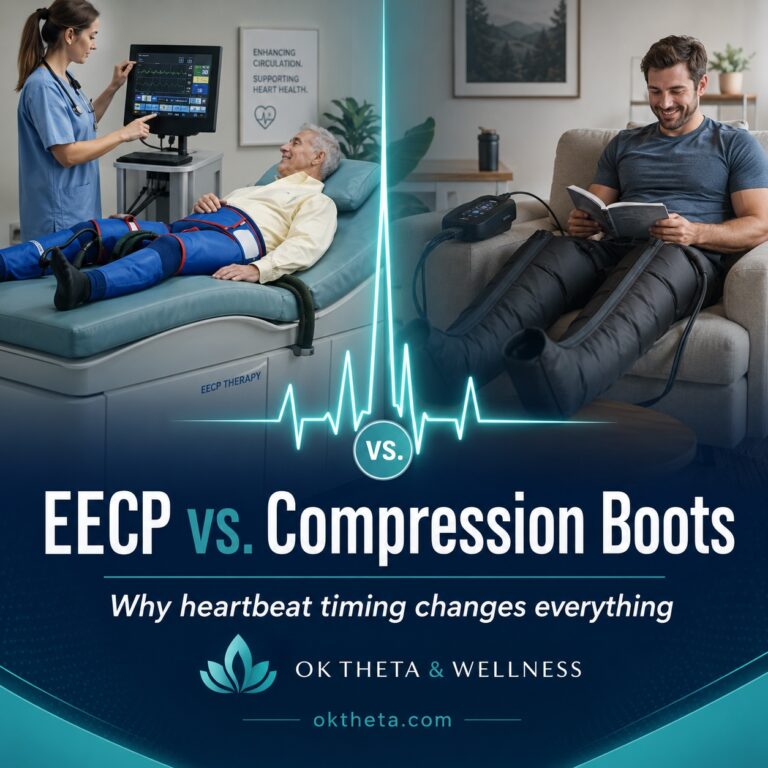
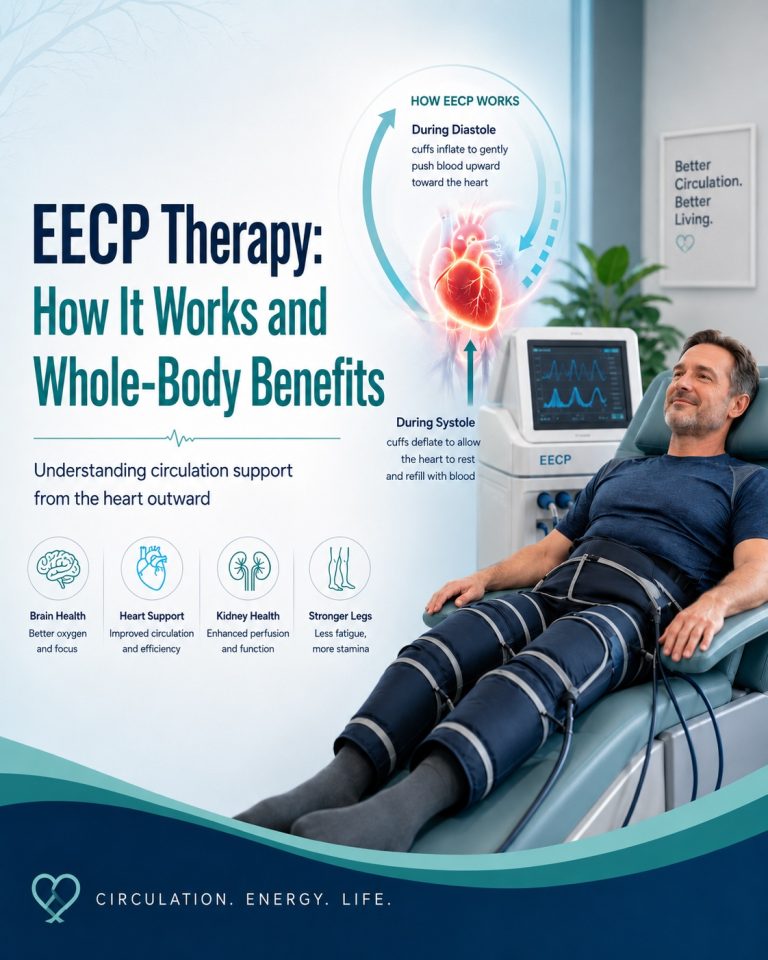
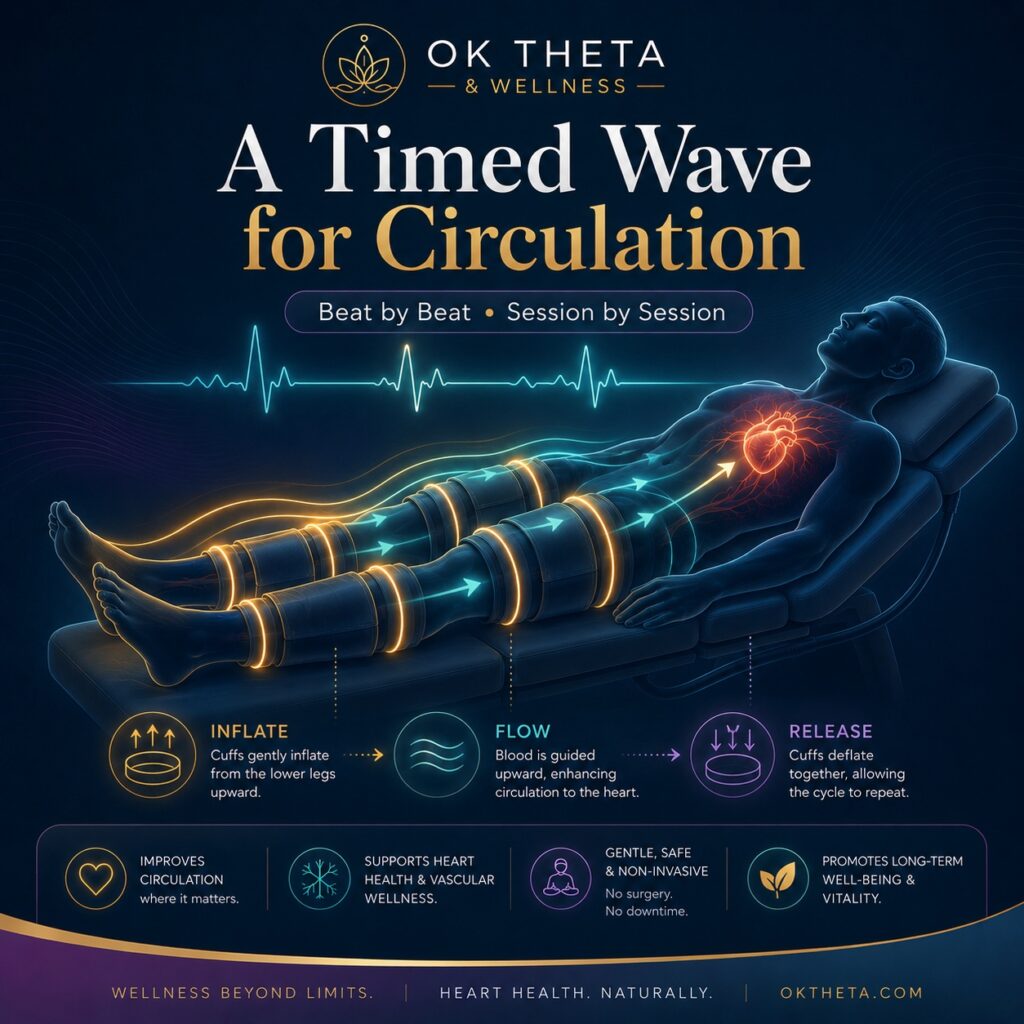
EECP therapy is a noninvasive outpatient treatment that uses pressure cuffs on the lower body. During a session, the person lies on a treatment table while cuffs around the calves, thighs, and hips inflate and deflate in timing with the cardiac cycle. The cuffs inflate during diastole, which is the relaxation phase of the heartbeat, and deflate before the heart pumps again. This timing is important. The goal is to help move blood back toward the heart when the heart is relaxing, while reducing resistance just before the next beat.
I often describe it as a timed wave. The machine is not randomly squeezing the legs. It is creating a rhythmic pressure pattern that works with the heartbeat. Beat by beat, session by session, EECP creates a circulatory stimulus while the person rests. At OK Theta & Wellness, a typical EECP session lasts about an hour. A full course is commonly 35 sessions. EECP is not usually thought of as a one-time intervention. The goal is cumulative support, repeated rhythm, and repeated vascular stimulation over time.
Why EECP Gets Compared to Exercise
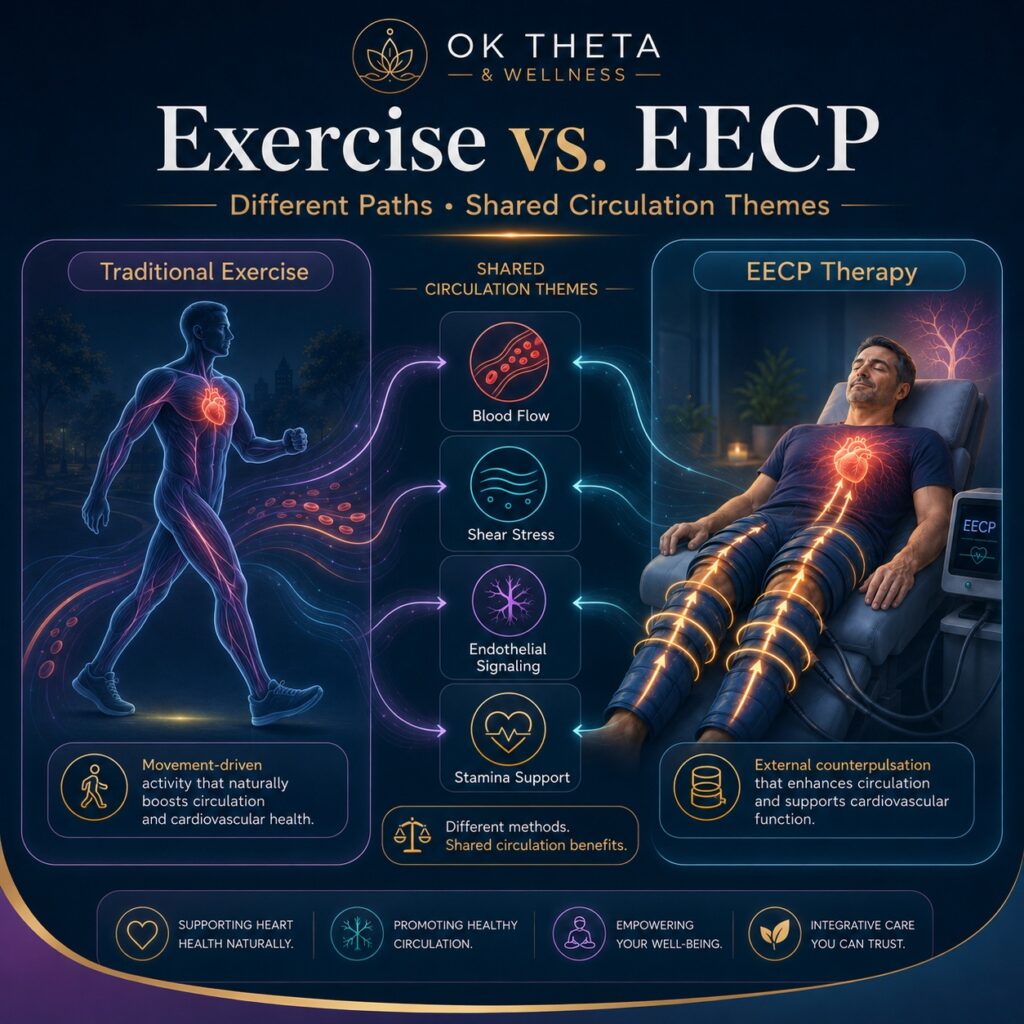
The comparison between EECP and exercise comes from the way both can influence circulation. Exercise uses muscle contraction to increase blood flow. EECP uses external compression to create a circulation-assist effect from the outside. That does not make them identical. Exercise builds strength, balance, coordination, metabolic flexibility, and confidence in movement. EECP does not replace those things. But EECP may overlap with exercise in one important way: it repeatedly changes blood flow dynamics.
Repeated change in blood flow can influence something called shear stress. Shear stress is the friction-like force created when blood moves along the inside of blood vessels. Healthy shear stress is one of the signals that can influence endothelial function, nitric oxide signaling, vascular tone, and circulation. This is one reason EECP has been studied in people with coronary artery disease and chronic angina. Cleveland Clinic describes EECP as an FDA-approved outpatient therapy for chronic stable angina that uses pressure on the lower limbs to improve blood flow in people with long-term symptoms of heart disease. [2]
A randomized study published in Frontiers in Cardiovascular Medicine looked at 240 patients with coronary artery disease. The EECP group received 35 one-hour daily sessions over 7 weeks. At one-year follow-up, the study reported improvements in measures related to endothelial function and exercise tolerance in the EECP group. [3] This is the kind of finding that makes the “exercise without exercise” idea worth discussing, as long as we keep the language honest. EECP is not a workout in the traditional sense. But it may provide a meaningful circulatory stimulus for some people who are not ready for harder physical exertion.
A Bridge for People Who Cannot Push Harder Yet
One of the biggest mistakes in wellness is assuming every person should start from the same place.
- Some people are ready for squats, hills, intervals, and heavy resistance training.
- Some people are ready for a 10-minute walk.
- Some people are ready to stand up, walk across the room, and recover.
- Some people are not even there yet.
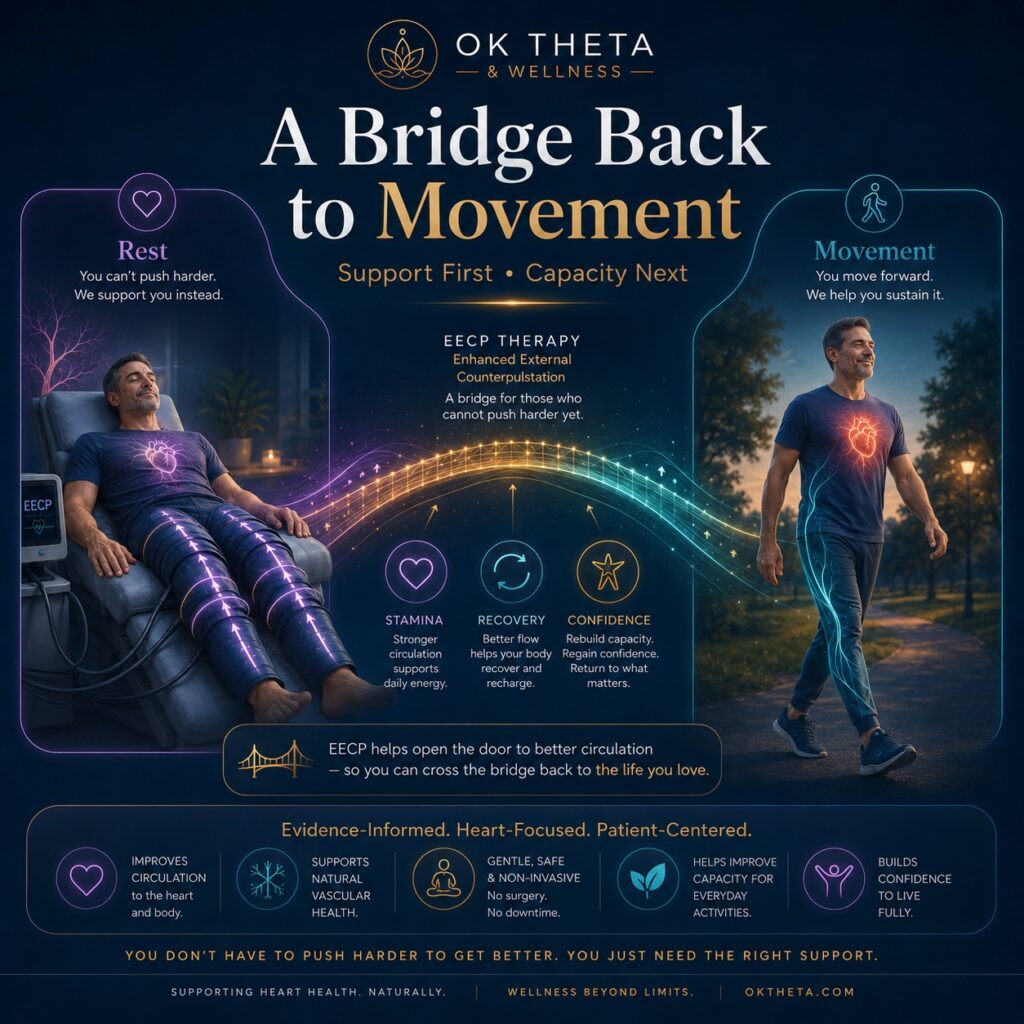
I do not see that as failure. I see that as physiology. If the nervous system, cardiovascular system, joints, muscles, lungs, or energy systems are not tolerating strain well, the answer is not always to push harder. Sometimes the answer is to build capacity from a lower starting point. That is where EECP may be useful. It can give the cardiovascular system a repeated stimulus while the person remains supported. For people who feel trapped between needing more conditioning and not tolerating conditioning, that can be a very meaningful middle ground.
What EECP May Help Support
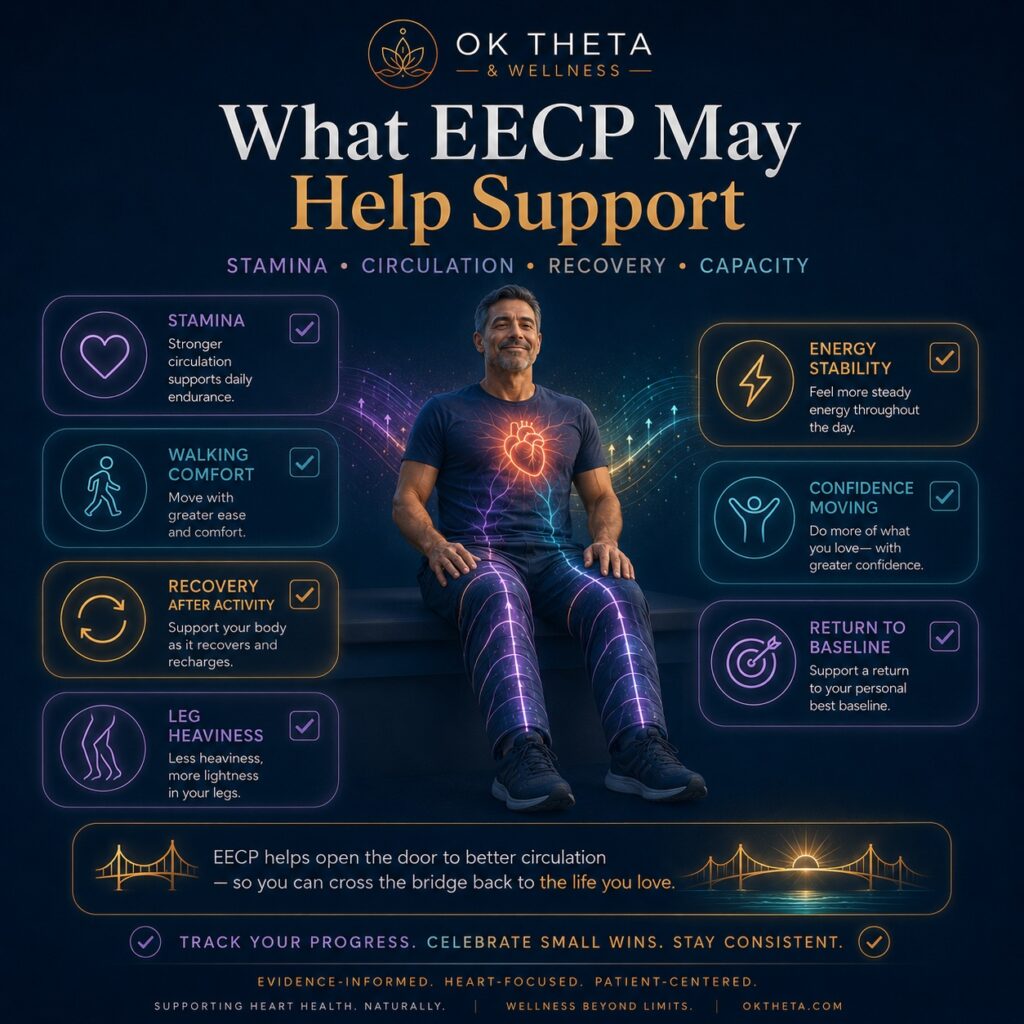
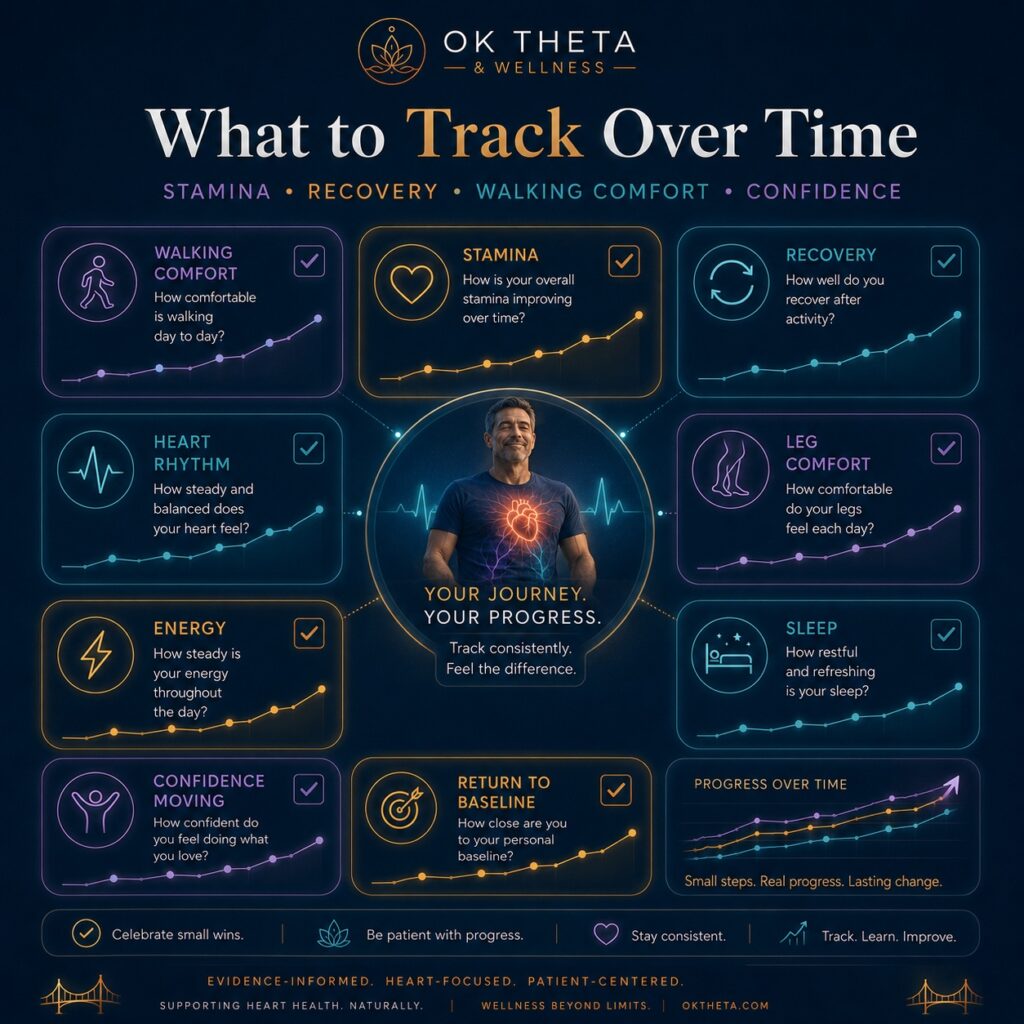
People often ask what they should be paying attention to during an EECP course. I usually encourage them to think less in terms of one dramatic change and more in terms of capacity. Capacity is the name of the game. Over time, a person might track things like:
- Am I walking more comfortably?
- Is my stamina improving?
- Am I less winded with daily activity?
- Do my legs feel less heavy?
- Am I recovering faster after activity?
- Are my energy crashes less intense?
- Am I more confident increasing movement?
- Can I return to baseline faster after exertion?
- Are my good days lasting longer?
- Is my body less reactive to physical stress?
These are practical markers. They are not flashy, but they matter. A life is often rebuilt through small improvements in tolerance.
- Can you walk through the store more comfortably?
- Can you climb stairs with less dread?
- Can you do errands and still have something left in the tank?
- Can you begin to trust your body again?
Those are not small things.
EECP and Heart Symptoms
EECP has a longer history in the world of chronic stable angina and refractory angina. Angina is chest discomfort or pressure that can happen when the heart is not getting enough oxygen-rich blood. EECP is not emergency treatment, and it is not for sudden, unstable, or worsening chest pain. Any sudden chest pain, severe shortness of breath, or symptoms concerning for heart attack should be treated as an emergency.
For people with known heart disease, EECP should be considered in the context of proper medical evaluation and ongoing care. It is not a replacement for a cardiologist, medications, procedures, or lifestyle changes when those are needed. But for appropriately selected people, EECP has been studied as a noninvasive option that may improve symptoms, activity tolerance, and quality of life.
The PEECH trial, which studied EECP in patients with stable heart failure symptoms and systolic dysfunction, found improvements in exercise duration, NYHA functional class, and some quality-of-life measures, though it did not show a significant difference in peak VO₂ compared with optimal medical therapy alone. [4] That mixed result tells us not to overstate the case. EECP is not a miracle machine. It is a tool. Like most tools, it works best when matched to the right person, the right goal, and the right expectations.
What EECP Does Not Replace
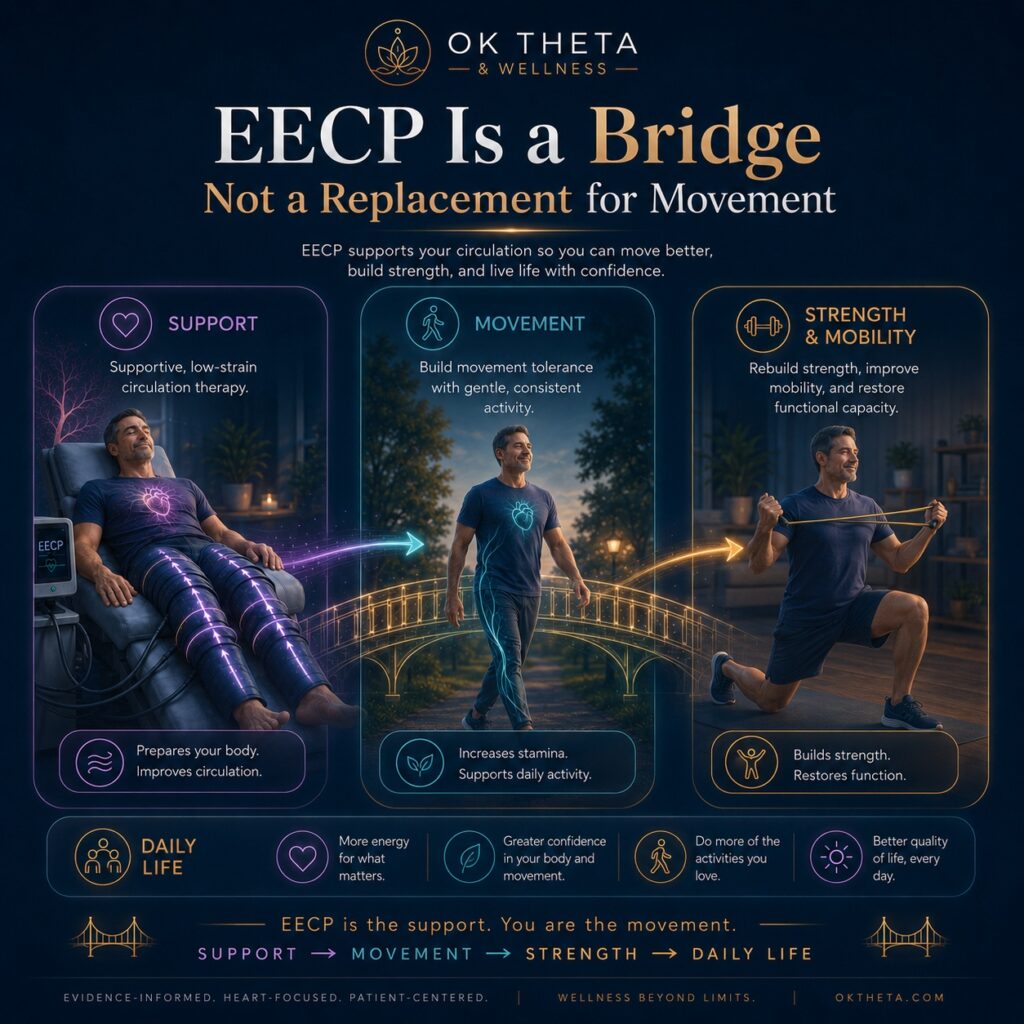
I want to be very clear about this: EECP does not replace movement. It does not build muscle the way resistance training does, or improve balance the way walking, stepping, or functional training can. It does not create the same coordination, strength, or metabolic benefits that come from using your own body.
The American Heart Association still recommends regular physical activity for adults, including aerobic activity and muscle-strengthening activity. [1] So I do not see EECP as a replacement for exercise. I see it as a bridge. For some people, EECP may help support the circulation and stamina needed to move more comfortably later. It may help a person begin to feel that physical activity is possible again. And sometimes that shift is the doorway. With that in mind, not everyone starts with exercise. Some people start by creating enough capacity to tolerate exercise.
Where Massage, Assisted Stretching, and Thai Massage-Inspired Bodywork May Fit
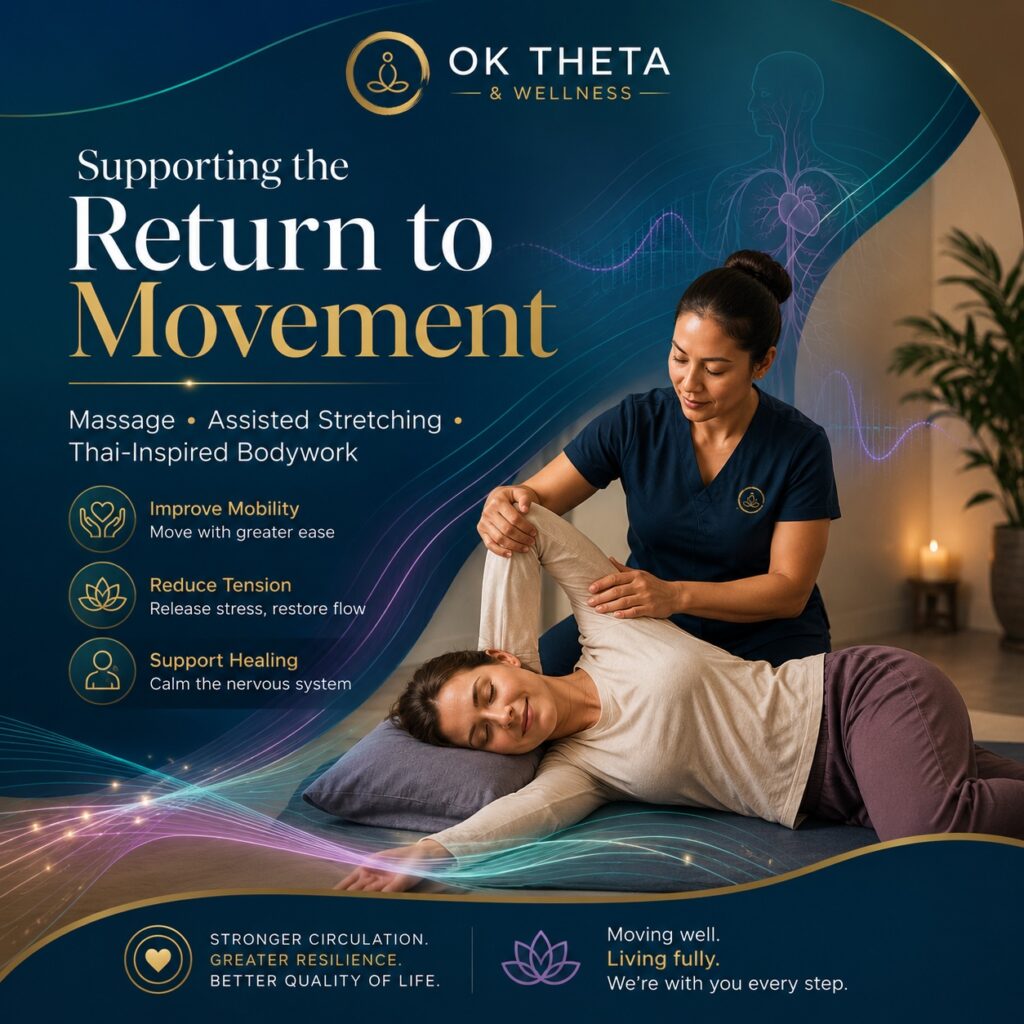
Although this post is mainly about EECP, I do think there is a related conversation around movement. At OK Theta & Wellness, some people pair EECP with massage, assisted stretching, or Thai massage-inspired bodywork. I do not think of these as cardiovascular replacements. They are different tools. But they may support the person who feels stiff, guarded, tense, or hesitant to move.
If EECP is helping support circulation, then manual therapy and guided movement may help the body remember that motion does not have to feel threatening. Massage can soften areas of tension. Assisted stretching can help the body explore range of motion in a supported way. Thai massage-inspired bodywork can bring in rhythm, breath, compression, and gentle movement. For some people, that combination makes sense. The goal is to help the person feel more able to participate in life again.
Why I Like the Phrase “Exercise Without Exercise”
I like the phrase because it gets people curious. But I also think we have to earn it. EECP is not exercise in the traditional sense. You are not lifting weights, walking on a treadmill, or pedaling a bike. You are lying down while the machine creates a timed circulatory wave through the lower body.
But for someone who cannot tolerate intense workouts, that can be exactly why it matters. It offers a way to support cardiovascular function without asking the person to push through strain they may not be ready for. That is the real message. If exercise feels out of reach right now, cardiovascular support may still be possible.
What to Track Over Time
If you are considering EECP, I would encourage you to track your response over time. Do not only ask, “Did this fix me?” That question is too blunt. Ask better questions:
- Am I recovering faster?
- Am I doing more with less crash?
- Am I walking farther or more comfortably?
- Do I feel less limited by fatigue?
- Are my symptoms less disruptive?
- Am I more willing to move?
- Am I building confidence in my body again?
Those questions tell a better story. Capacity often returns quietly at first. You may notice that you finished a task that used to wipe you out, or that your legs do not feel as heavy. You may notice that the hill, the parking lot, the grocery store, or the stairs do not feel quite as intimidating. That is how the body often changes. Not with fireworks. With a little more room.
Final Thoughts
“Exercise without exercise” is not a perfect phrase, but it points toward something important. There are people who want better cardiovascular health but cannot simply jump into intense workouts. Others whose bodies need support before they can tolerate more strain. And some who need a bridge between where they are and where they want to be. EECP therapy may be one of those bridges.
At OK Theta & Wellness, I see EECP as a low-strain cardiovascular support option for people who are trying to improve circulation, stamina, and activity tolerance without forcing the body past its current limits. The long-term goal is still participation. Walking more. Moving better. Recovering faster. Feeling more confident. Getting back into life. Contact us if we can help you start this journey.
References:
[1] The American Heart Association recommends at least 150 minutes per week of moderate-intensity aerobic activity or 75 minutes of vigorous activity, plus muscle-strengthening activity at least 2 days per week. (www.heart.org)
[2] Cleveland Clinic describes EECP as an FDA-approved outpatient therapy for chronic stable angina that uses pressure on the lower limbs to improve blood flow. (Cleveland Clinic)
[3] The 2022 Frontiers in Cardiovascular Medicine study randomized 240 patients with coronary artery disease and reported that 35 one-hour EECP sessions over 7 weeks were associated with improved endothelial-related measures and exercise tolerance at one-year follow-up. (Frontiers)
[4] ACC summary of the PEECH trial reports improvements in exercise duration, NYHA class, and quality-of-life measures, without a significant difference in peak VO₂ compared with optimal medical therapy alone. (acc.org)