
EECP and Brain Circulation: Why Better Blood Flow May Support Clearer Thinking
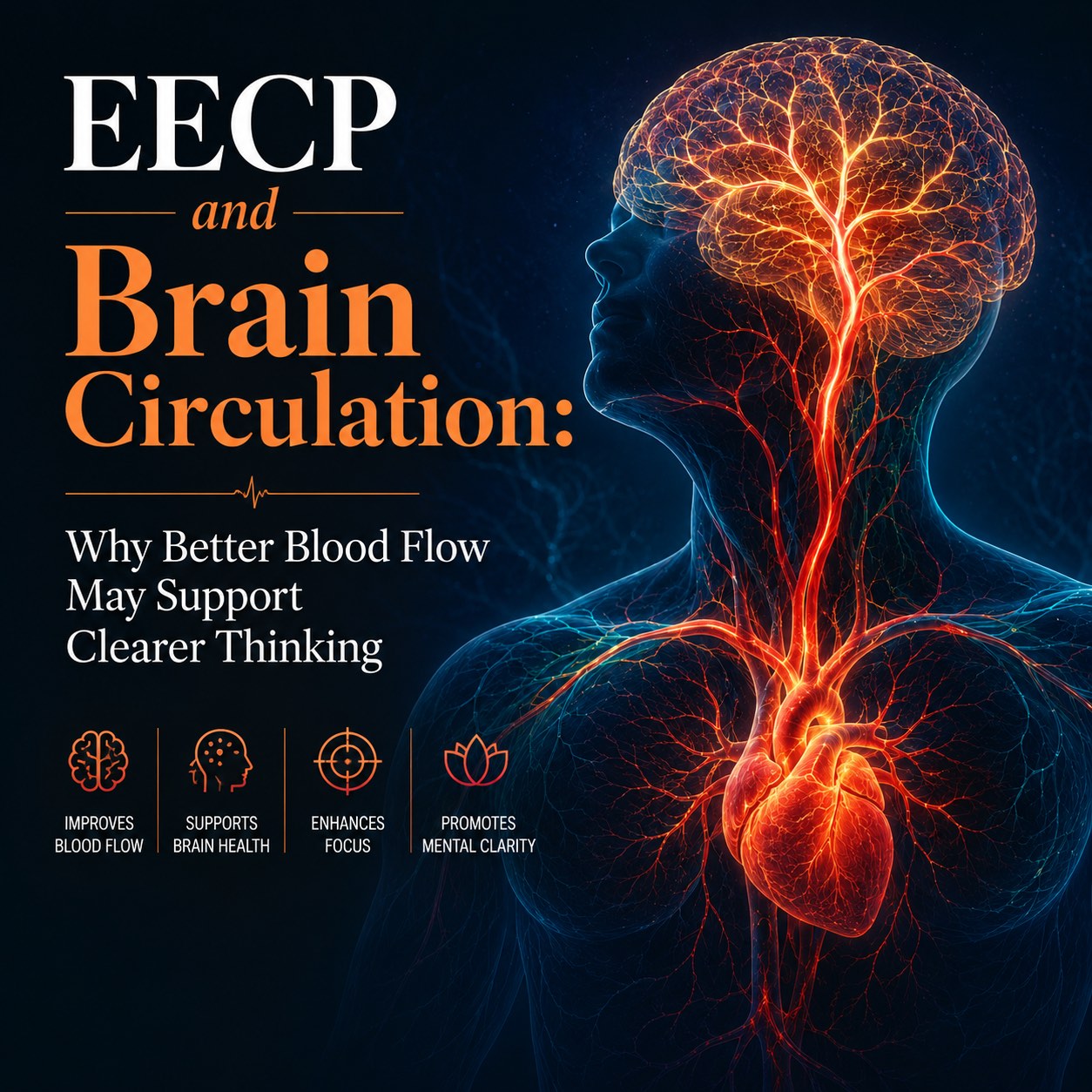
The brain is often described as an electrical organ. That is true, but it is only half the story. Before the brain can think clearly, remember well, regulate emotions, or maintain attention, it has to be supplied. Oxygen has to arrive. Glucose has to arrive. Waste products have to leave. Blood vessels have to respond moment by moment to the needs of different regions of the brain. In other words, cognition does not float above the body. It is carried by circulation. That is why I believe the conversation around EECP and brain circulation is so important.
EECP, or Enhanced External Counterpulsation, is best known as a noninvasive therapy for cardiovascular support. It has traditionally been used in patients with refractory angina and other circulation-related concerns. But a growing body of research suggests that EECP may also influence cerebral blood-flow dynamics, vascular reserve, endothelial function, and in certain patient groups, cognitive performance.
That does not mean EECP is a cure all for dementia, stroke, brain fog, or cognitive decline. It is not a replacement for neurology care, medical management, rehabilitation, sleep optimization, exercise, nutrition, or appropriate diagnostic evaluation. But it does suggest something important: The brain is deeply vascular. And when we improve circulation, we may be supporting one of the foundations that clear thinking depends on.
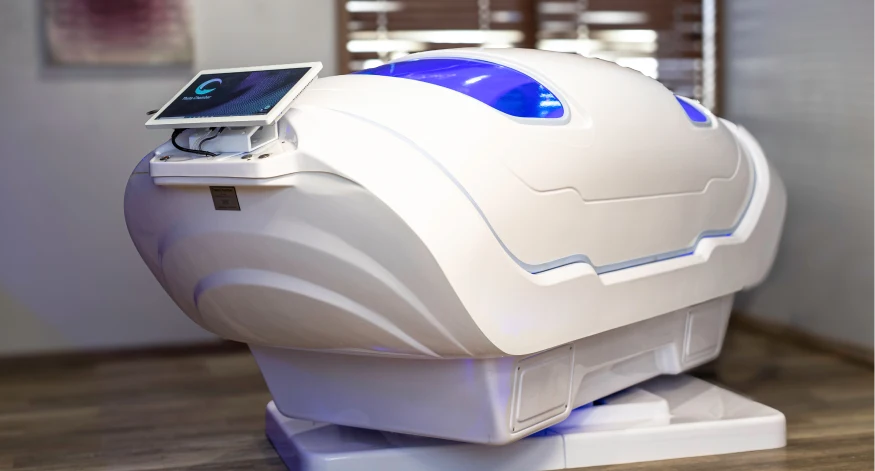
Spin into Wellness in Oklahoma’s First Theta Chamber!
What Is EECP?
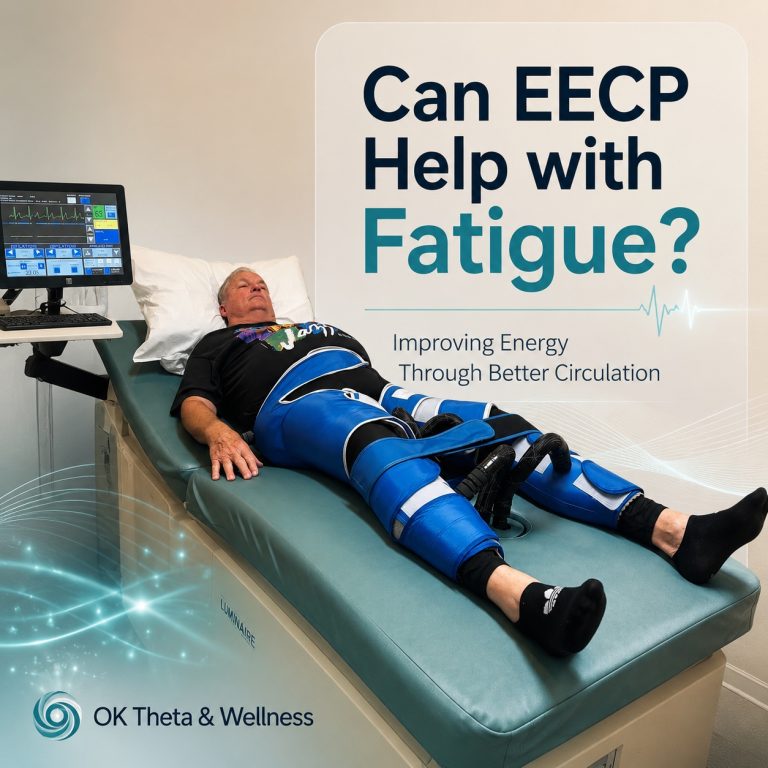
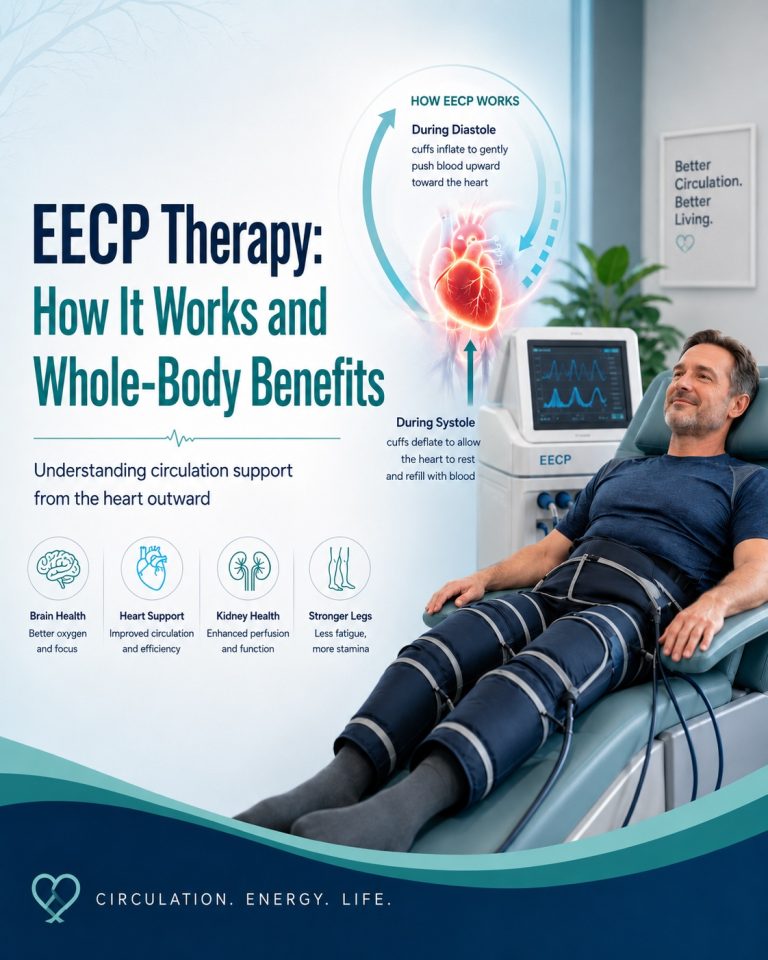
EECP is a noninvasive therapy that uses inflatable cuffs around the legs and hips. These cuffs inflate and deflate in rhythm with the heartbeat.
During diastole, the relaxation phase of the cardiac cycle, the cuffs inflate from the lower legs upward. This helps push blood back toward the heart and central circulation at the very time the heart itself receives much of its blood supply. Then, just before the heart pumps again, the cuffs rapidly deflate, reducing resistance against the next heartbeat.
In simpler language, EECP works with the rhythm of the cardiovascular system. It supports blood flow during the filling phase and reduces workload during the pumping phase. That rhythmic pressure wave is the heart of the therapy. It is mechanical, but its effects may be biological. By improving diastolic flow, increasing shear stress along the vessel wall, and supporting endothelial function, EECP may help the vascular system behave more flexibly and efficiently.
And since the brain is one of the most blood-flow-dependent organs in the body, the natural next question is: what happens upstream, in the brain?

The Brain Depends on Blood Flow
The brain only makes up about 2% of body weight, but it uses roughly 20% of the body’s oxygen at rest and receives about 15% of cardiac output. It does not store much fuel and depends on steady delivery. When brain circulation is healthy, blood vessels can dilate or constrict based on local demand. If one area of the brain becomes more active, that region needs more oxygen and glucose. Healthy blood vessels respond by increasing regional perfusion. This is part of why vascular health matters so much for cognition.
Memory, attention, processing speed, word retrieval, executive function, emotional regulation, and mental stamina all depend on a stable vascular foundation. When that foundation becomes compromised, people may describe symptoms such as brain fog, fatigue, poor concentration, slower thinking, reduced mental endurance, or difficulty recovering after stress.
Of course, not every cognitive symptom is caused by poor blood flow. Cognition is complex. Sleep, mood, inflammation, hormones, medications, neurodegenerative disease, trauma, metabolic health, and psychological stress can all play major roles. But circulation is one of the big roots under the tree.

EECP and Cerebral Blood-Flow Dynamics
One of the most interesting areas of EECP research is its effect on the blood vessels that supply the brain. While EECP is most commonly discussed as a heart and vascular therapy, the same hemodynamic principles that support coronary circulation may also influence cerebral circulation.
During EECP, the cuffs inflate during diastole, the resting phase of the heartbeat. This creates a pressure wave that helps push blood centrally, toward the heart, neck, and brain. Then the cuffs deflate just before the next heartbeat, reducing resistance against cardiac contraction. In simple terms, EECP works with the timing of the cardiovascular system to improve flow dynamics.
Several studies have measured how this affects arteries supplying the brain. One study looking at pneumatic external counterpulsation in patients with therapy-refractory inner-ear disorders measured flow volume in the internal carotid and vertebral arteries using color-coded duplex sonography. During treatment, internal carotid artery flow volume increased by approximately 19%, while vertebral artery flow volume increased by approximately 11%. (ResearchGate)
That matters because the internal carotid arteries supply much of the front and middle portions of the brain, including regions involved in attention, executive function, language, and memory networks. The vertebral arteries supply the posterior circulation, including the brainstem, cerebellum, occipital lobes, and important balance and autonomic pathways. In other words, these are not minor side roads. They are major highways into the brain.
The middle cerebral artery, or MCA, has also been studied during external counterpulsation. In a 2012 Stroke study, researchers used transcranial Doppler ultrasound to monitor bilateral MCA flow velocity in ischemic stroke patients with intracranial large-artery occlusive disease. During ECP, MCA mean flow velocity increased by 9.64% on the side of the infarct and 9.0% on the opposite side, while healthy controls did not show the same MCA velocity increase. The authors concluded that ECP may augment cerebral blood flow in ischemic stroke by elevating blood pressure and improving cerebral perfusion and collateral supply. (PubMed)
This distinction is important: the carotid and vertebral studies measured flow volume, while the MCA study measured mean flow velocity. Those are related, but they are not identical. Flow volume tells us how much blood is moving through a vessel over time. Flow velocity tells us how fast blood is moving through a vessel.
This is where the brain circulation story becomes clinically relevant. The brain is protected by autoregulation, meaning it does not passively accept every change in blood pressure or blood flow. Healthy cerebral vessels constantly adjust their tone to maintain stable perfusion. But in patients with vascular disease, impaired endothelial function, autonomic dysfunction, stroke history, long COVID, chronic inflammation, or reduced vascular reserve, the ability to adapt may be compromised.
That is why EECP’s effect on cerebral blood-flow dynamics is worth paying attention to. It may not simply “push more blood into the brain.” Instead, it appears to change the timing, pressure pattern, and flow waveform in ways that may improve perfusion under certain conditions. This may be especially relevant when cognitive symptoms overlap with vascular disease, poor exercise tolerance, fatigue, brain fog, or impaired cerebral perfusion reserve.

EECP, Intracranial Stenosis, and Vascular Reserve
Researchers are now studying EECP in people with severe intracranial arterial stenosis, meaning narrowing of important arteries inside the brain. A 2023 randomized clinical trial protocol in Frontiers in Neurology describes EECP as a potential therapy for patients with severe narrowing of the intracranial internal carotid or middle cerebral artery. The study is designed to evaluate effects on cerebral vasodilatory reserve, recurrent ischemic events, and neurocognitive performance. (PMC) That is an important research direction because it moves EECP into the world of brain circulation more directly.
The idea is not that EECP dissolves plaque or replaces stroke prevention strategies. Rather, EECP may support hemodynamics: the movement and pressure patterns of blood through the vascular system. In compromised vessels, even modest improvements in flow dynamics, collateral circulation, or vascular reserve could matter.
The body often has backup routes. In cardiology, we talk about collateral circulation around blocked coronary arteries. The brain also has collateral pathways, though they vary from person to person. If EECP can support diastolic flow and vascular adaptation, researchers are reasonably asking whether it can help support these backup pathways in certain cerebrovascular conditions. That is not a finished answer. But it is a very reasonable scientific question.
Cognitive Function: What Does the Research Suggest?
Mild Cognitive Impairment and Alzheimer’s Disease
A small pilot study looked at four patients with mild cognitive impairment who received 35 one-hour EECP sessions over seven weeks. The researchers reported improved cerebral blood flow in certain brain regions, including areas relevant to memory such as the hippocampus and precuneus. They also noted that some effects appeared to persist months after treatment. Because the study was very small, it should be viewed as preliminary, not definitive. (Austin Publishing Group)
More recently, a 2026 multicenter, blinded, randomized, sham-controlled trial evaluated external counterpulsation in early Alzheimer’s disease, including mild cognitive impairment due to Alzheimer’s disease and mild Alzheimer’s disease. The study reported improvements in measures of daily function and cognition compared with sham treatment, with no serious device-related adverse events reported. (Sage Journals)
That is promising. But even here, the appropriate conclusion is measured: EECP is being studied as a possible supportive therapy in cognitive decline, particularly where vascular function and cerebral perfusion may play a role. It is not yet standard dementia therapy. That distinction protects both the patient and the science.
Long COVID Brain Fog
Long COVID has forced medicine to take “brain fog” more seriously. Many patients describe difficulty concentrating, word-finding problems, mental fatigue, reduced processing speed, and the feeling that their brain just does not have its usual stamina.
A 2024 study evaluated EECP in long COVID patients with objectively measured cognitive impairment. The authors reported significant improvement in cognitive functioning after EECP in patients who had baseline impairment. (Scholars @ UT Health San Antonio) Other long COVID EECP work has also described improvements in symptoms such as fatigue, dyspnea, and brain fog, though again, much of this research remains early. (PMC)
This area is especially interesting because long COVID may involve vascular inflammation, autonomic dysfunction, microvascular changes, impaired oxygen extraction, and endothelial injury in some patients. That makes EECP mechanistically relevant, but not proven as a universal answer.
Post-Stroke Cognitive Impairment
There is also research looking at EECP in cognitive impairment after stroke. One 2023 study reported that EECP combined with atorvastatin was effective for post-stroke cognitive impairment and improved cognitive function. (PMC)
This does not mean EECP replaces stroke rehabilitation, secondary prevention, blood pressure control, cholesterol management, antiplatelet therapy when indicated, or physical/occupational/speech therapy. But it adds to the broader picture that EECP may have a role in selected neurovascular recovery settings.
Why Nitric Oxide and the Endothelium Matter
To understand the brain circulation story, we also have to talk about the endothelium. The endothelium is the inner lining of the blood vessels. It is not just a passive pipe lining. It is an active biological interface that helps regulate vascular tone, clotting, inflammation, blood pressure, and nitric oxide production.
Nitric oxide helps blood vessels relax and widen. It supports healthier blood-flow dynamics. It is one of the reasons shear stress matters. Shear stress is the frictional force created as blood moves across the endothelial surface. When that force is healthy and rhythmic, the endothelium receives a signal to produce more nitric oxide and behave more protectively.
EECP appears to increase pulsatile shear stress. That is one of the major proposed mechanisms behind its benefits for endothelial function. In plain language, EECP gives the vascular system a rhythmic workout.
That is why I often describe EECP as a vascular training session. You are not lifting a dumbbell with your artery. But the vessel wall is still receiving a signal. Flow changes. Pressure waves change. Shear forces change. The endothelium responds. And because brain health depends on vascular health, this may be one of the key bridges between EECP and cognitive support.

Brain Fog Is Not Always a Brain Problem Alone
One of the biggest mistakes we make with cognitive symptoms is assuming the problem is only “in the brain.” Sometimes brain fog is a sleep problem. Other times it is an inflammation problem. And other times it can be related to depression, anxiety, grief, trauma, medication effect, low B12, thyroid dysfunction, insulin resistance, dysautonomia, chronic pain, poor conditioning, or oxygenation.
And sometimes it is circulation.
The brain is downstream from the heart, lungs, blood vessels, blood sugar, autonomic nervous system, and inflammatory state. When those systems struggle, the brain may be the organ that complains first. That is why EECP is interesting. It does not “stimulate cognition” directly or force the brain to think better. It supports the river system underneath cognition. Better blood-flow dynamics may mean better oxygen delivery, better vascular responsiveness, better endothelial signaling, and better physiologic reserve. That is not flashy. But it is foundational.

Who Might Be Most Interested in EECP for Brain Circulation?
The people most likely to be interested in this conversation are not necessarily those looking for a magic fix. They are often people who can feel that their brain is not getting the same support it used to.
They may say:
- “I just don’t think as clearly as I used to.”
- “My stamina is gone.”
- “I get brain fog when I stand up or push too hard.”
- “My memory feels worse when I’m tired.”
- “I recover slowly after stress.”
- “My body feels under-circulated.”
- “I can still think, but it takes more effort.”
Those symptoms deserve thoughtful evaluation. They should not be brushed off. They also should not be automatically attributed to one cause. But if someone has cardiovascular risk factors, poor exercise tolerance, vascular disease, long COVID, dysautonomia, fatigue, endothelial dysfunction, or reduced circulation, the EECP conversation becomes more relevant. Again, this is not about promising that EECP will reverse cognitive decline. It is about recognizing that clearer thinking often depends on better physiology.

What We Can Say Honestly
EECP has been shown to alter cerebral blood-flow velocity patterns, especially during diastole. It is being studied in cerebrovascular disease, including intracranial stenosis. Early research suggests possible cognitive benefits in certain groups:
- Mild cognitive impairment
- Early Alzheimer’s disease
- Long COVID brain fog
- Heart-failure-related cognitive dysfunction
- Post-stroke cognitive impairment
The strongest mechanisms include improved hemodynamics, endothelial function, nitric oxide signaling, vascular reserve, and possibly collateral flow support. But the evidence is still developing. EECP may support brain circulation and vascular physiology in ways that are relevant to cognitive function, especially when cognitive symptoms overlap with vascular disease, fatigue, poor exercise tolerance, long COVID, autonomic dysfunction, or reduced perfusion reserve. That is honest. And honestly, it is still exciting.
The Brain Is Electrical, But the River Matters
At OK Theta & Wellness, we spend a lot of time thinking about the nervous system. We talk about brainwaves, theta states, emotional processing, autonomic balance, and the body’s ability to shift out of chronic stress patterns. EECP adds another layer to that conversation.
Because sometimes the brain does not just need more stimulation. Sometimes it needs better supply. The brain is electrical, yes. But electricity still depends on biology. Neurons need oxygen. Synapses need energy. Networks need perfusion. The mind may feel mysterious, but it is still carried by vessels smaller than a strand of hair. Better blood flow does not explain everything. But it explains enough that we should pay attention.
EECP gives us a noninvasive way to support the vascular system from the legs upward, working with the heartbeat instead of against it. For some people, that may mean better stamina, better circulation, better vascular responsiveness, and possibly clearer thinking. The brain does not live above the body. It lives inside a river. And when the river flows better, the lights may burn a little steadier.
Do any of these sound familiar?
If you’ve been feeling foggy, fatigued, or like your body just isn’t recovering the way it used to, improved circulation may be part of the conversation. Let us know at OK Theta & Wellness. We’d be happy to talk through whether EECP may be a good fit.