
CranioSacral Therapy in Oklahoma City
At OK Theta & Wellness, I spend a lot of time thinking about the nervous system. That may sound obvious coming from a former neurosurgeon, but my understanding of the nervous system has changed over time. In the operating room, I learned to respect the brain and spinal cord through anatomy, blood flow, mapping, monitoring, and structure. In wellness work, I have learned to respect the nervous system through rhythm, safety, touch, breath, movement, sleep, pain, memory, and emotional tone.
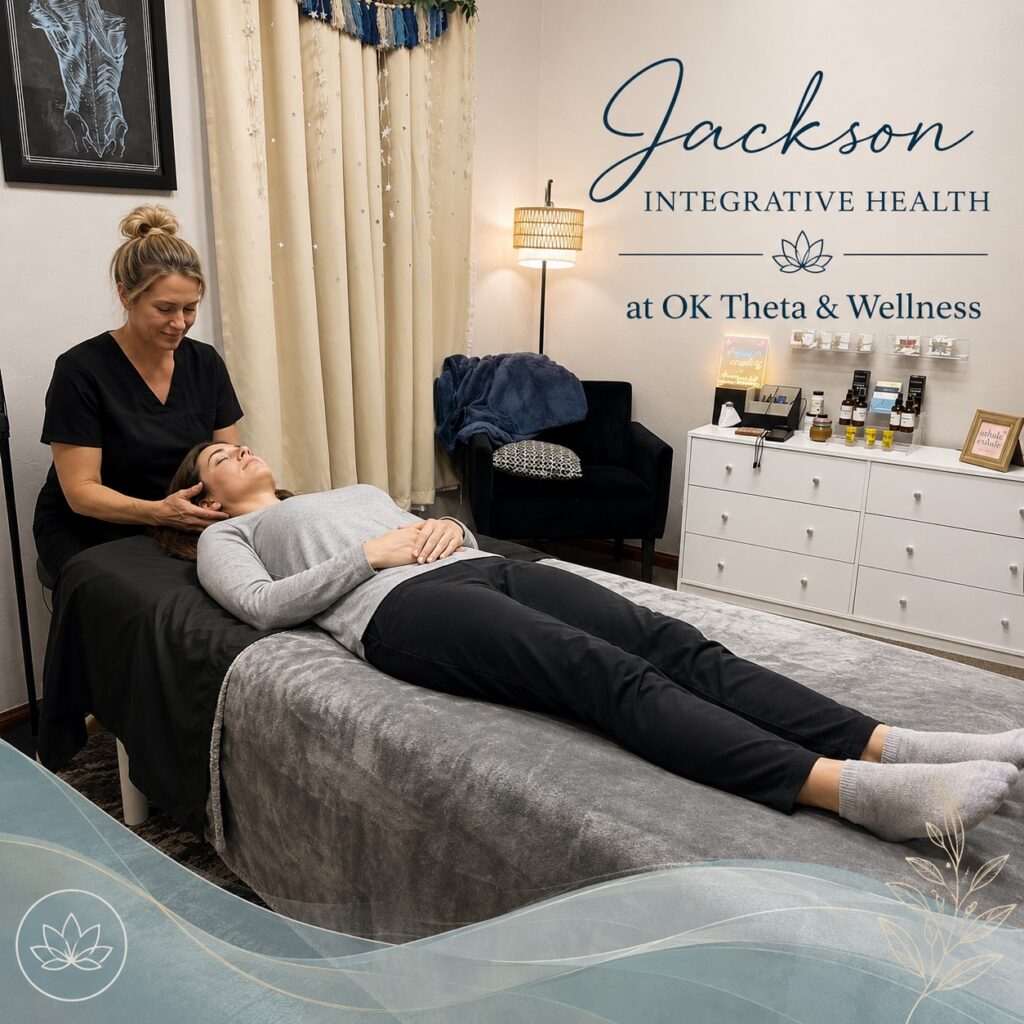
One of the reasons I am excited to offer CranioSacral Therapy in Oklahoma City is because of Amy Jackson, PT, and her work through Jackson Integrative Health at OK Theta & Wellness. Amy brings a calm, skilled, and intuitive presence to hands-on care, combining her physical therapy background with integrative techniques such as CranioSacral Therapy, myofascial release, and nervous system-focused bodywork. Her approach aligns beautifully with what we are building at OK Theta: a place where the body is not forced into change, but supported into regulation, relaxation, and resilience.
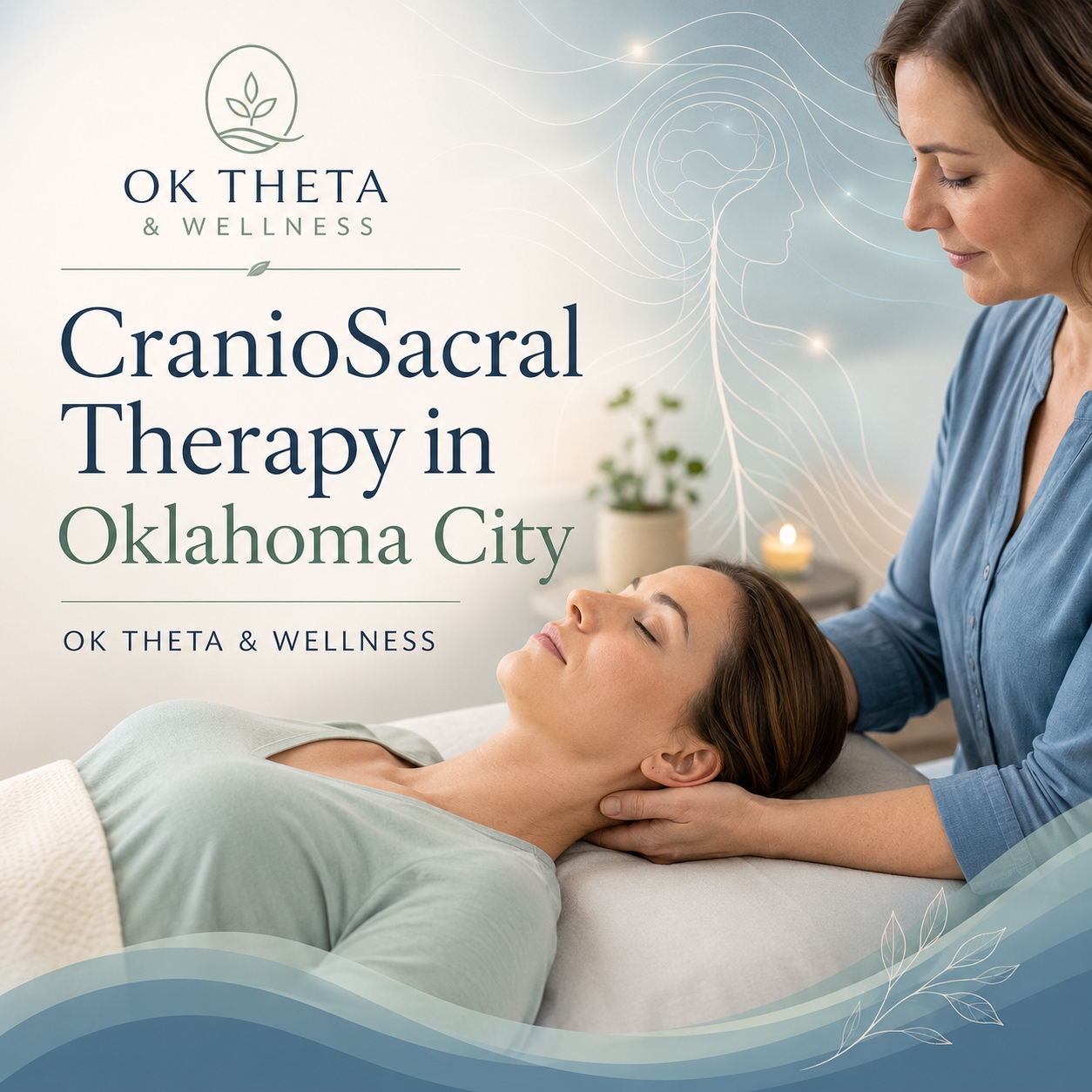
CranioSacral Therapy, often abbreviated CST, is a gentle hands-on therapy that works with the body through light touch. The Upledger Institute describes CST as a soft-touch approach intended to release restrictions in tissues that influence the craniosacral system, which includes the membranes and fluid surrounding the brain and spinal cord. They describe practitioners using light touch to evaluate the craniosacral system and then using soft-touch techniques to help release restrictions in related tissues. (Upledger Institute International)
That explanation is important, but I would say it even more simply: CranioSacral Therapy is a way of listening to the body through the hands.
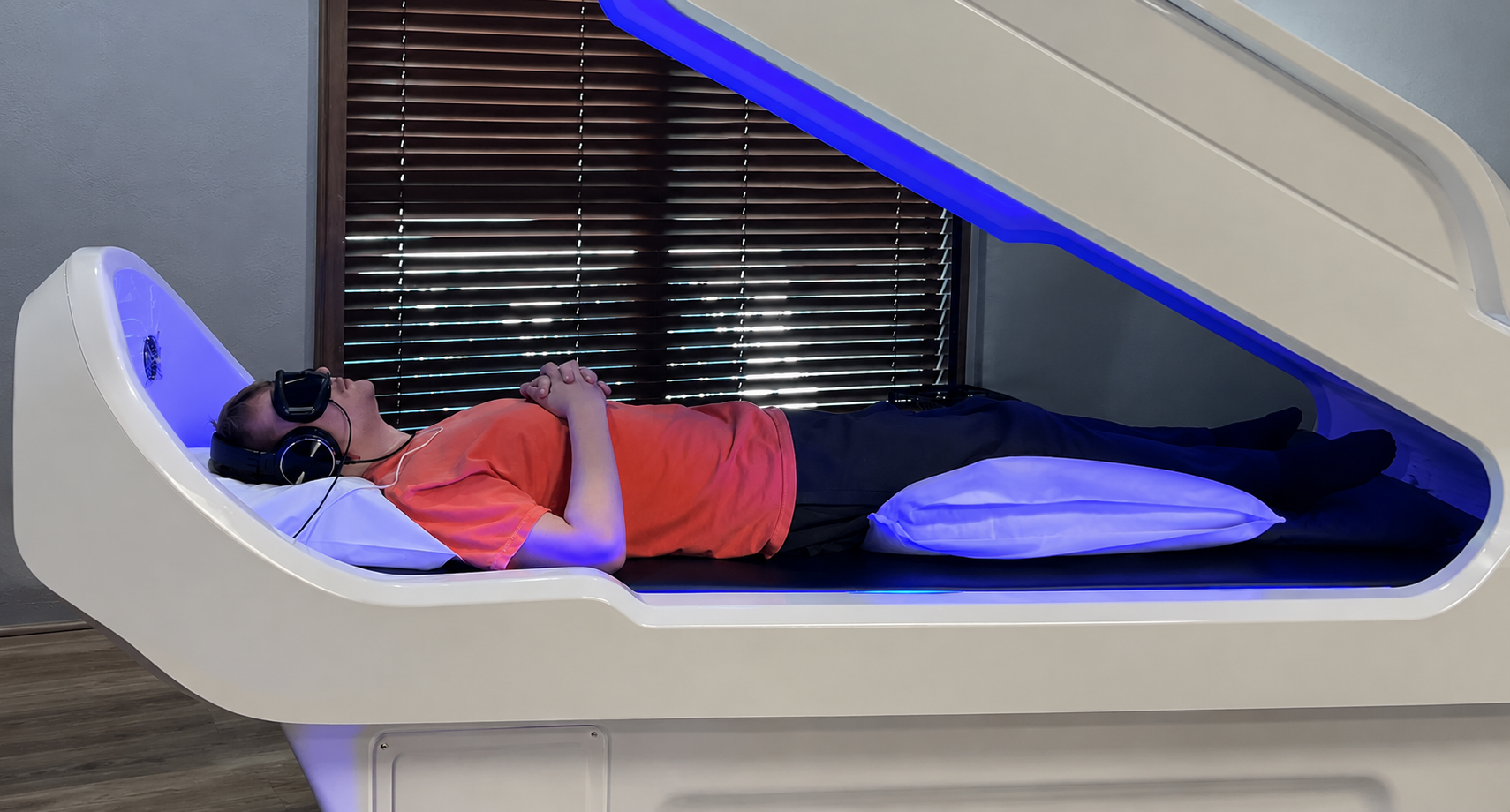
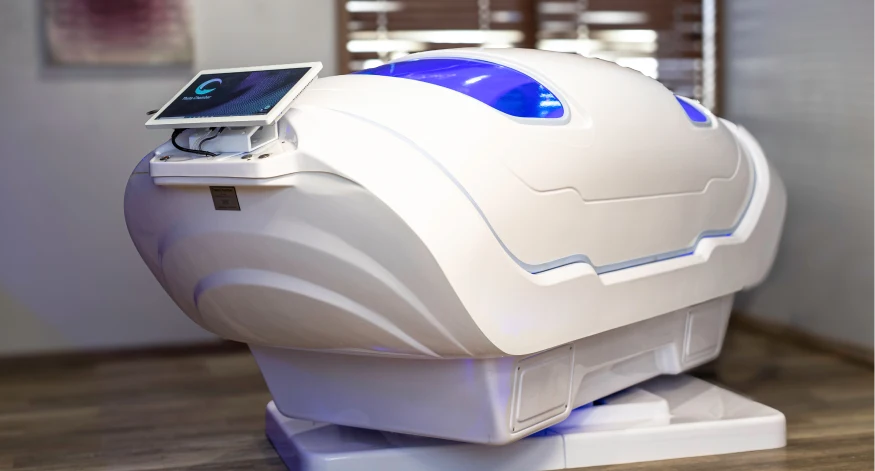
Spin into Wellness in Oklahoma’s First Theta Chamber!
Why CranioSacral Therapy fits at OK Theta & Wellness
Much of what we do at OK Theta & Wellness revolves around helping the body move out of a state of chronic protection. People often come to us with pain, poor sleep, anxiety, stress, fatigue, trauma history, post-concussion symptoms, nervous system sensitivity, or a body that simply feels stuck in high alert. In many of these situations, the issue is not only structural. It is also regulatory.
The body is not just a machine with broken parts. It is an intelligent living system constantly asking, “Am I safe?” When the answer is no, the body protects. Muscles tighten. Breathing changes. Sleep becomes shallow. Pain becomes louder. The jaw clenches. The neck guards. The shoulders rise. The gut tightens. The mind races. The body becomes a barn full of weather.
CranioSacral Therapy offers a very different kind of input. It is not forceful or aggressive. It does not try to overpower the body. Instead, it uses gentle contact, stillness, and skilled attention to give the nervous system a chance to soften. Many people are used to thinking that deeper work requires more pressure. Sometimes that is true. But often, especially when the nervous system is already guarded, the body does not need more force. It needs better information. It needs a safety signal.
What is the craniosacral system?
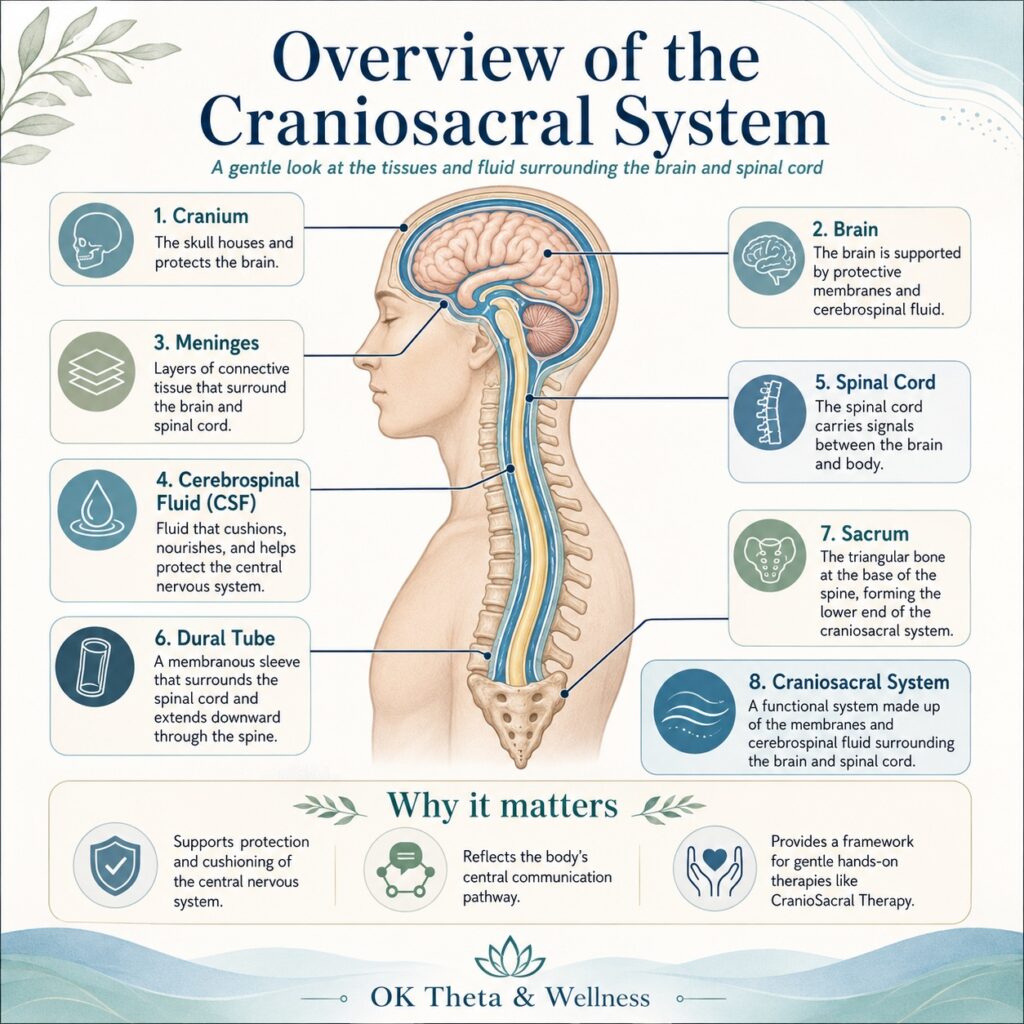
The craniosacral system refers to the structures surrounding the brain and spinal cord, including the membranes and cerebrospinal fluid that extend from the skull down through the spine toward the sacrum. The term “craniosacral” comes from the cranium and sacrum, the two ends of this central system.
As a neurosurgeon, I spent years working around the dura, arachnoid, pia, cerebrospinal fluid, cranial nerves, brainstem, spinal cord, and the delicate tissue planes of the central nervous system. I have a deep respect for these structures. They are not abstract to me. They are real, delicate, responsive, and beautifully organized.
CranioSacral Therapy comes from a different tradition than neurosurgery, but I appreciate that it places attention on the central nervous system and the tissues that surround it. It invites us to consider how tension, restriction, trauma, posture, breath, and autonomic state may influence the way a person feels in their body. That does not mean CST should be described as a cure-all. It should not. But it does mean there is room for a thoughtful, medically literate conversation about how gentle manual therapy can support relaxation, body awareness, pain modulation, and nervous system regulation.
CranioSacral Therapy and chronic pain
One of the most important shifts in modern pain science is the recognition that chronic pain is not always proportional to tissue damage. Pain is real. Always. But pain is also processed through the nervous system. That means stress, sleep, inflammation, trauma history, fear, prior injury, muscle guarding, and emotional state can all influence how loud pain feels. This is where gentle bodywork can be meaningful.
A 2019 systematic review and meta-analysis looked at CranioSacral Therapy for chronic pain and found that CST was associated with improvements in pain and function, with effects lasting up to six months in the included studies. The authors also noted that more high-quality randomized trials are needed to further confirm these findings. (PubMed)
At OK Theta, I often describe chronic pain as a system that has become overprotective. The alarm is not imaginary. It is just too sensitive. CranioSacral Therapy may help some people by offering the body a quieter signal, one that says, “You do not have to brace so hard right now.”

CranioSacral Therapy for neck pain
Neck pain is one of the most natural areas where people think about CranioSacral Therapy. The neck is not just a column of muscles and joints. It is a busy crossroads. It carries posture, stress, vision, vestibular input, jaw tension, headaches, breathing mechanics, and nervous system tone.
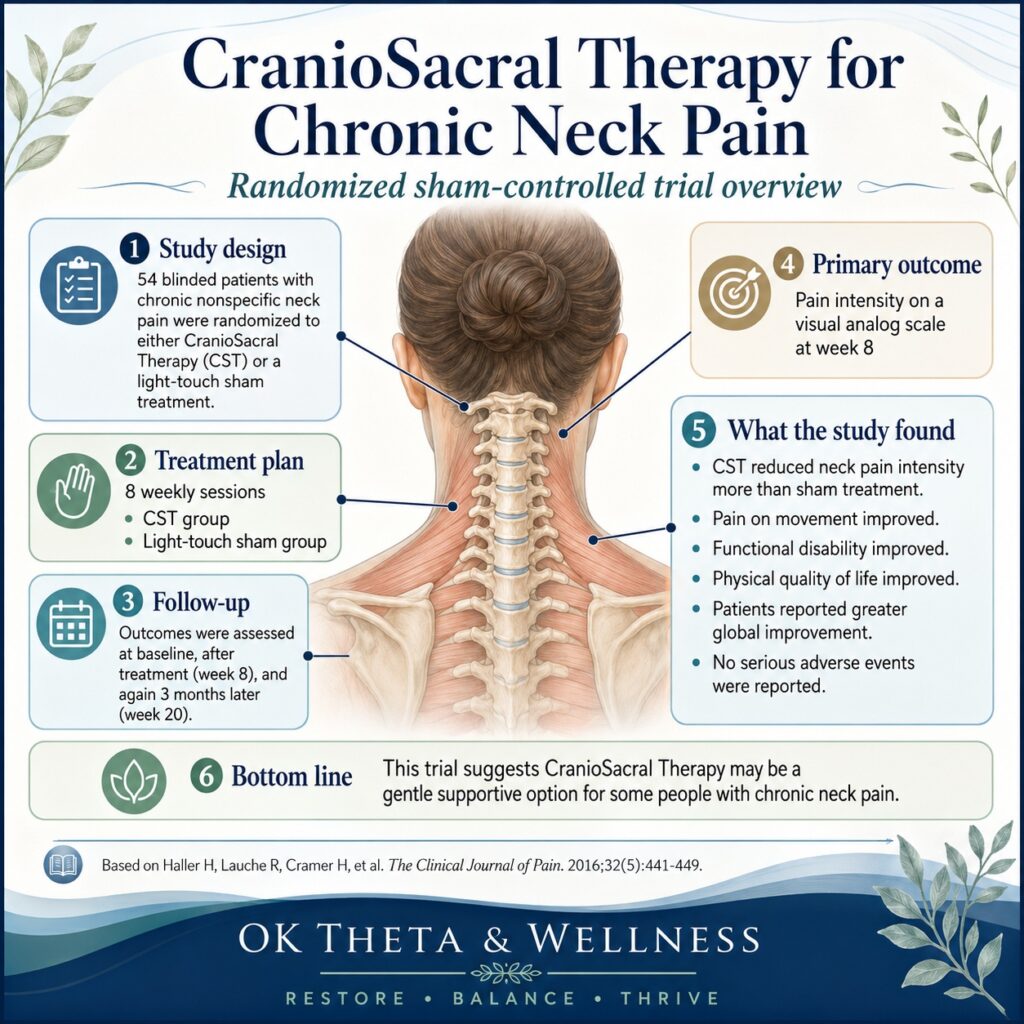
A randomized sham-controlled trial published in The Clinical Journal of Pain found that CranioSacral Therapy was effective and safe for reducing chronic neck pain intensity and may improve disability and quality of life up to three months after treatment. (PubMed) This does not mean everyone with neck pain needs CST. It does mean that gentle manual therapy may have a reasonable place in a broader care plan, especially when neck pain seems tied to stress, guarding, headaches, poor sleep, or chronic nervous system tension.
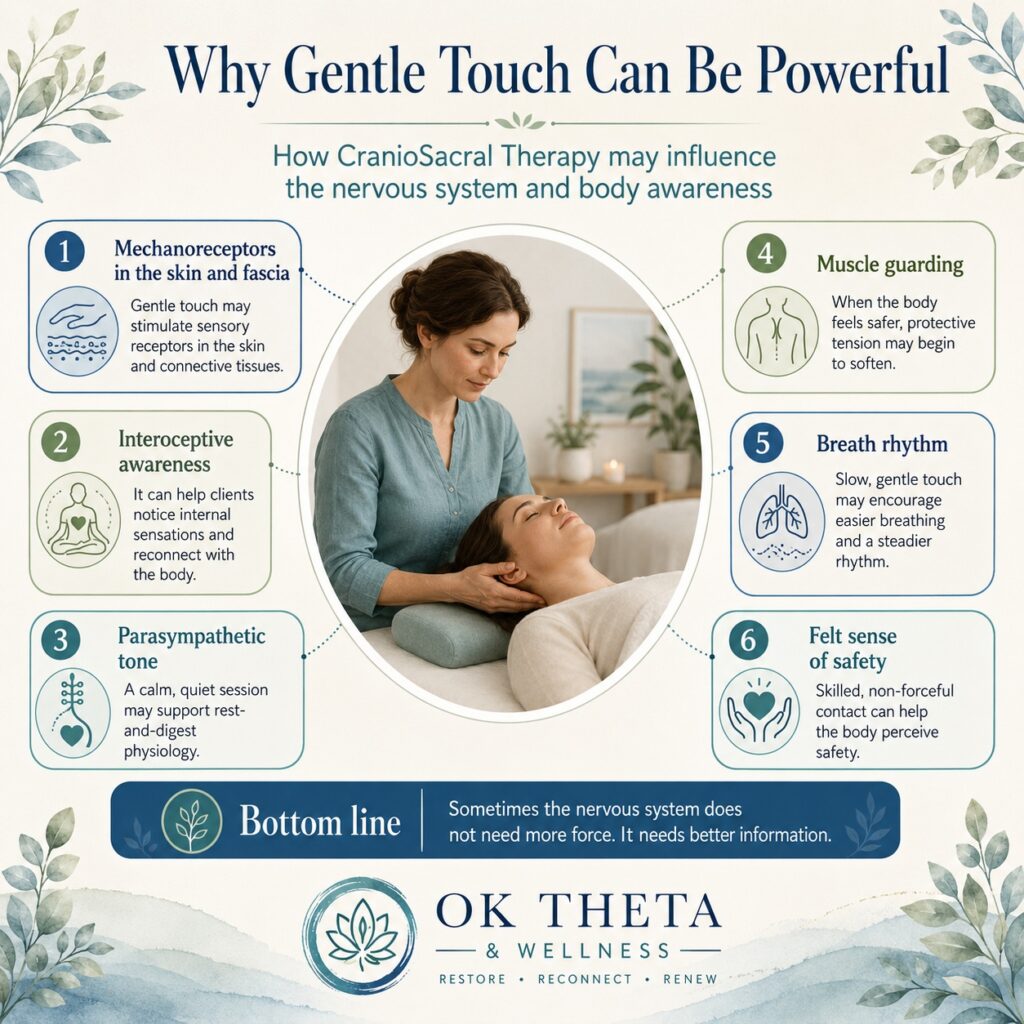
Why gentle touch can be powerful
One of the most common misunderstandings about CranioSacral Therapy is that because the touch is gentle, the effect must be small. I do not see the body that way. The nervous system is exquisitely sensitive. A whisper can change the whole room if the room has been waiting for quiet.
Light touch may influence the body through several overlapping pathways: mechanoreceptors in the skin and fascia, interoceptive awareness, parasympathetic tone, muscle guarding, breath rhythm, and the client’s felt sense of safety. Cleveland Clinic describes craniosacral therapy as a gentle, noninvasive hands-on technique used around the head, neck, and back to help alleviate tension, while also noting that some people may feel tired, dizzy, lightheaded, or mildly uncomfortable afterward. (Cleveland Clinic) That is clinically useful language. Gentle does not mean meaningless. Gentle means the goal is not to force change. The goal is to invite it.
CranioSacral Therapy and the body’s safety signal
At OK Theta & Wellness, we often talk about the body’s need for safety. The theta chamber uses organized sensory input: gentle motion, sound, light, rhythm, and relaxation. Morph/PENS uses peripheral nerve stimulation around the ear to interact with nervous system pathways. Massage and stretch therapy work through muscle, fascia, breath, and body awareness. EECP works through circulation and vascular signaling. StemWave works through acoustic stimulation and tissue response.
CranioSacral Therapy belongs naturally in this ecosystem. It is another way of communicating with the body. Not through intensity, force, or through pushing the system harder. Through contact, quiet, presence, and skilled listening. For some people, that may be exactly what the body has been waiting for.
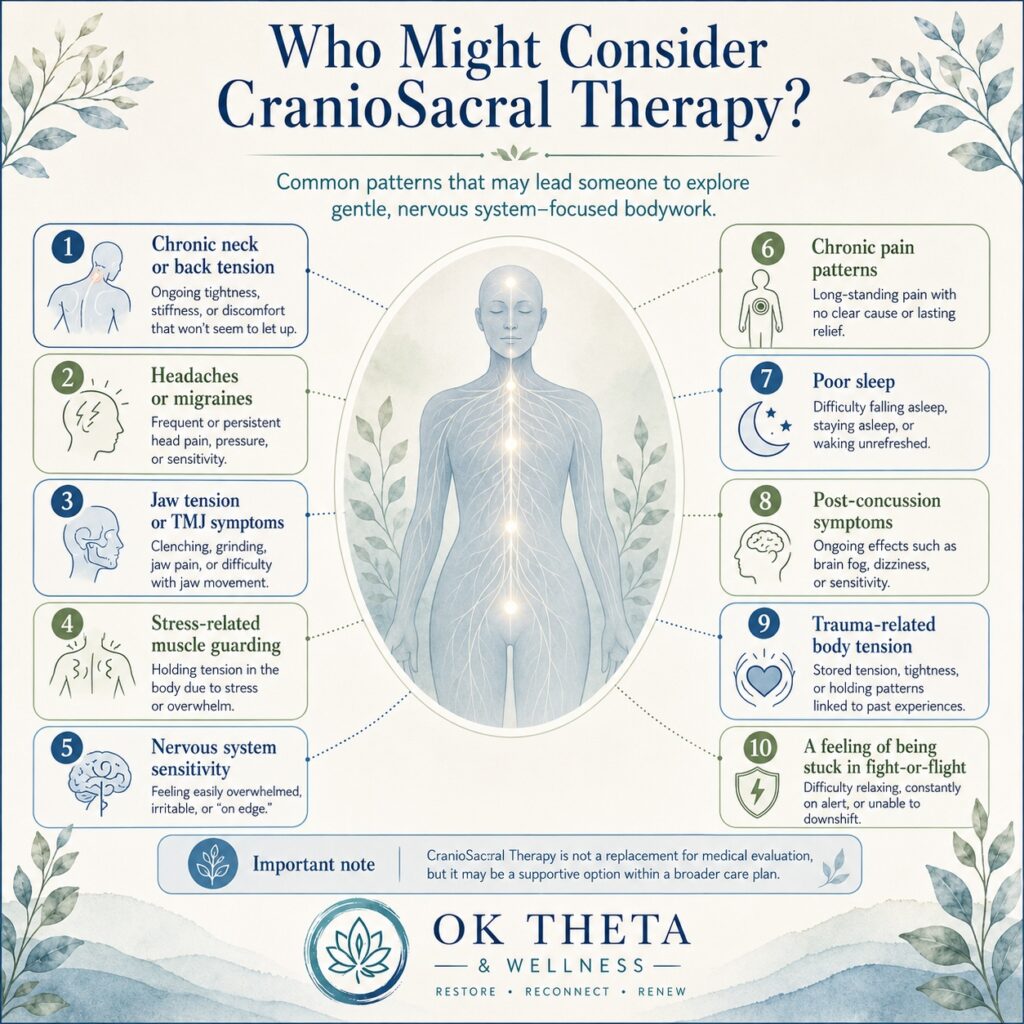
Who might consider CranioSacral Therapy?
CranioSacral Therapy may be worth considering for people who feel like their symptoms involve more than one isolated body part. That may include people dealing with:
- Chronic neck or back tension
- Headaches or migraines
- Jaw tension or TMJ symptoms
- Stress-related muscle guarding
- Nervous system sensitivity
- Chronic pain patterns
- Poor sleep
- Post-concussion symptoms
- Trauma-related body tension
- A feeling of being stuck in fight-or-flight
This does not mean CST replaces medical evaluation. New, severe, progressive, or unexplained symptoms should always be evaluated appropriately. But for many people with chronic patterns, CST may be a gentle supportive option inside a broader wellness plan.
What a session feels like
A CranioSacral Therapy session is typically quiet and deeply relaxing. You remain clothed. The practitioner uses light touch at different areas of the body, often around the head, neck, spine, sacrum, or other regions that seem relevant to the pattern being addressed. The work is subtle, but many people notice changes in breathing, body heaviness, warmth, emotional release, softening of muscle tension, or a shift into a calmer state.
Some people feel very relaxed. Some feel sleepy. Some feel emotional. Some notice very little during the session but feel different afterward. Some need repeated sessions before the body begins to trust the process. A guarded nervous system does not always open the gate on the first knock.
Why this matters in Oklahoma City
Many people in Oklahoma City are looking for options that are gentle, thoughtful, and supportive without being overly medicalized or overly passive. They want to feel better, but they also want to understand why their body feels the way it does. They want help with pain, stress, fatigue, sleep, or tension, but they do not want to be treated like a pile of disconnected parts.
That is where CranioSacral Therapy may be valuable. It gives us another way to work with the nervous system, especially for people whose bodies are sensitive, guarded, overwhelmed, or tired from being pushed.
Final thoughts
If your body feels guarded, tense, overwhelmed, or stuck in a pattern it cannot quite release, CranioSacral Therapy may be a gentle place to begin.
At OK Theta & Wellness, Jackson Integrative Health offers hands-on, nervous system-focused care in a calm and restorative setting. This work is not about forcing the body to change. It is about giving the body a quieter signal, a safer space, and enough support to begin softening from the inside out.
To learn more or schedule a session with Amy Jackson, contact OK Theta & Wellness in Oklahoma City today. Let your body have a chance to feel heard, supported, and safe enough to rest.
Revitalize Your Mind,
Renew Your Body