
Binaural Beats and the Theta State: How Sound Helps the Brain Let Go
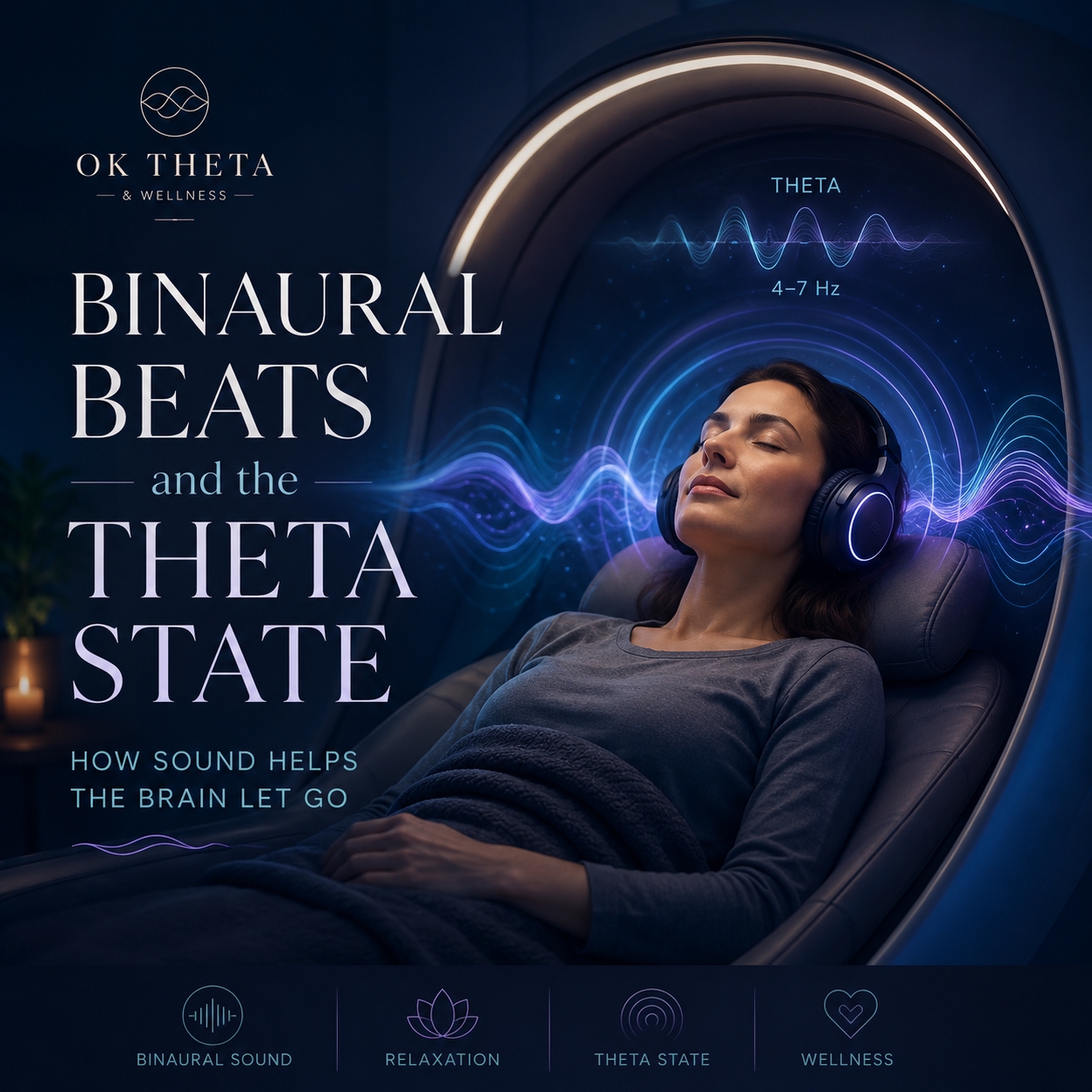
At OK Theta & Wellness in Oklahoma City, the Theta Chamber is not built around one single input. Sound and motion are only a parts. It is not just light, relaxation, or expectation. It is a layered experience.
The brain is rhythmic by nature. It breathes in patterns. It organizes itself through electrical timing. Attention, memory, sleep, emotional regulation, and body awareness all have rhythmic fingerprints. That is why the Theta Chamber uses multiple forms of gentle sensory input to help the nervous system shift out of ordinary alertness and into a more receptive state. One of those inputs is binaural beats.
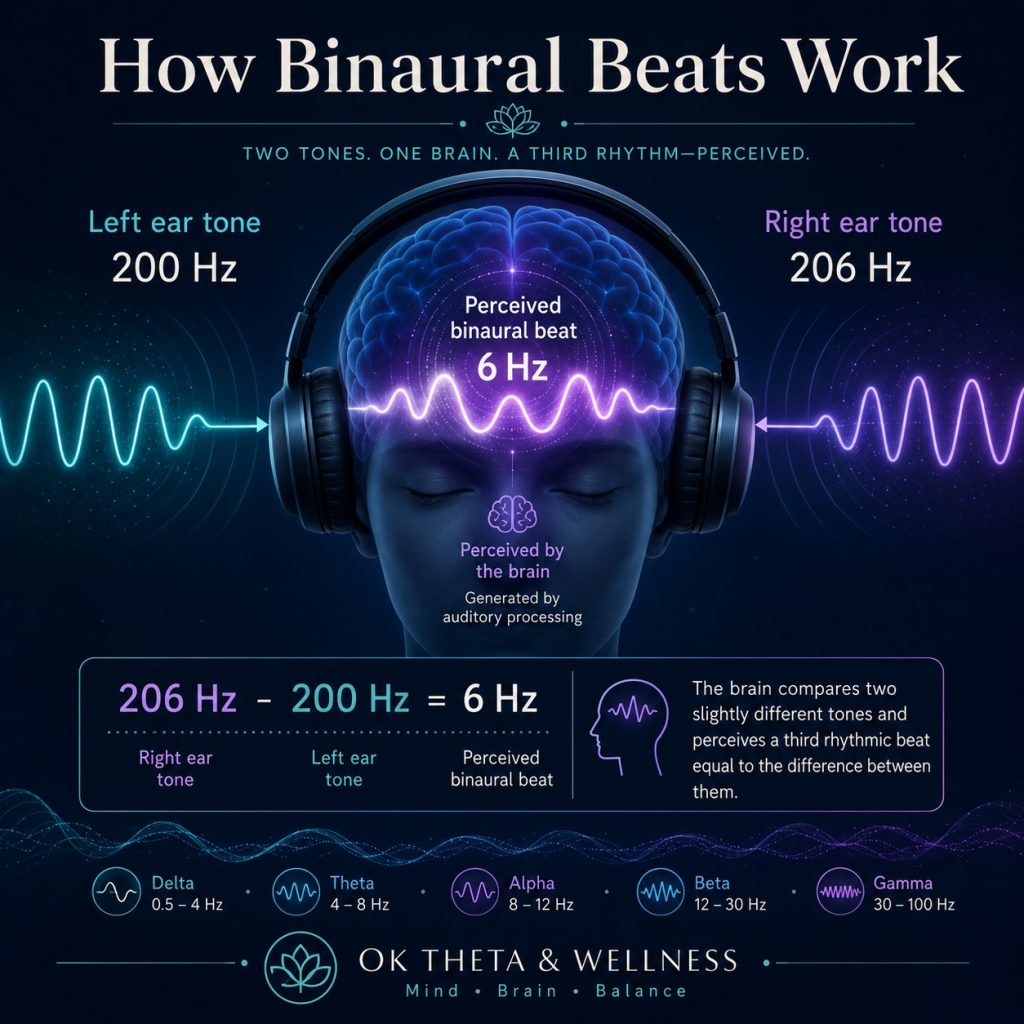
Binaural beats are a simple idea with a fascinating neurological twist. When one tone is played into the left ear and a slightly different tone is played into the right ear, the brain perceives a third rhythmic frequency equal to the difference between the two tones. For example, if the left ear hears 200 Hz and the right ear hears 206 Hz, the brain may perceive a 6 Hz beat. That 6 Hz difference falls in the theta range.
That “third tone” is not actually coming from the headphones. It is generated by the auditory processing system. The brain is, in a sense, solving the difference. It is listening between the notes. And that is where things get interesting.
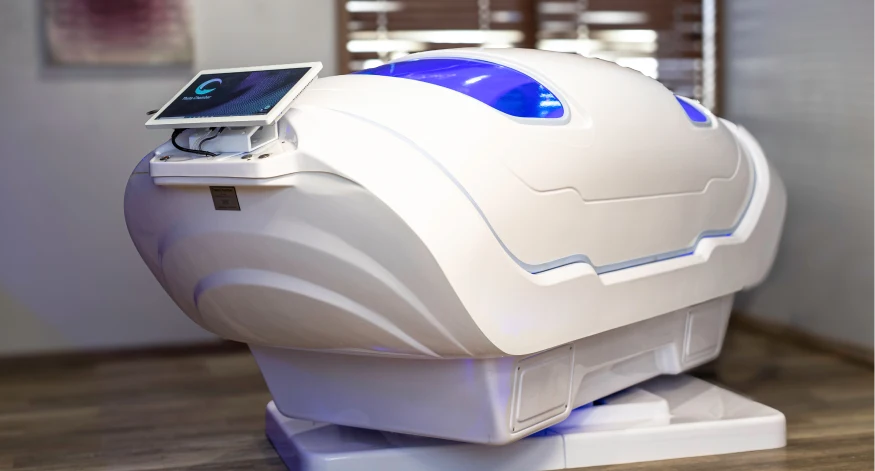
Spin into Wellness in Oklahoma’s First Theta Chamber!
Why Theta Matters
Theta brainwave activity is commonly described in the range of roughly 4 to 8 Hz. Theta is often associated with deep relaxation, early sleep, meditation, internal imagery, memory processing, and emotional openness. It is not unconsciousness or sedation. It is more like the brain stepping off the paved road of ordinary thought and walking into the tall grass where older patterns can be noticed.
In my view, this is one of the most important distinctions. The goal is not simply to “shut the mind off.” The goal is to help the brain enter a state where it can observe, soften, and reorganize. In theta, many people describe a quieting of the ordinary narrator. The internal commentator becomes less dominant, and the body becomes more noticeable. The emotional weather has room to move.
This matters because many of our patterns are not purely intellectual. You cannot always think your way out of a state that was wired through repetition, stress, trauma, fear, or protective reflex. Sometimes the nervous system needs a different state before it can receive a different message.
What the Research Says About Binaural Beats
The literature on binaural beats is promising, but it is not settled.
A 2015 review in Frontiers in Psychiatry describes auditory beat stimulation as a potentially useful tool for influencing cognition and mood, while also emphasizing that the field was still developing and that study designs varied considerably. (PMC)
A 2019 meta-analysis of 22 studies examines binaural beats in relation to cognition, anxiety, and pain perception. The authors conclude that binaural-beat exposure appears to have measurable effects, but that the direction and size of those effects depends on frequency, timing, and duration of exposure. (PubMed)
That is probably the most honest summary of the field: binaural beats may matter, but the details matter too. Frequency matters. Duration matters. The person matters. The surrounding environment matters. Whether the beats are used alone, under music, during a task, before a task, during meditation, or as part of a larger multisensory experience may all influence the result.
A 2023 systematic review specifically asks whether binaural beats can entrain the brain. The authors found mixed evidence. Some studies show changes in brain oscillatory activity, while others did not show reliable entrainment. Their conclusion was not that binaural beats are useless, but that the evidence is inconsistent and more rigorous research is needed. (PMC)
That matters because “brainwave entrainment” is often marketed too casually. It can sound as if a person simply presses play on a theta track and the brain obediently becomes theta, like flipping a porch light. The brain is more complex than that. It is living tissue, not a metronome with a password. But inconsistent evidence does not mean irrelevant evidence. It means we should be careful, curious, and specific.
Binaural Beats Inside the Theta Chamber
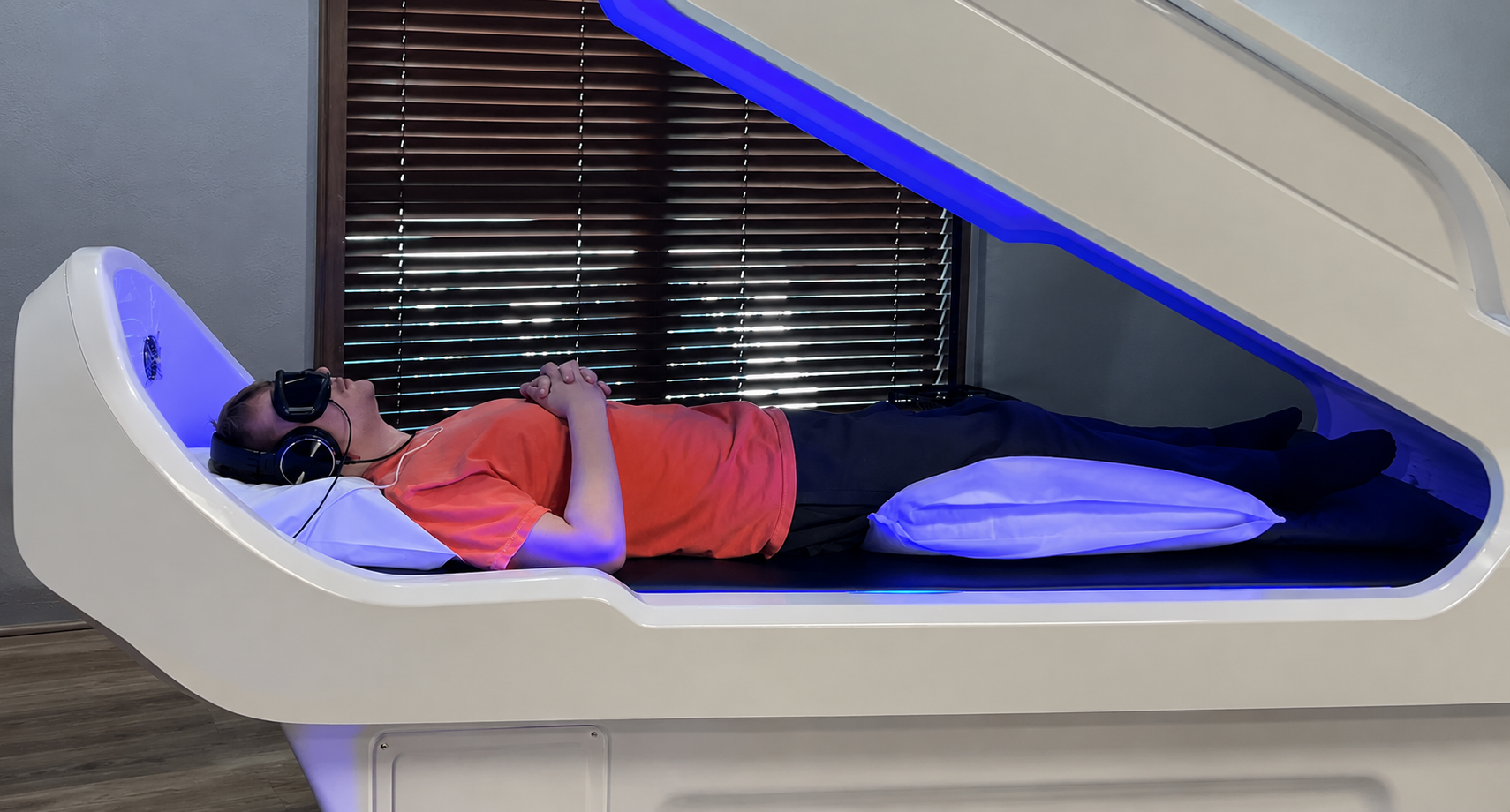
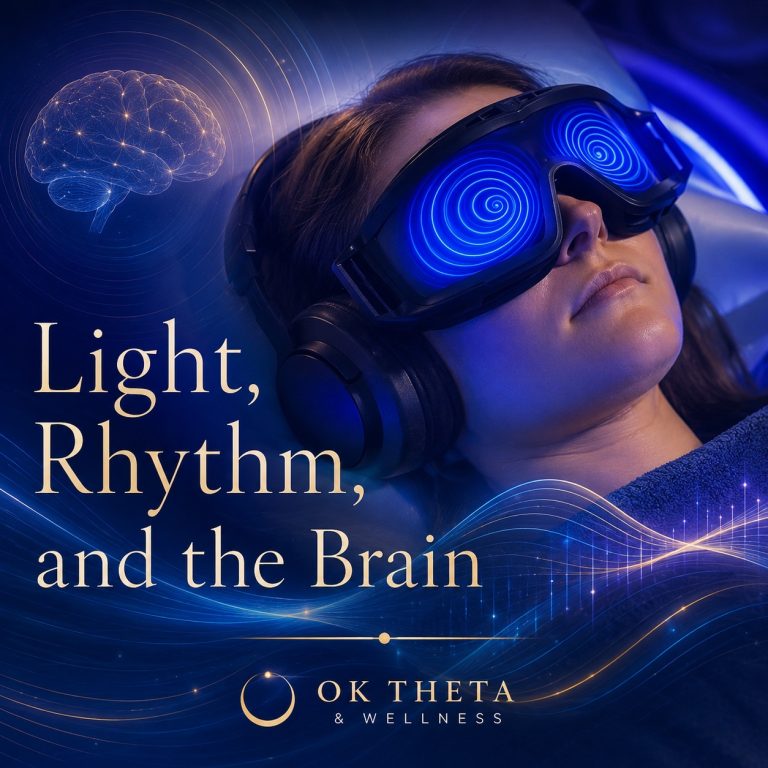
Binaural beats by themselves are one input. In the chamber, they are part of a broader sensory environment. The person is lying down with the body supported. There is rhythmic light stimulation while the auditory system receives patterned sound. The vestibular system receives gentle motion so the body has a chance to shift away from ordinary vigilance. That combination may matter.
A binaural beat track listened to while checking email, worrying about work, or scrolling your phone is not the same as a binaural beat track delivered inside a structured relaxation environment. Context changes the nervous system’s interpretation of the input. The chamber is not asking the brain to force a state. It is giving the brain repeated cues: you are supported, you can soften, you can observe, you can let go. The binaural beats are one part of that conversation.

Why Multi-Band Binaural Beats Are Worth Exploring
The multi-band Theta Chamber can deliver binaural beats not only in the theta range, but also in delta, alpha, beta, and gamma ranges.
Each frequency range is associated with different functional states:
- Delta is generally associated with deep sleep, restoration, and very slow-wave activity.
- Theta is associated with meditation, imagery, memory processing, emotional openness, and transitional states.
- Alpha is often associated with relaxed wakefulness, calm attention, and the bridge between internal and external awareness.
- Beta is associated with active thinking, task engagement, alertness, and cognitive structure.
- Gamma is associated with higher-frequency integration, attention, and binding of distributed neural activity.
The research on these frequency-specific effects remains mixed, and it would be irresponsible to claim that each setting reliably “causes” a precise mental state. A 2024 review reports that effects on memory, psychiatric symptoms, and brain activity vary across studies, with some positive findings and some null or inconsistent results. (The Open Public Health Journal)
But from a practical standpoint, this gives us a useful framework. Not every person needs the same entry point. Some people need to settle while some need to feel safe. Others need clarity or need emotional access. There are still others that need structure. Some people are already overactivated and need downshifting. Others are under-engaged and may benefit from a more alert, organized state. That is why I see the multi-band capability less as a “frequency menu” and more as a nervous-system tuning range.

The Real Question: Can Sound Help the Brain Become More Teachable?
To me, the most grounded way to talk about binaural beats is not to say they magically reprogram the brain. The better question is this: Can rhythmic sound help create conditions where the brain becomes more receptive? The answer appears to be: possibly, yes, for some people, under controlled conditions.
A 2024 systematic review of binaural beats for anxiety and depression summarizes that several studies reported better outcomes compared with certain control conditions, though the authors also note the need for more research and better standardization. (MDPI)
A 2024 study of daily 6 Hz binaural beat exposure reports preliminary evidence of changes in cognitive electrophysiology, including auditory P300 measures, after repeated listening over several weeks. The authors are appropriately cautious, noting that further research is needed. (Nature)
That word “repeated” matters. The nervous system often changes through repetition. One session may be calming. A series of sessions may teach the brain the path back to that state more efficiently. That is one of the ideas behind the Theta Chamber. We are practicing a state rather than chasing a single relaxing experience.
Sound as an Invitation, Not a Command
The brain does not like being bullied into healing. It responds better to invitation. Binaural beats are one form of invitation. Gentle motion is another. Breath is another. Light is another. Prayer, body scanning, mantra, and observational awareness are others.
When these inputs are layered carefully, the experience can become more than relaxation. It can become a setting where the person notices, “I am having a thought, but I am not the thought.” Or, “I am feeling an emotion, but I am not trapped inside it.” Or, “My body has been carrying this for a long time.”
That separation between the trigger and the self is powerful. And it may be one of the most practical reasons to explore theta states. Not because theta is mystical or magical, but because a calmer, more receptive brain may have more room to choose a new response.
Where We Go From Here
Binaural beats deserve both curiosity and humility. The science is not finished. Some studies are encouraging. Others are mixed. The effects likely depend on frequency, timing, duration, individual neurobiology, and the environment in which they are used.
At OK Theta & Wellness, binaural beats are not presented as a stand-alone miracle. They are part of a broader theta chamber experience designed to support relaxation, internal awareness, and nervous system flexibility.
When combined with the right environment, the right rhythm, and the right intention, can binaural beats help the brain remember how to let go? That is the question worth exploring. And for many people, that exploration begins with lying down, putting on the headphones, letting the body settle, and allowing the brain to listen beneath the sound.

Curious what your brain feels like when sound, motion, light, and deep relaxation all point in the same direction?
The Theta Chamber at OK Theta & Wellness uses binaural beats as one part of a multi-sensory experience designed to help the nervous system settle, soften, and become more receptive.
Schedule a session and experience the theta state for yourself.
Revitalize Your Mind,
Renew Your Body