
EECP for Chronic Refractory Angina: The Heart-Lane Evidence Behind Better Blood Flow
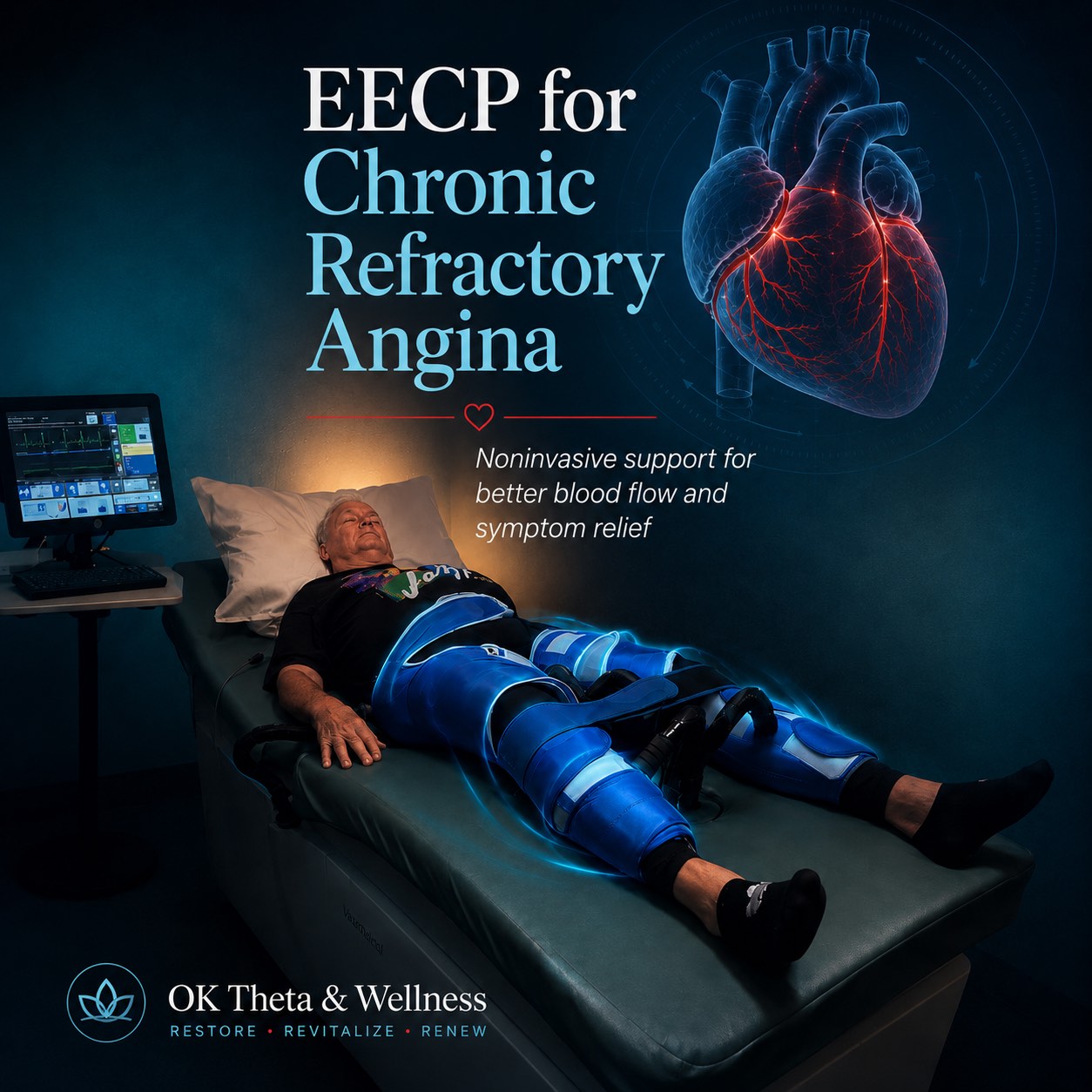
Enhanced External Counterpulsation, or EECP, is being studied in a growing number of circulation-related conditions. That part is exciting. But before we wander out into the wider pasture, we need to start where the fence posts are strongest.
The traditional, insurance-recognized use of EECP is chronic stable angina that has not responded adequately to standard medical therapy and where the patient is not a good candidate for further revascularization, such as stents or bypass surgery. In plain language, this means a person has coronary artery disease, continues to have limiting chest pain or angina-equivalent symptoms, and their cardiology team has determined that medications, stents, or surgery are either not enough, not possible, or carry too much risk. Medicare’s National Coverage Determination describes EECP, also called external counterpulsation, as a noninvasive outpatient treatment for coronary artery disease refractory to medical and/or surgical therapy. Coverage is specifically tied to disabling Class III or Class IV angina, or an equivalent classification, in patients who are not readily amenable to procedures such as angioplasty or bypass surgery. (cms.gov)
That matters for us at OK Theta & Wellness in Oklahoma City because we want to talk about EECP in the right order. There are many intriguing physiologic ripple effects, including endothelial function, nitric oxide, vascular flexibility, collateral circulation, exercise tolerance, fatigue, brain fog, autonomic function, and even mood. But the “heart-lane” evidence starts with refractory angina. That is the center of the wheel.
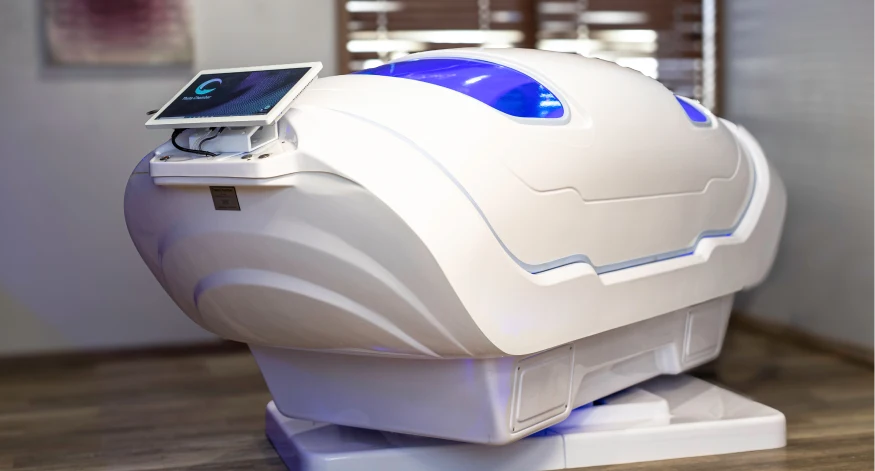
Spin into Wellness in Oklahoma’s First Theta Chamber!
What Is Chronic Stable Angina?
Angina is not usually a disease by itself. It is a symptom of an oxygen-supply problem in the heart muscle. When coronary arteries are narrowed, stiffened, or unable to deliver enough blood during exertion or stress, the heart may signal distress through chest pressure, tightness, shortness of breath, fatigue, arm discomfort, jaw discomfort, or a general sense that the body “hits a wall.” Cleveland Clinic describes chronic stable angina as long-term chest pain or pressure related to heart disease, often occurring with activity or stress. (Cleveland Clinic)
Stable angina has a pattern. It tends to occur with predictable triggers and improve with rest or medication. This is different from unstable angina, which can occur suddenly, at rest, or with worsening intensity and may represent an emergency. EECP is not a treatment for an acute heart attack or unstable chest pain. If someone is having new, severe, escalating, or rest-related chest pain, that is emergency-room territory, not wellness-center territory. Cleveland Clinic specifically notes that EECP cannot treat unstable angina or acute coronary syndrome. (Cleveland Clinic)

Where EECP Fits Traditionally
The classic EECP patient is someone who has already been through the standard cardiac pathway. They may have had medications, stress testing, angiography, stents, bypass surgery, or cardiology evaluation. Yet they still have limiting angina. Sometimes their coronary anatomy is too diffuse for another stent. Sometimes bypass is too risky. Sometimes the vessels are small, complex, or previously treated. Sometimes the patient’s other medical conditions make another procedure less attractive.
Medicare’s coverage language is specific. EECP is covered for patients with disabling Class III or Class IV angina, or equivalent severity, when a cardiologist or cardiothoracic surgeon determines they are not readily amenable to surgical intervention because their condition is inoperable, high risk, anatomically unsuitable, or complicated by comorbidities that create excessive risk. (cms.gov)
EECP is traditionally a therapy for people with significant angina who have run out of easy conventional options.
How EECP Works: Counterpulsation Without Going Inside the Body
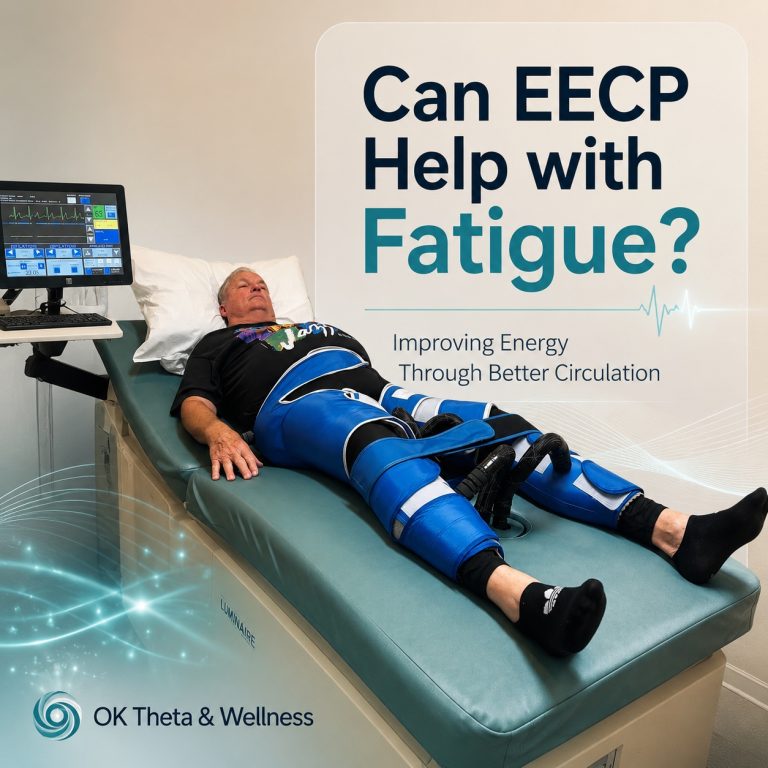
EECP uses large pneumatic cuffs wrapped around the calves, thighs, and buttocks. These cuffs inflate and deflate in rhythm with the cardiac cycle. The timing matters. During diastole, when the heart relaxes and the coronary arteries are most able to receive blood flow, the cuffs inflate sequentially from the lower legs upward. Just before systole, when the heart contracts, the cuffs rapidly deflate.
The goal is twofold: increase blood flow back toward the heart during diastole and reduce the workload the heart faces during systole. Medicare describes the mechanism as sequential cuff inflation during diastole that increases diastolic pressure, generates retrograde arterial blood flow, and increases venous return. Rapid deflation before systole decreases vascular impedance, reduces ventricular workload, and may increase cardiac output. (cms.gov)
I sometimes explain it this way: EECP is not forcing the heart to work harder. It is rhythmically assisting the circulation around the heart’s natural timing. It is a bit like helping a tired pump by improving the timing and direction of the water around it. More diastolic support. Less systolic resistance. Better coronary opportunity.
A standard course is usually 35 one-hour sessions, often delivered five days per week over seven weeks. (cms.gov)

What Outcomes Should Patients Reasonably Expect?
EECP is not a magic eraser for coronary artery disease. It does not remove plaque. It does not replace appropriate cardiology care. It does not mean a person should stop medications, skip cardiac rehab, ignore diet, or pretend risk factors no longer matter.
CMS summarizes the expected treatment effect as improved myocardial perfusion, reduced cardiac workload, increased time until onset of ischemia, increased exercise tolerance, and reduction in the number and severity of anginal episodes. CMS also notes that evidence presented for coverage suggested effects lasting beyond the immediate post-treatment phase, with some patients remaining symptom-free for months to two years. (cms.gov)

The MUST-EECP Trial: The Foundational Study
The pivotal study most often discussed is the Multicenter Study of Enhanced External Counterpulsation, known as MUST-EECP. This was a randomized, sham-controlled trial involving 139 patients with coronary artery disease and angina. Patients received either active EECP or sham treatment over 35 hours of outpatient therapy across four to seven weeks. The American College of Cardiology summary notes that 57% of patients had prior revascularization and 74% were Canadian angina Class II or III. (American College of Cardiology)
The findings were mixed but important. CMS reports that there was no statistically significant difference between active treatment and control in change in exercise duration or nitroglycerin use. However, active treatment showed a significant improvement in time to exercise-induced ischemia, measured by time to ST-segment depression during exercise. In patients completing more than 34 active sessions, angina count improvement reached statistical significance. (cms.gov)
The ACC summary of the MUST-EECP quality-of-life substudy reports that at one year, patients who received EECP had less activity-limiting physical pain, improved general health, and more satisfaction with energy level, stress, chest pain, and shortness of breath. Sham-treated patients did not show improvement on those quality-of-life measures. (American College of Cardiology)
That is very relevant clinically because refractory angina is not just a coronary narrowing problem. It becomes a life-narrowing problem. People stop walking. They avoid stairs. They plan their day around symptoms. They worry about triggering chest pain. A therapy that improves function and confidence may matter even when the angiogram itself is unchanged.
Registry and Long-Term Data
Beyond MUST-EECP, much of the EECP literature includes observational studies, registries, and follow-up cohorts. These are not as strong as large randomized trials, but they are still helpful in understanding real-world patterns.
A two-year report from the International EECP Patient Registry described patients with refractory angina and reduced left ventricular ejection fraction. The published summary reports that improvements in angina symptoms and quality of life were maintained at two years, with modest repeat EECP and low major cardiovascular event rates. (ScienceDirect)
Another long-term follow-up study reported that EECP improves angina and quality of life immediately after treatment, and that for most patients the benefits were sustained for three years. (PubMed)
A 2015 meta-analysis in Medicine reported that angina class improved by at least one Canadian Cardiovascular Society class in approximately 85% of patients after EECP, though meta-analyses of this type depend heavily on the quality and design of the included studies. (Lippincott Journals)
Mood, Anxiety, and Depression: A Related Finding Worth Mentioning Carefully
One interesting finding in the angina literature is that psychological measures may improve after EECP. This makes intuitive sense. Chronic angina can make people feel trapped inside their own cardiovascular limitations. Fear of chest pain can become its own cage.
A prospective observational study by May and Søgaard examined depression in 50 patients with refractory angina who were not candidates for revascularization. Patients underwent the traditional 35-session EECP course. Depression prevalence dropped from 18% before EECP to 2% immediately after treatment, 2% at three months, and 4% at twelve months. The authors also reported that the improvement in depression did not appear to be directly associated with reduction in chest pain. (Psychiatrist.com)
That last detail is fascinating. It suggests the mood effect may not simply be, “My chest hurts less, therefore I feel better.” The authors discuss possible mechanisms involving endothelial function, nitric oxide, inflammation, and the structured daily therapeutic contact of treatment. They also clearly note that the study was small and not randomized, and that larger randomized studies are needed. (Psychiatrist.com)
Earlier psychosocial work also reported improvements in perceived health, quality of life, depression, anxiety, and somatization after EECP in angina patients. (ScienceDirect)
Who Is Not a Good Candidate?
EECP is noninvasive, but it is still a cardiovascular therapy. It should be screened carefully.
Potential contraindications and exclusions commonly include:
- Unstable angina
- Recent myocardial infarction
- Severe uncontrolled hypertension
- Significant arrhythmias that interfere with treatment timing
- Deep vein thrombosis
- Bleeding disorders or high anticoagulation risk
- Severe aortic insufficiency
- Severe peripheral vascular disease
- Pregnancy
- Certain decompensated cardiac conditions
Aetna’s clinical policy and other medical policy summaries list many of these contraindications, and Anthem’s policy similarly describes exclusion criteria such as severe aortic insufficiency, arrhythmia, bleeding diathesis, deep vein thrombosis, severe hypertension, stroke, and unstable angina. (Aetna) For anyone with known coronary disease, angina, heart failure, arrhythmia, valve disease, clotting history, or major vascular disease, EECP should be coordinated with the patient’s treating physician or cardiology team.
At OK Theta & Wellness, the point is not to replace cardiology. The point is to support appropriate patients with a noninvasive circulation therapy in the right clinical context.
The Mechanistic Bridge: Why Symptoms May Improve
The traditional explanation for EECP includes several overlapping mechanisms.
- First, the diastolic inflation may increase coronary perfusion pressure. Coronary blood flow occurs primarily during diastole, so the timing of EECP is not incidental. The therapy is built around the heart’s relaxation phase.
- Second, systolic deflation may reduce afterload. By rapidly dropping cuff pressure before the heart contracts, EECP may reduce the resistance the left ventricle must pump against. CMS describes this as a decrease in ventricular workload and vascular impedance. (cms.gov)
- Third, EECP may improve endothelial function. The rhythmic increases in vascular shear stress may stimulate nitric oxide-related pathways and improve vascular responsiveness. A clinical rehabilitation study discussing EECP in coronary artery disease notes that benefits associated with EECP include reduction in angina and nitrate use, increased exercise tolerance, favorable psychosocial effects, enhanced quality of life, prolonged time to exercise-induced ST-segment depression, and resolution of myocardial perfusion defects in some studies. (e-arm)
- Fourth, EECP may encourage collateral circulation or improve flow through existing collateral vessels. CMS describes improved myocardial perfusion and notes that diastolic pressure and retrograde aortic flow may improve perfusion while unloading reduces oxygen demand. (cms.gov)
That combination is why EECP is so interesting. It is not just “more blood flow.” It is timed hemodynamic assistance, vascular conditioning, and potentially improved endothelial signaling.
The Aerial View: What Else Is Being Studied?
EECP began as a therapy for chronic refractory angina. Because it affects circulation, endothelial function, diastolic pressure, vascular shear stress, and potentially nitric oxide signaling, researchers have naturally explored whether it may help other conditions where blood flow and vascular function matter. Some early results are promising. Some are mixed. Some remain investigational.
EECP has been studied or discussed in:
- Heart failure
- Endothelial dysfunction
- Peripheral vascular disease
- Erectile dysfunction
- Stroke recovery
- Kidney disease
- Diabetes/metabolic outcomes
- Sleep
- Autonomic symptoms
- Other circulation-related conditions
Cleveland Clinic lists several conditions where EECP has been explored or may be discussed clinically, including cardiac syndrome X, cerebrovascular disease, heart failure, kidney failure, left ventricular dysfunction, pulmonary disease, and peripheral artery disease. (Cleveland Clinic)
Some policy reviews state that evidence for non-angina indications remains insufficient to determine net health outcomes, especially when studies are small, observational, methodologically limited, or not yet reproduced in large randomized trials. (Triple-S Salud)
At OK Theta & Wellness, we are interested in that broader frontier, but we want to build from the strongest traditional evidence first.
That is honest. That is scientifically clean. That is the Oklahoma way: don’t sell the thundercloud before the rain hits the ground.
Bringing EECP to Oklahoma City
For people in Oklahoma City, access matters. EECP usually requires a substantial time commitment: 35 one-hour sessions, often five days per week over seven weeks. That is not a casual appointment. It is a course of therapy.
But for the right person, especially someone living with chronic stable angina who has already been told there are limited procedural options, that time may represent something valuable: a chance to improve function, reduce symptom burden, and reclaim daily activity.
At OK Theta & Wellness, our goal is to provide EECP in a way that is grounded, medically respectful, and clear-eyed. We are not trying to make EECP into something it is not. We are placing it where the evidence first placed it: in the care conversation for chronic refractory angina.
From there, we can continue to educate about endothelial health, nitric oxide, vascular aging, circulation, metabolic health, brain fog, exercise tolerance, and nervous system regulation. But the cornerstone post should begin here, with the heart.
Final Word
EECP is not new, but it is still unfamiliar to many people. It sits in an unusual space: noninvasive, physiology-heavy, time-intensive, and traditionally used for a very specific group of patients with chronic refractory angina.
The best evidence supports its role in selected patients with disabling chronic stable angina who remain symptomatic despite medical therapy and are not good candidates for revascularization. The most reasonable expectations are improvements in angina symptoms, exercise tolerance, time to ischemia, quality of life, and functional confidence. Some studies also suggest improvements in mood and anxiety-related measures, but those should be treated as related findings rather than the primary reason for treatment.
At OK Theta & Wellness in Oklahoma City, we see EECP as a serious circulation therapy with a traditional heart-centered foundation and a growing research horizon. The foundation matters. The horizon matters too. But the foundation comes first.
Do You Still Have Chest Pain?
If you or someone you love has chronic stable angina, reduced stamina, or persistent symptoms despite standard cardiac care, ask your cardiologist whether EECP may be appropriate. If you are curious about how EECP is being offered in Oklahoma City, contact OK Theta & Wellness and we can help you understand the treatment process, screening considerations, and whether this conversation belongs in your care plan.
Revitalize Your Mind,
Renew Your Body