

StemWave Shockwave Therapy: How Acoustic Energy Can Help the Body Repair
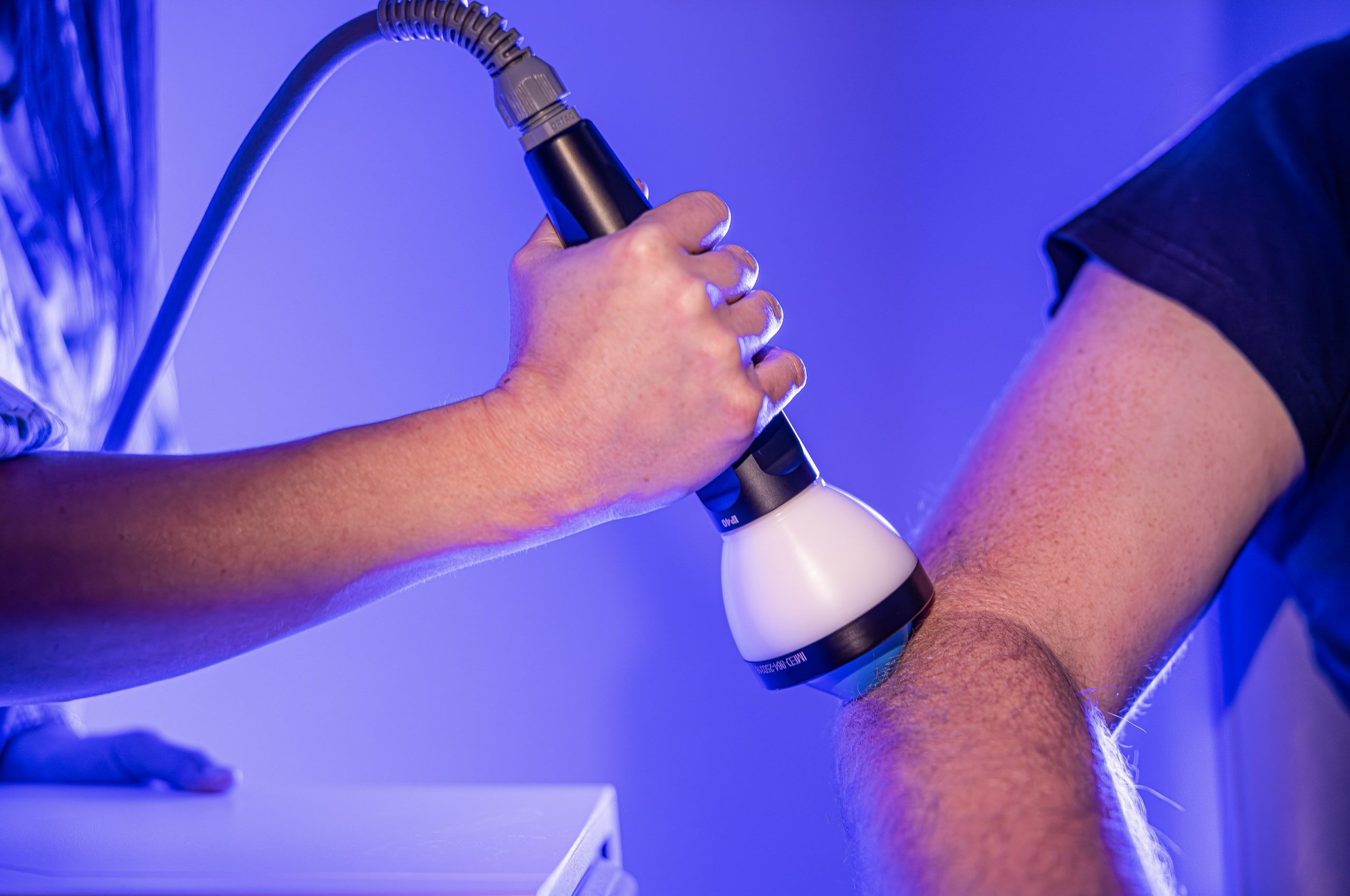
At OK Theta & Wellness, we are always looking for therapies that work with the body instead of simply overriding it. StemWave shockwave therapy is one of those tools. It does not inject a substance, numb the body into silence, or pretend that pain is just an inconvenience to be covered up. Instead, it uses acoustic energy to create a mechanical signal inside the tissue. That signal aims to wake up local repair pathways, increase blood flow, activate connective tissue responses, and influence the cellular environment where healing takes place.
The body is not passive. Tissue is listening all the time. Bone, tendon, fascia, ligament, cartilage, muscle, blood vessels, and nerves are constantly responding to mechanical forces. The question is whether the signal is helpful or harmful. Too much force creates injury, while too little force creates stagnation. But the right kind of mechanical stimulus can become a biological invitation. StemWave shockwave therapy sits in that middle space: not a magic wand or a replacement for good clinical judgment, but a non-invasive way to stimulate the body’s own repair language.
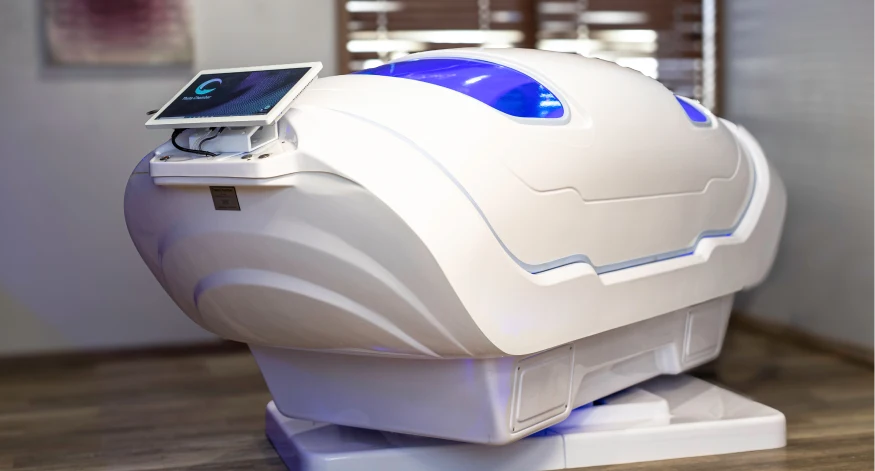
Spin into Wellness in Oklahoma’s First Theta Chamber!
What Is StemWave Shockwave Therapy?
StemWave is a branded form of shockwave or acoustic wave therapy. In the medical literature, this broader category is usually discussed under the name extracorporeal shockwave therapy, or ESWT. “Extracorporeal” simply means the energy is generated outside the body. The device delivers acoustic pressure waves through the skin into targeted tissues, creating mechanical force. The body then converts that force into cellular activity through a process called mechanotransduction.
Mechanotransduction is how cells translate physical pressure, stretch, vibration, or force into biochemical signals. It is one of the reasons exercise works, bone remodels under load, and tendons respond to progressive loading. The body is built to interpret force. Shockwave therapy applies a focused mechanical stimulus to tissue that may be painful, inflamed, poorly vascularized, or stuck in a chronic repair pattern. The goal is not to “blast” the tissue, but rather to stimulate a controlled biological response.
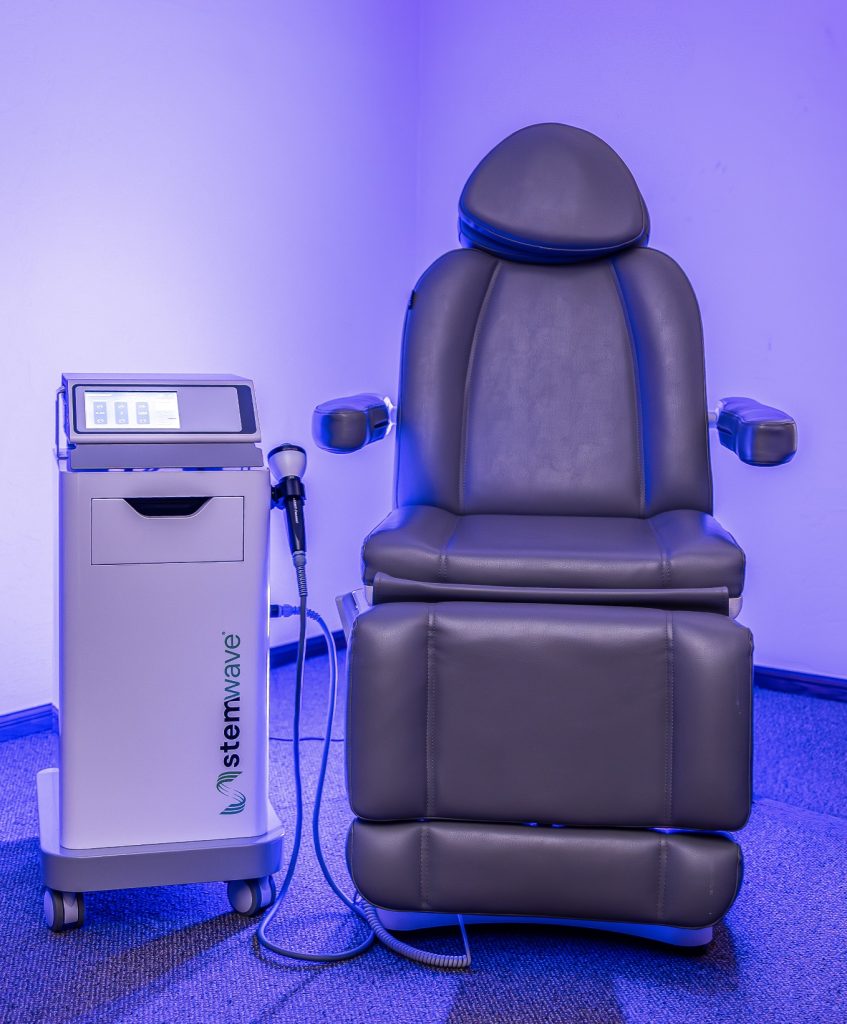
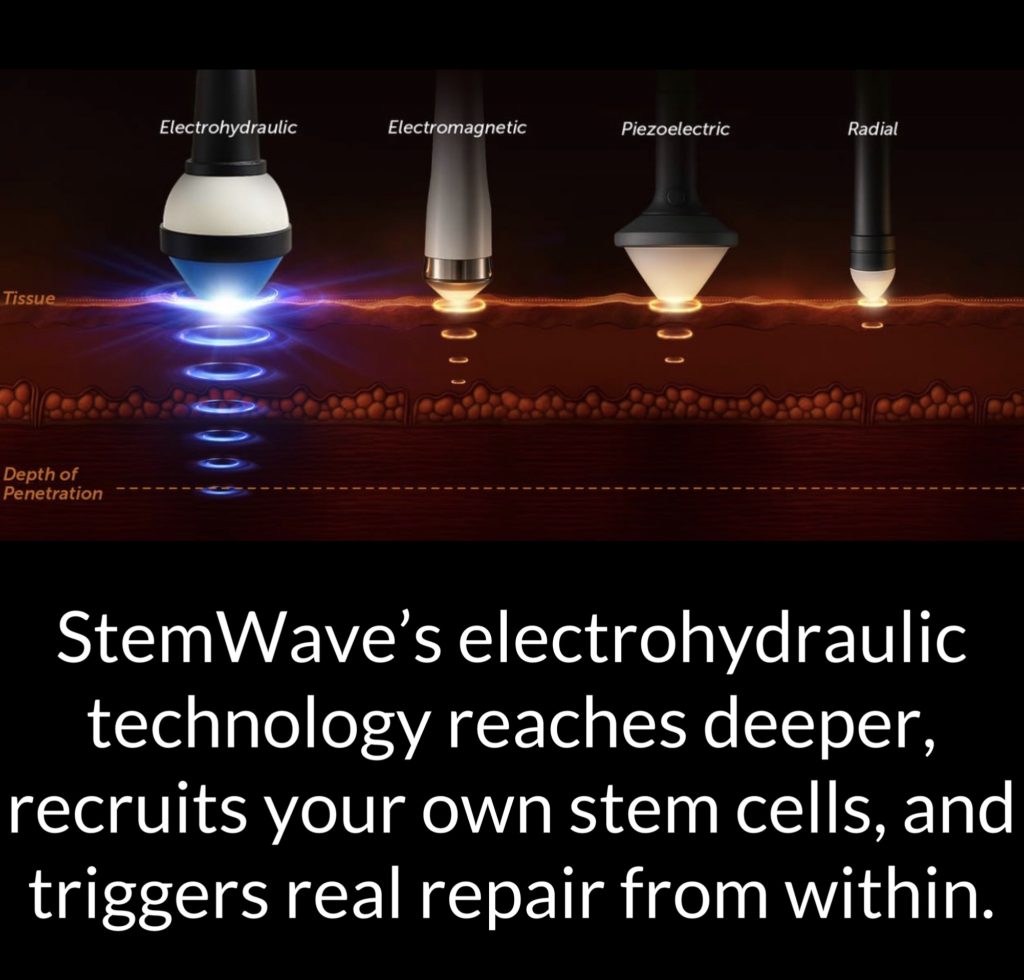
Depending on the device and protocol, shockwave therapy may be focused, radial, or unfocused/broad-focused. StemWave is focused. The categories are not identical, and the research literature does not always translate from one device to another. That said, the shared therapeutic concept is acoustic energy interacting with tissue biology.
The Science: Mechanical Energy Becomes Cellular Signaling
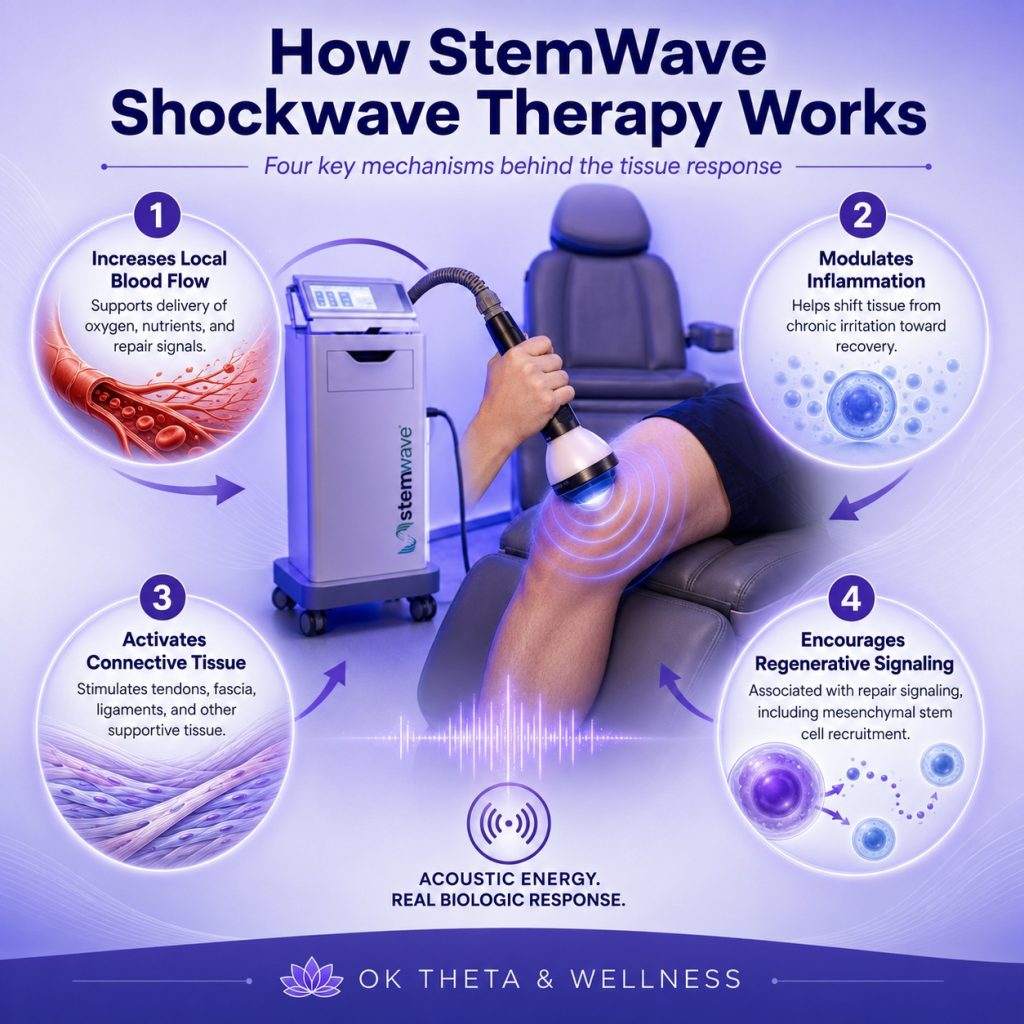
StemWave shockwave therapy works through several overlapping mechanisms:
The first is increased local blood flow. Acoustic wave therapy can stimulate vascular responses, which can help bring oxygen, nutrients, immune cells, and repair mediators into tissues that have been underperforming metabolically. The second is modulation of inflammation. Chronic pain is often not just “damage.” It is frequently a failed transition from inflammation into repair. The tissue gets stuck in a noisy middle stage. Shockwave therapy may help shift that local environment toward a more constructive healing response.
The third is connective tissue activation. Tendons, ligaments, fascia, and joint capsules are living tissues. They remodel, thicken, organize, and adapt based on the signals they receive. Shockwave therapy is FDA-regulated with indications related to chronic diabetic foot ulcers, plantar fasciitis, lateral epicondylitis, temporary pain relief, increased blood flow, and connective tissue activation. (Univera Providers) The fourth is regenerative signaling, and that is where the conversation becomes especially interesting.
Mesenchymal Stem Cells and the Repair Response
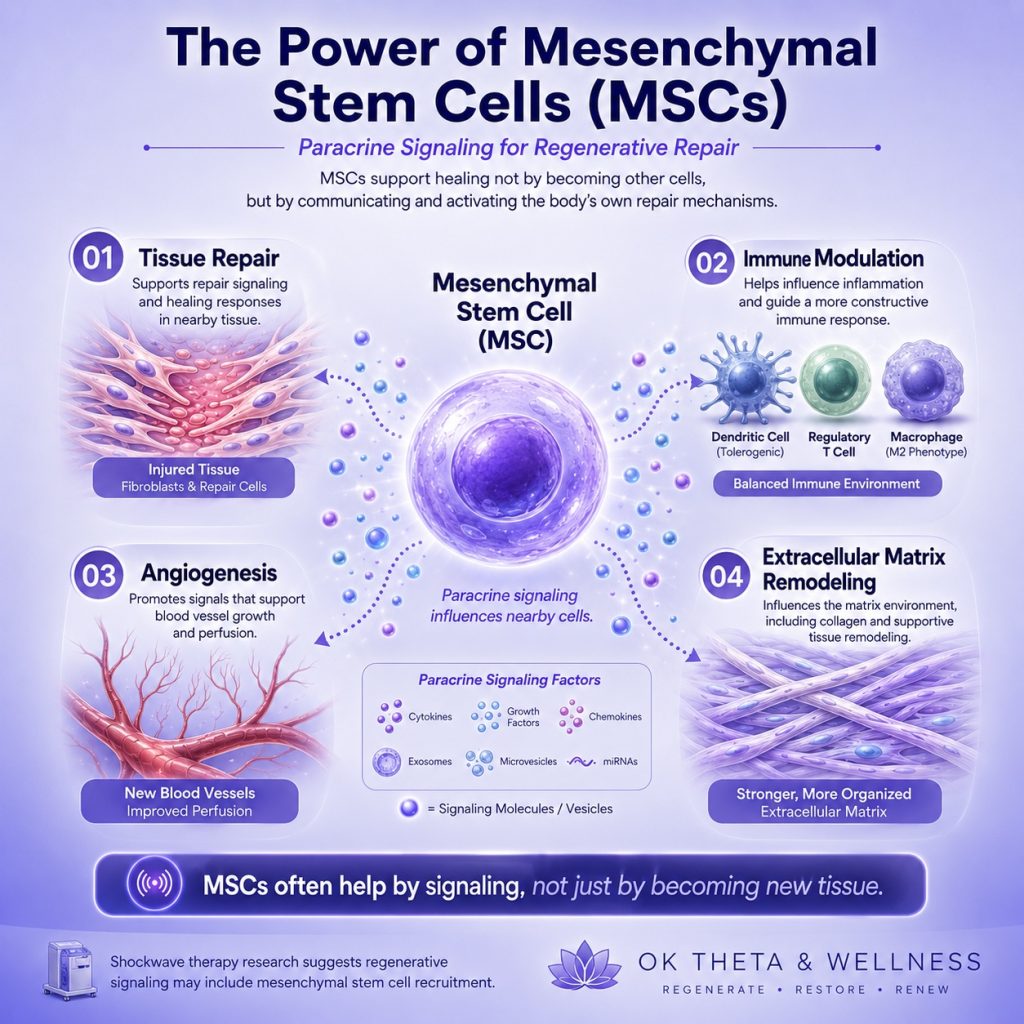
Mesenchymal stem cells, often called MSCs, are multipotent stromal cells involved in tissue repair, immune modulation, angiogenesis, and extracellular matrix remodeling. These cells do not simply “turn into new tissue” in a cartoonish way. They appear to act largely paracrine, meaning they release signaling molecules that influence the behavior of nearby cells.
A 2024 review on extracorporeal shockwave therapy and stem cell therapy describes ESWT as a strategy that may enhance stem cell proliferation, differentiation, migration, and recruitment across several disease models. The review specifically notes that ESWT has been demonstrated to enhance migration and recruitment of mesenchymal stem cells to targeted regions. (PMC)
Shockwave therapy can help create a local biological environment that is more favorable for repair, including signaling pathways associated with stem cell recruitment, homing, angiogenesis, and tissue regeneration. One pathway that often comes up in regenerative medicine is the SDF-1/CXCR4 axis. SDF-1, also known as stromal cell-derived factor 1, helps regulate migration and homing of stem and progenitor cells. CXCR4 is one of its key receptors. This signaling pathway has been studied in relation to MSC chemotaxis, survival, and paracrine function. (PLOS)
In plain language, injured tissue can release a kind of “come here” signal. Stem cells and repair-associated cells respond to that chemical geography. Shockwave therapy seems to influence some of these signaling pathways, which is exciting!
What Does the Literature Say About Outcomes?
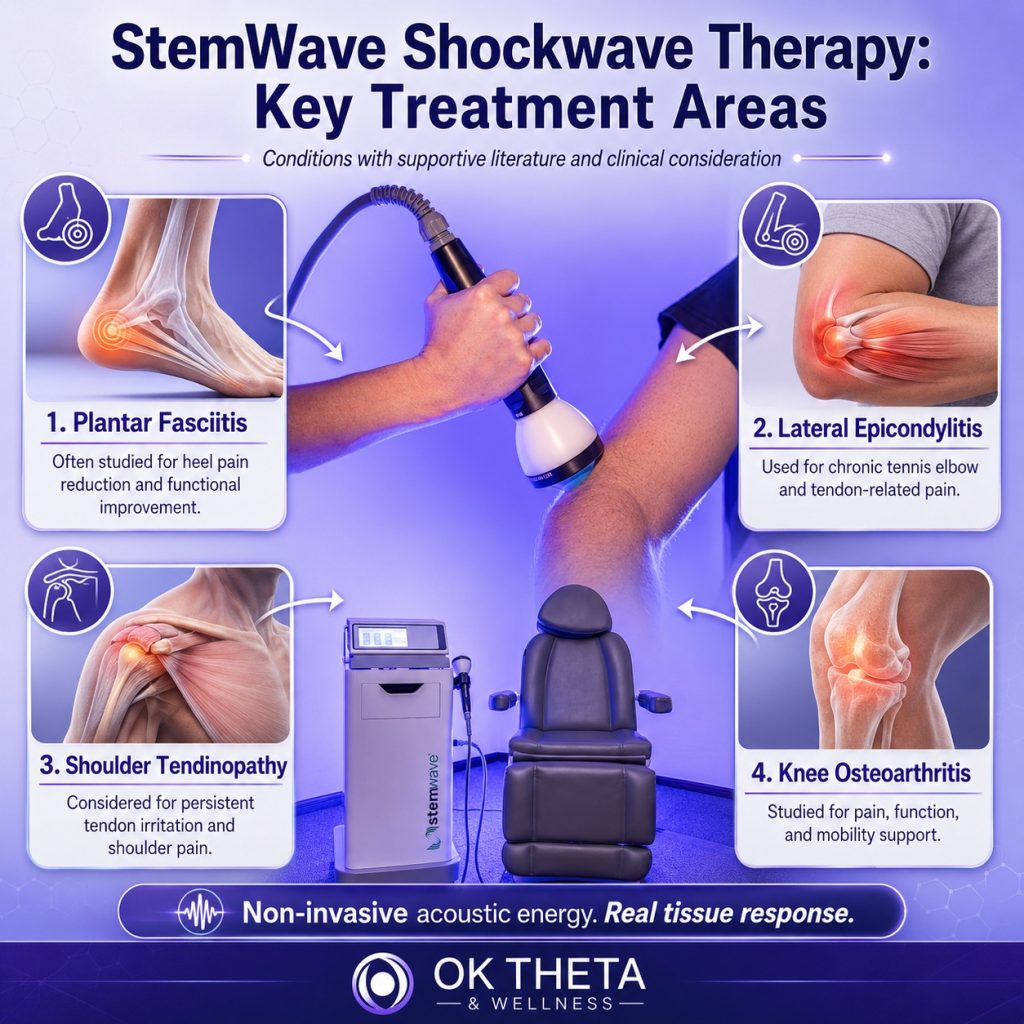
There is supportive literature for several musculoskeletal conditions, particularly plantar fasciitis, lateral epicondylitis (tennis elbow), calcific shoulder tendinopathy, and certain other tendinopathies. In a 2015 review authors conclude that ESWT is an effective and safe non-invasive treatment option for several tendon and musculoskeletal pathologies. (PMC) A 2018 JBJS review notes increasing evidence that ESWT is safe and effective for several musculoskeletal disorders. (Lippincott Journals)
More recent summaries are condition-specific. A 2026 medical policy summary citing Charles et al. reviews high-quality evidence suggesting a large effect of ESWT on pain and function for plantar fasciitis. (Univera Providers) In other tendon conditions, results vary by diagnosis, chronicity, device type, energy settings, and number of treatments. It also matters whether therapy is paired with proper loading, mobility work, and correction of the underlying mechanical problem.
In the case of lateral epicondylitis or “tennis elbow,” a randomized trial summarizes that focused and radial shockwave groups improved more than sham treatment. The authors also note that focused shockwave (like StemWave) outperformed radial shockwave. (Univera Providers) For knee osteoarthritis, the literature is growing. A 2026 evidence summary concludes that ESWT improved pain and function in subjects with knee osteoarthritis. (Univera Providers)
For wounds, shockwave therapy can affect perfusion, angiogenesis, and tissue repair. One review of ESWT in wounds reports healing and perfusion in shockwave-treated groups when compared with controls in some studies. Wound care is a complex field where patient selection, vascular status, infection control, offloading, nutrition, and glucose control matter tremendously. (HMP Global Learning Network)
Why This Matters for Pain
Pain is not a simple alarm bell. In some instances, pain can be thought of as smoke detector that keeps chirping after the fire has passed. Other times, pain may be a warning from tissue that has poor blood flow, poor glide, poor load tolerance, or a stalled inflammatory process. StemWave shockwave therapy gives us a way to speak to that tissue directly.
Instead of only asking, “How do we block the pain?” we can ask, “Why is this area not recovering well?” Is the tendon underloaded or overloaded, the fascia stiff, the joint irritated? Is the local blood supply poor, the tissue trapped in a chronic inflammatory state, the nervous system guarding the area? Shockwave therapy fits beautifully into an integrative model. It can be paired with physical therapy, mobility work, strengthening, massage therapy, fascial release, nervous system regulation, nutrition, and circulation support. The shockwave is often only part of the story. It is a signal. What the body does with that signal depends on the terrain.
What Patients May Experience
Most StemWave shockwave therapy sessions are relatively quick. The provider identifies the area of concern, applies the treatment head to the skin, and delivers acoustic pulses into the targeted tissue. Some areas feel tender during treatment, especially when the device passes over irritated tissue. In a way, that tenderness can help map the problem. Patients often describe the sensation as tapping, pulsing, pressure, or a deep ache that changes as the tissue responds.
There is typically no required downtime. Some people feel immediate relief. Others notice gradual improvement over several weeks as tissue remodeling and repair signaling continue. In chronic conditions, the goal is not just momentary comfort. The goal is to help the tissue move into a better healing trajectory.
A Grounded Way to Think About StemWave
I do not like overselling regenerative therapies. The literature DOES support the idea that shockwave therapy can influence stem-cell-related pathways, including stem cell migration, recruitment, and regenerative signaling. But it is more accurate to describe StemWave shockwave therapy as a therapy that can activate the body’s repair environment.
The outcomes literature is encouraging in several conditions. The safety profile is favorable when used appropriately. But results depend on the diagnosis, tissue type, chronicity, protocol, and the whole-person context. At OK Theta & Wellness, that is how we see StemWave shockwave therapy: not as a standalone miracle, but as a powerful tool in a broader healing plan.
StemWave is acoustic energy with biological consequences, mechanical force translated into cellular conversation. It is a way of telling tired tissue, “Wake up. The repair crew is needed here.” When that signal is delivered thoughtfully, it can become a meaningful part of restoring movement, reducing pain, and helping the body how to heal.
Are You Dealing With Stubborn Joint Pain?
If you are dealing with stubborn pain, a chronic tendon issue, joint irritation, plantar fasciitis, or an injury that just does not seem to fully settle down, StemWave shockwave therapy is worth exploring. At OK Theta & Wellness, we look at the tissue, the nervous system, the circulation, and the whole person. If you want to know whether StemWave is a good fit for you, reach out and let us take a thoughtful look.


