
StemWave Usually Requires Multiple Sessions

One of the most common questions I hear about StemWave is also one of the most reasonable:
“Why would I need more than one session?”
I understand the question. Most of us are used to thinking about pain relief in a fairly immediate way. If we take a medication, we expect to feel something soon. If we get an injection, we hope the pain calms down quickly. If we get a massage or an adjustment, we often know by the end of the visit whether something feels different.
StemWave is a little different.
StemWave is not simply about what happens during the appointment. It is about what the body does in response to the treatment over time.
That distinction matters.
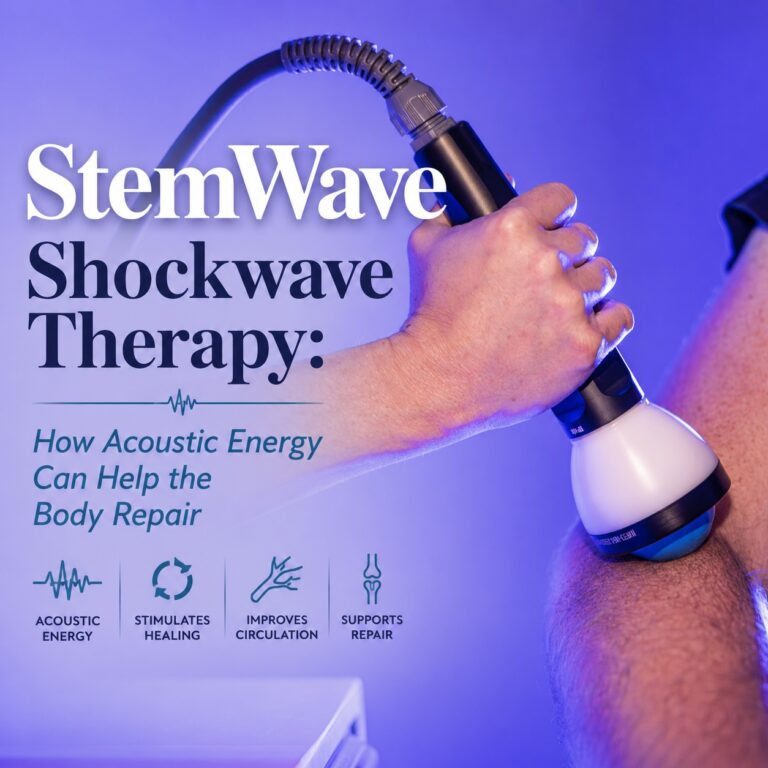
When I talk with people about StemWave, I try to frame it as a repeated biological stimulus. The treatment is designed to apply acoustic wave energy to a targeted area of tissue. That energy creates mechanical stimulation. The goal is not just to distract the nervous system for an hour or temporarily numb a painful spot. The deeper goal is to encourage the body to pay attention to an area that may have become irritated, under-repaired, stiff, inflamed, guarded, or stuck in a chronic pain pattern.
That kind of change usually does not happen all at once.
Spin into Wellness in Oklahoma’s First Theta Chamber!
What Is StemWave Shockwave Therapy?
StemWave is a branded form of shockwave or acoustic wave therapy. In the medical literature, this broader category is usually discussed under the name extracorporeal shockwave therapy, or ESWT. “Extracorporeal” simply means the energy is generated outside the body. The device delivers acoustic pressure waves through the skin into targeted tissues. These waves create mechanical force. The body then converts that mechanical force into cellular activity through a process called mechanotransduction. That word matters.
Mechanotransduction is how cells translate physical pressure, stretch, vibration, or force into biochemical signals. It is one of the reasons exercise works. It is one of the reasons bone remodels under load. It is one of the reasons tendons respond to progressive loading. The body is built to interpret force.
Shockwave therapy applies a focused mechanical stimulus to tissue that may be painful, inflamed, poorly vascularized, or stuck in a chronic repair pattern. The goal is not to “blast” the tissue. The goal is to stimulate a controlled biological response.
Depending on the device and protocol, shockwave therapy may be focused, radial, or unfocused/broad-focused. These categories are not identical, and the research literature does not always translate perfectly from one device to another. That is an important distinction. That said, the shared therapeutic concept is acoustic energy interacting with tissue biology.
StemWave Is a Signal, Not a Shortcut
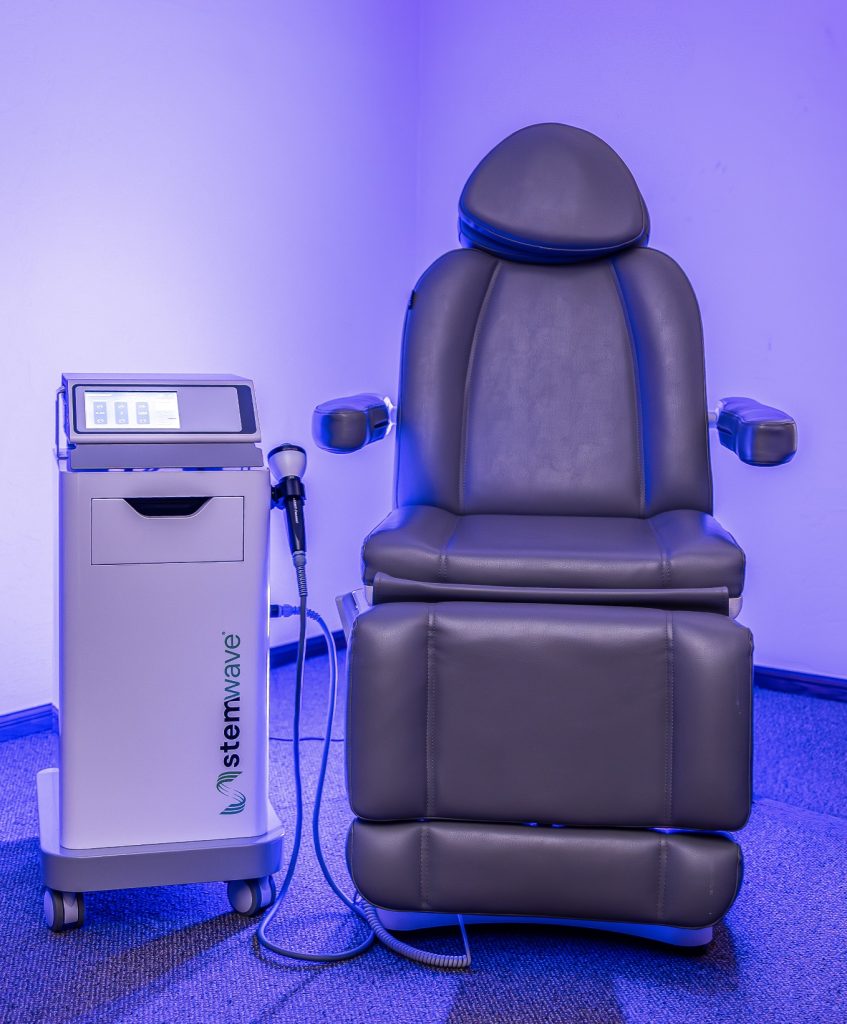
I like to think of StemWave as a signal. It does not “install” healing into the body, force the body to regenerate tissue in one dramatic moment, or erase years of pain in one visit like someone hitting a reset button on a machine. Instead, StemWave sends a mechanical signal into the tissue.
That signal may help stimulate local circulation, cellular activity, tissue repair signaling, and pain modulation. In simpler terms, it is a way of asking the body to re-engage with an area that has not been healing or functioning well. That is why a series of treatments usually makes more sense than a single treatment. One session may start the conversation. Multiple sessions give the body repeated chances to respond.
Tissue Repair Takes Time
Most of the problems people bring to us are not brand new. By the time someone is interested in StemWave, they may have had knee pain for years. Or shoulder pain that never fully resolved. Or plantar fascia pain that keeps returning. Or neuropathy symptoms that have been slowly worsening. Or back pain that changes their posture, walking, sleep, and confidence.
These problems are rarely just “pain.” They often involve several layers at once:
- irritated local tissue
- poor circulation
- chronic inflammation
- tendon or fascia changes
- joint stiffness
- muscle guarding
- altered movement patterns
- nervous system sensitivity
- fear of loading or using the area
When a problem has been present for months or years, the body has usually adapted around it. Sometimes those adaptations are helpful at first. The body guards, braces, limps, tightens, avoids, and compensates. But over time, those protective strategies can become part of the problem.
StemWave may help stimulate the tissue, but the body still has to respond to that stimulation. Blood flow has to change. Sensitivity has to calm. Tendons and connective tissue may need time to remodel. Movement patterns may need to normalize. The nervous system may need repeated reminders that the area is not as threatened as it once believed. That takes time. Pain may improve before the tissue has fully adapted. That is why stopping too early can sometimes be like taking bread out of the oven halfway through baking. Something has started, but it may not be finished.
The Body Repairs in Phases
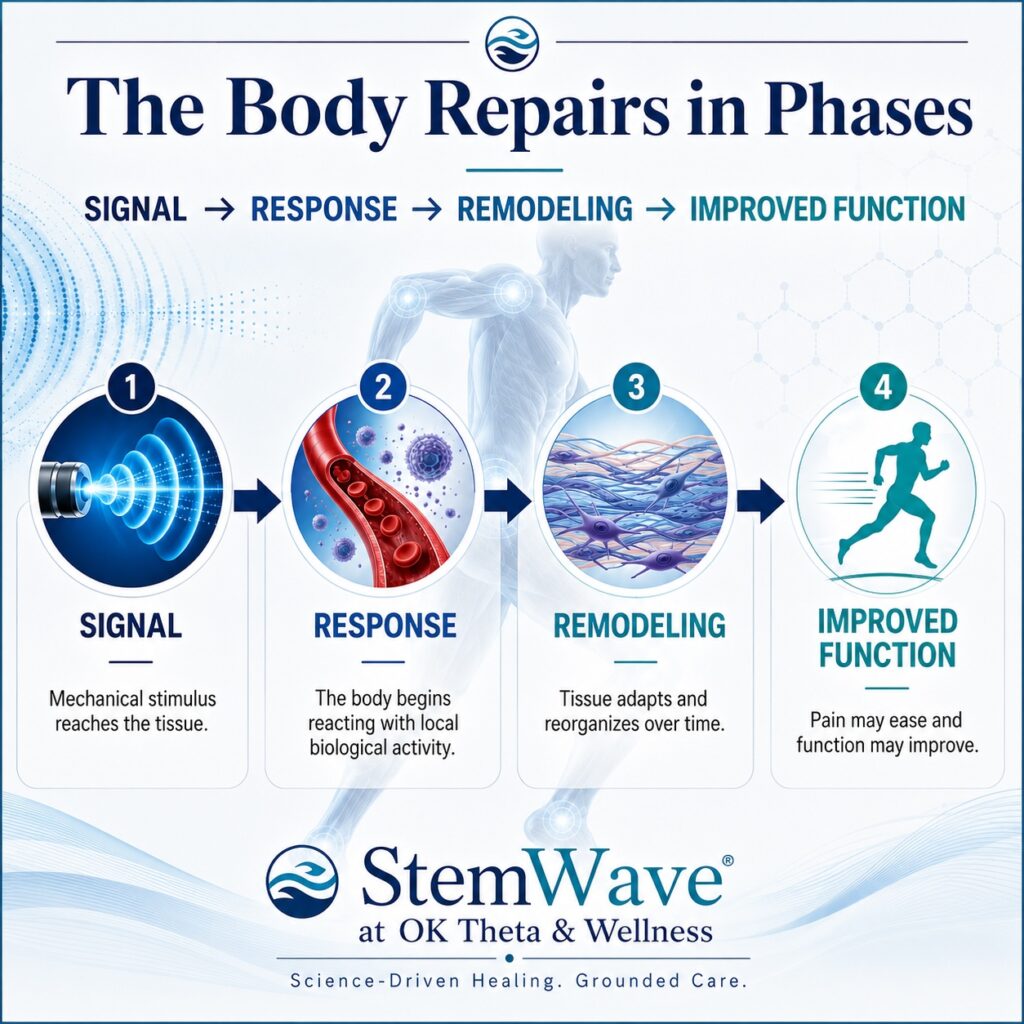
Healing is not a light switch. It is more like a sequence. First, the body receives a signal. Then, the body responds. Then, over time, the tissue may remodel and become more tolerant. This is one of the main reasons I explain StemWave as a course of care. Each session is not isolated. Each session builds on the previous one.
A simple way to think about it is:
Signal → response → remodeling → improved function
The first session may help us identify the most reactive areas. It may increase local stimulation. It may reduce pain for some people. It may also leave some temporary soreness, which can happen when chronically irritated tissue is stimulated. The next sessions continue the process. Over time, we are looking for changes in tenderness, range of motion, pain intensity, stiffness, walking tolerance, grip strength, sleep interruption, or the ability to do normal daily activities. The goal is not simply to chase a pain score from one appointment to the next. The goal is to help the area become more tolerant, more mobile, and less reactive.
Why Chronic Pain Often Needs Repeated Input
Chronic pain can become self-reinforcing. A painful knee changes how someone walks. A painful shoulder changes how someone reaches. A painful foot changes how someone loads the hip and back. Neuropathy symptoms can change balance, gait, confidence, and sleep. Back pain can make the whole body move as if it is trying not to wake a sleeping dragon. Over time, the original problem and the body’s compensation pattern can start feeding each other.
This is why I rarely think of chronic pain as only a local tissue problem. It may begin in one area, but eventually it can involve the nervous system, circulation, movement, sleep, stress, and confidence. Repeated StemWave sessions give us repeated opportunities to interrupt that loop. The treatment may help stimulate the tissue. Movement afterward may help the body learn how to use that change. Better circulation may support recovery. Less guarding may improve mobility. Improved mobility may reduce strain. Reduced strain may help pain calm down.
This is not always instant, and it is not always perfectly linear. But it is logical. If the body has been practicing a pain pattern for a long time, it may need repeated input to learn a different pattern.

Some People Feel Better After One Session
Some people do notice a change after one StemWave session. They may say the area feels lighter, looser, warmer, less sharp, or easier to move. Sometimes people notice better range of motion right away. Others notice that their pain is not gone, but it feels less threatening. Some people sleep better that night because the painful area is not yelling as loudly.
That early response can be encouraging. But early relief does not always mean the underlying tissue has fully changed. This is an important point. If someone feels better after one session, I am happy to hear it. But I still want them to understand that early improvement may reflect pain modulation, circulation changes, temporary reduction in muscle guarding, or a nervous system response to stimulation.
Those are good things. They are just not always the whole story. A series of sessions gives us a better chance of moving from short-term relief toward longer-term change.
Progress Is Not Always Linear
I wish healing always looked like a straight upward line. It usually does not. Progress often looks more like a winding road with better scenery over time. Some people feel better quickly. Some feel sore after early sessions and then start to notice improvement later. Some have good days and bad days before the good days become more consistent. Some notice function improving before pain fully disappears.
For example, someone may still have discomfort, but they can walk farther. Or they can go up stairs more easily. Or they wake up less stiff. Or they realize they are not thinking about the painful area as much during the day. Those are meaningful changes. Pain is important, but function matters too.
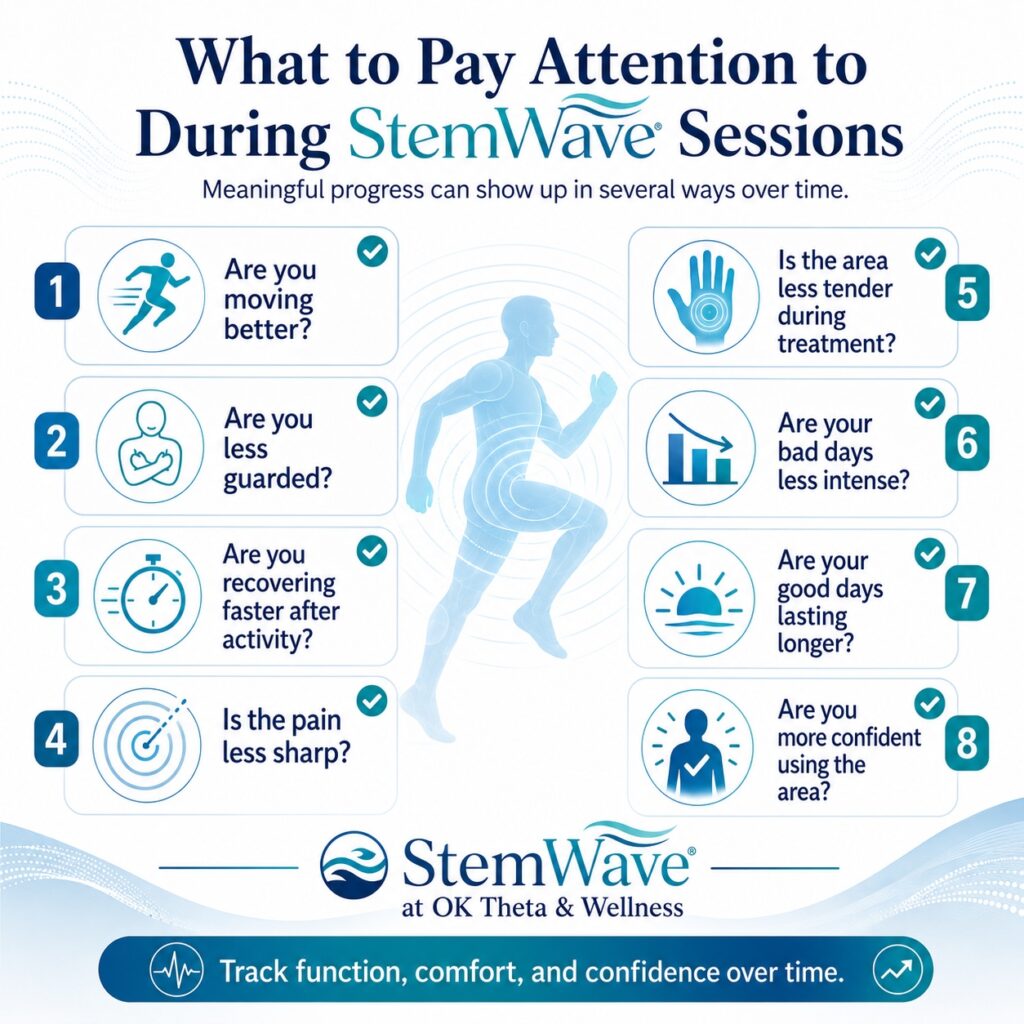
When we are doing a series of StemWave sessions, I am paying attention to questions like:
- Are you moving better?
- Are you less guarded?
- Are you recovering faster after activity?
- Is the pain less sharp?
- Is the area less tender during treatment?
- Are your bad days less intense?
- Are your good days lasting longer?
- Are you more confident using the area?
Those details tell us more than a single number on a pain scale.
Why a Series Gives the Body More Opportunity
Multiple StemWave sessions give the body repeated opportunities to respond. That repetition can help reinforce the repair signal, continue stimulating local circulation, support tissue remodeling, and gradually reduce sensitivity in the treatment area.
This is especially important for stubborn problems like tendon pain, chronic joint pain, plantar fascia pain, shoulder pain, back pain, and neuropathy-related symptoms. These are not usually one-layer problems. They often require a layered approach.
At OK Theta & Wellness, I generally think in terms of a course of care rather than a single appointment, especially when symptoms have been present for a long time. That does not mean everyone needs the same number of sessions. It means we are trying to respect the biology of healing.
The body changes through repetition. This is true in exercise. It is true in physical therapy. It is true in nervous system regulation. It is true in sleep habits. It is true in tissue repair. One workout does not build strength. One healthy meal does not change metabolism. One night of good sleep does not fully restore a depleted nervous system. In the same way, one StemWave treatment may be helpful, but a series gives the body a better chance to adapt.
StemWave Works Best When the Body Learns What To Do With the Change
I also like to remind people that StemWave is not meant to replace movement. In many cases, it works best when paired with better movement. That may mean walking, stretching, mobility work, physical therapy, gentle strengthening, or gradually returning to activities that the person has been avoiding. The right approach depends on the person and the problem. The treatment may help open a window.
Movement helps the body learn what to do with that window. For example, if someone has chronic knee pain, the goal is not just to make the knee feel better while lying on a treatment table. The goal is to help that person walk, climb stairs, exercise, travel, garden, golf, play with grandkids, or live their normal life with less limitation. That requires the tissue and the nervous system to become more tolerant of real-world loading. StemWave can be part of that process, but the body still needs to relearn capacity.

Why Every Body Responds Differently
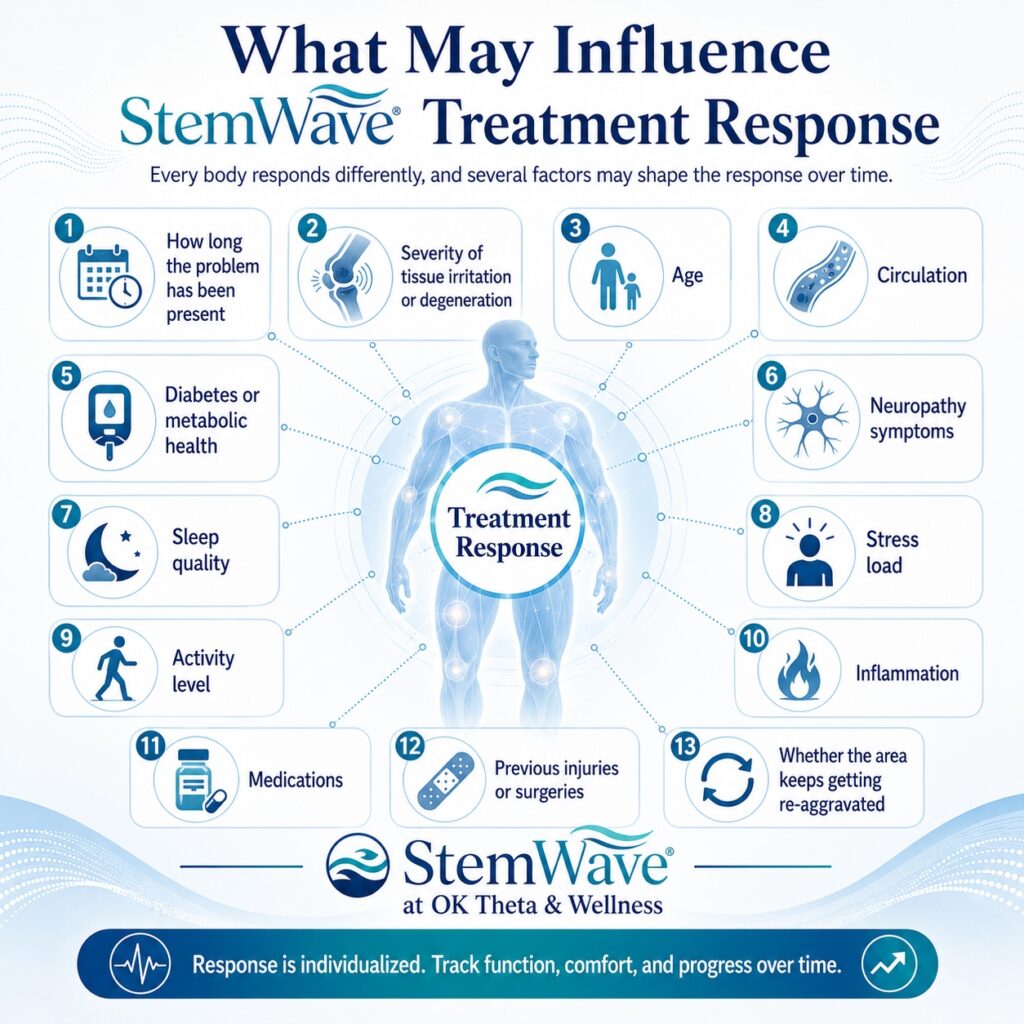
No two people respond exactly the same way. That is because no two bodies arrive with the exact same history. Response can be influenced by many factors, including:
- how long the problem has been present
- the severity of tissue irritation or degeneration
- age
- circulation
- diabetes or metabolic health
- neuropathy symptoms
- sleep quality
- stress load
- activity level
- inflammation
- medications
- previous injuries or surgeries
- whether the area keeps getting re-aggravated
This is why I try not to promise a specific outcome in a specific number of sessions. The body is not a vending machine. We do not insert treatment and receive a guaranteed result. Instead, we look for signs that the system is responding. Sometimes those signs are obvious. Sometimes they are subtle at first.
StemWave Is Helpful for Many People, But It Is Not a Guarantee
I believe in being honest about this. StemWave can be a very useful tool for many people dealing with chronic joint, tendon, soft tissue, or nerve-related pain patterns. But it is not magic, and it is not a guarantee. Some people need imaging. Some need medical evaluation. Some need physical therapy. Some need medication changes. Some need surgery. Some have pain that is being driven by a condition StemWave cannot fix. That does not make StemWave less valuable. It just means it should be used thoughtfully.
The goal is to match the tool to the person, not force every person into the same tool. I also think it is important to pay attention to red flags. Severe unexplained pain, major trauma, infection concerns, rapidly progressive weakness, unexplained weight loss, new bowel or bladder issues, or other concerning symptoms should be medically evaluated. Pain can be common, but that does not mean it should always be brushed off. A grounded approach asks better questions.
The Goal Is Durable Change, Not Just Temporary Relief
The reason StemWave usually requires a series of sessions is simple: The body changes over time. One session may help start the process. A series gives the body repeated signals, repeated opportunities, and repeated chances to move toward better function.
For many people, especially those dealing with chronic joint pain, tendon irritation, plantar fascia pain, neuropathy symptoms, or stubborn soft tissue pain, the goal is not just to feel different for a day. The goal is to help the area become less reactive. More mobile. More tolerant. More usable. More trustworthy. That is the bigger picture.
I think of StemWave as a way of repeatedly reminding the body that repair may still be possible. Not by forcing it. Not by masking the pain. But by giving the tissue and nervous system a signal, then giving the body time to respond. Healing is rarely a single event. More often, it is a series of invitations. And sometimes, with the right repeated signal, the body begins to answer.
Are You Dealing With Stubborn Joint Pain?
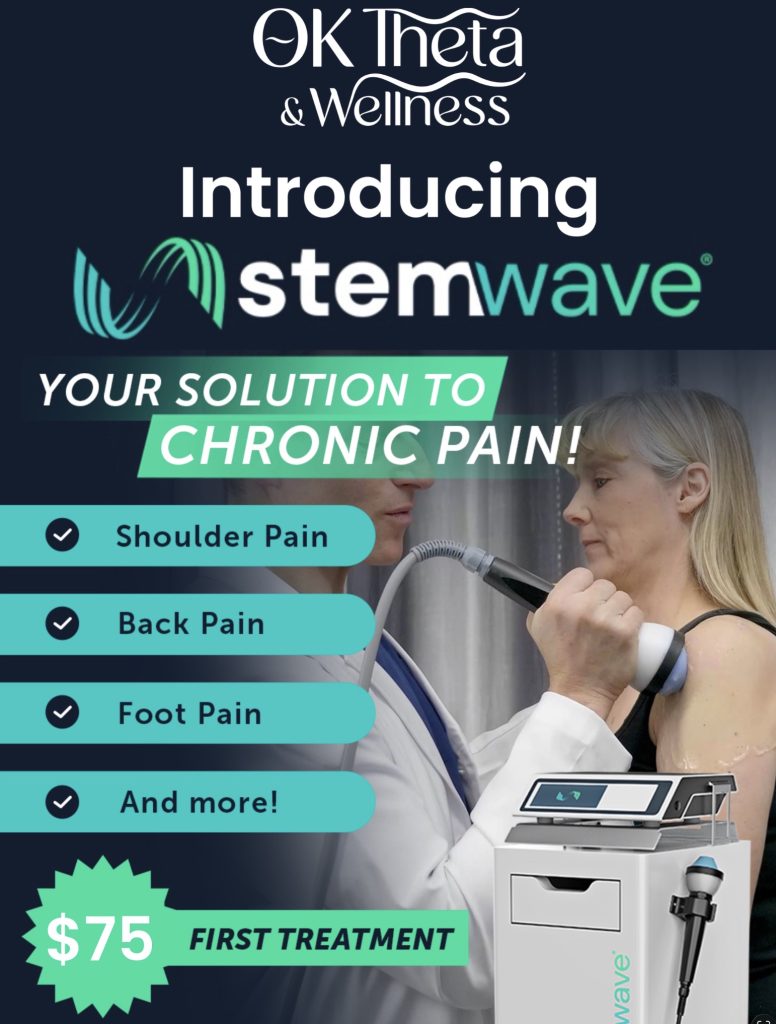
If you are dealing with stubborn pain, a chronic tendon issue, joint irritation, plantar fasciitis, or an injury that just does not seem to fully settle down, StemWave shockwave therapy may be worth exploring.
At OK Theta & Wellness, we look at the tissue, the nervous system, the circulation, and the whole person. If you want to know whether StemWave is a good fit for you, reach out and let us take a thoughtful look.