
EECP and Endothelial Function: Restoring Vascular Health

When most people think about cardiovascular health, they think about the heart. That makes sense. The heart is the pump. It is the engine room. It is the organ we usually focus on when we talk about chest pain, shortness of breath, blood pressure, heart attacks, or endurance. But the heart does not work alone.
Every heartbeat sends blood through an enormous living network of arteries, arterioles, capillaries, and veins. These blood vessels are not passive pipes. They are dynamic, responsive tissues that constantly adapt to pressure, flow, oxygen demand, inflammation, stress, and repair. That is why vascular health matters so much.
Healthy blood vessels help deliver oxygen, nutrients, immune cells, hormones, and signaling molecules throughout the body. They also help remove waste products and support the healing process. The brain, heart, muscles, nerves, kidneys, and skin all depend on healthy circulation. When blood vessels are functioning well, the body has more room to work. When blood vessel health declines, the body often has to operate under strain.
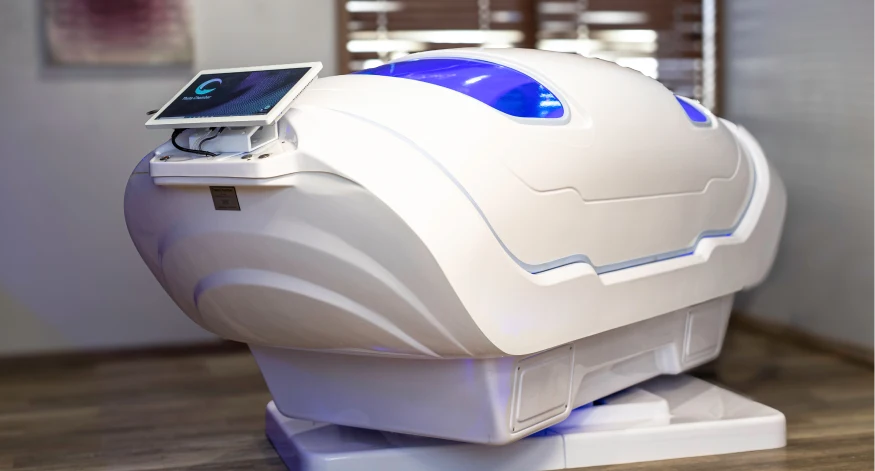
Spin into Wellness in Oklahoma’s First Theta Chamber!
The Endothelium: The Inner Lining That Runs the River
At OK Theta & Wellness, when we talk about EECP therapy, we are not only talking about helping the heart pump more effectively. We are talking about supporting the health of the entire vascular system.
One of the most important pieces of that conversation is endothelial function. The endothelium is the thin inner lining of the blood vessels. It is only one cell layer thick, but it plays an enormous role in circulation. It helps regulate blood vessel tone, inflammation, clotting, immune signaling, and the ability of arteries to relax and widen when more blood flow is needed. In plain language, the endothelium helps blood vessels behave like living tissue instead of stiff plumbing.
When endothelial function is healthy, blood vessels can respond. They can open when tissue needs more oxygen. They can help maintain smoother flow. They can communicate with the rest of the cardiovascular system. When endothelial function is impaired, arteries tend to become stiffer, less responsive, more inflamed, and more vulnerable to vascular disease.

What Is Endothelial Dysfunction?
Endothelial dysfunction occurs when the inner lining of the blood vessels loses some of its normal ability to regulate flow, relaxation, inflammation, and repair. This can happen for many reasons, including:
- High blood pressure
- High blood sugar
- Insulin resistance
- Smoking or nicotine exposure
- Oxidative stress
- Chronic inflammation
- Sedentary lifestyle
- Aging
- Cardiovascular disease
Over time, endothelial dysfunction can make blood vessels less flexible and less responsive. This can contribute to poor circulation, reduced exercise tolerance, vascular stiffness, elevated cardiovascular risk, and impaired healing.
Many people do not feel endothelial dysfunction directly. They may simply notice fatigue, cold hands or feet, poor stamina, brain fog, slow recovery, or a sense that their body does not respond the way it used to. The vascular system can whisper for a long time before it ever starts knocking loudly.

What Is EECP Therapy?
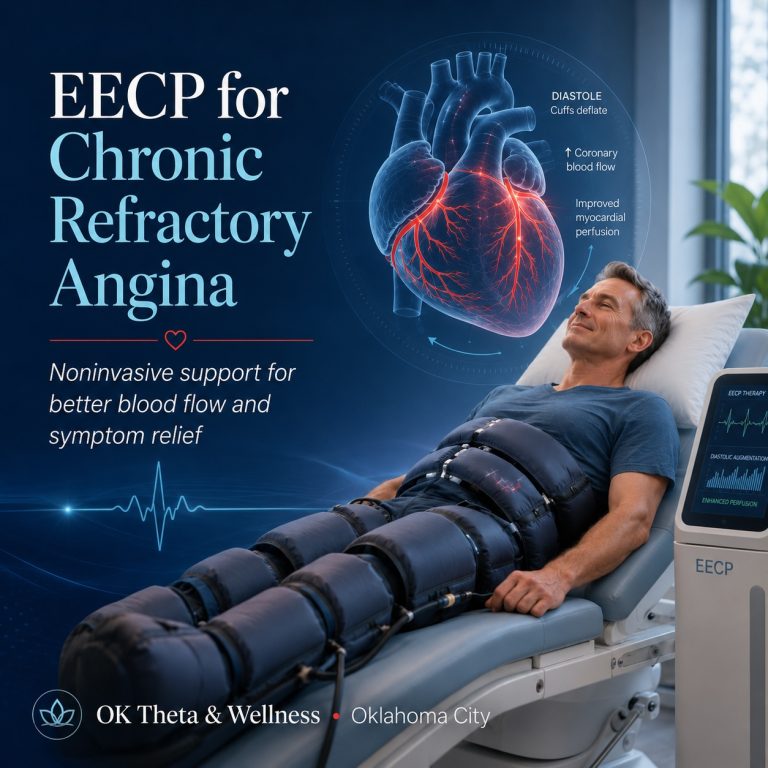
EECP stands for enhanced external counterpulsation. It is a non-invasive circulation therapy that uses inflatable cuffs around the legs and hips. These cuffs inflate and deflate in rhythm with the heartbeat. During the relaxation phase of the heart, the cuffs inflate from the lower legs upward. This helps push blood back toward the heart and central circulation. Just before the next heartbeat, the cuffs release, reducing the resistance against which the heart has to pump.
That rhythm matters. EECP does not simply squeeze the legs. It creates a repeated wave of circulation. Over a full treatment course, that rhythmic pressure and release may help support better vascular signaling, improved blood flow dynamics, and healthier endothelial function.

How EECP Supports Endothelial Function
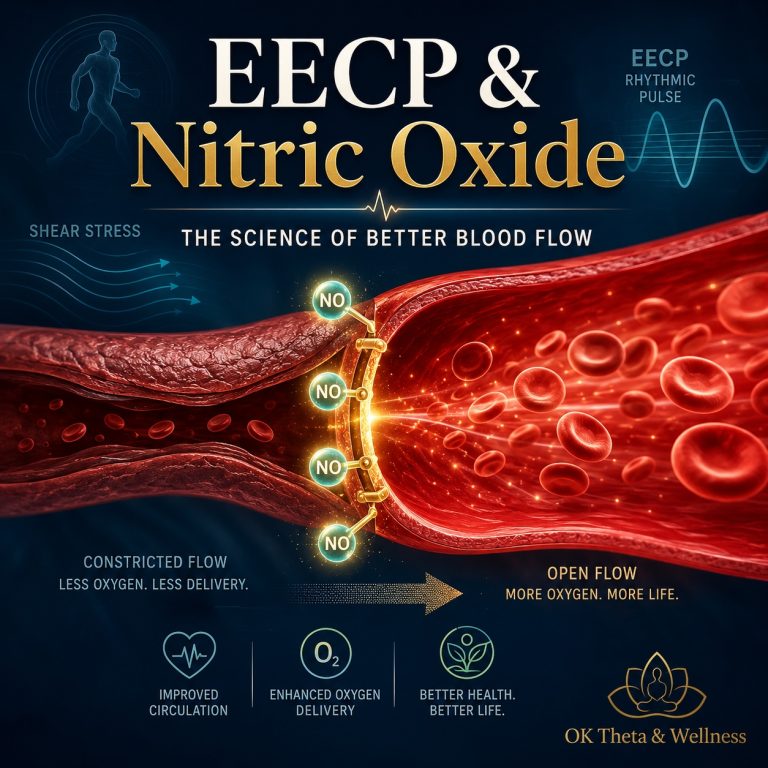
One of the key ways EECP may support endothelial function is through improved shear stress. Shear stress is the frictional force created when blood flows along the inner lining of the blood vessels. That may sound like a small detail, but it is one of the main signals the endothelium uses to sense and respond to circulation.
The body responds to signals. Bone responds to loading. Muscle responds to resistance. The nervous system responds to repetition. Blood vessels respond to flow.
EECP creates a repeated mechanical and circulatory stimulus. That repeated increase in blood flow may help signal the endothelium to produce more nitric oxide, relax more effectively, and improve vascular flexibility. This is one reason EECP is so interesting. It gives the vascular system a rhythmic workout while the patient is lying comfortably on a treatment table. It is active physiology inside a passive experience.

Nitric Oxide: The Body’s “Open the Gate” Signal
Nitric oxide is a small signaling molecule with a big job. It tells blood vessels to relax. When nitric oxide production is healthy, arteries can widen more appropriately. This supports blood flow, oxygen delivery, blood pressure regulation, and vascular flexibility.
I often describe nitric oxide as one of the body’s natural “open the gate” signals. When tissues need more oxygen or nutrients, the vascular system should be able to respond. Nitric oxide helps make that possible.
When endothelial function is impaired, nitric oxide availability is often reduced. This means blood vessels may become less able to relax, less able to widen, and less able to adapt to changing needs. That is a major problem because health is not just about whether blood can move through the body. It is about whether the vascular system can respond intelligently.

Vascular Flexibility and Why It Matters
Vascular flexibility refers to the ability of blood vessels to relax, widen, constrict, and adapt based on what the body needs. This matters every day.
When you stand up, your blood vessels adjust.
When you exercise, your blood vessels adjust.
When your brain needs more oxygen, your blood vessels adjust.
When tissue is healing, your blood vessels adjust.
When your body is under stress, your blood vessels adjust.
Flexible blood vessels help the body respond. Stiffer, less responsive blood vessels make the whole system work harder. The heart may have to pump against more resistance. Tissues may receive less oxygen. Recovery may slow down. Circulation may become less efficient.
This is why vascular flexibility is not just an athletic performance concept. It is part of cardiovascular resilience, metabolic health, brain health, and whole-body healing.
EECP as a Vascular Workout
One of the simplest ways to understand EECP therapy is to think of it as a vascular workout. It is not exercise in the traditional sense. You are not walking on a treadmill or lifting weights. But your circulatory system is being stimulated in a rhythmic and repeated way. That matters because not everyone can begin with intense exercise.
Some people have poor exercise tolerance. Some have vascular disease. Some are recovering from illness. Some have chronic fatigue, neuropathy symptoms, leg heaviness, or poor circulation. Some simply do not yet have the stamina to create a strong cardiovascular stimulus through exercise alone.
EECP offers a different entry point. It asks the vascular system to participate without asking the person to push beyond their capacity. For many people, that is a meaningful distinction.

The Systemic Nature of Circulation
The classic medical use of EECP has been for patients with refractory angina, especially when additional invasive procedures are not ideal. But the physiology of EECP reaches beyond the narrow idea of chest pain.
EECP affects pressure, flow, vascular signaling, endothelial shear forces, and potentially the development or recruitment of collateral circulation. Collateral circulation refers to alternate blood flow pathways. These are natural bypass routes that can help move blood around areas of reduced flow. The body already has this capacity. EECP may help stimulate some of the conditions that encourage the vascular system to use or develop these pathways more effectively.
This is one reason I believe EECP belongs in a broader conversation about vascular health, heart health, and whole-body circulation. The heart may be the pump, but the blood vessels are the living riverbed. When the riverbed becomes more flexible, responsive, and healthy, the whole landscape has a better chance to recover.

EECP Is Not Magic, But It Is Meaningful
EECP is not magic. It does not erase vascular disease overnight. It does not replace nutrition, movement, sleep, blood pressure control, glucose control, smoking cessation, stress reduction, or appropriate medical care. But it may provide a very specific kind of stimulus the vascular system understands: rhythmic, repeated, mechanically induced blood flow. That is where the value is.
EECP works with the heartbeat. It supports circulation during the phase when the heart is relaxed. It may reduce the workload of the heart during the pumping phase. And over time, it may help stimulate endothelial pathways involved in nitric oxide production, vascular flexibility, and improved blood flow. That is not a small thing.
Restoring Vascular Health
When we talk about restoring vascular health, we are really talking about restoring responsiveness.
- Can the vessels relax?
- Can they widen?
- Can they deliver more blood when the body needs it?
- Can they support oxygen delivery, nutrient delivery, waste removal, and tissue repair?
- Can the system adapt?
That is the deeper goal. Healthy blood vessels are not just open vessels. They are responsive vessels.
At OK Theta & Wellness, our goal with EECP is to help people understand circulation in a broader, more practical way. This is not just about treating a diagnosis. It is about asking whether the vascular system is flexible, responsive, and supported.
For people dealing with poor circulation, reduced stamina, brain fog, fatigue, heart health concerns, or declining vascular resilience, EECP may be worth exploring.

Final Thoughts
EECP and endothelial function belong in the same conversation because endothelial health is central to vascular health. The endothelium helps regulate blood flow, nitric oxide production, inflammation, vascular tone, and flexibility. EECP provides a non-invasive way to rhythmically stimulate circulation and potentially support healthier vascular signaling over time.
To me, that is the beauty of this therapy. It is not forcing the body. It is not bypassing the body. It is working with the body’s own rhythm.
The heart beats.
The cuffs respond.
The blood moves.
The vessels listen.
And over time, with the right support, the vascular system may begin to remember how to respond.
If you are curious whether EECP therapy may be a good fit for your circulation, vascular health, or exercise tolerance goals, let us know at OK Theta & Wellness. We are happy to talk through the physiology, the protocol, and whether this non-invasive therapy makes sense for your situation.