
Theta Chamber for Insomnia: Using the Gateway Rhythm for Sleep, Dreaming, and Calm
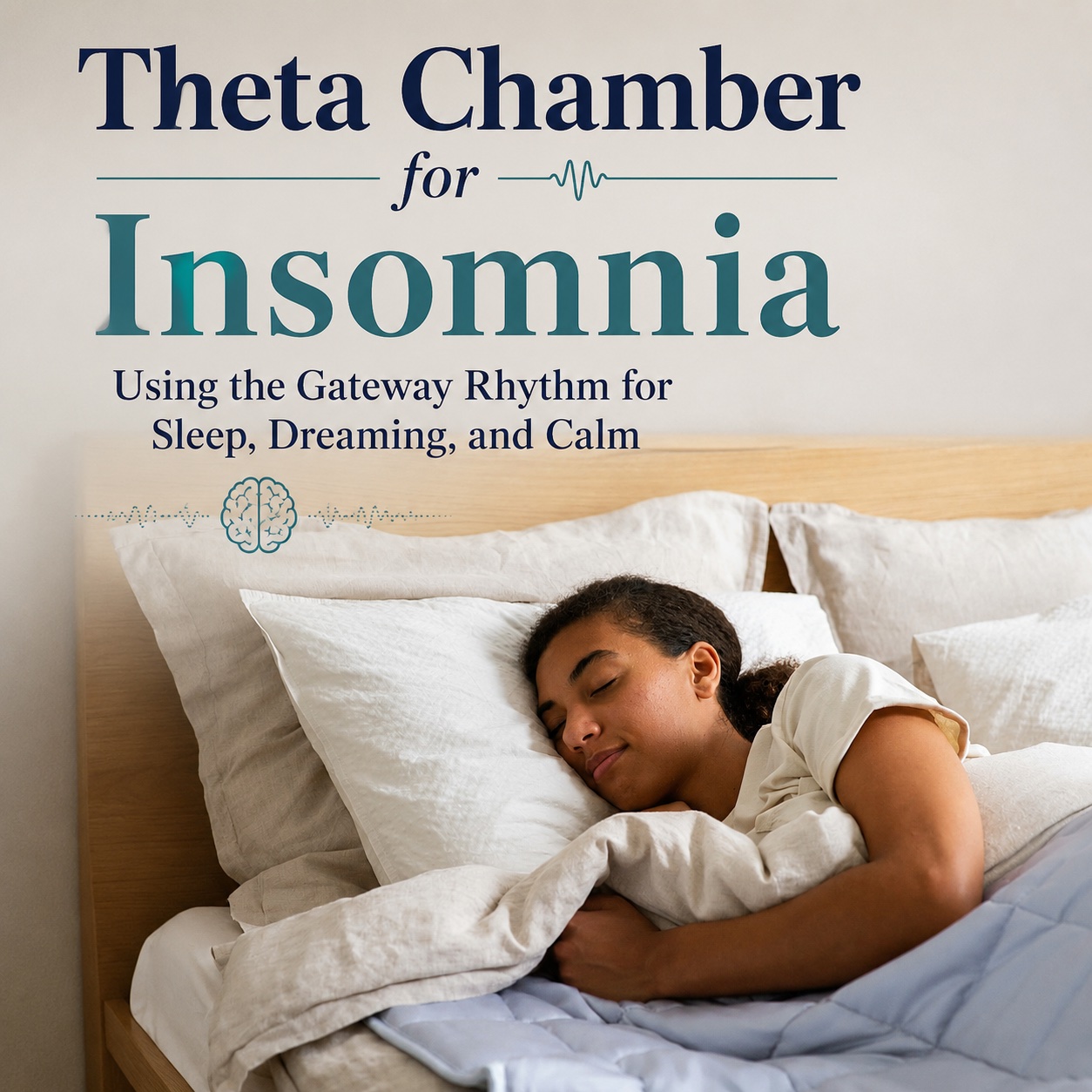
Sleep is supposed to be one of the most natural things we do. But for many people, bedtime does not feel natural at all. It feels like a negotiation.
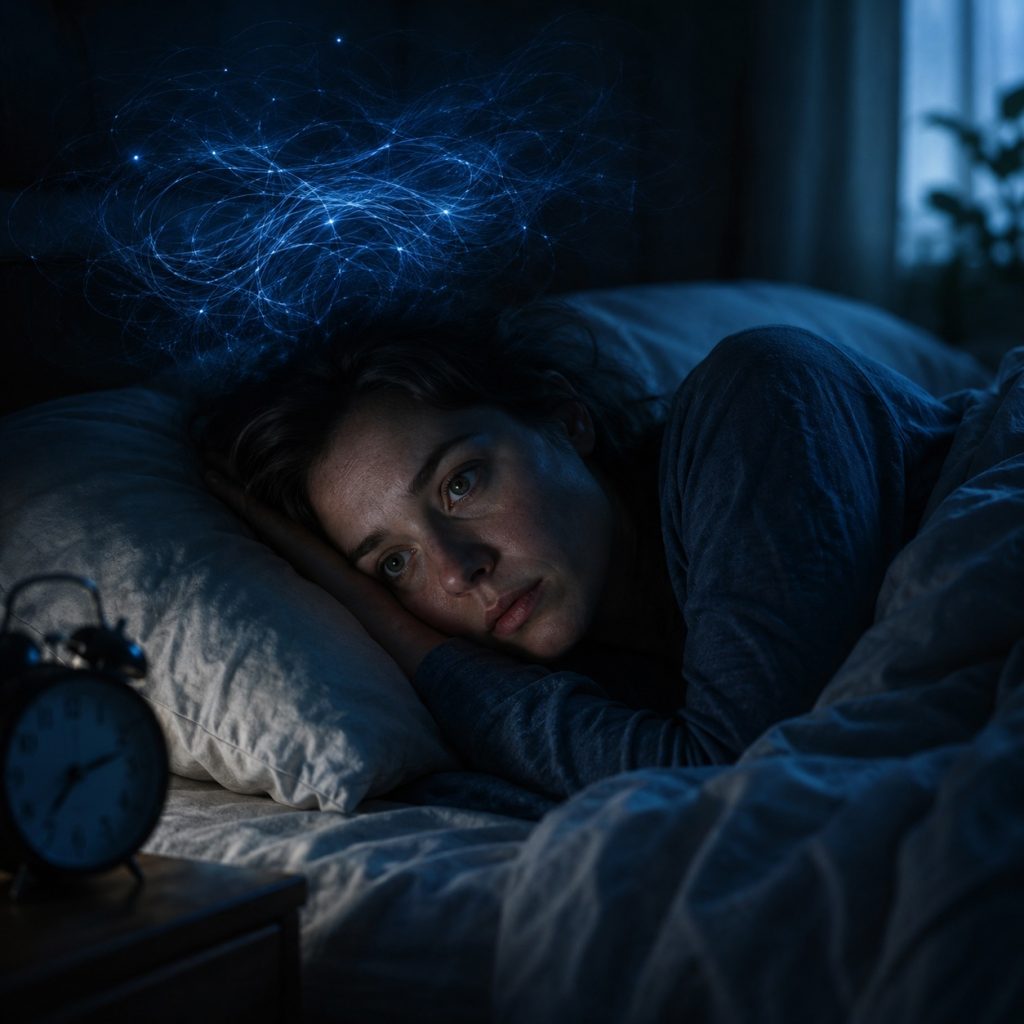
The body is tired, but the mind is still walking fence lines. The room is quiet, but the nervous system is not. Thoughts get louder. Old worries step forward. Tomorrow starts rehearsing itself before today has even ended. That is one of the reasons I think the theta chamber for insomnia is such an interesting tool. Not because it forces sleep. Not because it knocks the brain offline. But because it may help the brain remember a rhythm it already knows.
Theta is one of the gateway rhythms of the human nervous system. It lives near the borderlands between waking and sleeping, between thinking and dreaming, between effort and surrender. In sleep physiology, theta activity becomes more prominent as the brain moves through the earliest stages of sleep, especially the transition from relaxed wakefulness into light sleep. Sleep then progresses through deeper stages, and REM sleep is strongly associated with dreaming. (NCBI)
In plain language, theta is not “sleep” by itself. It is more like the porch light before sleep. It is the rhythm of softening.
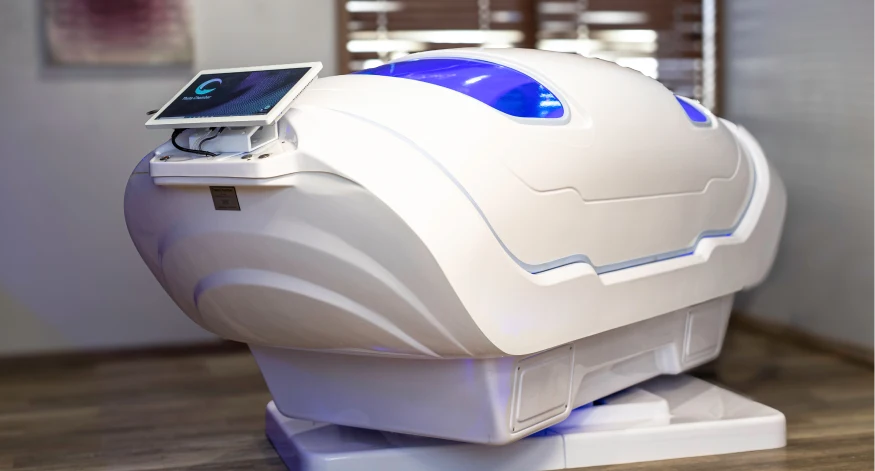
Spin into Wellness in Oklahoma’s First Theta Chamber!
Why Insomnia Is Often More Than “Not Being Tired”
When people say they have insomnia, they may mean different things. Some people cannot fall asleep. Some fall asleep but wake up at 2 or 3 a.m. with their mind running. Some sleep long enough but wake up feeling unrested. Others dread bedtime because they already expect a fight. That matters, because insomnia is not always a simple lack of fatigue. Often, the problem is arousal.
The brain may be tired, but it is not convinced that it is safe to power down. This is why behavioral and psychological approaches are considered foundational in chronic insomnia care. The American Academy of Sleep Medicine guideline supports behavioral and psychological treatments for chronic insomnia in adults, including cognitive behavioral therapy for insomnia. (PMC)
That point is important. A theta chamber is not a replacement for medical evaluation, sleep apnea screening, cognitive behavioral therapy, medication review, trauma therapy, or good sleep hygiene when those are needed. But it can be a useful support for one of the central problems in insomnia: helping the nervous system shift out of guarded wakefulness and into a more receptive, restful state.

What Is Theta?
Theta brainwave activity is generally described in the 4 to 8 Hz range. It is associated with drowsiness, light sleep, dreaming-related processes, memory, imagery, and meditative states. Different sources describe theta as appearing during early sleep, relaxed attention, and internal awareness. (NCBI) To me, theta is best understood as a threshold rhythm.
It is not the busy, problem-solving rhythm of the day. It is not the deep, slow delta rhythm of restorative sleep. It sits between worlds. That is why I often describe theta as the gateway rhythm for sleep, dreaming, and calm meditative states. When the brain moves toward theta, it often moves away from the sharp edges of ordinary waking thought. The inner volume turns down. The body may begin to feel heavier. Images, memories, feelings, and dreamlike impressions may come closer to the surface.
For some people, this is deeply calming. For others, it can be emotional at first because the mind is no longer being held together by constant distraction. That does not mean something is wrong. It may mean the nervous system is finally quiet enough to notice what has been waiting underneath.

How the Theta Chamber Supports Sleep
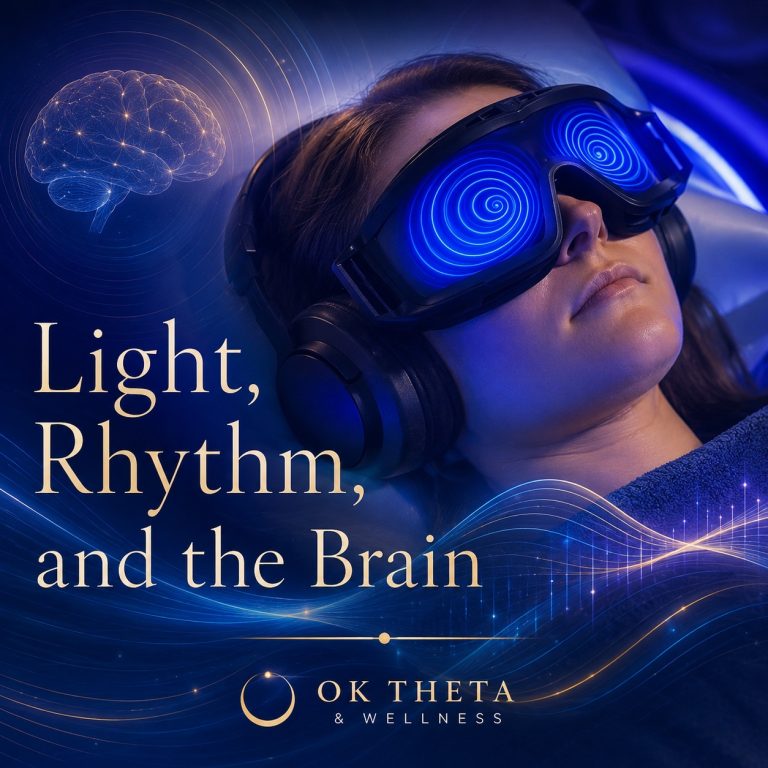
The theta chamber is designed to help guide the nervous system into a deeply relaxed state through multiple layers of sensory input. Depending on the session, this may include rhythmic vestibular motion, light and sound entrainment, binaural beats, cranial electrotherapy stimulation, and other calming sensory cues. The goal is not to make someone “try harder” to relax. Most people with insomnia are already trying too hard. The goal is to create conditions where the brain and body can gradually follow a rhythm. That distinction matters.
When someone with insomnia lies in bed and thinks, “I need to fall asleep right now,” the pressure itself can become activating. The bed turns into a performance stage. Sleep becomes a test. The nervous system feels watched. The theta chamber offers a different pathway. Instead of demanding sleep, it introduces rhythm, repetition, darkness, containment, and sensory guidance. The person does not have to generate the meditative state from scratch. They can be carried toward it. That is where the theta chamber for insomnia may be especially helpful. It gives the overactive mind something gentle to follow.
My Personal Experience With Theta and Sleep
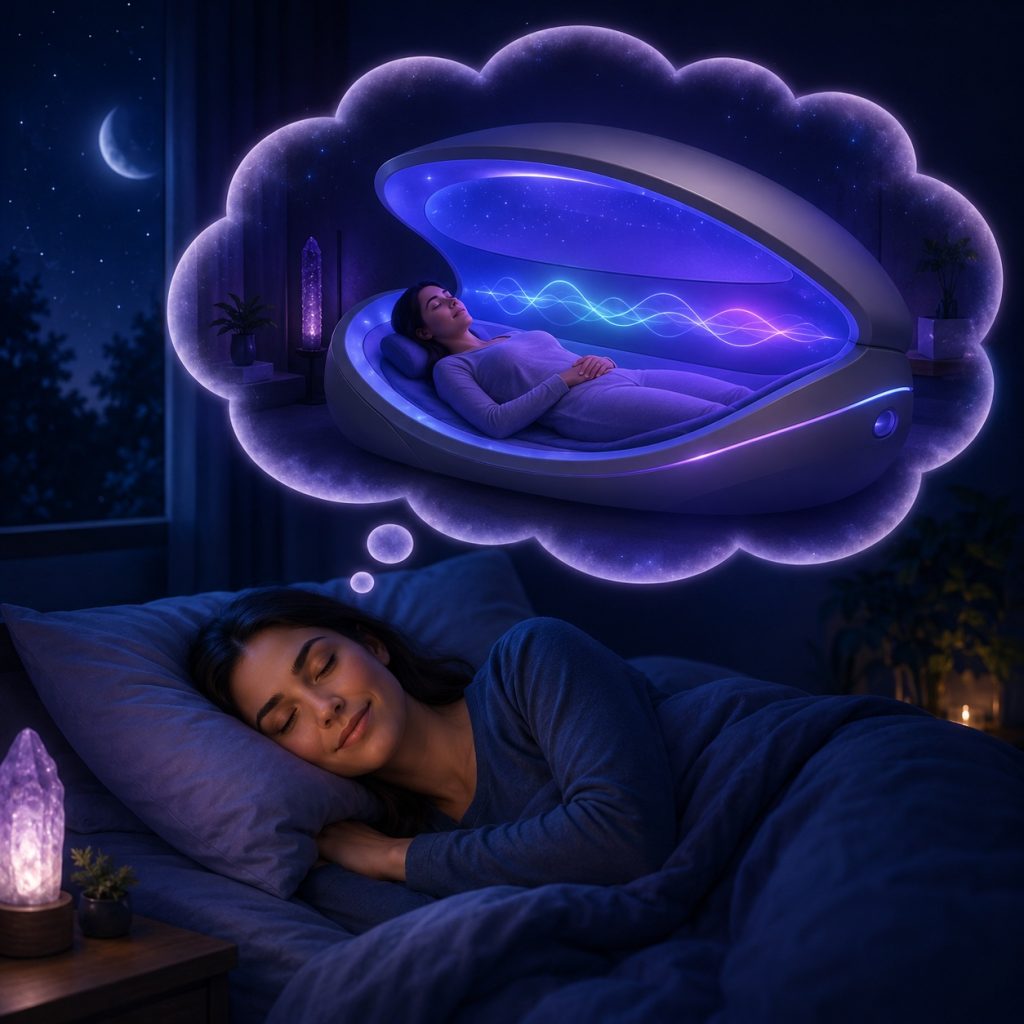
I have personally used theta chamber sessions for sleep, and one of the clearest effects I noticed was a shortened time to sleep. My body seemed to settle more quickly. The usual mental static was less sticky. I also noticed increased dreaming.
That stood out to me. Not because dreaming is automatically good or bad, but because dreaming often tells us the brain is processing. The mind is sorting, filing, integrating, rehearsing, releasing. Sometimes dreams are strange little theater productions put on by the subconscious with a budget of lightning and soup cans. But they are not random in the way we often assume. After theta sessions, my sleep felt less like a collapse and more like a transition. I was not being dragged into sleep. I was crossing into it.
That is only my experience, and I do not want to overstate it. Personal experience is not the same thing as controlled clinical evidence. But as a neurosurgeon who has spent a lot of time thinking about states of consciousness, I find the pattern meaningful. Theta seems to help create a bridge between waking control and sleeping surrender.

The Nervous System Needs a Ramp, Not a Light Switch
One of the mistakes we make with sleep is imagining it as an on/off switch. Awake. Asleep. But biologically, sleep is more like a descent. The nervous system usually needs a ramp. Light changes. Temperature changes. Hormones shift. Brain rhythms slow. Muscle tone changes. Attention turns inward. The body begins trusting the night.
Modern life breaks that ramp into pieces. Bright screens at night. Late caffeine. Emotional stress. Alcohol. Irregular schedules. Work messages. Financial pressure. Family concerns. Trauma. Pain. Hormonal changes. Poor breathing during sleep. Too much noise. Too little morning light. By bedtime, many people are asking the brain to do something unreasonable: run at highway speed all day, then pull into a quiet driveway without touching the brakes.
Theta work may help rebuild part of that ramp. Not by overriding the system, but by inviting the brain into a slower pattern before sleep is expected. That can be especially useful for people whose insomnia is driven by cognitive arousal, body tension, emotional overload, or inability to shift out of the day.

Theta, Dreaming, and Emotional Processing
Theta also has a natural relationship with imagery, memory, and internal awareness. This is one reason meditative states can bring up insights, old emotions, or dreamlike material. Meditation research has explored relationships between meditation, waking brain rhythms, and later sleep patterns, though the field is still developing and should be interpreted carefully. (PMC)
For insomnia, this matters because many sleep problems are not purely about sleep. They are about what shows up when the world gets quiet. At night, the mind loses its daytime scaffolding. No tasks. No conversations. No errands. No phone calls. Nothing to manage except the inner landscape. For someone carrying stress, grief, anxiety, trauma, or unresolved conflict, that quiet can feel less like peace and more like exposure.
The theta chamber may be helpful here because it provides a structured calm state. The person is not simply lying in bed alone with racing thoughts. They are placed in a rhythmic, contained environment where breath, body awareness, prayer, mantra, or observation can be practiced. This can help train a new relationship with the inner world. Instead of “I need to escape my thoughts,” the practice becomes, “I can observe what arises without becoming it.” That is a major shift.

What a Sleep-Focused Theta Practice Looks Like
For someone using the theta chamber for insomnia, I would think about the session less as a one-time intervention and more as nervous system training. A sleep-focused session might include a simple intention before beginning:
“I am not here to force sleep. I am here to teach my body how to soften.”
During the session, the person might use slow nasal breathing, body scanning, prayer, mantra, or observational awareness. Nothing complicated. The goal is not to win a meditation contest. The goal is to practice releasing control in a safe, repeatable way. After the session, I would keep the evening quiet if possible. This is not the ideal time to jump straight into emails, intense conversations, social media arguments, or blue-light excavation of every problem on earth. Let the nervous system keep the trail it just found. Hydrate. Dim the lights. Keep the phone away from the bed. Let the body coast. That post-session window may be just as important as the session itself.
Who Can Benefit?
The theta chamber may be worth considering for people whose sleep issues are related to:
- Difficulty winding down
- Racing thoughts at bedtime
- Stress-related insomnia
- Poor sleep after emotional overload
- A body that feels tired but wired
- Meditation difficulty
- Anxiety-driven sleep onset problems
- A desire to deepen relaxation before bed
It may also be useful for people who are not “bad sleepers” but want to improve sleep quality, dream recall, recovery, or evening nervous system regulation. That said, not all insomnia is the same. If someone snores heavily, wakes gasping, has restless legs, has severe depression, has medication-related sleep disruption, or has sudden major changes in sleep, that deserves proper medical evaluation. The theta chamber can be part of a wellness plan, but it should not become a way to ignore red flags.
Why This Matters
Sleep is not just downtime. It is repair, regulation, memory processing, immune support, emotional digestion, and nervous system recalibration. When sleep breaks down, people often feel it everywhere. Mood changes. Pain feels louder. Cravings increase. Focus drops. The body feels older than it should. The mind gets more reactive. Life starts to feel uphill both ways.
That is why I care about tools that help the nervous system return to rhythm. The theta chamber for insomnia is not about sedating the brain. It is about helping the brain remember how to cross the bridge from waking into sleep. Theta is that bridge rhythm: calm enough to loosen control, aware enough to observe, and close enough to sleep that the body can begin to follow.
For many people, sleep does not begin when the eyes close. Sleep begins when the nervous system finally feels safe enough to let go. And sometimes, with the right rhythm, the right environment, and a little practice, that letting go becomes easier.

Are You Ready to Try a Natural Sleep Remedy?
If you struggle with falling asleep, staying asleep, or feeling like your mind will not shut off at night, the theta chamber may be worth exploring.
At OK Theta & Wellness, we use the theta chamber as a practical way to help the body enter a calmer, more meditative state. For some people, that may become an important first step toward better sleep. You do not have to force rest. Sometimes, you just need to give your nervous system a rhythm it can trust.