
NAD+ and Mitochondrial Health: A Grounded Introduction
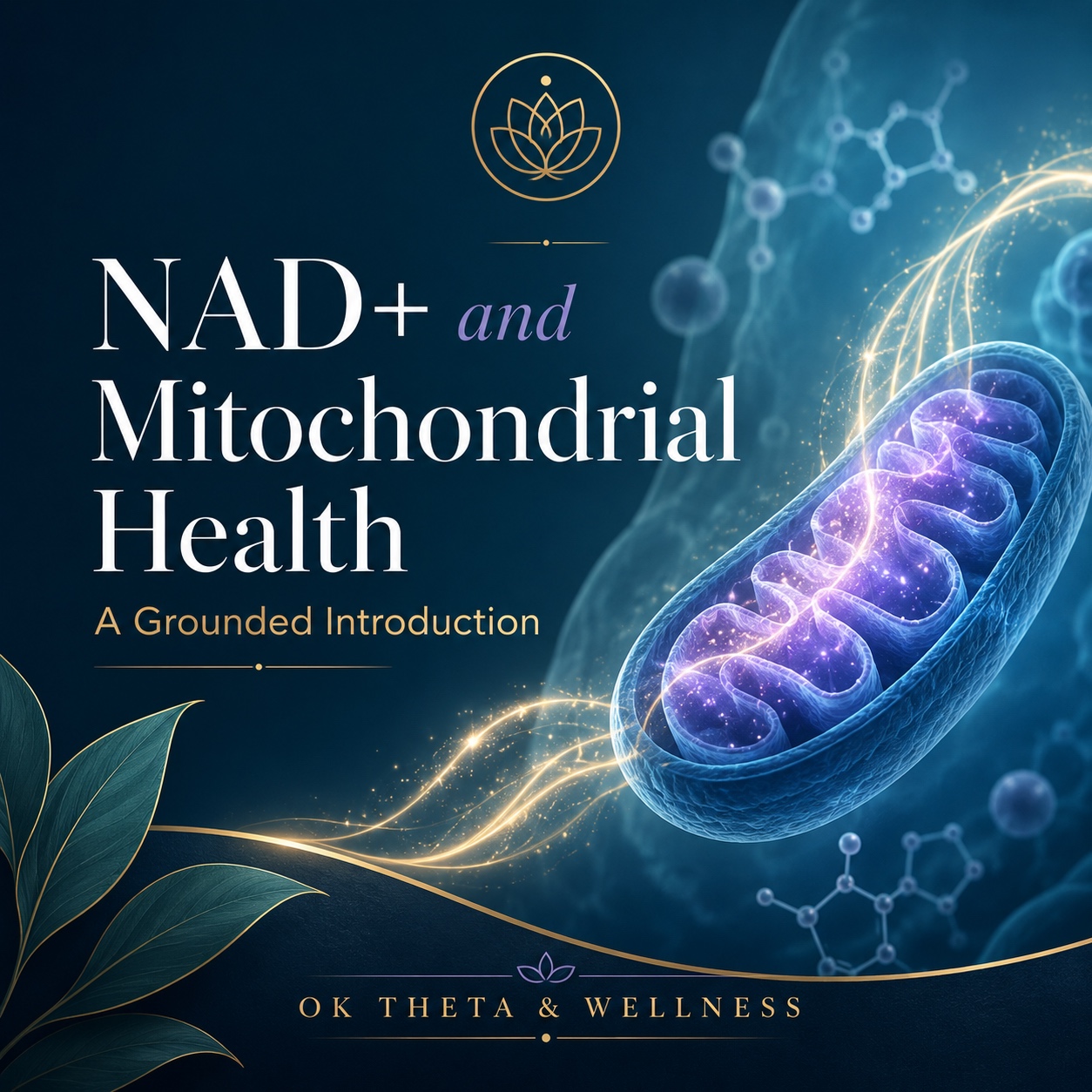
NAD+ has become one of the more talked-about topics in wellness, especially in conversations about energy, aging, brain fog, recovery, and mitochondrial health. I understand why. Anytime a molecule touches energy production, cellular repair, and the aging conversation, people are going to pay attention. But I also think NAD+ deserves a grounded introduction.
In wellness spaces, NAD+ can sometimes be presented like a magic switch. Take it, inject it, infuse it, and suddenly the mitochondria wake up like someone turned the lights back on in a dusty old workshop. Biology is more interesting than that. It is also more complicated.
At OK Theta & Wellness, we think about energy from a systems perspective. Energy is not just about willpower, caffeine, or getting through the day. It involves sleep, nervous system tone, circulation, oxygen delivery, nutrient status, stress chemistry, inflammation, movement, and the health of the mitochondria inside our cells. NAD+ belongs in that conversation because it plays an important role in how cells produce, manage, and repair energy systems.
This post is meant to explain what NAD+ is, why mitochondrial health matters, how IV and IM NAD+ are different, and what we can reasonably say without wandering into miracle-claim territory.
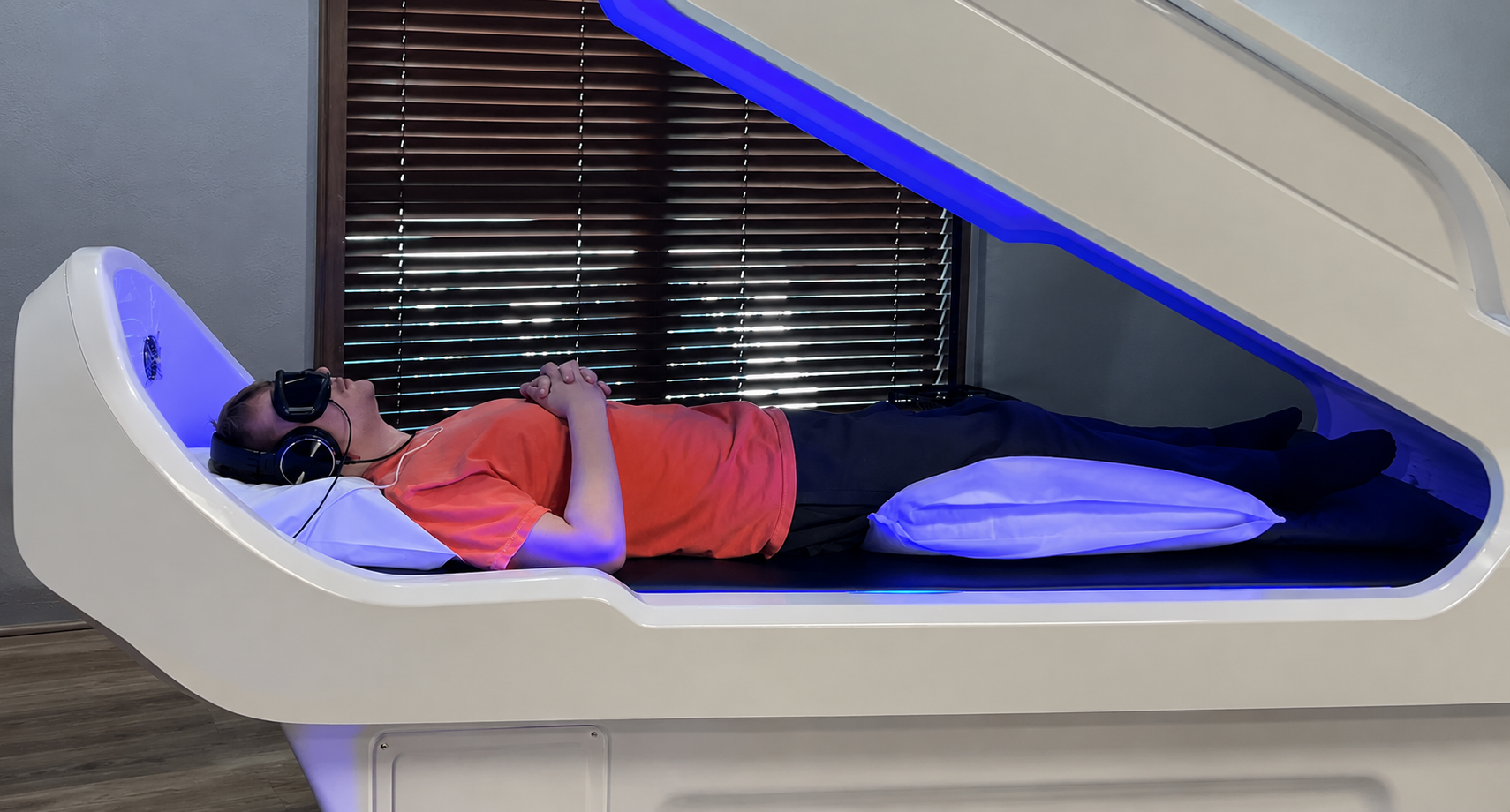
Spin into Wellness in Oklahoma’s First Theta Chamber!

What Is NAD+?
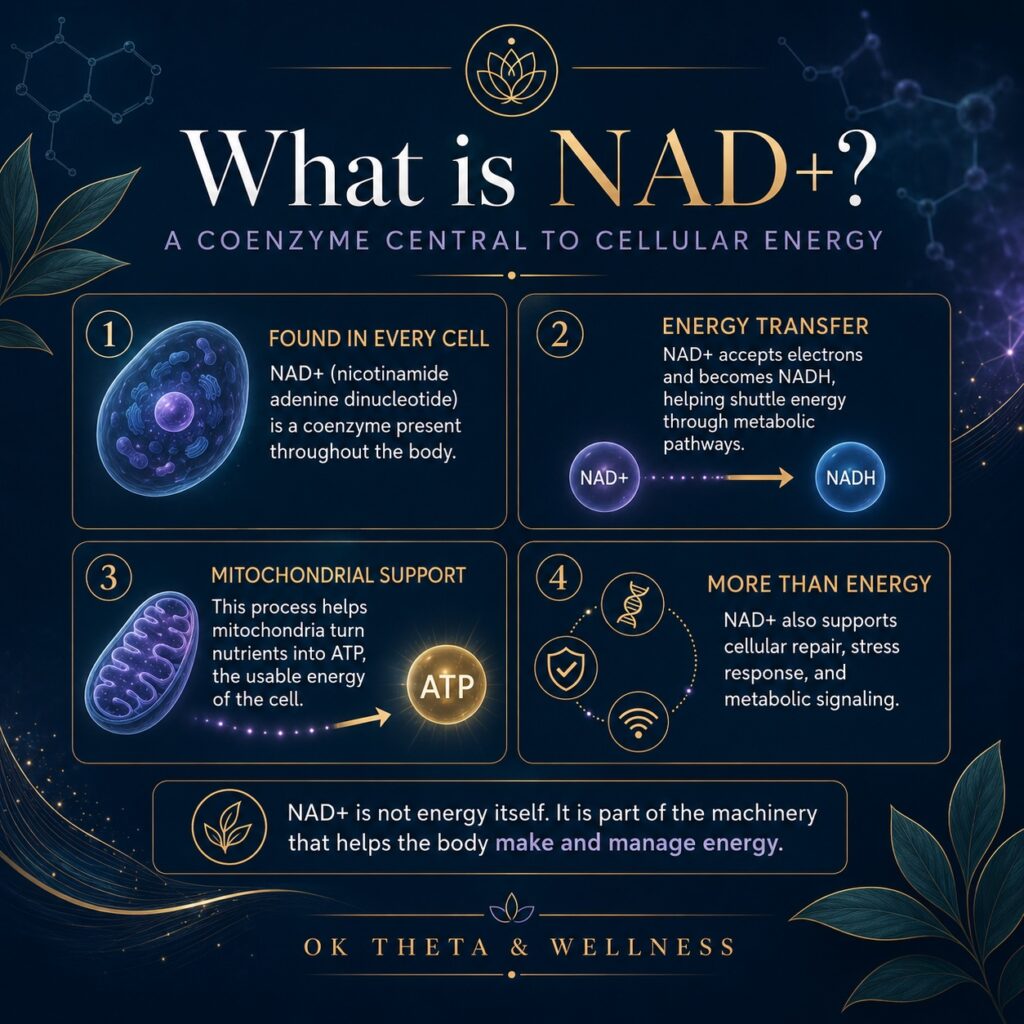
NAD+ stands for nicotinamide adenine dinucleotide. It is a coenzyme found in every cell of the body. A coenzyme is not the same thing as a vitamin, hormone, or stimulant. It is more like a helper molecule that allows important chemical reactions to happen. One of the most important roles of NAD+ is in energy metabolism.
The body takes food and breaks it down into usable fuel. That fuel eventually enters metabolic pathways that help create ATP, the energy currency cells use to do work. NAD+ is involved in moving electrons through these pathways. In simple terms, NAD+ helps the body transfer energy from the food we eat into the cellular machinery that produces usable energy.
NAD+ and NADH work together as a pair. NAD+ is the oxidized form, and NADH is the reduced form. NAD+ accepts electrons and becomes NADH. NADH then carries those electrons into mitochondrial energy pathways. This back-and-forth movement is one reason NAD+ is so important for mitochondrial health. That is also why I do not think of NAD+ as “energy” itself. NAD+ is not a lightning bolt. It is part of the wiring.
Why Mitochondria Matter
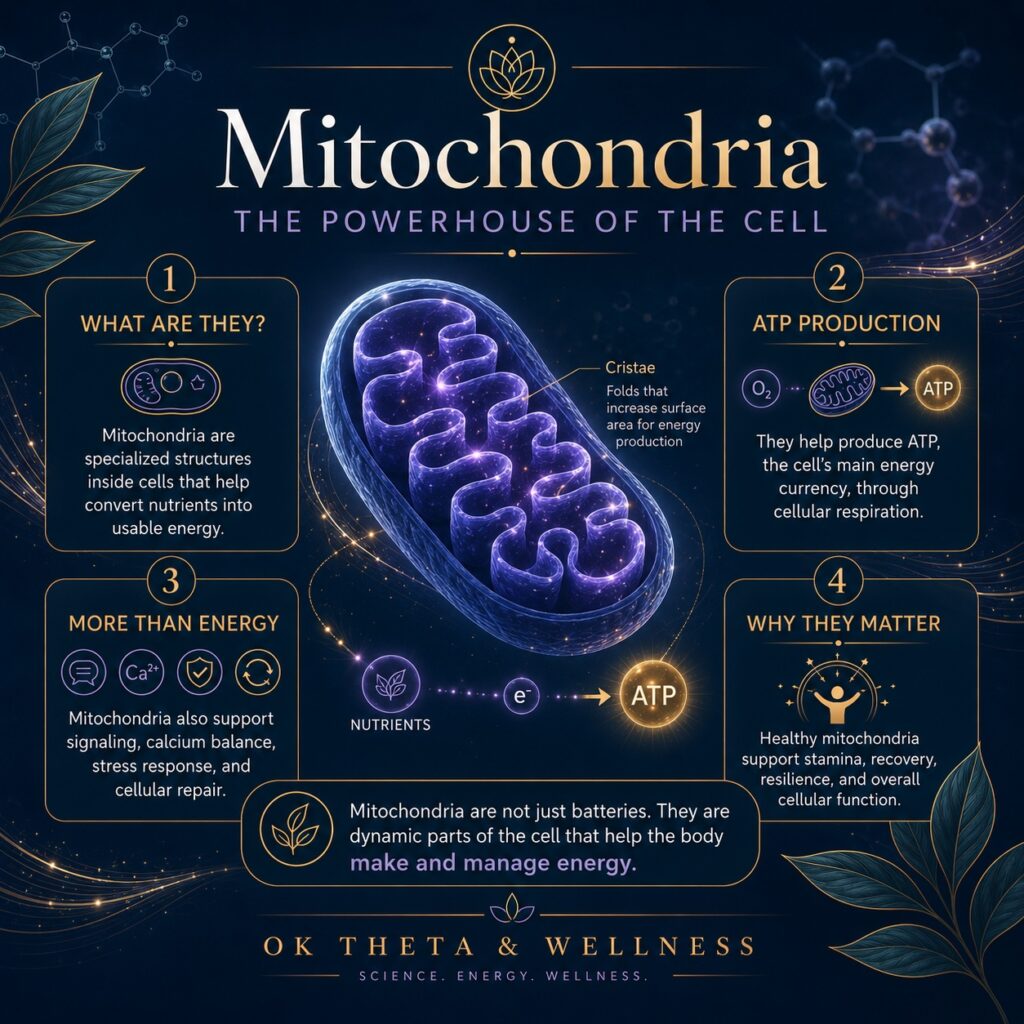
Most people have heard mitochondria called the powerhouses of the cell. That is true enough, but I think it undersells them. Mitochondria are not just little batteries. They are responsive, living, adaptive organelles. They help cells produce energy, regulate oxidative stress, respond to metabolic demand, and communicate with the rest of the cell. When mitochondrial function is working well, the body tends to have better capacity for recovery, repair, and resilience.
When mitochondrial function is strained, people may experience that strain in broad and frustrating ways. They may describe low stamina, poor recovery, brain fog, heavy fatigue, exercise intolerance, or the sense that their body does not bounce back the way it used to.
Of course, those symptoms can come from many different causes. Low energy is not automatically an NAD+ problem. Fatigue can involve sleep disorders, anemia, thyroid disease, nutrient deficiencies, depression, chronic infection, inflammation, medication effects, dysautonomia, overtraining, under-eating, and many other issues. That is why I like to keep the conversation grounded. NAD+ is important, but it is one piece of a much larger energy puzzle.
NAD+ Beyond Energy
NAD+ is especially interesting because it is not only involved in energy production. It is also used by enzymes involved in cellular repair and stress response.
Some of the major NAD+-dependent systems include sirtuins, PARPs, and CD38. Sirtuins are enzymes involved in cellular stress response, metabolism, inflammation, and aging-related pathways. PARPs are involved in DNA repair. CD38 is an enzyme that consumes NAD+ and has been studied in relation to aging and inflammation. This is one reason NAD+ has become such a hot topic in longevity and regenerative medicine circles. It sits at the intersection of energy production, cellular repair, metabolic health, and aging biology.
But that does not mean replacing or boosting NAD+ automatically reverses aging or fixes fatigue. The body is not a vending machine where we insert one molecule and receive a guaranteed clinical outcome. NAD+ metabolism is dynamic. It changes based on tissue type, stress load, inflammation, nutrition, sleep, age, illness, and the body’s overall physiologic state.
Does NAD+ Decline With Age?
This is one of the most common claims made about NAD+: that NAD+ levels decline with age. There is evidence that NAD+ metabolism changes with aging, and many preclinical studies suggest that NAD+ levels can decline in certain tissues. There is also research linking NAD+ biology to age-related changes in mitochondrial function, DNA repair, inflammation, and cellular stress responses.
But in humans, the picture is not perfectly simple. NAD+ changes may vary by tissue, health status, measurement method, and individual physiology. So I think the more accurate statement is this: NAD+ metabolism appears to change with age, stress, and disease, but that does not mean every person has the same NAD+ problem or that more NAD+ is always better.
IV NAD+ and IM NAD+: Different Routes, Different Experiences
When people talk about NAD+ therapy, they may be referring to several different approaches. These can include IV NAD+ infusions, IM NAD+ injections, oral NAD+ precursors, or lifestyle strategies that support the body’s own NAD+ metabolism.
Since this post is for the infusion and injection side of our wellness offerings, I want to explain the difference between IV and IM NAD+ in practical terms. IV NAD+ is delivered directly into the bloodstream through an intravenous line. This allows the NAD+ to be administered gradually over time. IV sessions usually take longer, and the rate of infusion may matter quite a bit for comfort. Some people tolerate NAD+ better when it is given slowly. IM NAD+ is delivered into the muscle. This is typically a shorter visit and may be more convenient for people who do not want a longer IV session. However, IM delivery is not simply “the same as IV, but faster.” The dose, absorption pattern, appointment experience, and tolerance can all differ.
I would not frame IV or IM as universally better. I would frame them as different tools. For some people, a longer IV session may make sense because it allows gradual delivery and close observation. For others, IM NAD+ may be more practical because it is quicker and easier to fit into a schedule. The best option depends on the person, their goals, their tolerance, and the clinical judgment of the provider.
Why Route, Dose, and Rate Matter
With NAD+, I do not think the goal should be to simply get as much as possible. The better question is: what route, dose, and pace make sense for the person in front of us?
This is especially true with IV NAD+. Some people report uncomfortable sensations if NAD+ is infused too quickly. These sensations may include nausea, abdominal discomfort, flushing, headache, chest tightness, anxiety-like feelings, or lightheadedness. Slowing the rate can sometimes make the experience more tolerable.
IM injections have their own considerations. They are usually quicker, but they may cause local soreness or injection-site discomfort. The experience is different from sitting through a longer IV infusion. This is part of why NAD+ should be approached thoughtfully. It is not just about the molecule. It is about the person receiving it.
What Does the Research Actually Support?
The strongest foundation for NAD+ is biochemical. We know NAD+ is central to energy metabolism and important cellular processes. We know the NAD+/NADH balance matters. We know NAD+-dependent enzymes are involved in repair, stress response, and aging-related pathways. The human clinical evidence is still developing.
Oral NAD+ precursors such as nicotinamide riboside, nicotinamide mononucleotide, niacin, and nicotinamide have been studied more than direct IV or IM NAD+ for raising NAD-related biomarkers. Some studies show changes in NAD+ levels or related metabolites, while clinical outcomes are more mixed and still being investigated.
For IV NAD+, the evidence is much more limited. There has been human research showing that IV NAD+ changes measurable NAD-related metabolites in blood and urine, but that does not prove that IV NAD+ treats fatigue, reverses aging, improves neurologic disease, or produces broad wellness outcomes. This is an honest place to stand. NAD+ biology is real. NAD+ therapy is interesting. But the bigger claims still need more human outcome data.
Who Might Be Curious About NAD+ Support?
People may become interested in NAD+ support for several reasons. Some are focused on mitochondrial health. Some are interested in recovery. Some are working on healthy aging. Some feel depleted after a long season of stress, poor sleep, illness, or overextension. Others are simply trying to understand why their energy system does not feel as resilient as it used to.
I think NAD+ is best considered by people who are already thinking in a broader way about their health. That means not using NAD+ as a substitute for sleep, nutrition, movement, hydration, strength, sunlight, stress regulation, or appropriate medical care. NAD+ may be part of a wellness plan, but it should not be the whole plan.
That matters because mitochondria are not isolated machines. They respond to the whole environment of the body. Poor sleep affects mitochondrial function. Chronic stress affects mitochondrial function. Poor circulation affects mitochondrial function. Nutrient deficiencies affect mitochondrial function. Inflammation affects mitochondrial function.
So when someone asks me about NAD+, I am also thinking about the larger terrain. How are they sleeping? How is their nervous system? Are they moving? Are they eating enough protein? Are they overusing alcohol? Are they recovering well? Are they dealing with brain fog, dysautonomia, chronic pain, or burnout? Are they getting appropriate medical evaluation when symptoms require it?
NAD+ and Whole-Body Wellness at OK Theta
At OK Theta & Wellness, we tend to think in layers. NAD+ fits into the cellular energy layer. IV nutrients, hydration, B vitamins, magnesium, amino acids, and other supportive therapies may also belong in that layer depending on the person.
But we also think about circulation. That is where something like EECP may enter the conversation. Better oxygen and nutrient delivery can matter for energy and recovery.
We think about the nervous system. That is where the Theta Chamber, PEMF, breath, sound, and parasympathetic regulation become relevant. A body stuck in sympathetic overdrive may have a very different energy pattern than a body that can actually enter repair mode.
We think about pain and tissue health. That is where StemWave, movement, stretching, and bodywork may fit. The point is not to throw every therapy at every person. The point is to understand the pattern. If someone is tired, depleted, inflamed, stressed, and not recovering, NAD+ may be one possible support. But the deeper goal is to help the body regain capacity. Capacity to make energy. Capacity to repair. Capacity to regulate. Capacity to respond to stress without staying trapped in it. That is the bigger picture.
Safety and Common Sense
NAD+ therapy should be provided in an appropriate clinical or wellness setting with proper screening, sterile technique, and trained professionals. People who are pregnant, actively being treated for cancer, dealing with significant kidney or liver disease, managing complex medical conditions, or taking multiple medications should speak with an appropriate medical professional before considering NAD+ therapy. Anyone with chest pain, severe shortness of breath, fainting, unexplained weight loss, progressive neurologic symptoms, or severe fatigue should seek medical evaluation rather than assuming the issue is mitochondrial or wellness-related. NAD+ is not a replacement for medical diagnosis. It is also not a substitute for the foundations: sleep, nutrition, hydration, movement, sunlight, meaningful connection, and stress regulation. That may sound basic, but the basics are not small. They are the soil everything else grows in.
A Grounded Takeaway
NAD+ is worth understanding because it touches some of the most fundamental processes in the body: mitochondrial energy production, cellular repair, stress response, and metabolic regulation. I am interested in NAD+ because the biology makes sense. I am cautious with NAD+ because biology does not automatically equal clinical proof. Both things can be true at the same time.
IV and IM NAD+ may be useful wellness tools for some people, especially when considered as part of a broader plan to support energy, recovery, and mitochondrial health. But NAD+ should not be sold as a miracle, and it should not be separated from the larger systems that influence how the body actually feels and functions. At OK Theta & Wellness, we are interested in helping people think through that larger picture.
If you are curious whether NAD+ therapy, IV nutrients, or other wellness supports may fit into your health plan, we would be happy to help you explore your options in a thoughtful and grounded way.
Revitalize Your Mind,
Renew Your Body