
Assisted Stretching with Eva Renee: Why the Body Opens Better When It Feels Supported
Most people know they probably need to stretch more. They feel it when they get out of bed in the morning. They feel it after a long day at a desk. They feel it when they turn their neck and realize one side feels like a rusty hinge. They feel it in the hips, the low back, the shoulders, the hamstrings, or that vague whole-body stiffness that seems to whisper, “You have not moved like a human animal in a while.”
But here is the problem: stretching sounds simple until you actually try to do it well. Many people stretch too aggressively. Some hold their breath. Some bounce. Some compensate by twisting through the wrong joints. Some avoid the very positions their body needs because those positions feel awkward, vulnerable, or uncomfortable. Others simply do not know where to start.
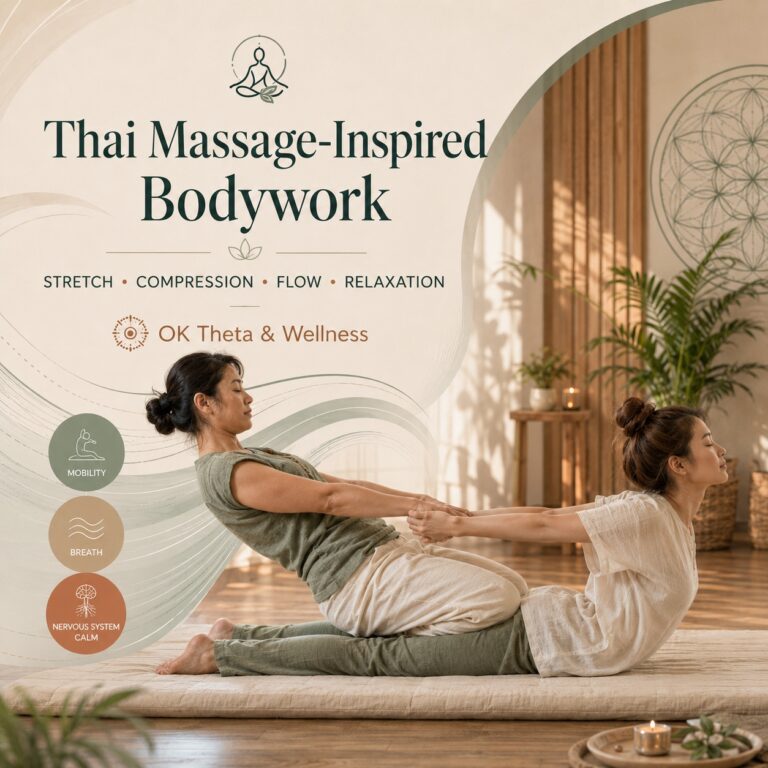
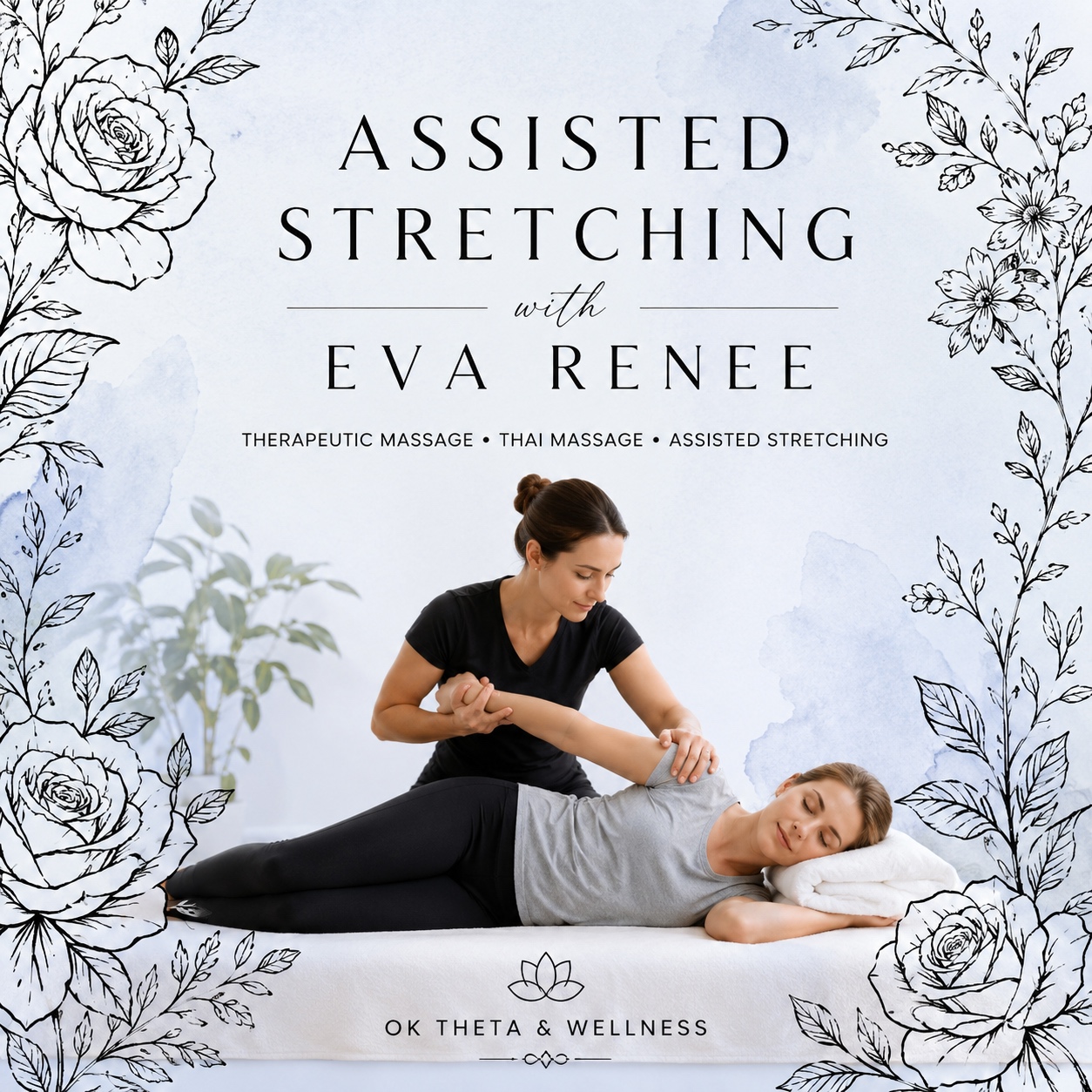
That is one reason I am excited about assisted stretching with Eva Renee at OK Theta & Wellness. Eva specializes in therapeutic massage, Thai massage, and assisted stretching. What makes her work unique is that she blends these approaches into a thoughtful, hands-on session that meets the body where it is. Her work can be relaxing, but it is also purposeful. It is bodywork with a mobility goal. It is stretching, but with support. It is therapeutic touch, but with movement. And from my perspective, that combination makes a lot of sense.
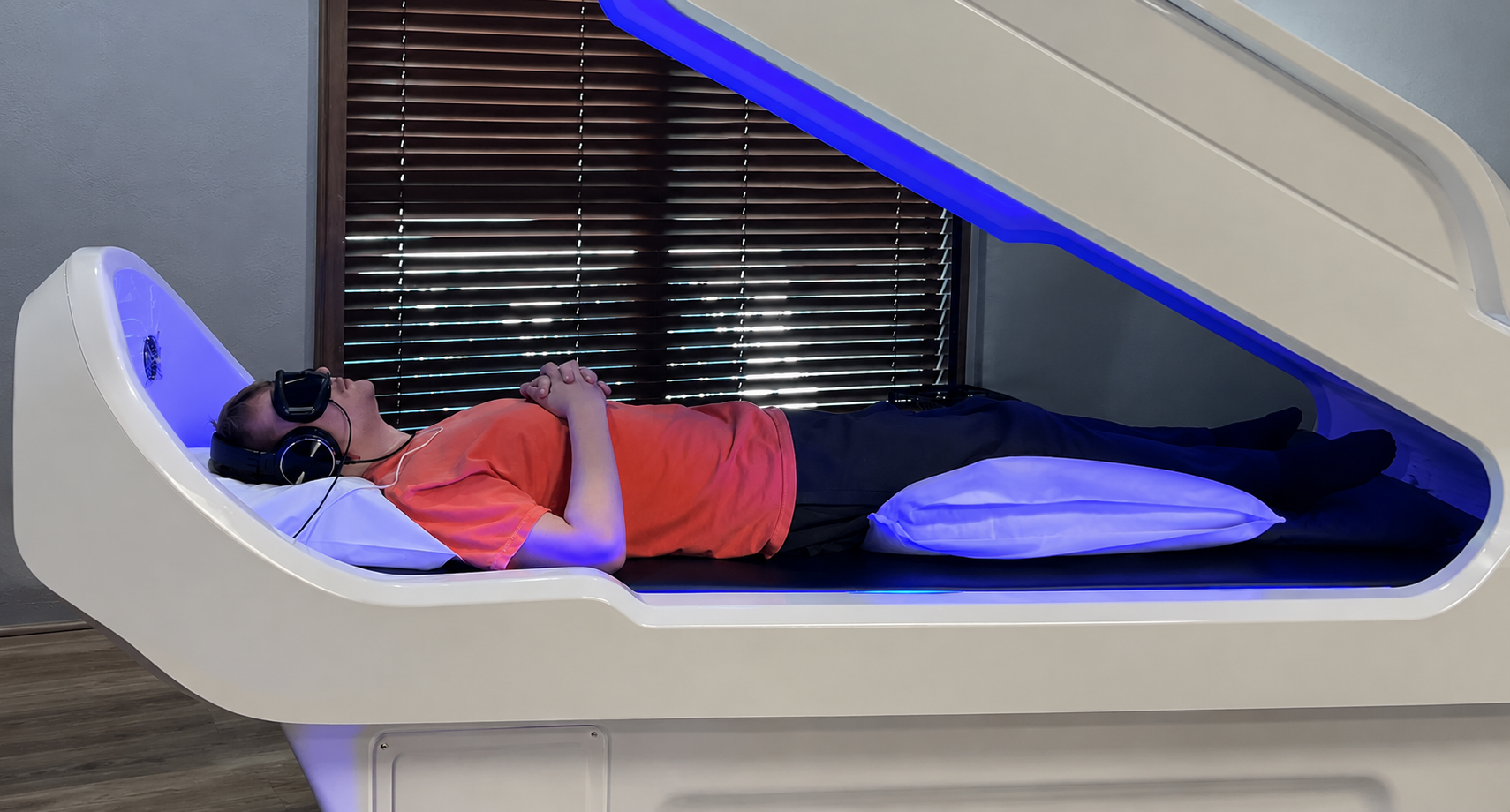
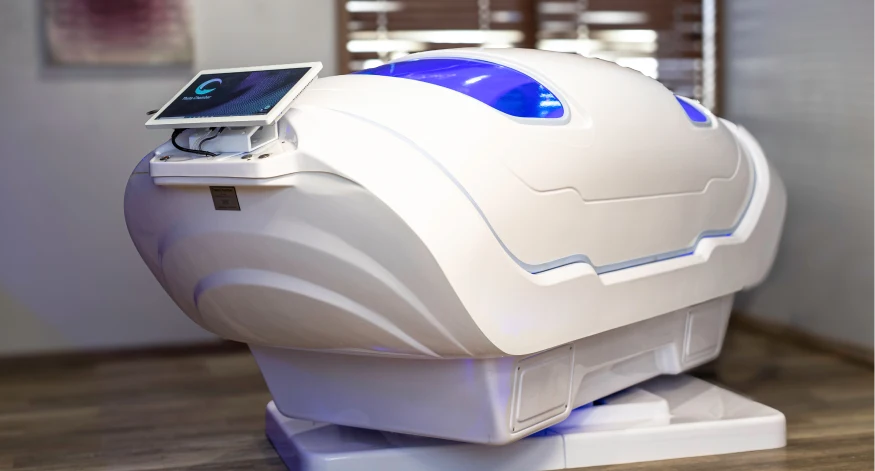
Spin into Wellness in Oklahoma’s First Theta Chamber!
Tightness Is Not Always Just a Tight Muscle
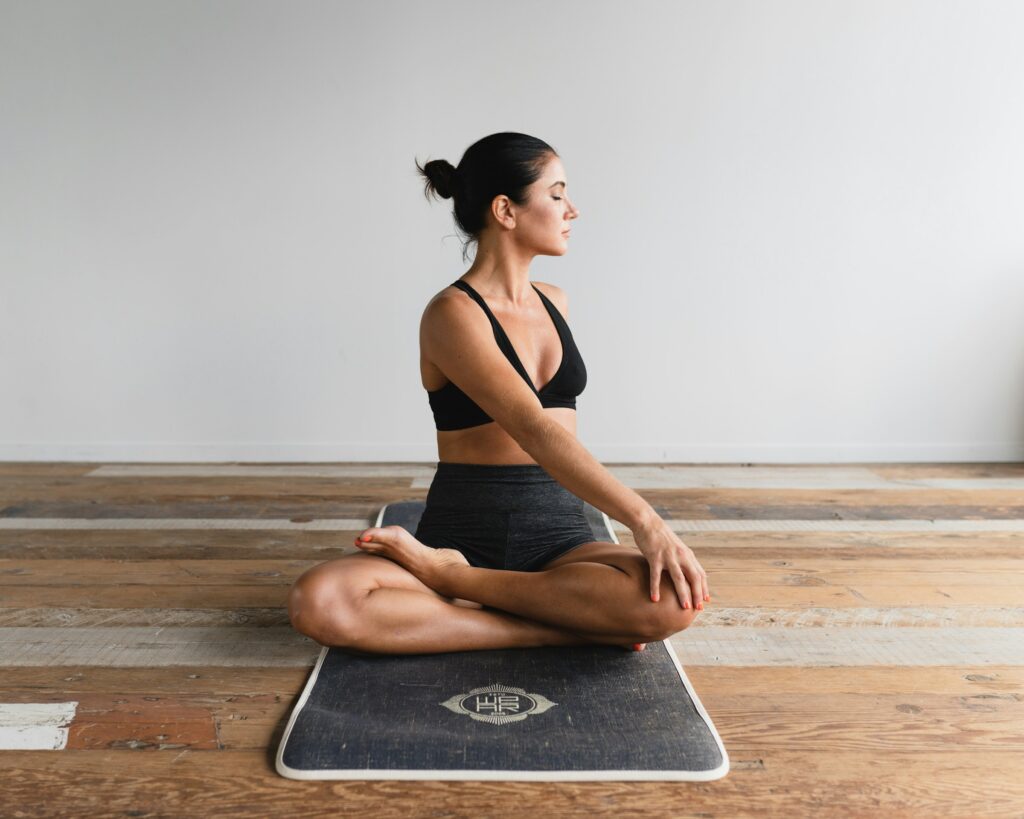
When people say, “I’m tight,” they are usually describing a real sensation. But the reason behind that sensation can vary. Sometimes a muscle truly has limited length or flexibility. Sometimes there is soft tissue restriction. Sometimes the fascia and connective tissue do not glide as well as they should. Sometimes the nearby joint is not moving freely, so the muscles around it feel like they are working overtime. Sometimes the body is guarding because of pain, stress, old injury, repetitive posture, or a lack of perceived safety.
In other words, tightness is not always just a mechanical problem. It is often a conversation between the muscles, fascia, joints, and nervous system. That matters because the nervous system plays a major role in how much range of motion the body will allow. Muscles contain sensory receptors that detect stretch and tension. Tendons monitor load. Joints report position. The skin and fascia respond to pressure, movement, and touch. Your brain is constantly integrating all of that information and making decisions about what feels safe.
If the body senses threat, instability, pain, or uncertainty, it may guard. If the body senses support, control, breath, and safety, it may begin to soften. That is where assisted stretching becomes interesting.
Assisted Stretching Is Not About Forcing the Body Open
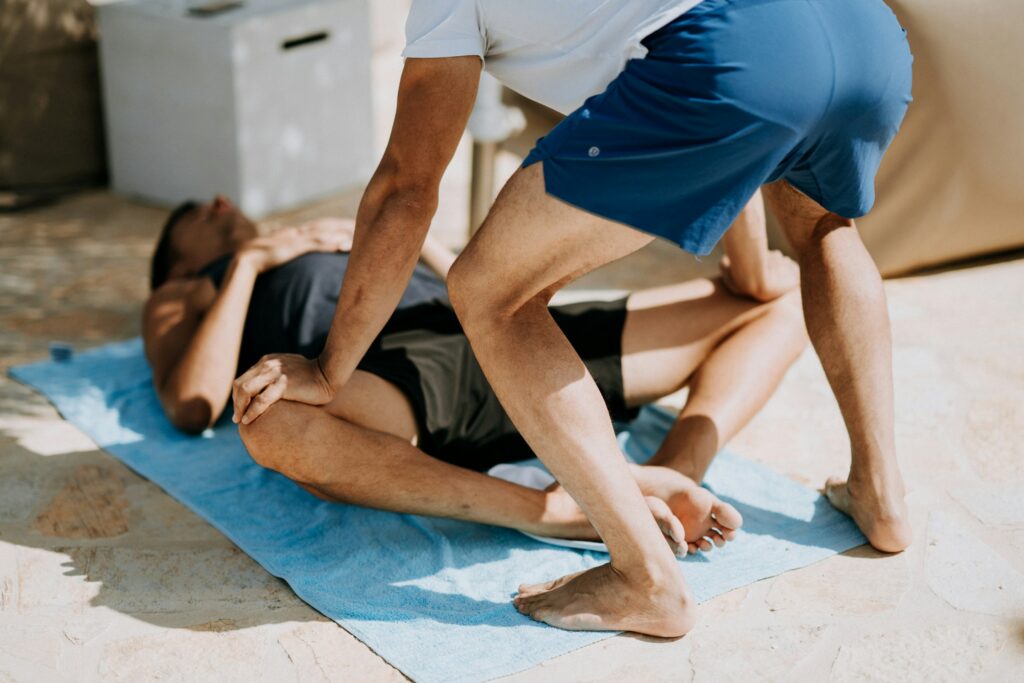
A good assisted stretching session is not a tug-of-war with your hamstrings, pushing through pain, being folded into a pretzel while trying to act brave, or chasing extreme flexibility for its own sake. At its best, assisted stretching is guided mobility work. The practitioner helps position the body, control the angle of stretch, monitor the client’s response, and adjust the intensity in real time. The client is able to relax more fully because they are not having to do all the work themselves. This changes the experience.
When you stretch alone, you are both the mover and the receiver. You have to create the stretch, hold the position, manage your balance, monitor your discomfort, and figure out whether you are doing it correctly. That can be useful, but it can also create unnecessary tension. With assisted stretching, someone else is helping create the conditions for the body to release. The client can focus more on breathing, sensing, and allowing. That supported feeling is not just pleasant. It may be part of why the body responds.
The Nervous System Needs to Be Invited, Not Bullied
I think this is one of the most important points. The body opens better when it does not feel attacked. A stretch that is too intense can trigger protective contraction. The person may feel the muscle tighten against the stretch. The breath may become shallow. The jaw may clench. The shoulders may creep upward. The whole system starts negotiating with itself. But when the stretch is slow, supported, and responsive, the nervous system gets a different message. There is time, support, and no emergency.
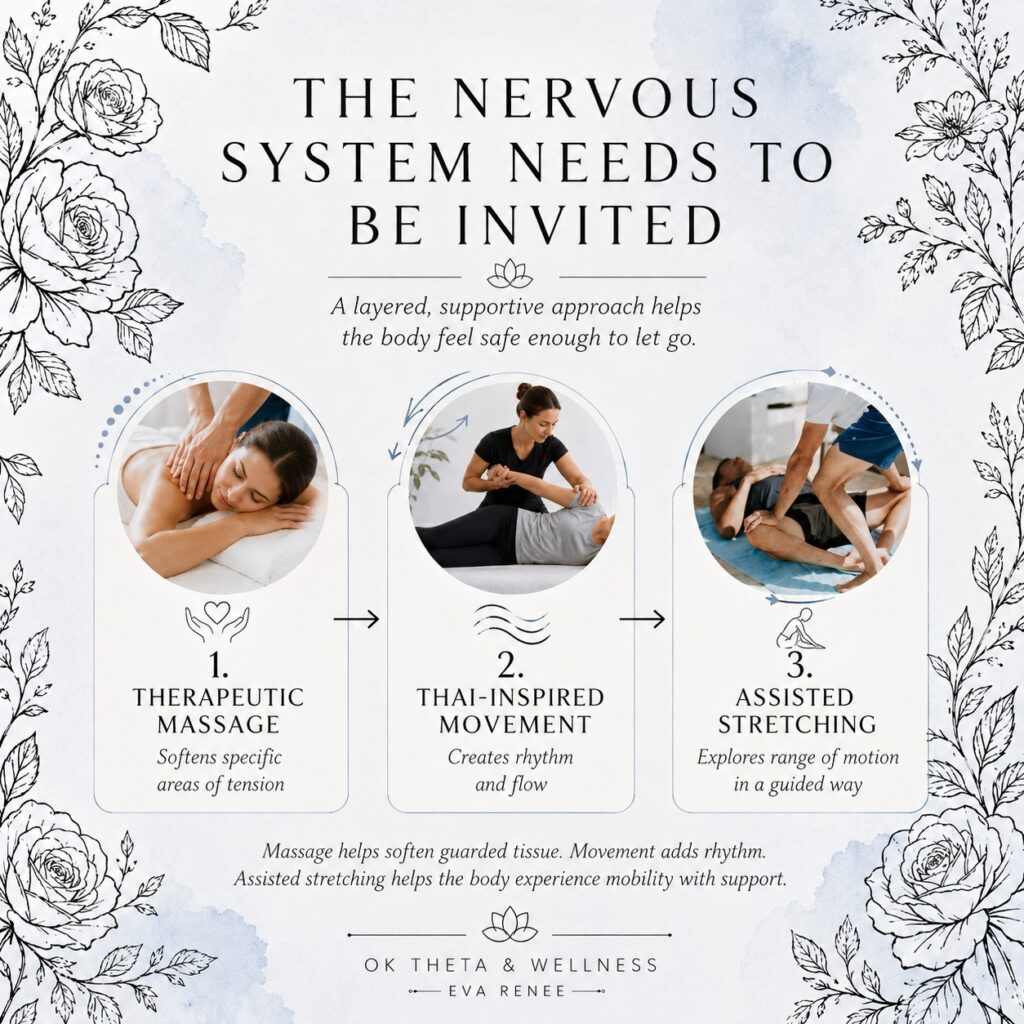
This is why Eva’s approach is so valuable. She is not just stretching tissue. She is working with the whole person. Her sessions can include therapeutic massage to soften specific areas of tension, Thai massage-inspired movement to create rhythm and flow, and assisted stretching to help the body explore range of motion in a guided way. That layered approach respects the fact that the body is not a machine with stuck parts. It is a living system with memory, tone, reflexes, preferences, and protective strategies.
Eva’s Multi-Approach Technique
Eva Renee brings several bodywork languages into the same room. Therapeutic massage allows her to address localized muscle tension, tender areas, trigger points, and soft tissue restriction. This can help prepare the body before moving into deeper or more functional stretches. Sometimes the tissue needs to soften before the body is ready to move.
Thai massage adds another dimension. Thai massage often involves supported positioning, rhythmic compression, gentle traction, and assisted movement. It has a different feel than traditional table massage. There can be a sense of flow, almost like the body is being guided through a sequence rather than treated one muscle at a time.
Then assisted stretching helps translate that softening into movement. Instead of simply relaxing on the table and then standing up with the same old movement patterns, the body gets a chance to experience range of motion with support. That combination is the key.
Massage can help reduce guarded tension. Thai-inspired movement can help the body feel rhythm, breath, and spaciousness. Assisted stretching can help the client reconnect with mobility. Together, this becomes more than stretching. It becomes a supported conversation with the body.
Why Assisted Stretching Can Feel Different
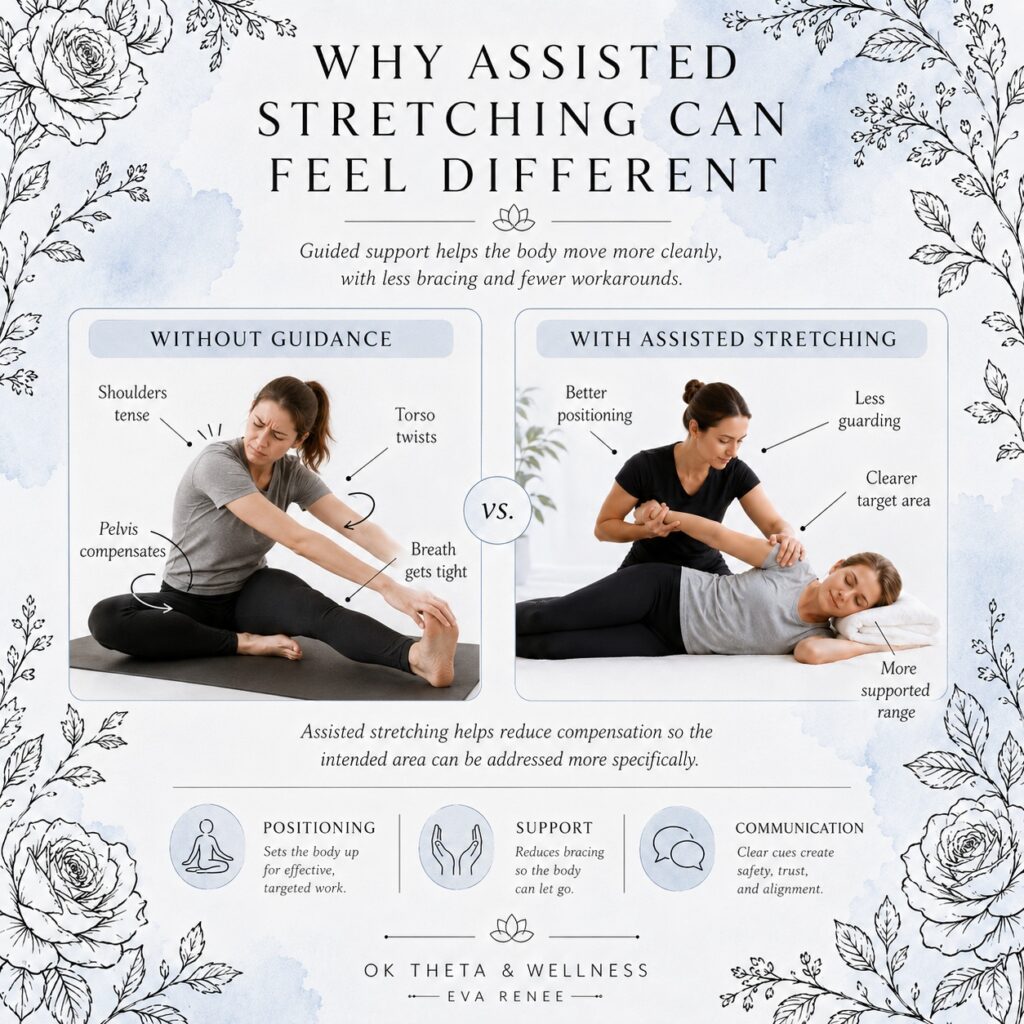
One of the biggest advantages of assisted stretching is that it helps reduce compensation. Most of us have clever bodies. If one area does not move well, another area will usually volunteer for the job. If the hips are stiff, the low back may move too much. If the shoulders are restricted, the neck may get involved. If the hamstrings feel tight, the pelvis may tuck under or the spine may round. The body finds a way, but the workaround is not always ideal.
In an assisted stretching session, Eva can help guide positioning so the intended area is being addressed more specifically. She can adjust the angle. She can slow the movement down. She can notice when the body is bracing. She can help the client find the edge of a stretch without tumbling over it. That is important because productive stretching should not feel like punishment. It should feel like a clear signal that the body can understand.
There may be intensity, but it should be tolerable. There may be challenge, but it should still feel safe. There may be deep release, but it should not require the client to disconnect from the body in order to endure it.
Who Might Consider Assisted Stretching?
Assisted stretching may be a good fit for people who feel chronically stiff, guarded, or restricted in their movement. It may be especially helpful for people who sit for long periods, athletes wanting better recovery, people with recurring neck or back tension, those who feel too stiff to stretch effectively on their own, or clients who already enjoy massage but want something more mobility-focused.
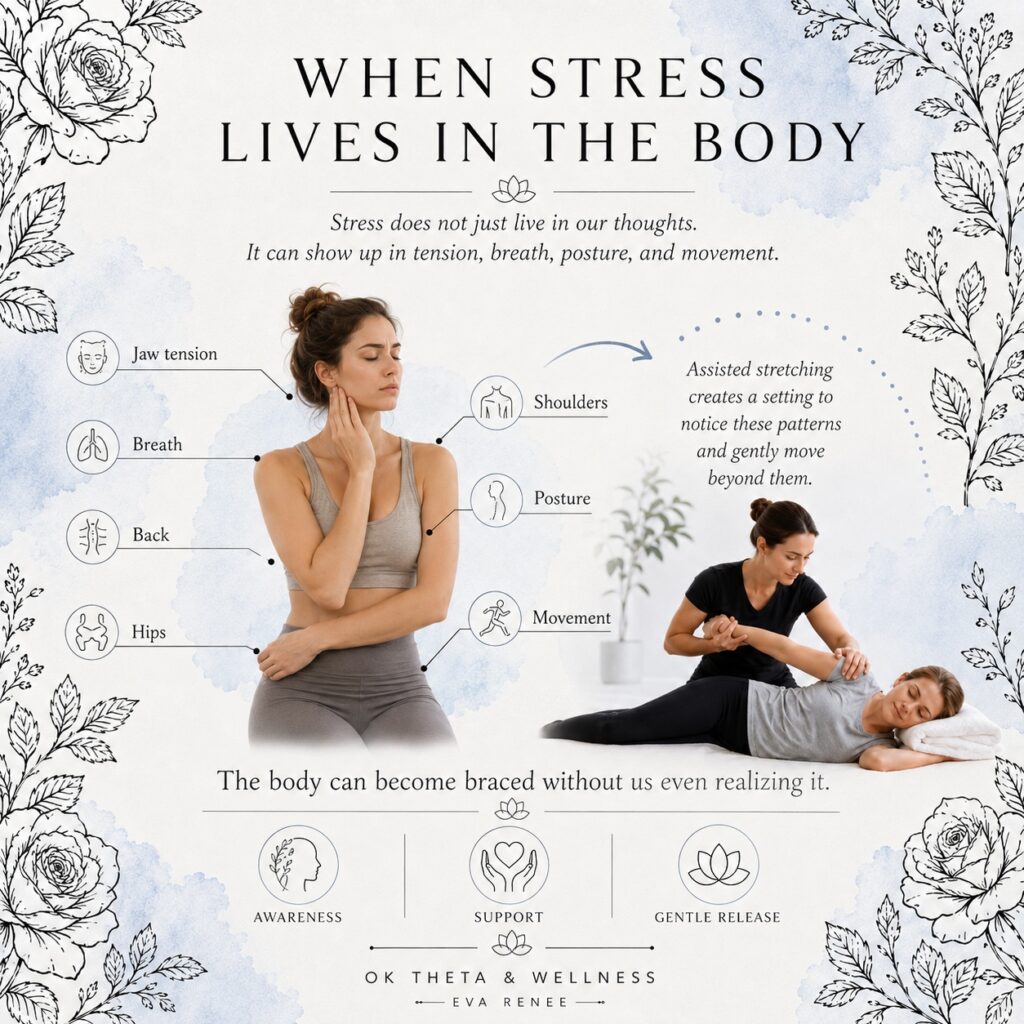
It may also be useful for people who carry stress physically. That is something I see often. Stress does not just live in our thoughts. It shows up in the jaw, shoulders, hips, back, breath, posture, and movement. The body can become braced without us even realizing it. Assisted stretching can create a setting where the person is invited to notice those patterns and gently move beyond them.
Of course, this work should always be adapted to the person. Recent surgery, acute injury, severe pain, joint instability, certain neurologic conditions, or significant osteoporosis may require modification or medical clearance. The goal is not to force a method onto everyone. The goal is to meet the body intelligently.
What a Session May Feel Like
A session with Eva may begin with a conversation about where you feel tension, what movements feel limited, and what your goals are. From there, she may use therapeutic massage to work into areas of tightness or guarding. She may incorporate Thai massage-inspired techniques such as compression, traction, or supported movement. She may then guide the body into assisted stretches while helping you stay relaxed and aware.
The client is not passive in the sense of being disconnected. In fact, the best sessions often involve communication, breath, and attention. You may be asked what you feel. You may notice one side is different than the other. You may realize a stretch in the hip also changes the breath. You may feel how much your body has been holding. That awareness is part of the value. Assisted stretching is not only about increasing range of motion. It can also help people rebuild a more accurate relationship with their own body.
A More Supported Way to Regain Movement
If your body feels stiff, guarded, or stuck in familiar patterns of tension, assisted stretching may be a gentle place to begin. Eva Renee’s approach blends therapeutic massage, Thai massage-inspired movement, and guided stretching to help the body feel supported enough to soften, move, and reconnect.
At OK Theta & Wellness, assisted stretching is not about forcing flexibility. It is about creating the right conditions for your body to notice, breathe, release, and explore greater ease. Schedule an assisted stretching session with Eva Renee and experience a more supported way to move beyond tension.
Revitalize Your Mind,
Renew Your Body